



|
In stock
|
Out of stock
|
||
|
|
|||
|
|
|||
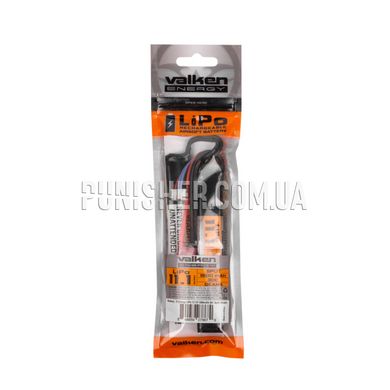
Lithium ion polymer (LiPo) batteries are the successor to the well-known lithium ion (LiIon) batteries. The main advantage of LiPo batteries is undoubtedly the ratio of capacity and size.
Another benefit of LiPo packs is the low self-discharge rate. An unused pack will lose approximately 3-5% of energy per month. It is important to pay attention to unused packaging, as there is a risk that, as a result of not being used for a long period of time, it may be discharged below the permissible minimum value (3 V per cell), and unintended chemical reactions may occur that lead to deterioration of the properties of the package, including permanent damage and, in extreme cases, fire.
When properly used, a LiPo pack has an average life of 500-700 cycles. An important factor is the temperature at which LiPo blocks can operate. Unlike other batteries, LiPo cells perform well at low temperatures. However, they should be charged at room temperature. In order to keep LiPo batteries in good condition, it is necessary to balance them during charging using the service connector found in most LiPo packs (a good LiPo charger has a built-in balancer).
Length: 118mm x 20mm x 9mm; 118mm x 20mm x 5mm
Battery: Lipo
Battery capacity: 1200 mAh
Battery voltage: 11.1v
Discharge voltage: 30C
Connector: DEANS / T-connect
For LiPo and Li-Ion batteries, the warranty only covers switching on. The product cannot be returned or exchanged in the future!
Do not allow the battery to discharge below the maximum permissible level (3 V per section), this may cause damage, and in some cases, fire. An unused battery must be charged to 70%.
When using, it is also important not to allow overcharging above 4.2 V per section. The battery must be charged at room temperature. To maintain performance when charging, you must use balancing when connecting.
Do not allow the battery to completely discharge!
Do not store the battery at temperatures below 0 °C.
Do not use the machine at temperatures below -1 °C.