






|
In stock
|
Out of stock
|
||
|
|
|||
|
|
|||
Ballistic protection — expanding the armor coverage for neck, groin, shoulders and thighs
In combat conditions, not only the plate in a plate carrier matters, but also how well vulnerable areas are covered: the neck, collarbones, groin, lower back, sides, thighs and legs. That is why additional ballistic protection (soft armor inserts and modules) becomes a logical extension of a body armor system: it increases coverage against fragments, ricochets and secondary projectiles while maintaining mobility.
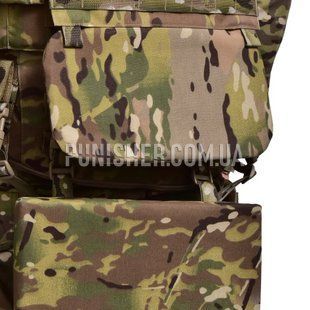
In this section you can buy ballistic protection for various needs: ballistic neck protection (collar/gorget), ballistic groin protection (groin protector), ballistic shoulder protection, side ballistic protection, as well as modules for lower-back protection and thigh protection.
What is a groin protector and what is it for?
A groin protector is a ballistic protection element that covers the groin area and lower abdomen. It attaches to a plate carrier or body armor and contains a soft ballistic insert. Its main task is to protect one of the most vulnerable body areas from fragments, ricochets and secondary projectiles where armor plates do not provide sufficient coverage.
Why is thigh protection needed?
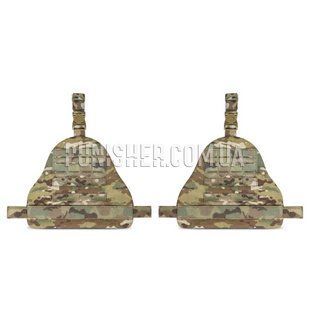
Thigh protection consists of ballistic modules that cover the upper legs in the femoral artery area. They are used to reduce the risk of severe injuries from fragments and ricochets. This type of protection is especially relevant for vehicle crews, assault operations and environments with a high fragmentation threat.
What is a gorget and how is it different from neck protection?
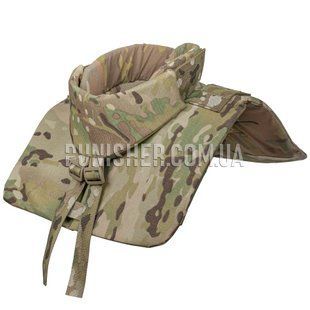
A gorget is a protective element that covers the throat/front of the neck and upper chest (depending on the model). In modern gear it is often referred to as neck protection or a neck-chest module. The purpose is the same: to add fragmentation protection where the plate and armor carrier do not fully cover the area.
Soft ballistic protection: when is it needed?
Soft ballistic protection consists of inserts (aramid/Kevlar/UHMWPE, etc.) designed primarily to stop fragments and shrapnel, and in certain classes, handgun threats. Soft inserts are most commonly used in:
- ballistic neck collars and modules;
- groin protectors;
- shoulder protection modules;
- side and lower-back ballistic elements;
- internal/external thigh protection modules.
How to choose ballistic protection for your plate carrier

✔️ Coverage area — choose what matters most: neck (collar/gorget), groin, shoulders, lower back or thighs.

✔️ Compatibility — check attachment systems (Velcro, Fastex, MOLLE) and fit.

✔️ Weight & mobility — modules should protect without restricting movement. Soft armor is lighter and better for long wear.
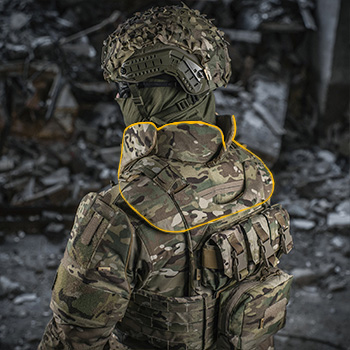
✔️ Ergonomics — neck protection must not block sight or weapon shouldering, and groin protection must not restrict movement.

✔️ Materials — Cordura and quality hardware directly affect durability.

✔️ Protection level — choose according to DSTU/NIJ standards.
Ballistic protection available at Punisher
- Neck protection — collars, neck-chest modules, gorgets.
- Groin protection — groin protectors and aprons.
- Shoulder protection — deltoid modules.
- Lower-back protection — rear modules.
- Side protection — side/rib modules.
- Thigh protection — internal/external inserts.
Need to assemble a setup quickly? We’ll recommend the best solution.
Consultation and selection tips from Punisher
If unsure what to choose — we’ll help.
FAQ. Frequently asked questions
How is soft ballistic protection different from plates?
Soft armor mainly works as a fragmentation barrier and expands coverage. Plates are a different class with different tasks. Together they complement each other.
Is a gorget the same as neck protection?
Often yes. A gorget focuses on throat/front-neck coverage, while neck protection may include collarbone coverage.
Does groin protection restrict movement?
Quality groin protection with proper adjustment should not restrict movement.
Why add side and lower-back protection?
They close gaps between main armor elements and increase coverage.
Thigh or leg protection first?
Thigh protection usually comes first for maximum coverage.