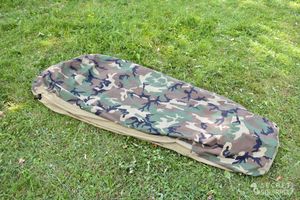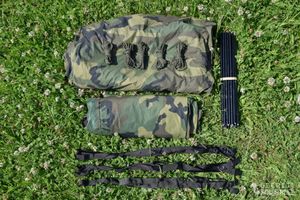

When it comes to personal shelter in field conditions – whether for combat missions, solo mountain treks, or night hunts – the "tarp vs. tent" debate is always a heated one. While a tarp wins in versatility, a modern military 1-man tent like the Litefighter 1 is gradually closing all the gaps that made many avoid classic solutions for years.
I used a tarp for a long time because the civilian market didn't offer what I needed: it was either a flimsy lightweight tent, a complex and expensive construction, or not a freestanding tent at all. But as soon as you look toward the military segment, the situation changes drastically.
Enter Litefighter LLC with their Litefighter 1 Individual Shelter System – a solution that effectively sets the standard for the "1-man military tent" category. With the help of this guide from the Punisher military store, we’ll break down what makes it tick, inside and out.

Why the 1-Man Format Is a Necessity, Not a Whim
From experience: a 1-man army tent isn't about luxury; it's about control. Everyone carries their own gear, and everyone can survive autonomously, even if separated from the group.
Large 2-3 person military tents look logical only on paper. In practice, they mean extra weight, dependency on others, and a constant compromise between mobility and comfort.
That’s why the "personal army shelter" concept has long been a standard in the US Armed Forces. It’s no coincidence that these solutions are widely used as US Army tents or even as the USMC 1-man tent.

The Litefighter 1 Concept: What Makes It Different
The first thing to understand is that the Litefighter 1 isn't just a small military tent; it’s a complete system. It is designed for real-world tasks: rapid deployment, camouflage, and autonomy.
Key features:
-
Fully freestanding construction (can be pitched even on asphalt);
-
Up to 5 configurations of use;
-
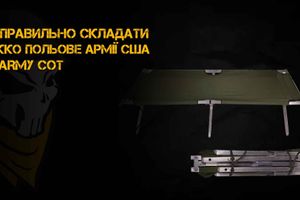
Can be mounted on an army cot;
-
Two full-sized vestibules;
-
Permethrin-treated mosquito netting;
-
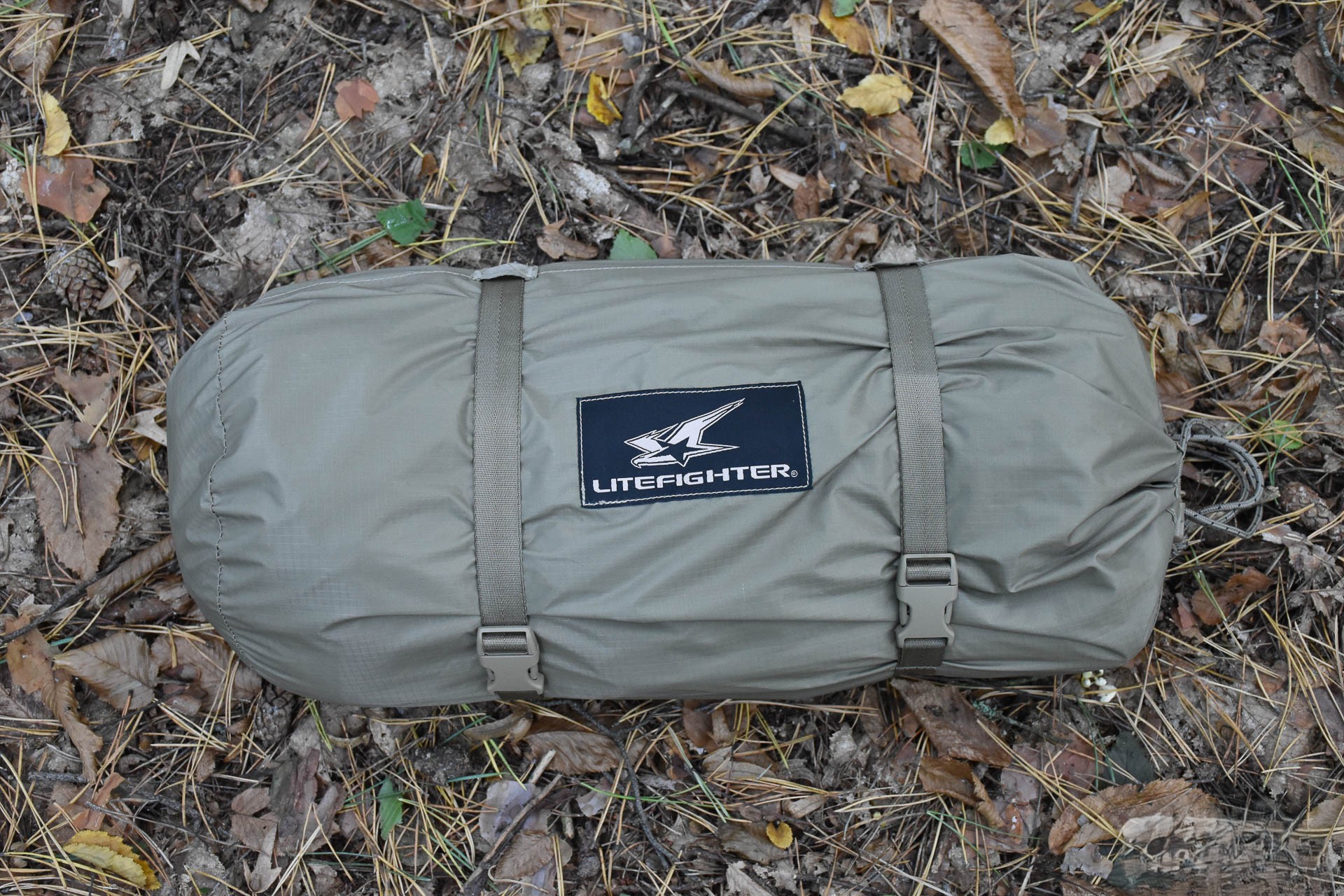
Compactness and a reasonable weight (2.4 kg/5.3 lbs).
Essentially, it’s no longer just a 1-man tent but a full-fledged combat shelter that adapts to the mission.
Most modern military 1-man tents are designed to be used with field cots – this reduces heat loss and increases comfort in wet environments.
Construction and Materials: No Unnecessary Magic
As expected from a proper field army tent, it uses a proven foundation:
-
Rainfly – 40D Nylon Ripstop PU;
-
Floor – 70D Reinforced Nylon;
-
Inner layer – Breathable mesh.
This provides a balance between weight and durability. This isn't an "ultralight toy" but a military four-season tent built to withstand real stress.
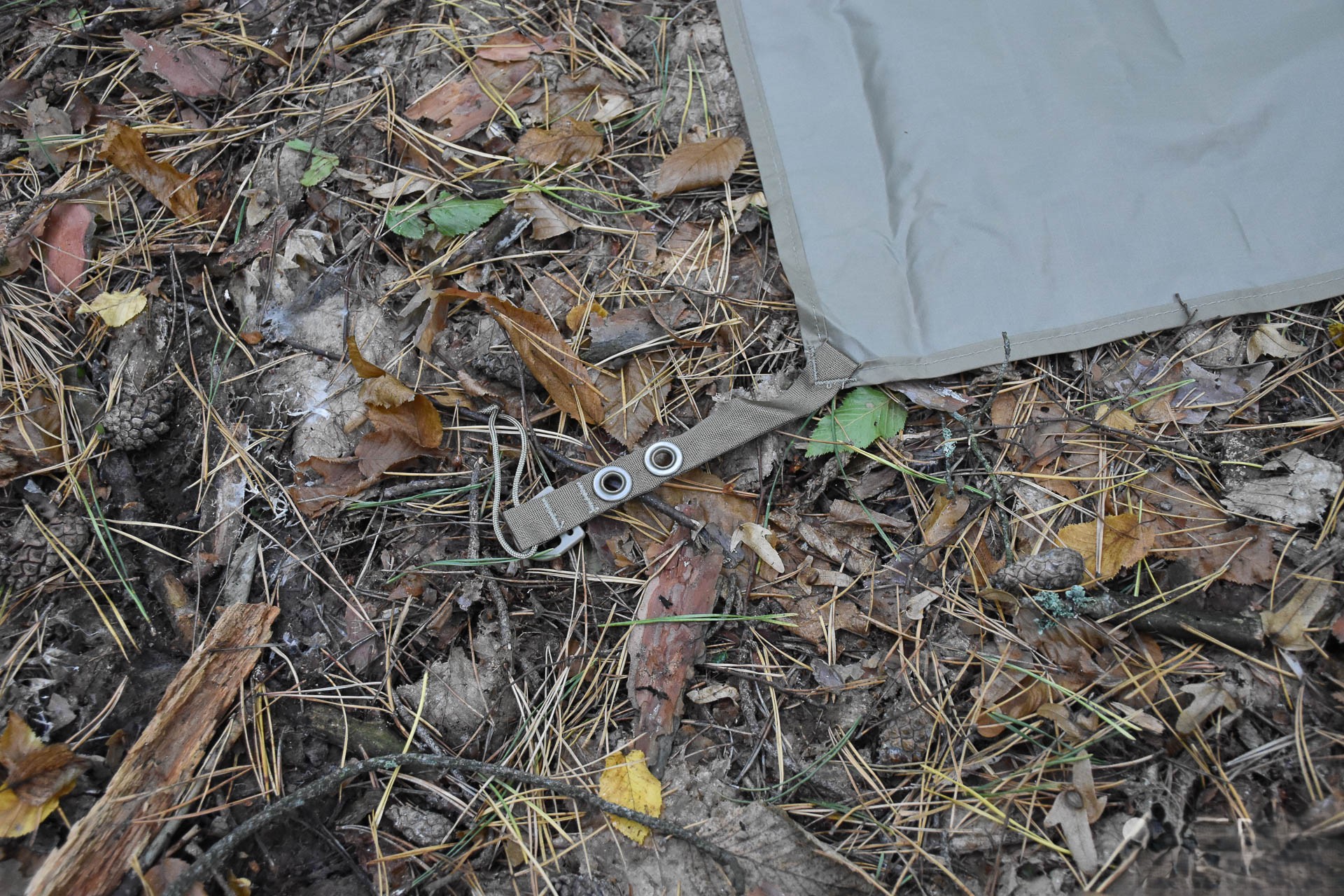
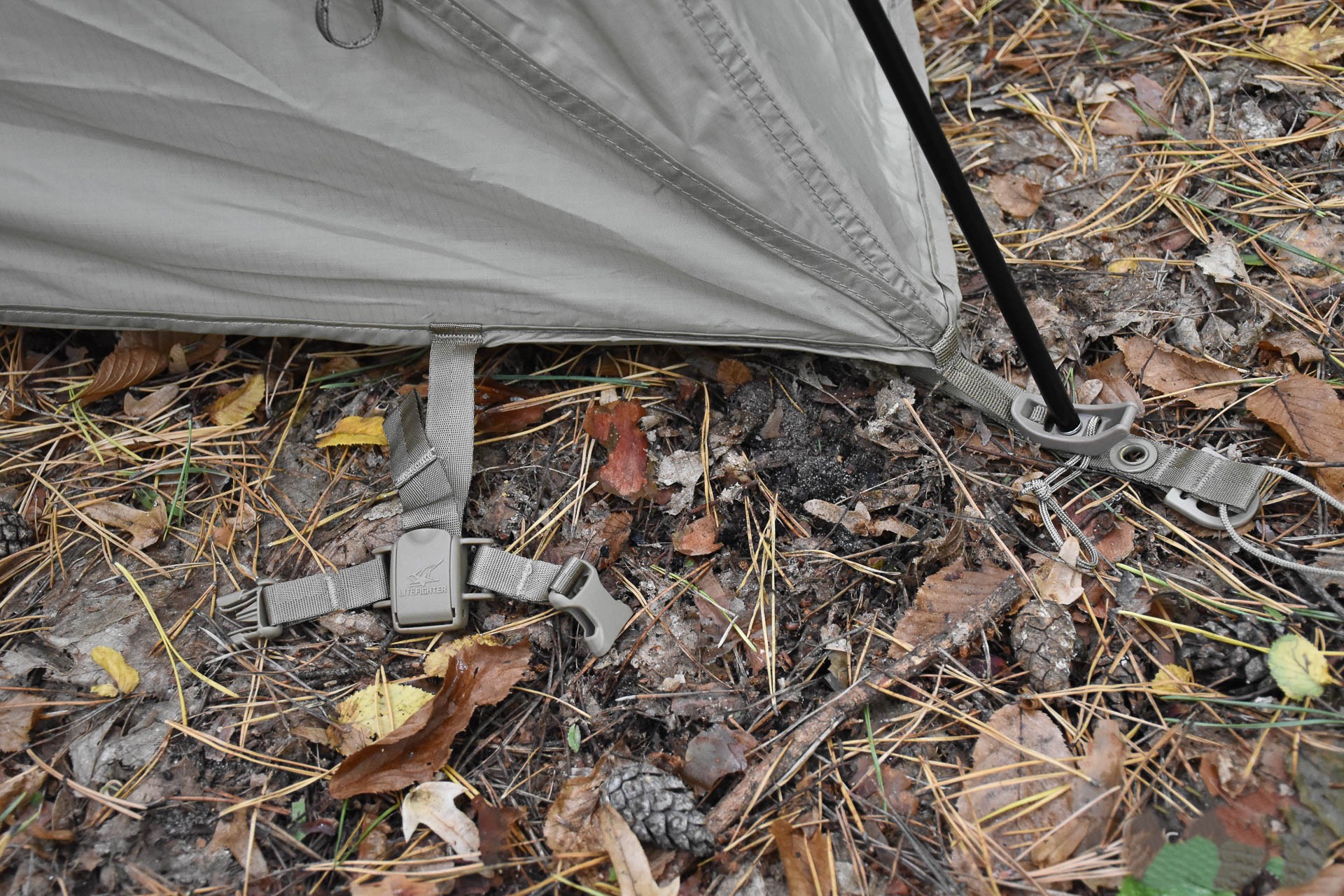
Special mention goes to the footprint – many underestimate this detail, but it extends the life of the tent significantly.
A footprint is a piece of waterproof material used as an additional ground cloth for the tent. Contrary to popular belief, its primary job isn't just moisture protection but extending the tent's lifespan by protecting the floor from abrasion.


Setup: The "5-Minute" Scenario
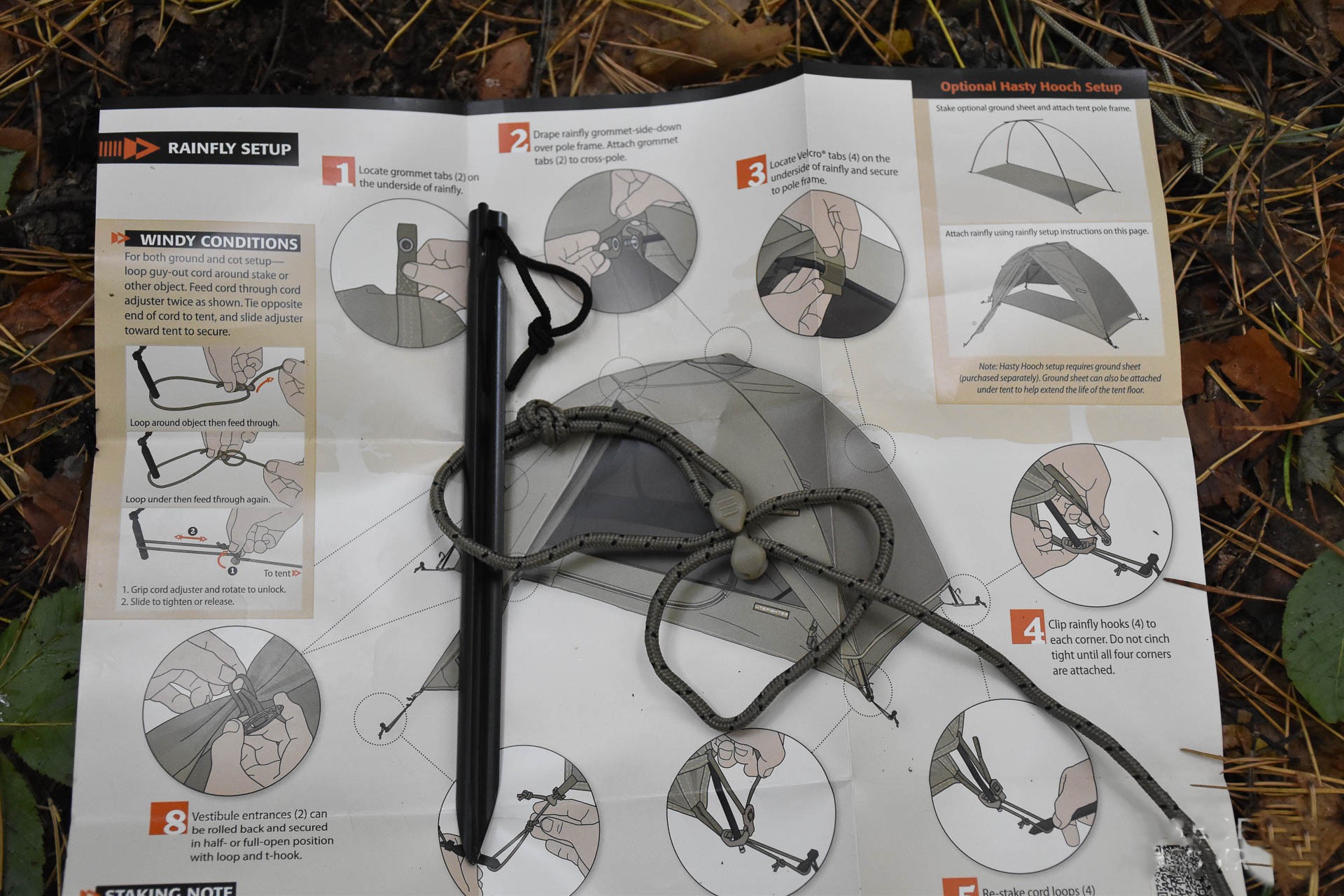
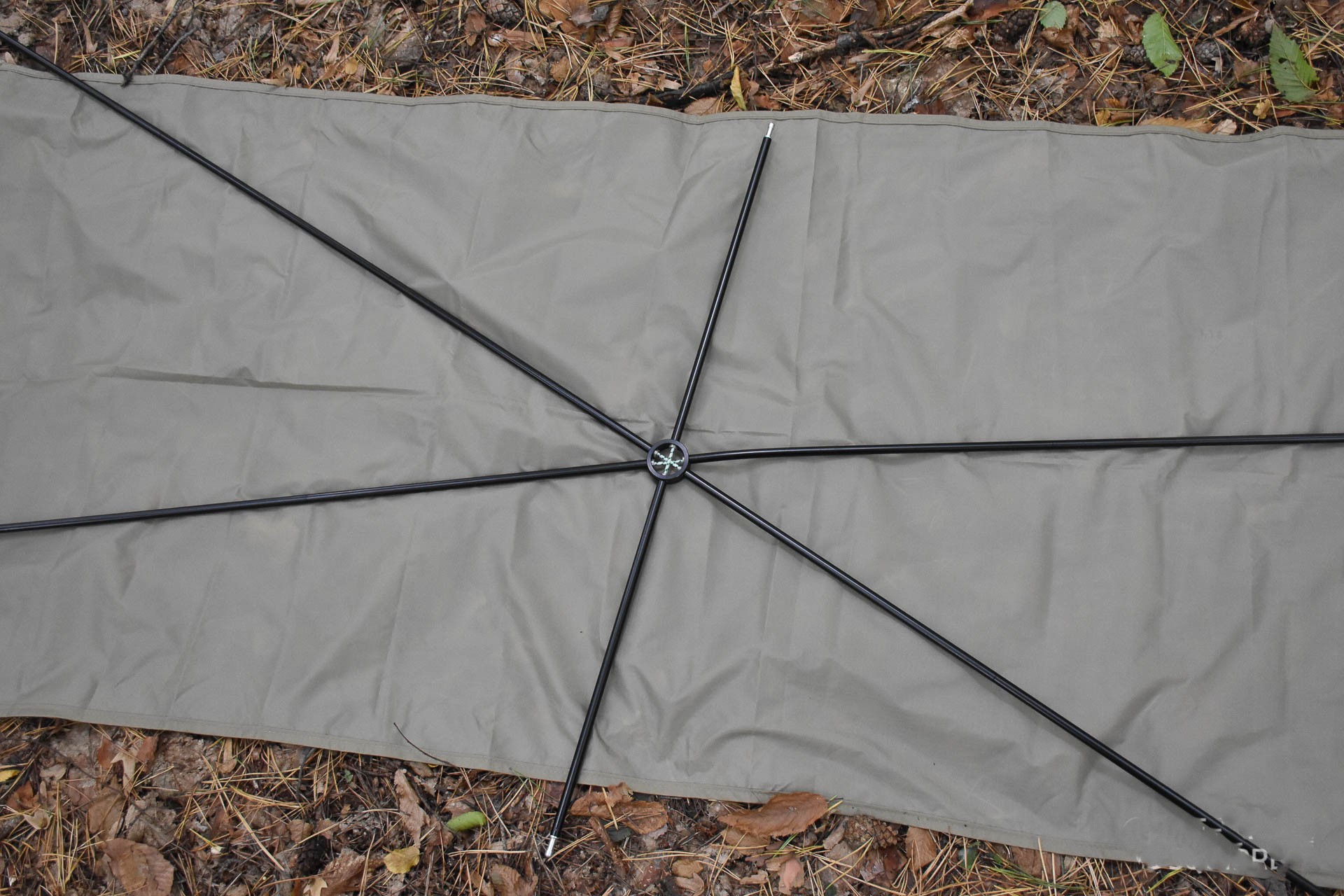
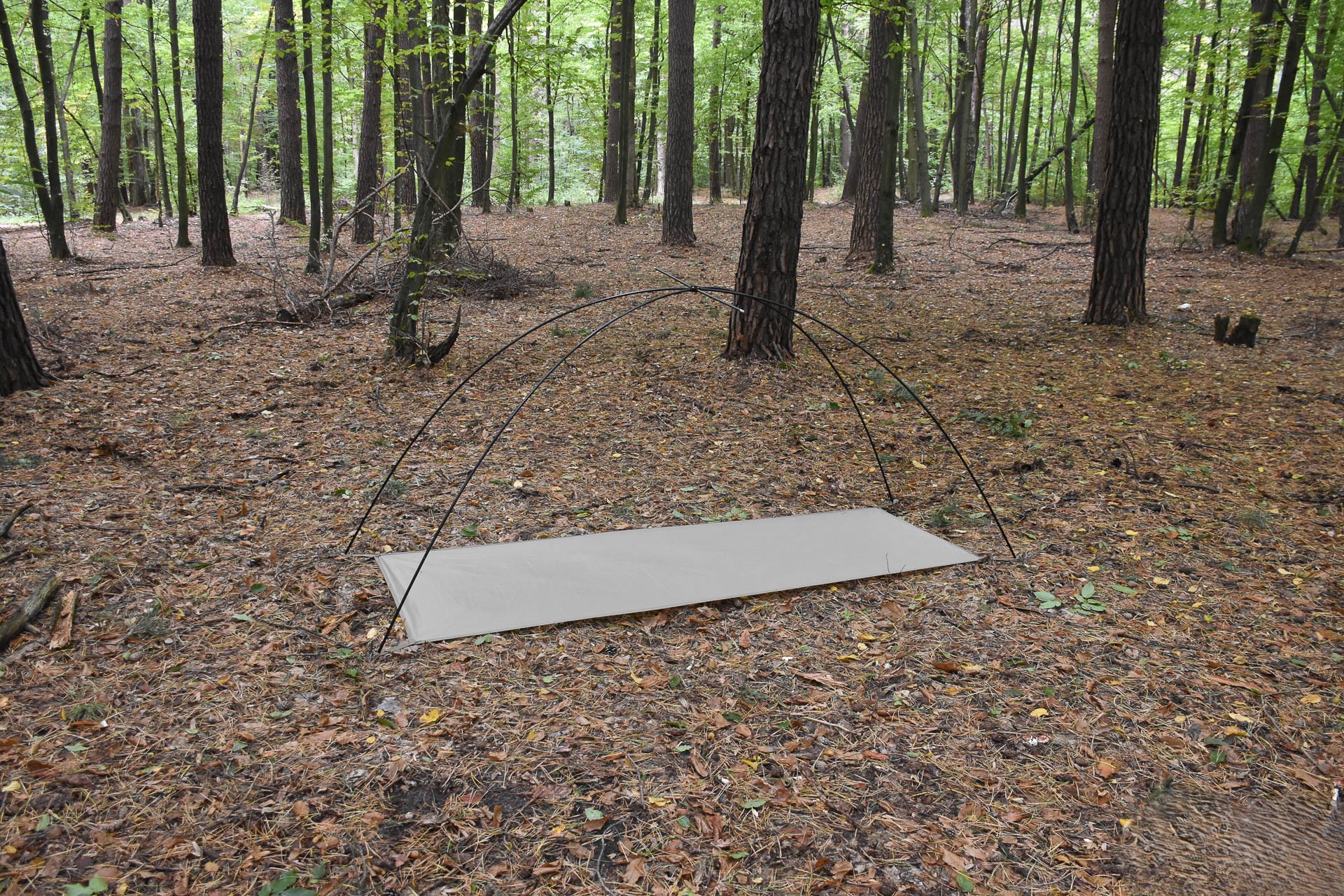
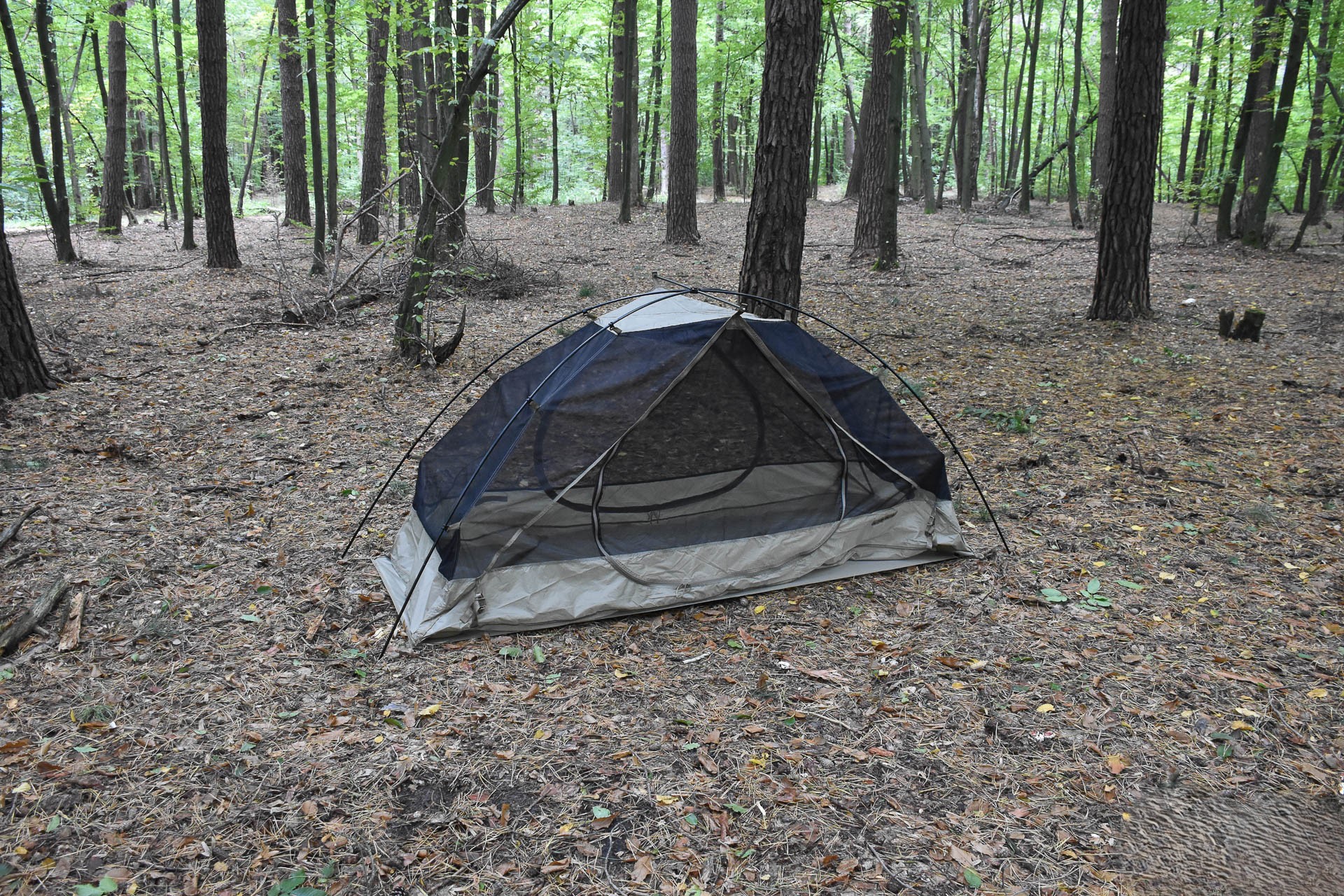
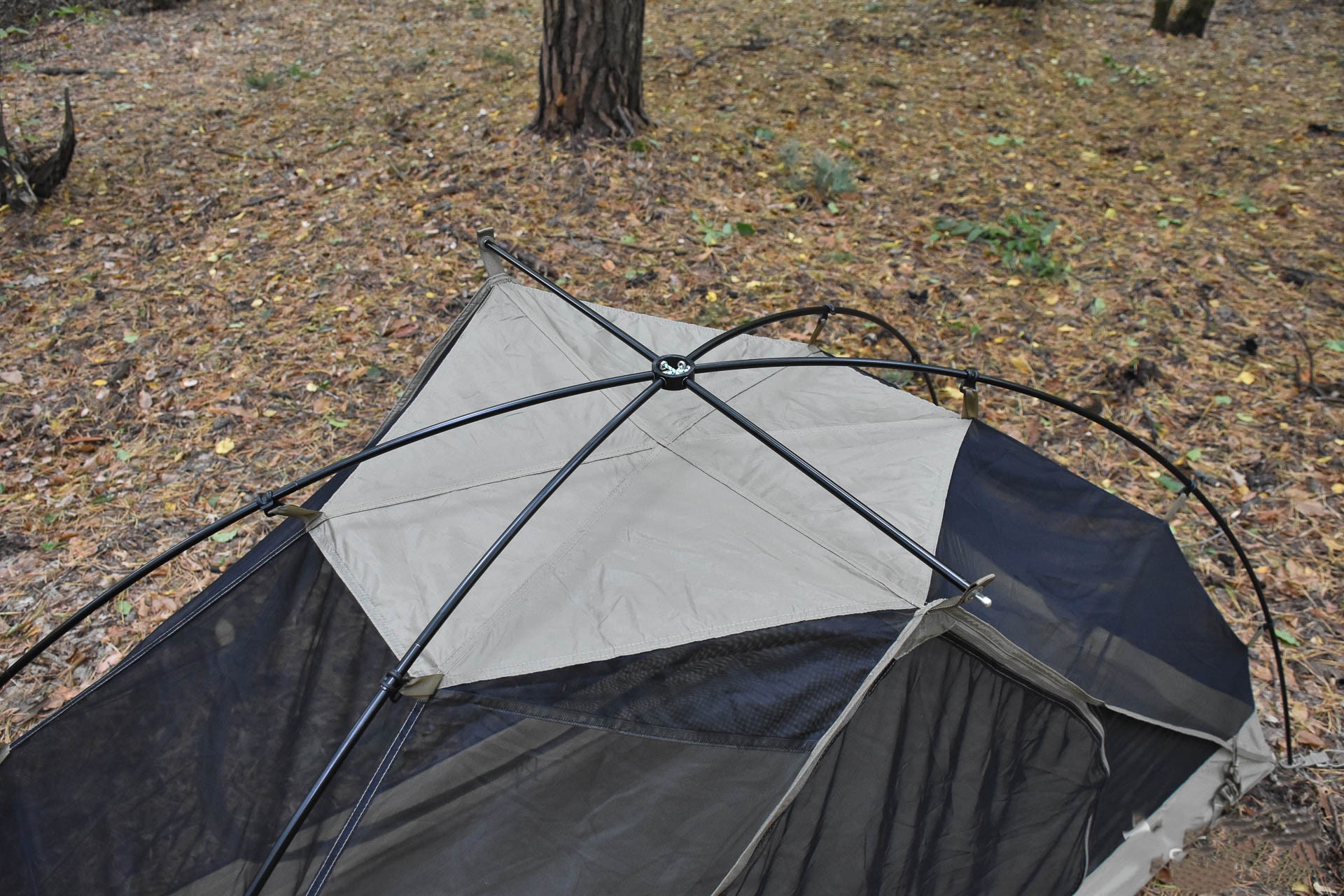
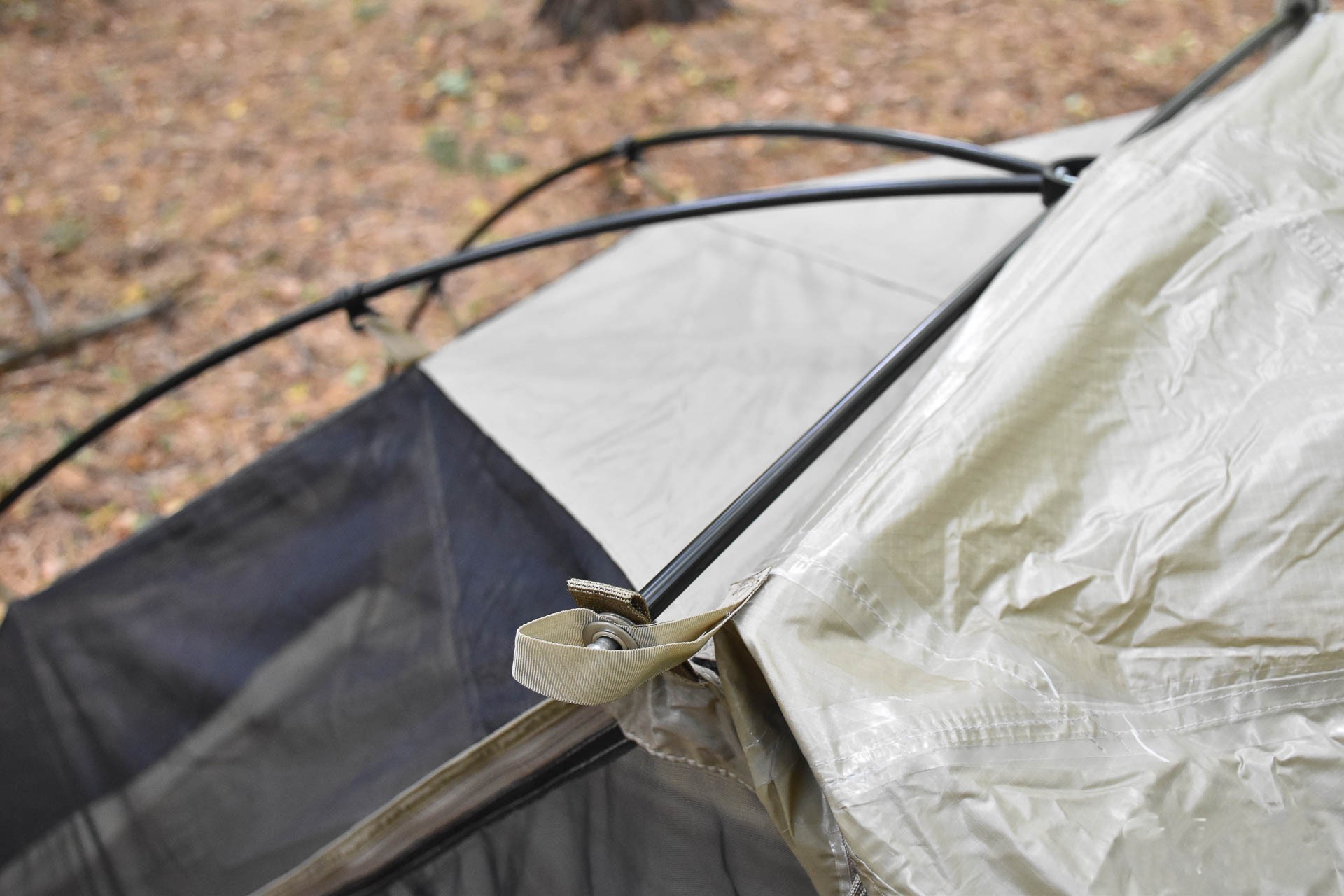
One of the key advantages is speed. Thanks to the hub-pole system (a central node where all sections meet), this 1-man army tent can be set up very quickly. No more "sliding the pole through the sleeve and hoping you didn't miss" nonsense.
From a practical standpoint: if you set it up diagonally, the process becomes even simpler and doesn't require extra bracing with feet or trees.
This is critical when you are pitching a shelter:
-
In the rain;
-
In the dark;
-
Or in conditions where you don't want to linger.


Interior Features: The Small Things That Count
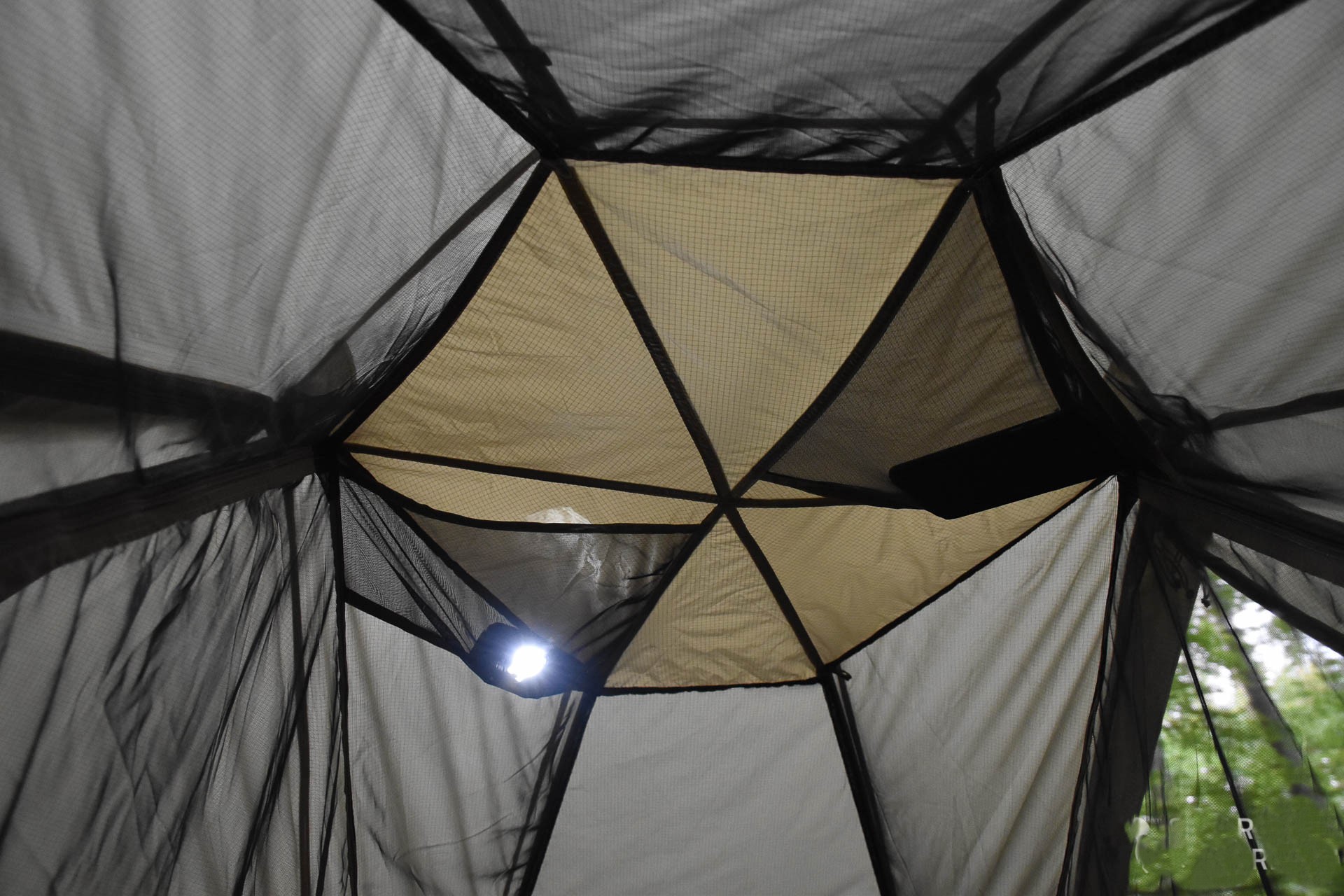
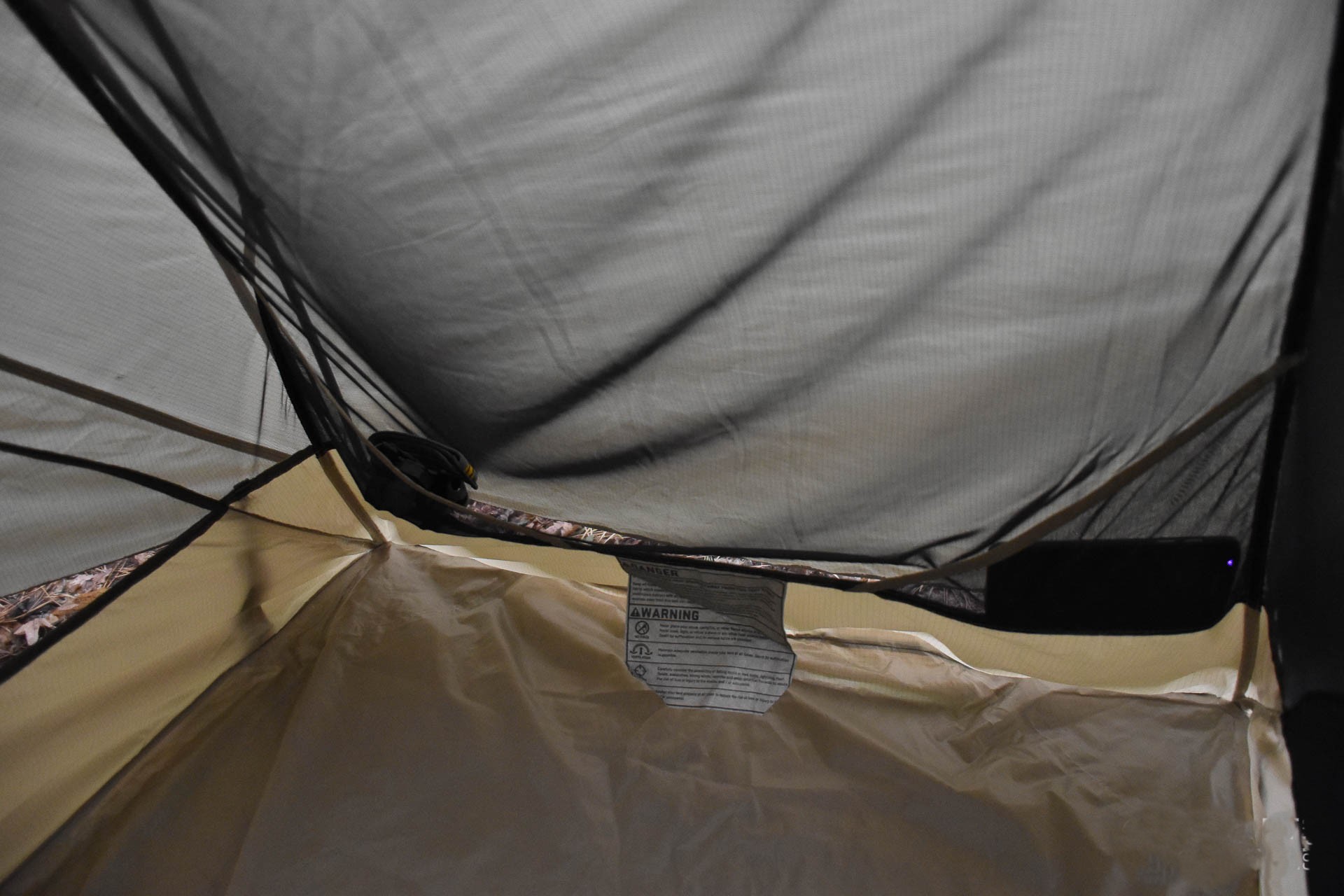
Features often ignored in civilian models are handled expertly here. The interior of this military army tent is designed for real scenarios:
-
Multiple mesh pockets;
-
Overhead organizers for flashlights or small gear;
-
Two-sided entry;
-
Vertical walls (thanks to the spreader bars).
The result isn't just a place to "crash", but a space where you can actually manage your environment.
Vertical walls in 1-man tents are rare. However, they provide a sense of space and allow you to work with your gear inside comfortably.

Vestibules and Gear Management
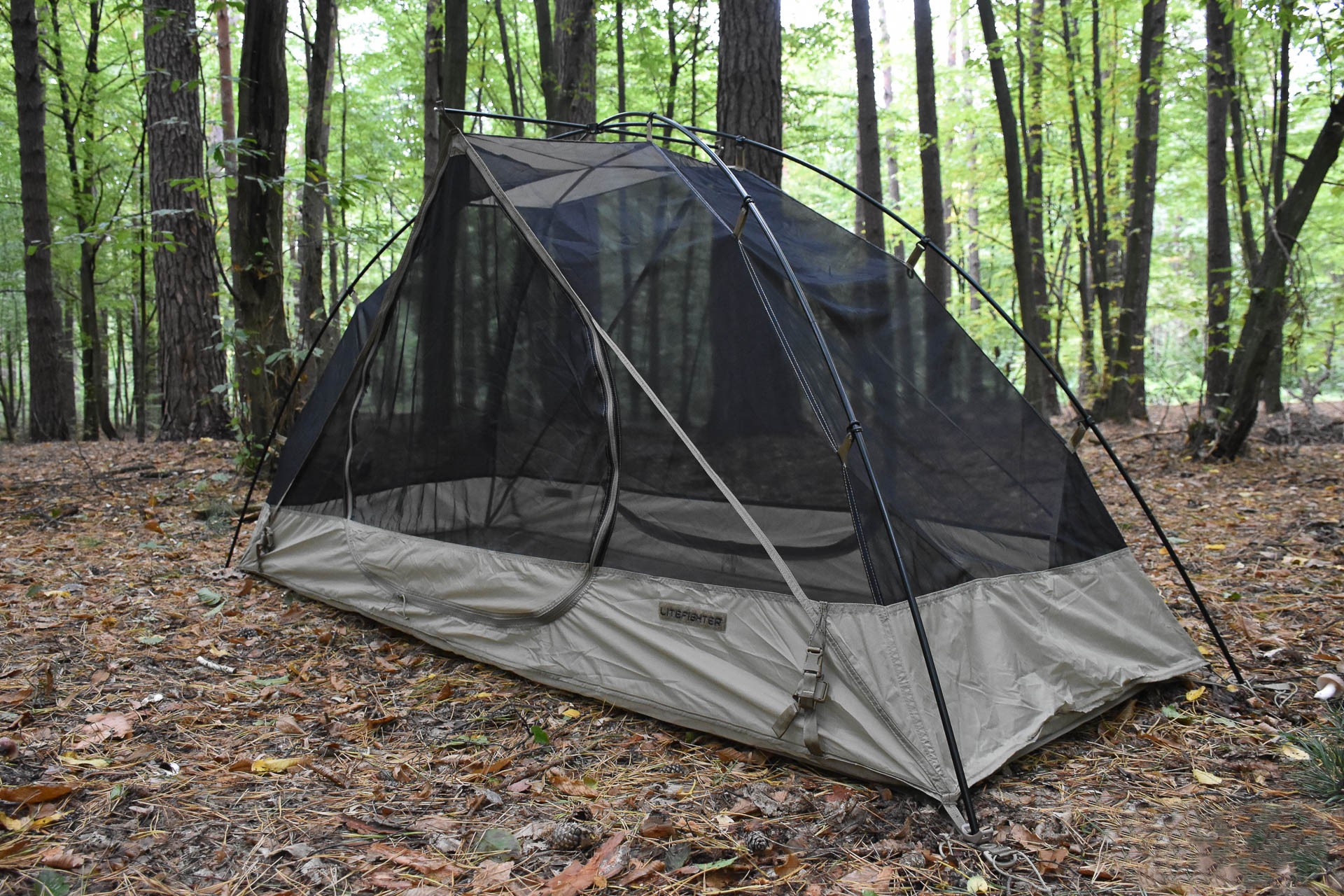
Two vestibules are a massive plus. One can be used for your rucksack, the other for footwear and quick access. Most importantly, they are accessible even from inside the closed tent. For a 1-man military tent, this is vital: you don't have to pull gear outside, you don't "light up" your position, and you avoid unnecessary movement.

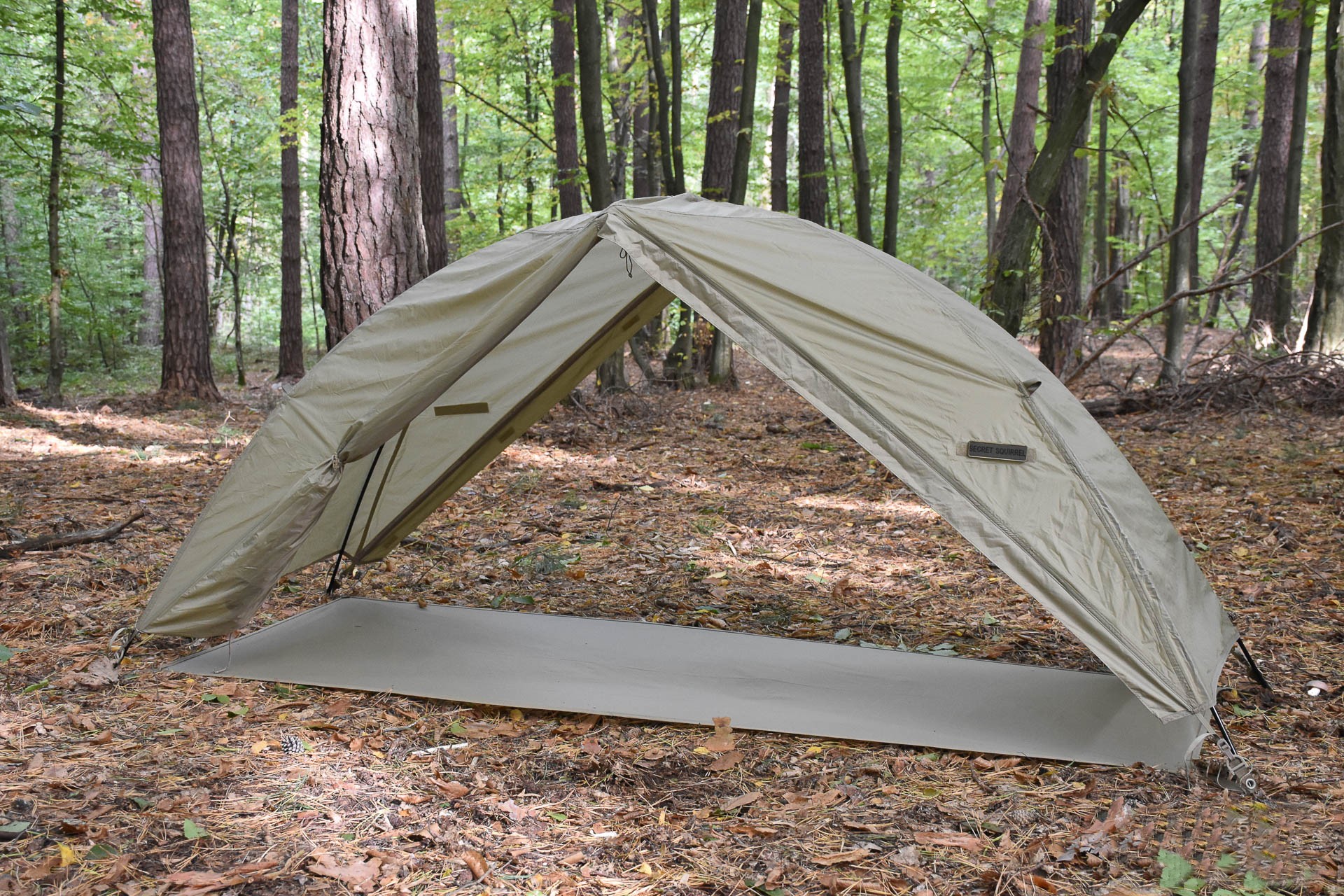
Configurations: From Full Tent to Hasty Hooch
One of the most interesting aspects is the ability to turn the system into a lightweight shelter. Effectively, you get:
-
A classic double-wall tent;
-
Or a simplified 1-man shelter (similar to a tarp shelter).
This mirrors the approach used by special forces: maximum variability without the dead weight.
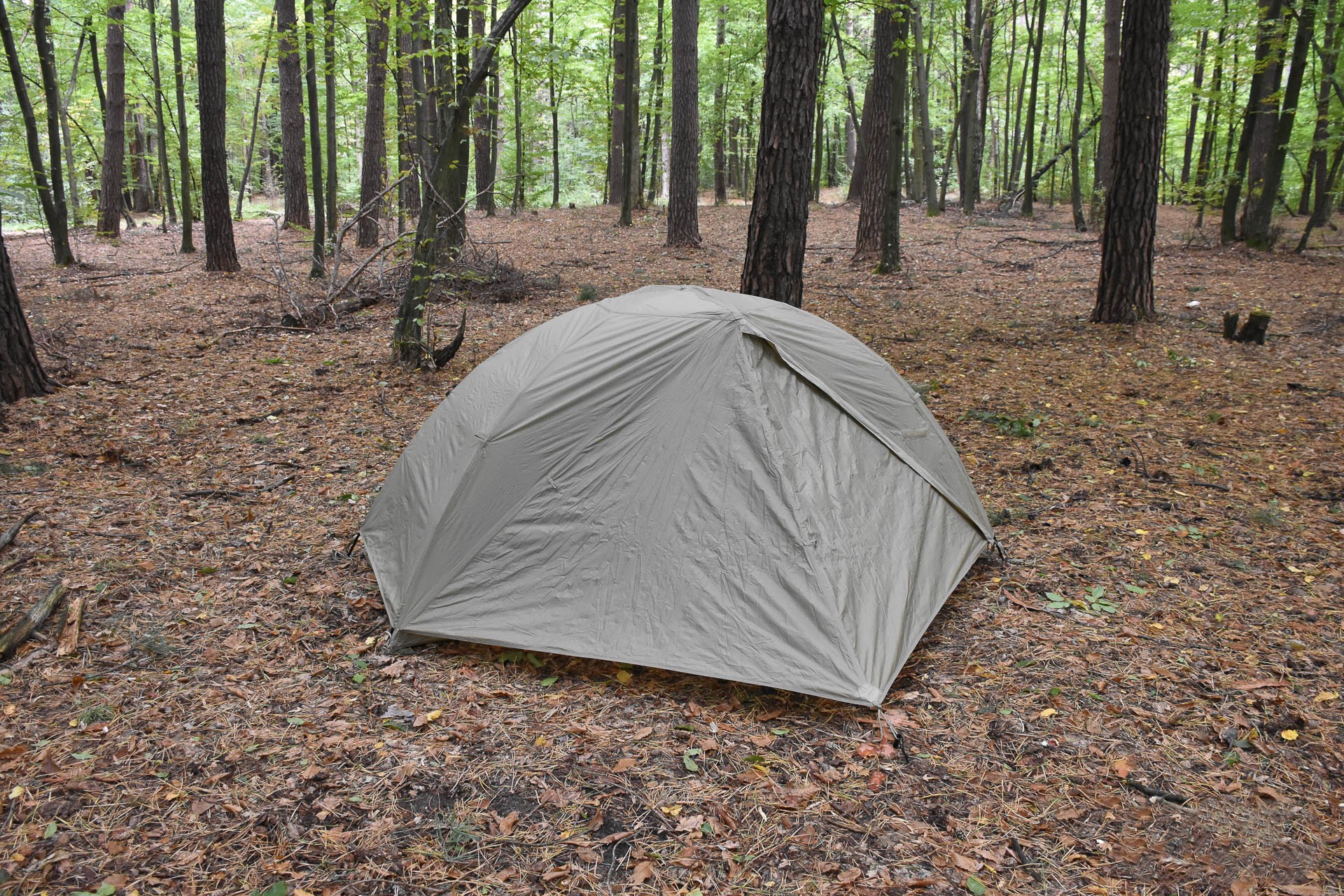

Camouflage and Colors
The Litefighter is available in:
-
Coyote Tan;
-
OD Green;
-
Multicam;
-
OCP (the famous OCP tent, also known as the OCP army tent).
This matters because color here isn't about "looks"; it's about survival. A Multicam or OCP tent works effectively in most environments.

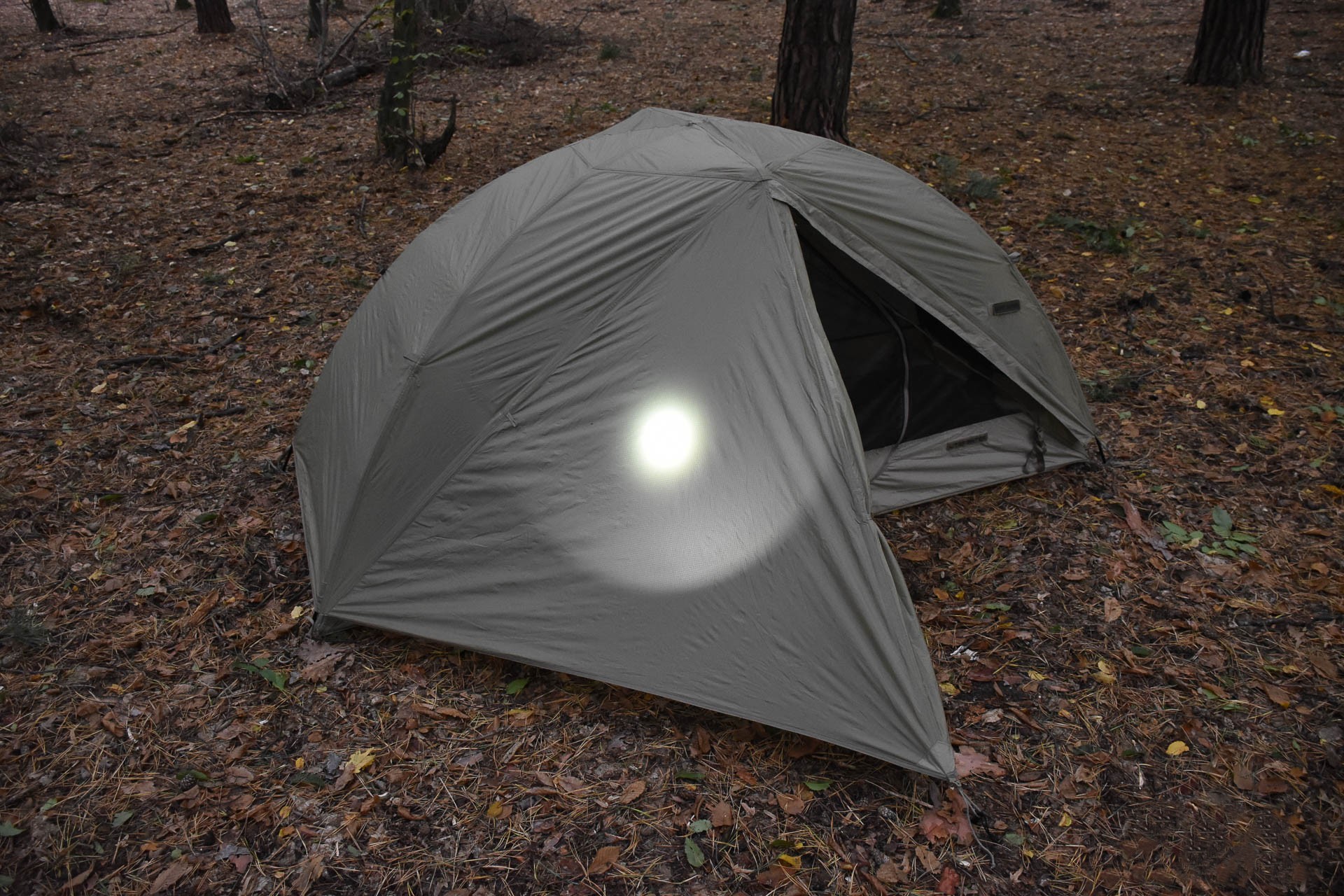
A Disadvantage Worth Noting
There is one thing that might not suit everyone – the lack of "blackout" properties. A flashlight beam from the inside is clearly visible from the outside. For tourism, this isn't critical. But if it's a combat shelter, you’ll need to manage your light discipline. This isn't a design flaw, but a matter of discipline.
Even a faint light at night is visible for hundreds of meters, and even further through optics. That’s why in combat conditions, light discipline is more important than comfort.
In short: the Litefighter 1 is one of the few options that truly live up to the concept of a "personal army tent without compromises." It is a full-featured military 1-man tent, a flexible personal shelter, and a practical tool for hiking, hunting, and tactical tasks. While it’s not perfect, it is very close to the "gold standard" many have spent years looking for.

Igor Ivandikov — author of the article
Project Manager
Has over 2 years of experience working in the field of camping equipment. Well-versed in products for tourism, camping, and outdoor recreation.
Responsible for coordinating projects, monitoring deadlines, and ensuring the quality of task completion.
He enjoys football (soccer) and billiards, participates in competitions, and has won prizes on numerous occasions. He is a fan of active recreation.
FAQ. Answers to Frequently Asked Questions
1. What is the Litefighter 1 in simple terms?
2. Is it suitable for hiking, and is it truly a four-season solution?
3. How is it better than civilian tents?
4. Can it be used as a tent cot?