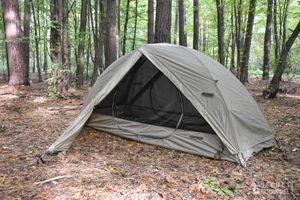
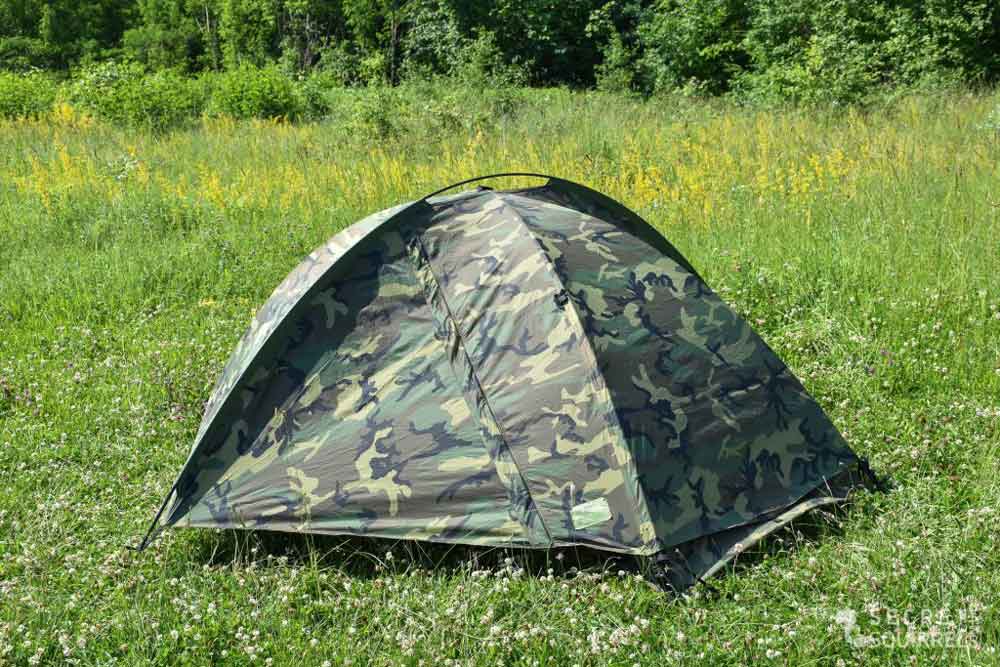
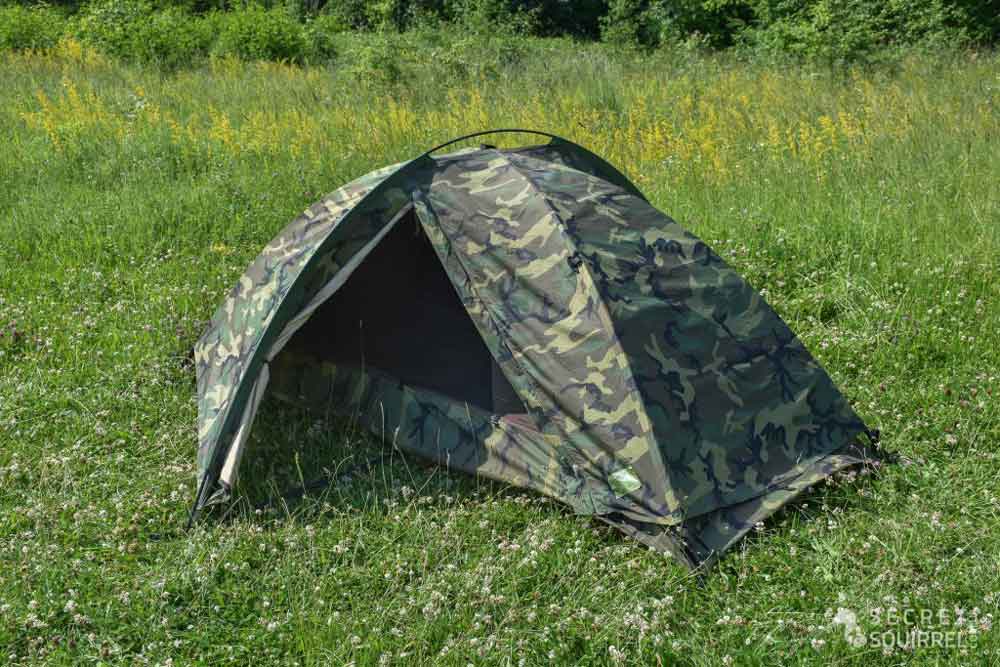
When it comes to survival and a soldier's comfort in the field, compromises are unacceptable. The Eureka Tent Combat One Person (TCOP) single-person modular tent is not just a commercial tent in a protective color, but a full-fledged element of combat gear. It is officially part of the individual bivouac equipment of the US Marine Corps (USMC) and the US Army.
In this review from the Punisher military store, we will break down why this contract tent remains one of the best solutions for military personnel, volunteers, and enthusiasts of reliable tactical gear.
Legendary Quality Since 1895
The American company Eureka! Tent Company is a recognized giant in the shelter manufacturing industry. Since the late 19th century, the brand has been creating tents for extreme mountaineering, civilian camping, and military needs. With a powerful production base in the US, the company became a strategic contract supplier to the US Department of Defense (DoD).
Eureka! provides the Pentagon with both large-scale structures for forward operating bases (RDS and MGPTS systems) and group shelters for extreme cold (ECWT), as well as individual solutions. And it is the Eureka TCOP that stands as the most famous and widely produced representative of this line.
The Eureka! company supplied tents to the US Army as far back as World War I, and in 1963, it was in a tent from this brand that the first American mountaineers conquered Mt. Everest. The military TCOP has absorbed all of this century-long experience of survival in extreme conditions.
Technical Specifications of the Eureka TCOP
Before moving on to the field breakdown, let's look at the dry but impressive figures:
-
Design: Free-standing, 3-in-1 (three configuration options);
-
Capacity: 1 person + gear;
-
Floor Area: 28 sq ft (floor dimensions: 7 ft 11 in x 3 ft 5 in);
-
Interior Height: 2 ft 10 in;
-
Vestibule Area: 2 independent vestibules of 16.9 sq ft each (total protected area ~32.3 sq ft);
-
Packed Dimensions: 17.7 in (length) x 7.5 in (diameter);
-
Materials: Main tent body and floor — 70D Ripstop Nylon with polyurethane coating (98P material waterproof rating), breathable 40D nylon mesh;
-
Poles: Anodized aluminum from the legendary Easton brand;
-
Weight (tent, fly, poles): 7 lbs;
-
Color Options: Woodland/Desert Tan (reversible fly) or ACU/Tan.
The manufacturer of the poles for the Eureka TCOP – Easton – works so brilliantly with military aircraft-grade aluminum alloys (specifically the 7000 series) that their technological developments are used not only in tents and hunting arrows. At one time, Easton participated in the development of ultralight armor plates and structural frame elements for US military vehicles. So the frame of your tent has literal "aircraft" roots.
Package Contents and First Acquaintance
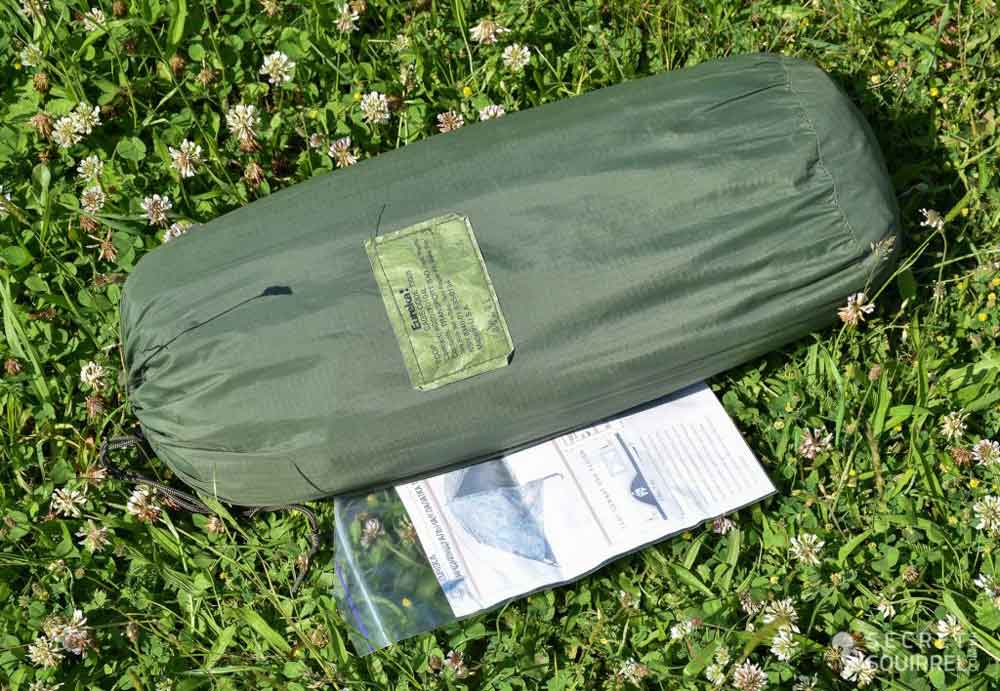
The tent is delivered in a durable cylindrical carry bag in Olive Drab color. The opening features a protective flap against dust and dirt with a reliable plastic cord lock.
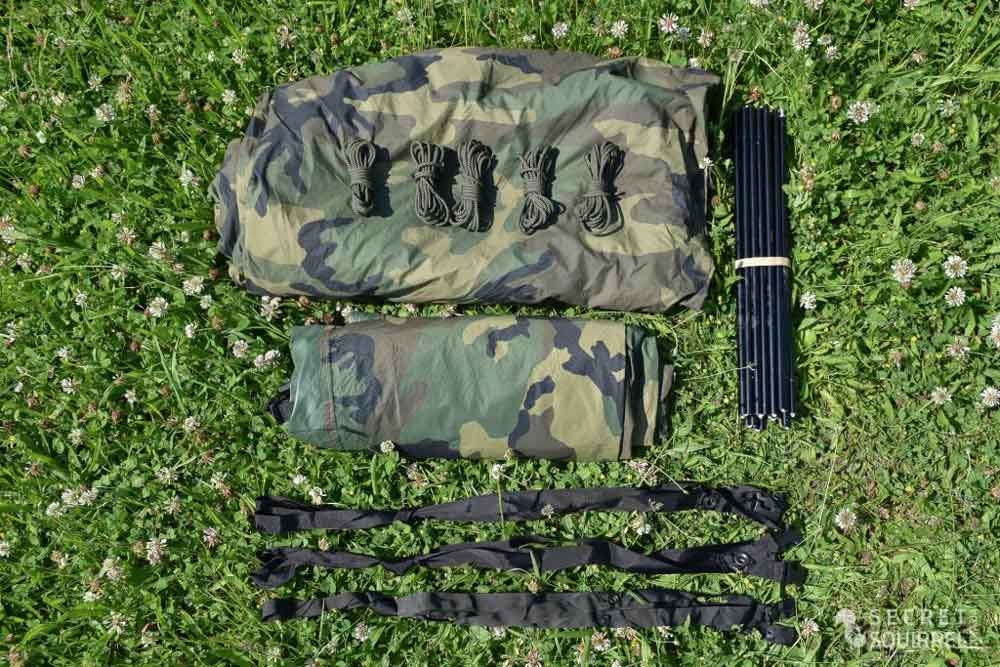
Inside the transport bag are:
-
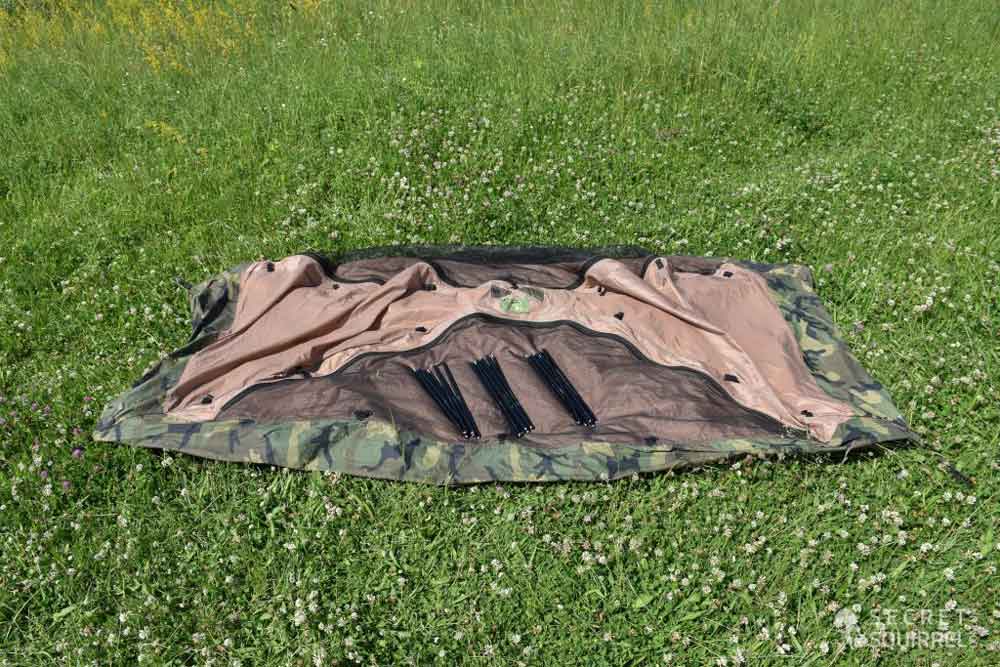
Inner tent module.
-
Reversible outer rainfly.
-
Three Easton aluminum poles.
-
Three straps (two with buckles measuring 8 ft 11 in long, one without buckles – 8 ft 10 in long).
-
Five guy lines for stormy winds.
Important note from Punisher experts:
Since original Eureka TCOP tents reach the civilian market in Ukraine primarily from US military surplus stocks (disposal, reserve updates) or directly from veterans, the configuration of used gear may vary. Sometimes stakes or a repair kit may be missing from the package. When buying from our online store, you always receive clear information about the condition of the item, along with professional advice in a language you understand.
Clever Design: From Floor to Frame
Easton Poles: Hunting Strength
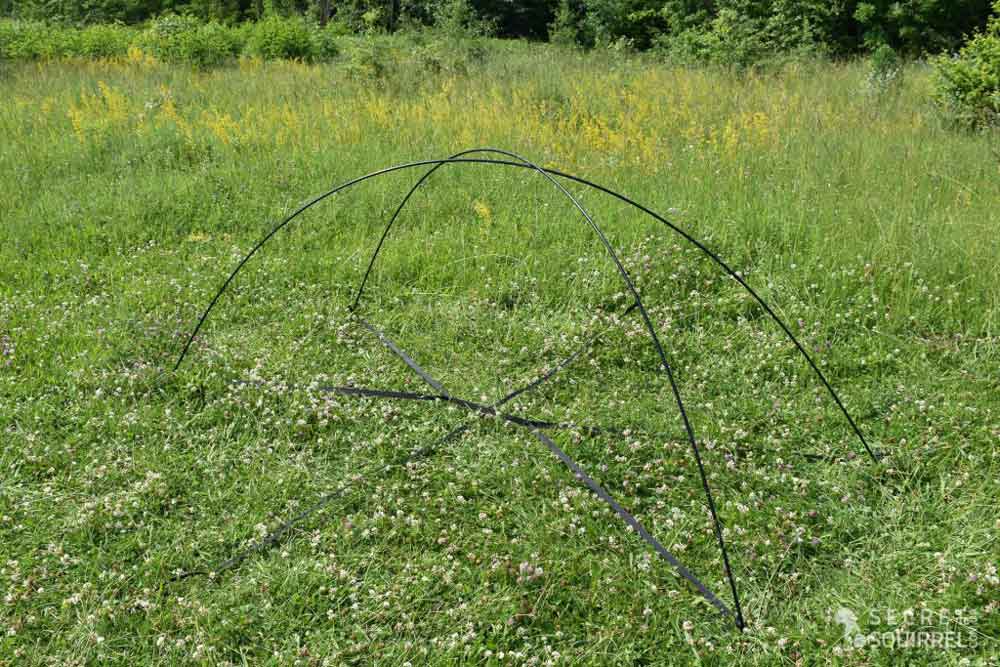
The tent frame consists of three poles measuring 11 ft 1 in long each. They are manufactured by the American company Easton – the world leader in the production of high-strength aluminum and carbon fiber archery arrows. The sections are connected by a frost-resistant elastic shock cord that does not lose its properties under the scorching sun or in bitter frost. The poles are resistant to deformation and hold their shape even under the weight of wet snow.
Quick Setup and Full Autonomy
The Eureka TCOP is a 100% free-standing tent. It can be deployed without a single stake on any surface: rocky ground, asphalt, snow, or even on a gym floor where a temporary deployment point has been set up.
The assembly process of the base module is as simple as possible:
-
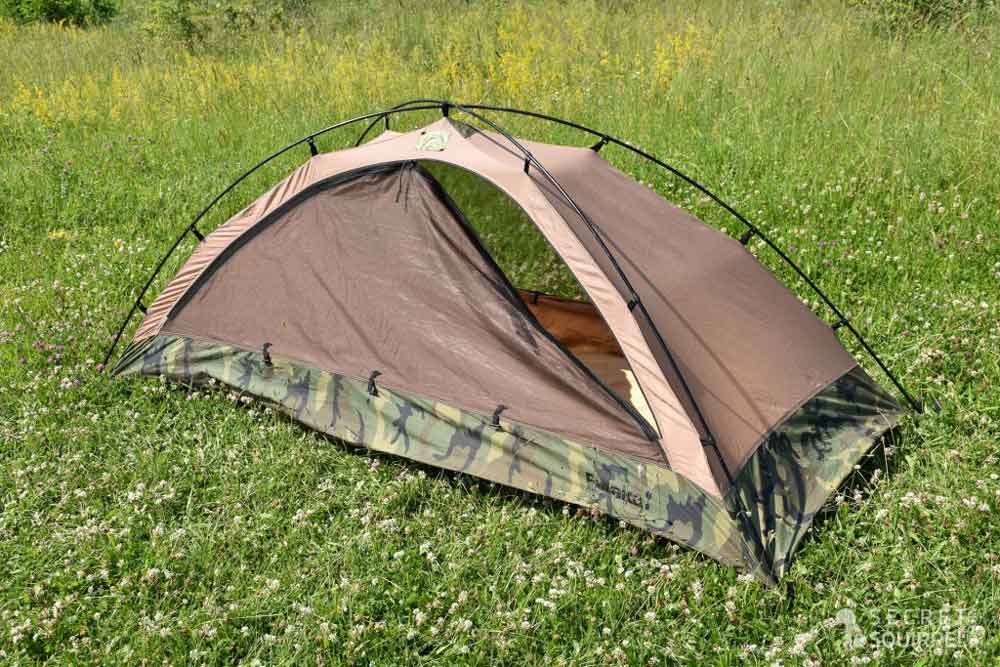
Two poles are assembled and inserted criss-cross into the corner grommets of the inner tent.
-
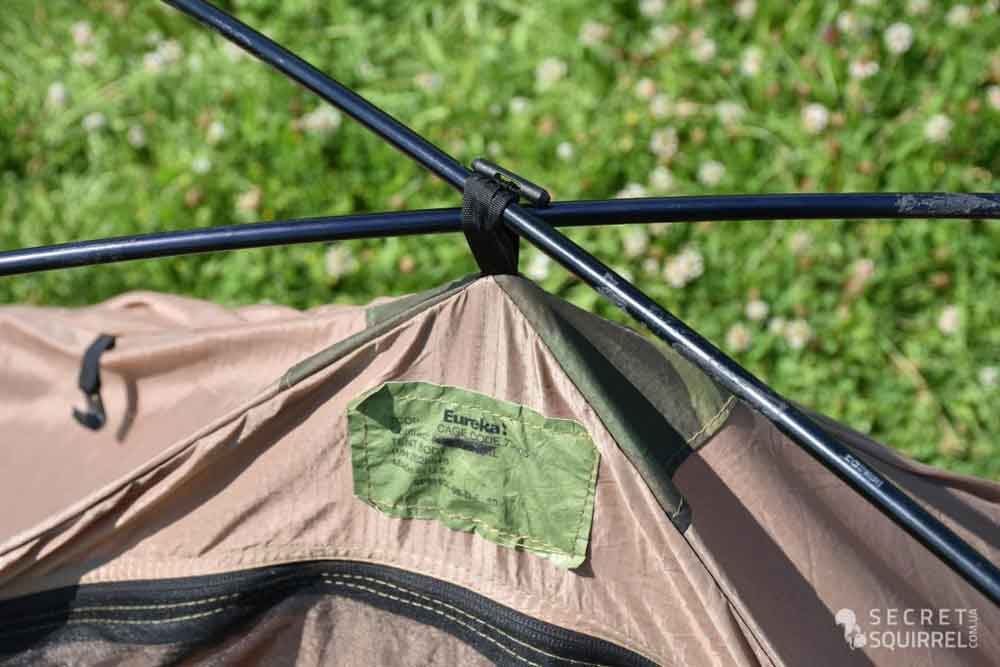
The peak of the tent is fixed in the center using a special loop with a plastic toggle button.
-
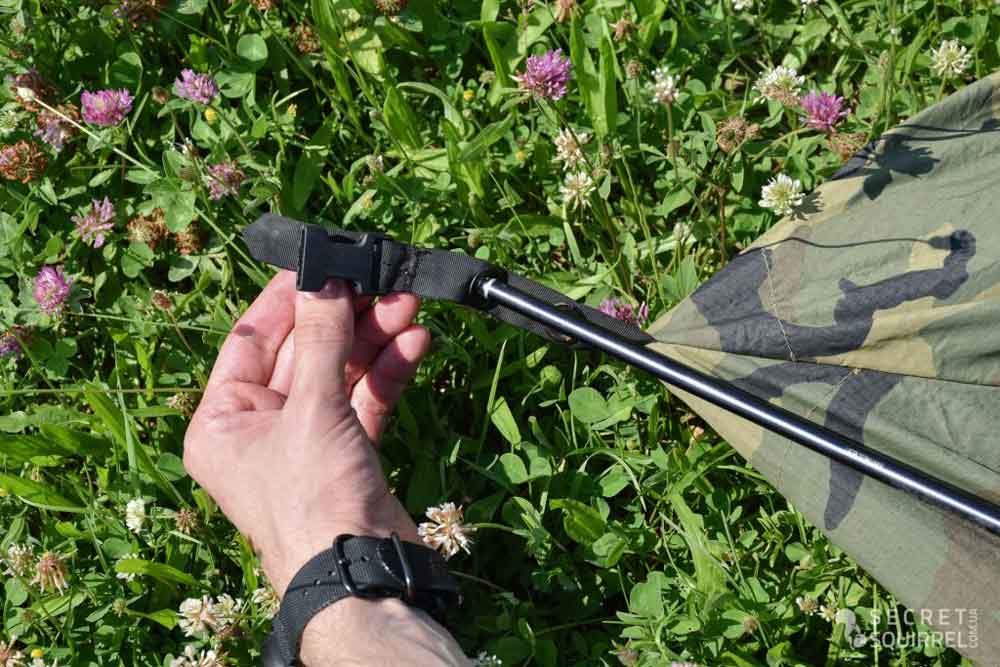
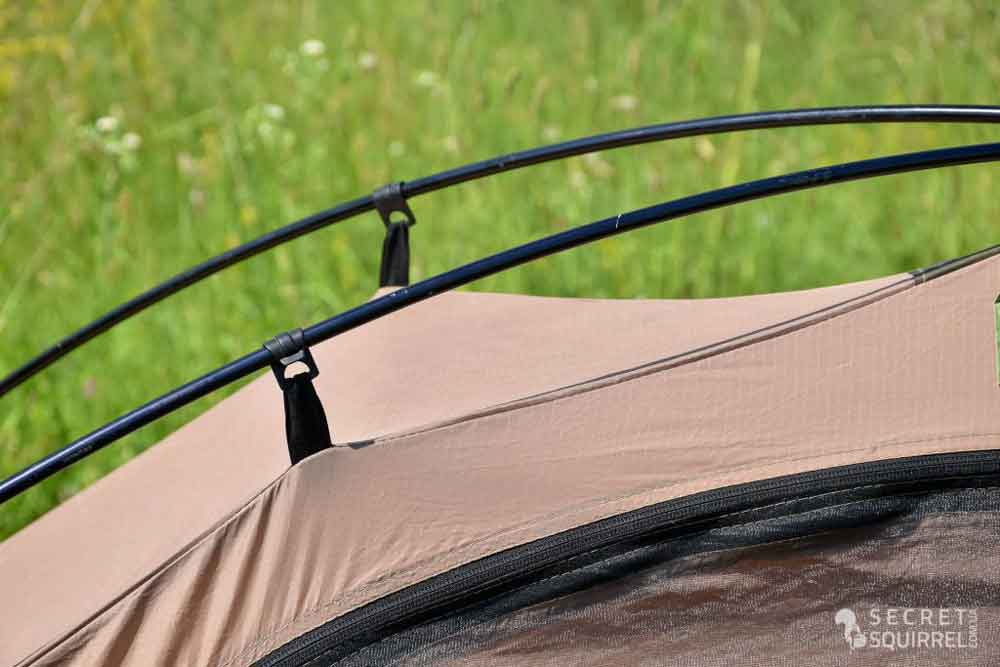
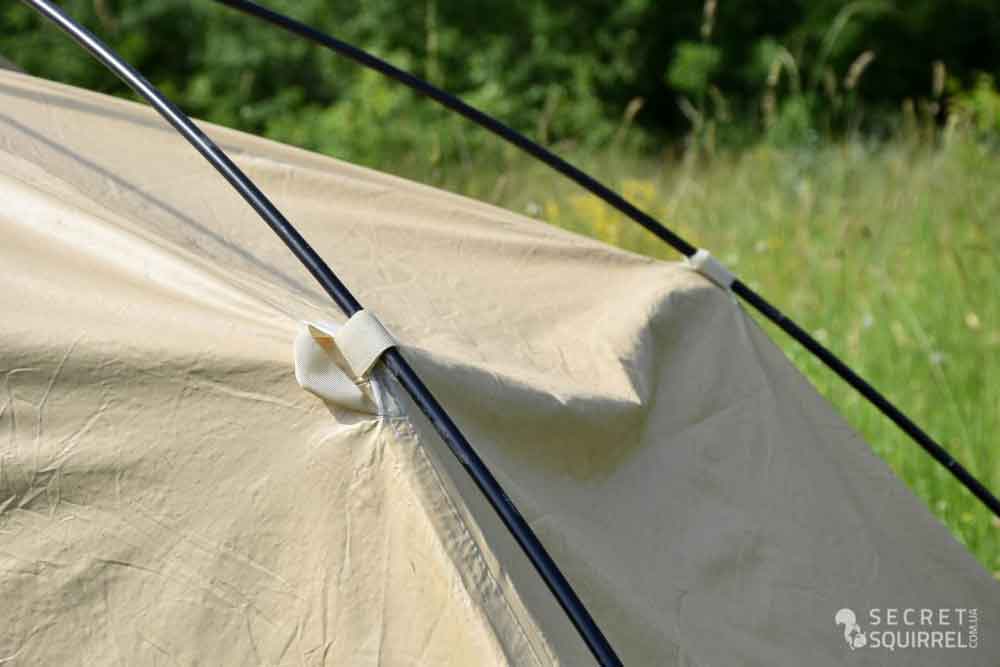
The fabric seams of the canopy are attached to the poles using durable plastic clips.
Comfort and Insect Protection
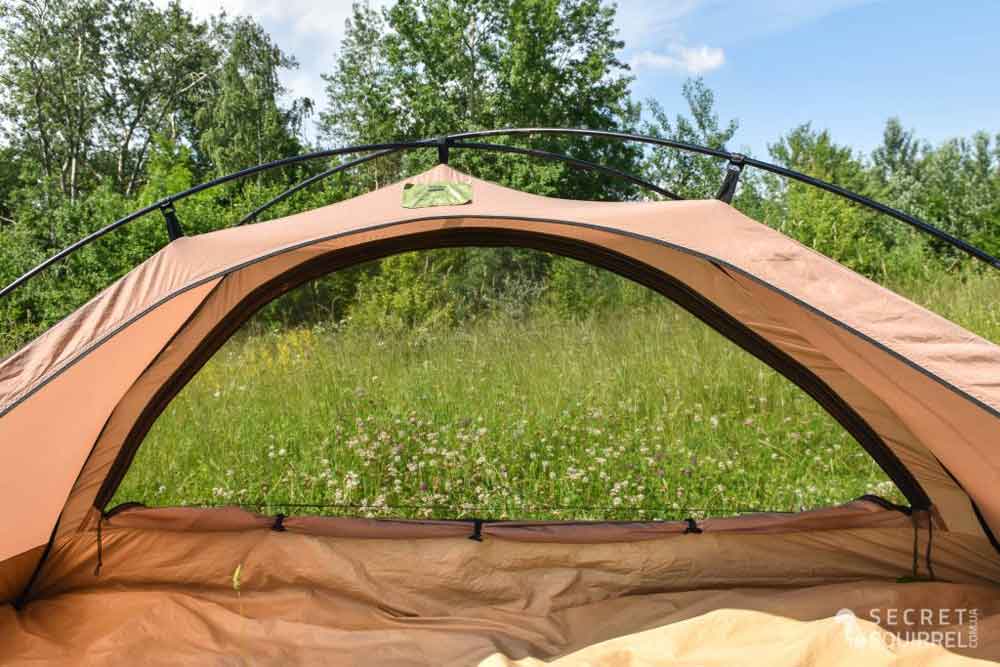
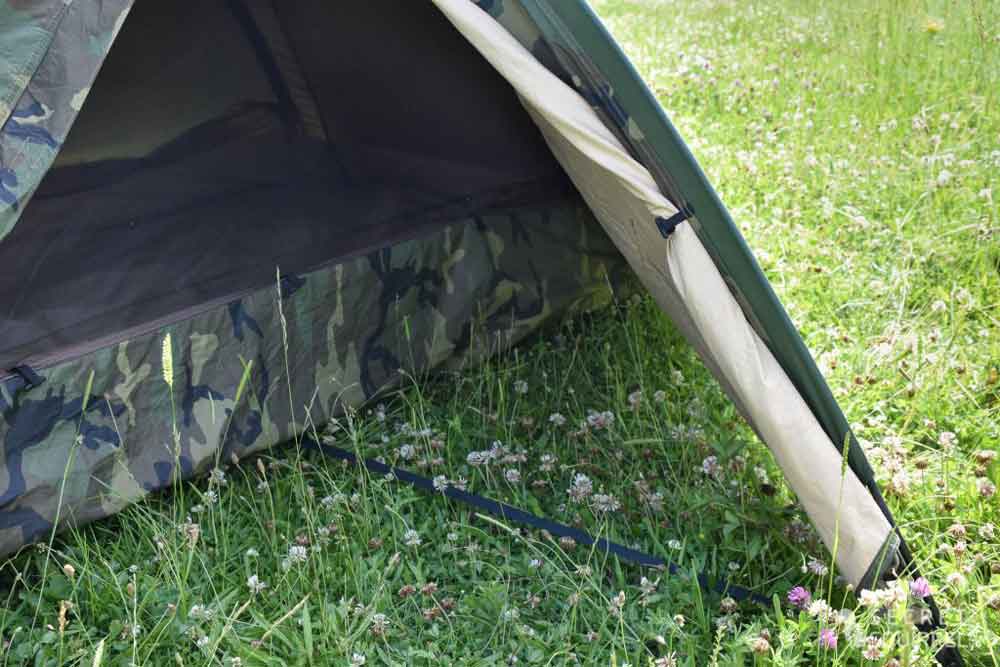
The living space (7 ft 11 in x 3 ft 5 in) allows even a tall soldier in full gear to accommodate comfortably. The floor is made in a "bathtub" style – its seams are raised several inches off the ground. This guarantees that water, dust, dirt, or crawling insects will not get inside.
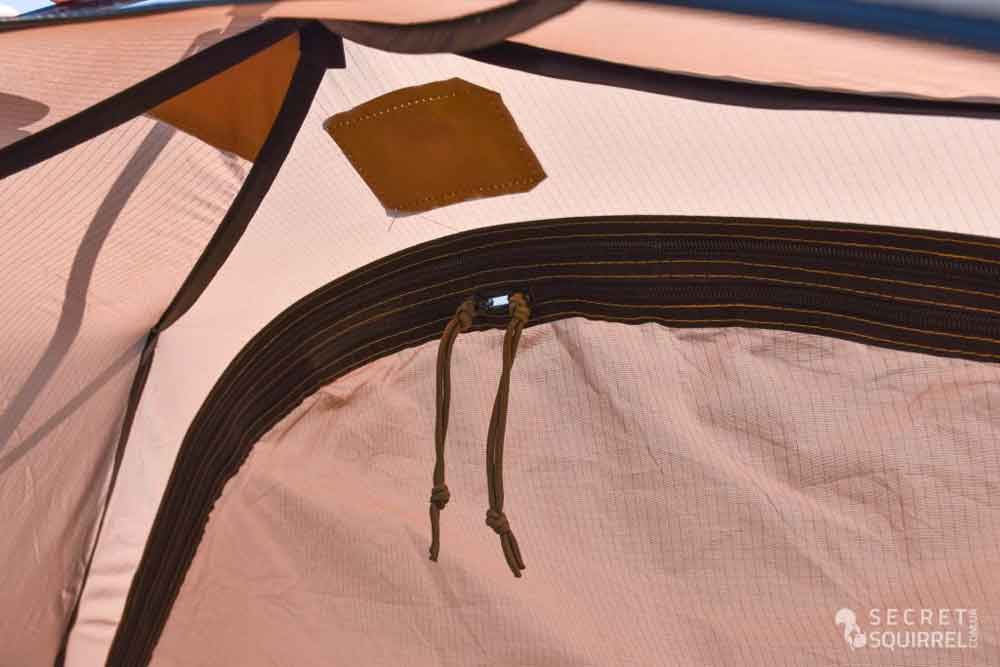
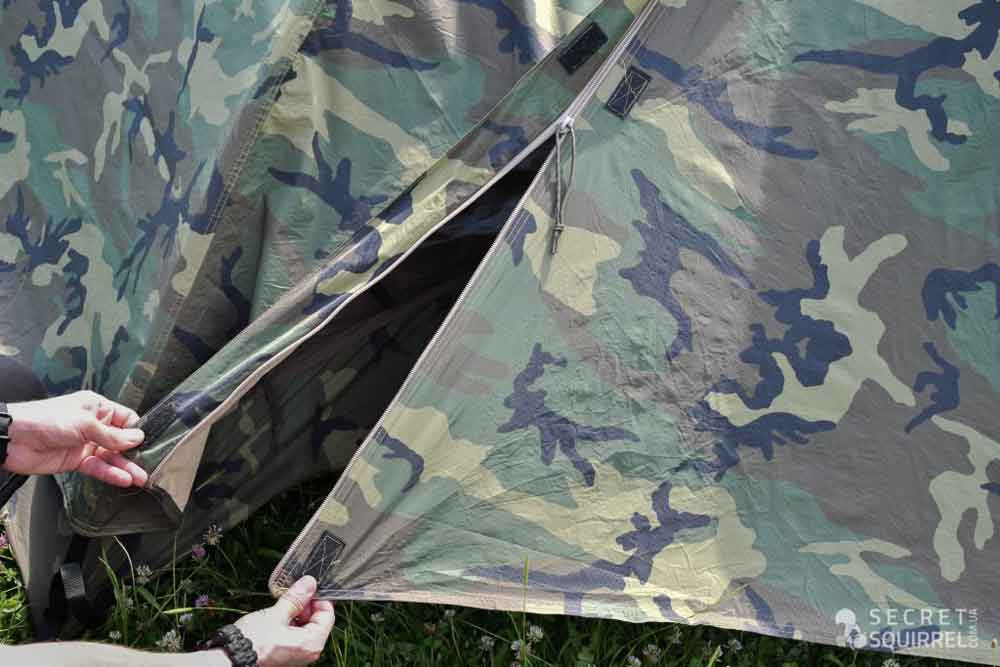
The tent has two huge semi-circular doors (5 ft 9 in x 2 ft 2 in) on both sides. Two-way zippers with long pullers allow the fabric flaps to be fully opened, leaving only the protective 40D nylon mesh. On a hot summer day in Ukraine, this provides perfect cross-ventilation without the risk of being bitten by midges or mosquitoes.
Among US Marines (USMC), there is an unofficial life hack for extreme crossings over small water obstacles. If you tightly wrap a pile of bulky gear and backpacks inside the removed outer rainfly of the Eureka TCOP, tie it securely with guy lines, and seal the flaps, you get an improvised waterproof "float." Thanks to the high water-repellent properties of the fabric, such a bundle can stay afloat while the soldier swims across the river.
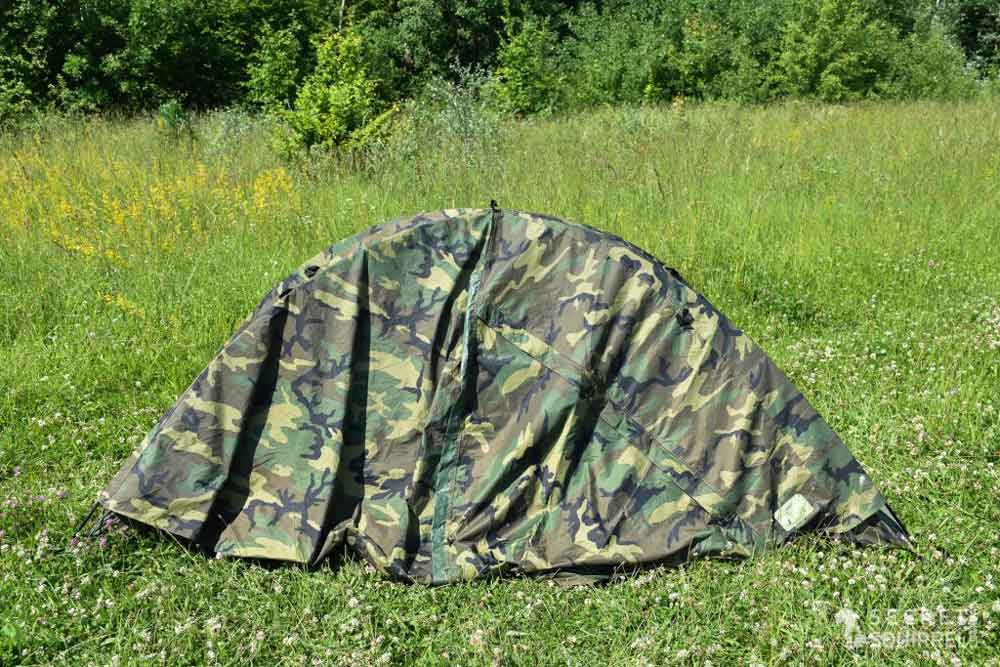
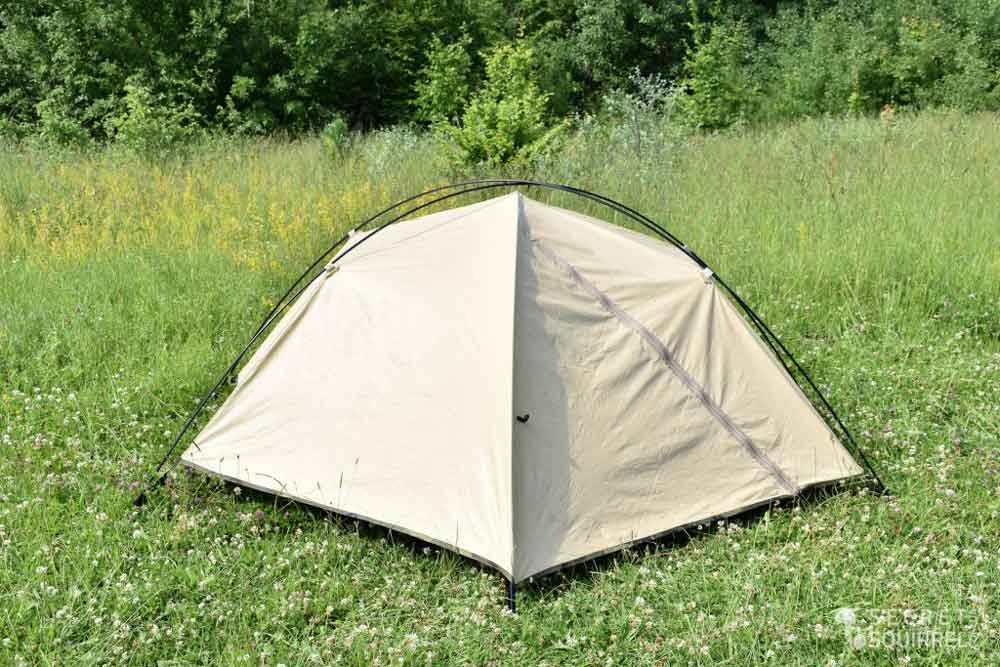
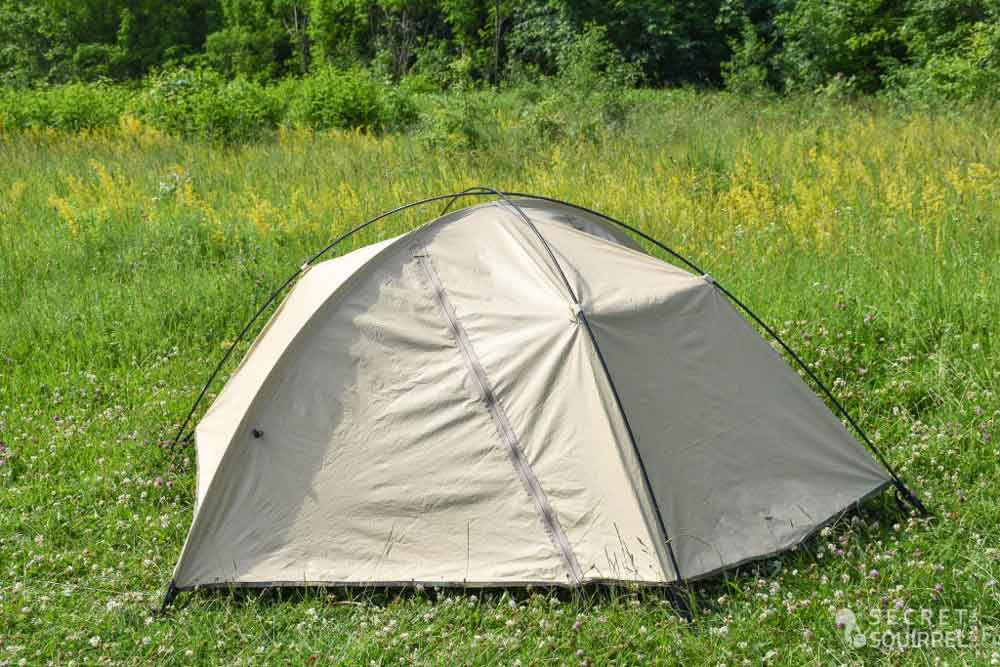
Reversible Rainfly: Camouflage and Light Discipline (Blackout)
The outer rainfly of the Eureka TCOP is a masterpiece of military engineering. It is made of thick fire-retardant Ripstop nylon with factory-taped seams. In addition to heavy rain protection, this material possesses unique tactical properties:
-
Light Discipline (Blackout): The high density of the fabric allows virtually no light to pass outward. You can freely use a tactical flashlight or a tablet inside the tent at night – the position will remain invisible to the enemy.
-
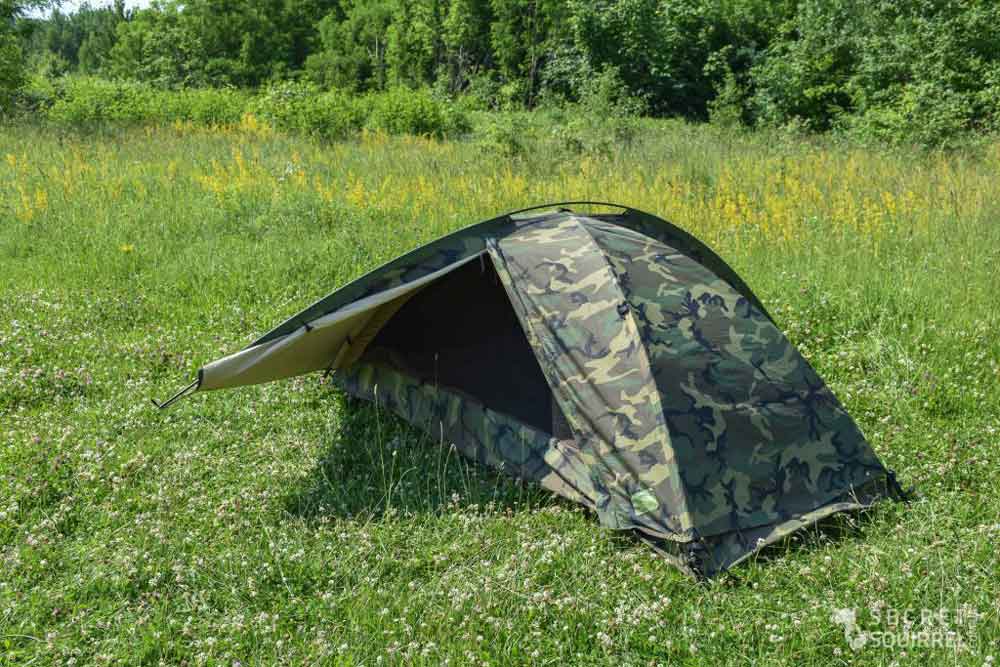
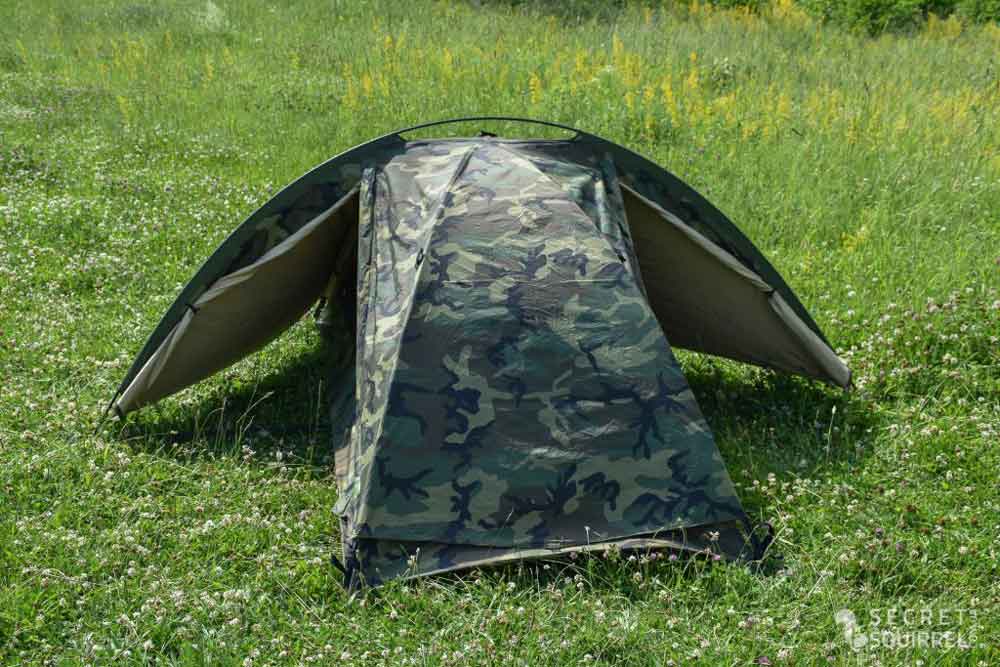
Reversible Coloration (Woodland/Desert Tan): The fly can be flipped inside out. Need to camouflage in a forest or "greenery"? We use the Woodland side. Did the theater of operations shift to a sandy or steppe environment, or has a hot summer arrived? Flip the fly with the Desert Tan side facing out. Furthermore, the light color reflects sunlight beautifully, preventing the tent from overheating during the day.
Important: The capability for reversible color transformation is only available in the Woodland/Desert Tan version. The ACU color modification has the same pattern on both sides.
Condensation Management and Climate Control
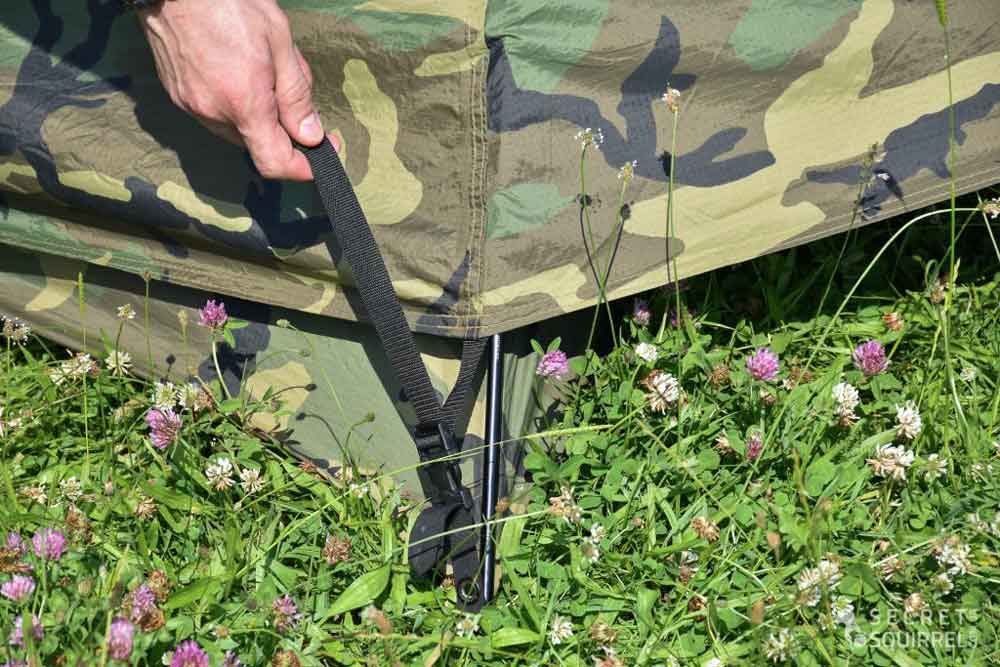
The rainfly attaches to the inner tent using side-release buckles (fastex). The adjustment straps have a range of up to 10 in. This gives the soldier a climate control tool:
-
Need more fresh air and less condensation? Loosen the straps, increasing the gap for ventilation.
-
Did a storm or strong crosswind start? Tighten the straps as close to the ground as possible.
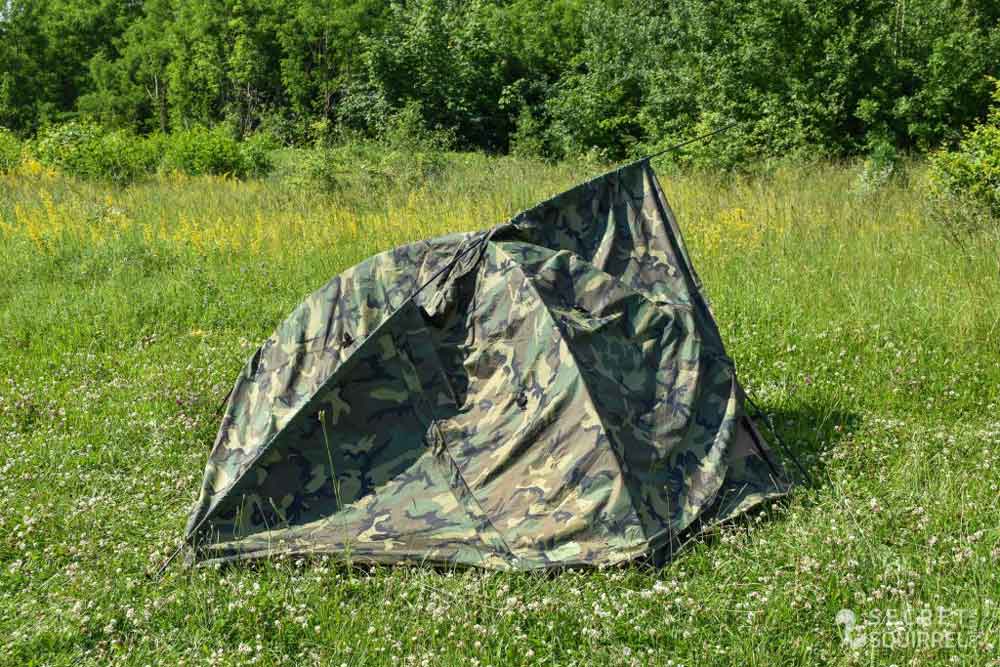
The third (transverse) Easton pole inserts directly into the rainfly and forms two spacious, fully symmetrical vestibules with a 2 ft 4 in overhang.
A Life Hack from Punisher for Stakeless Configuration
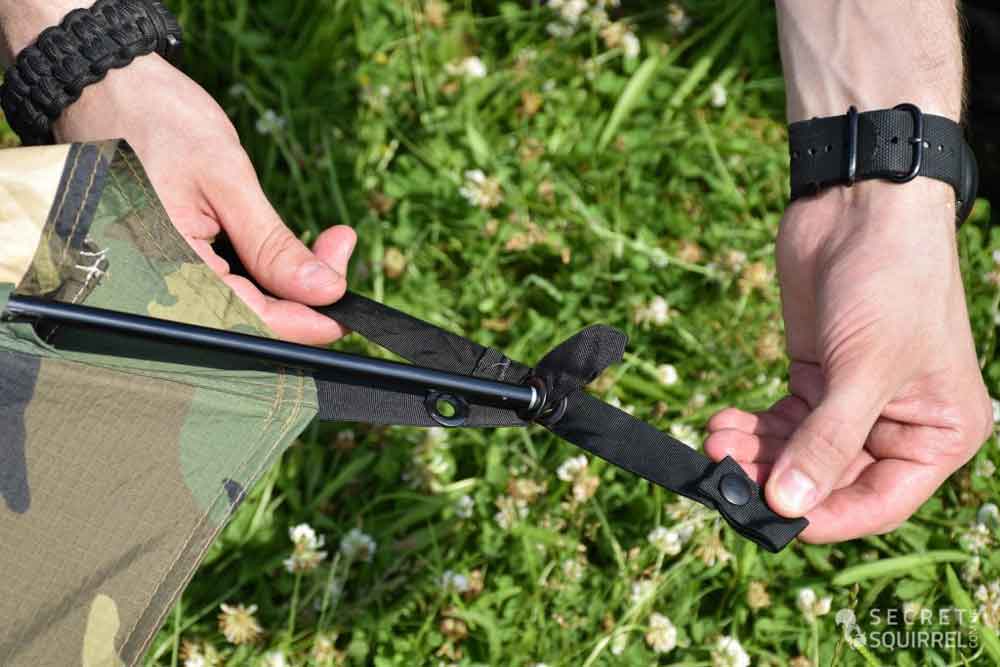
If the tent is pitched without being staked down to the ground, opening the vestibule zipper will cause the tension of the transverse pole to try to pull the edge of the fly upward. If it is raining, water can wet the gear in the vestibule. To avoid this, use the third strap from the kit (the one without buckles). Run it under the tent floor and secure the ends of the transverse pole into it – it will act as a reliable limiter.
Due to the extremely dense material of the outer rainfly and the special 98P polyurethane coating, the Eureka TCOP does not just provide a complete Blackout to the naked eye. It also effectively screens and diffuses the thermal radiation of the soldier's body inside. This significantly complicates the detection of the tent using civilian thermal imagers or drones with thermal cameras at long distances (faces and hot breath are reliably hidden under the canopy).
"Shed" Configuration (Desert Shelter)
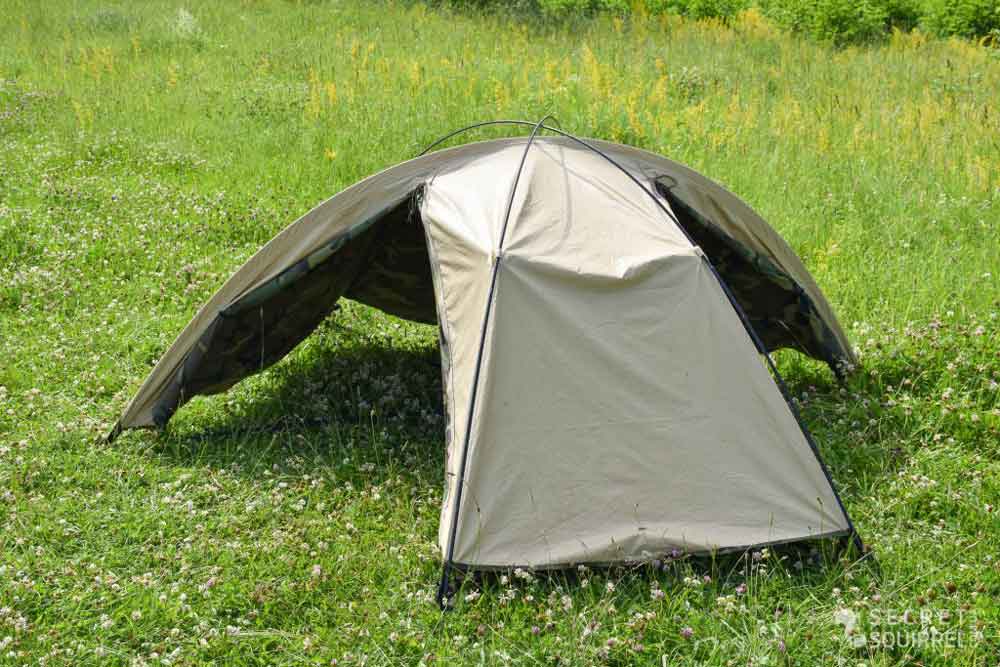
If extreme heat is expected and gear weight needs to be minimized, the Eureka TCOP can be set up without the inner living module.
To do this, only the poles, the outer fly, and the included straps (which snap together to form a hexagonal base for the frame) are used. The fly is turned Desert Tan side out, secured to the poles with Velcro, and transforms into a lightweight, excellently ventilated six-sided canopy that protects against the scorching sun and sudden rain.
The Eureka Tent Combat One Person (TCOP) is an uncompromising all-season individual shelter. Comparing it to another popular military tent – the Litefighter 1 – the Eureka inner module is simpler (it lacks interior pockets or gear lofts under the ceiling). However, the Eureka TCOP outer rainfly wins out substantially due to its thicker, fire-retardant Ripstop nylon, superior blackout properties, and unique reversible dual-use capability (forest/desert). It is a reliable "bunker" for one person, guaranteed to withstand harsh field operating conditions.

Igor Ivandikov — author of the article
Project Manager
Has over 2 years of experience working in the field of camping equipment. Well-versed in products for tourism, camping, and outdoor recreation.
Responsible for coordinating projects, monitoring deadlines, and ensuring the quality of task completion.
He enjoys football (soccer) and billiards, participates in competitions, and has won prizes on numerous occasions. He is a fan of active recreation.
FAQ: Answers to Frequently Asked Questions
1. What is the actual waterproof rating of the Eureka TCOP tent?
2. Can the Eureka TCOP tent be used in winter?
3. Why is the tent fly colored in two different patterns?
4. Why might stakes be missing from a used tent kit from military surplus?