In tactical medicine, there is equipment that does not need loud advertising. It simply does its job for years, where every second weighs more than beautiful presentations. The North American Rescue Talon II Model 90C semi-rigid litters belong precisely to such solutions – an evacuation platform used by the US military, NATO units, medical services, rescue workers, and tactical evacuation teams in various corners of the world.
If soft evacuation litters are a tool for quickly "snatching a wounded person from the jaws of danger" and dragging them across a few dozen meters under fire, then the Talon II 90C is the next step up. This is not about "getting them there somehow". This is about more stable, safer, more comfortable, and more technologically advanced transportation of the casualty from the point of primary pickup to a vehicle, stabilization point, field hospital, or MEDEVAC asset. Let's look at all aspects of its use together with a specialist from the Punisher military store right here.
Where the Capabilities of Soft Litters End – and the Purpose of the Talon II 90C Begins
Soft litters work perfectly on a short evacuation shoulder: pulling a wounded person out of cover, moving them from the red zone to the yellow zone, transferring them through a narrow passage, or loading them into a vehicle. But as soon as the distance increases, the terrain becomes uneven, and the casualty has armor, gear, weapons, wet clothes, and fatigue on top of everything – all the romance of the "lightweight solution" ends very quickly.
The problem with soft litters is that they provide mobility but do not provide sufficient rigidity. The casualty literally "sinks" in the canvas, the carriers get tired faster, and any prolonged evacuation turns into a strength test. This is exactly where the North American Rescue Talon II Model 90C looks like a logical development of the concept: they remain relatively compact but already work as a full-fledged semi-rigid evacuation system.
What is the NAR Talon II Model 90C, and Why are These Litters Considered a TACEVAC Classic
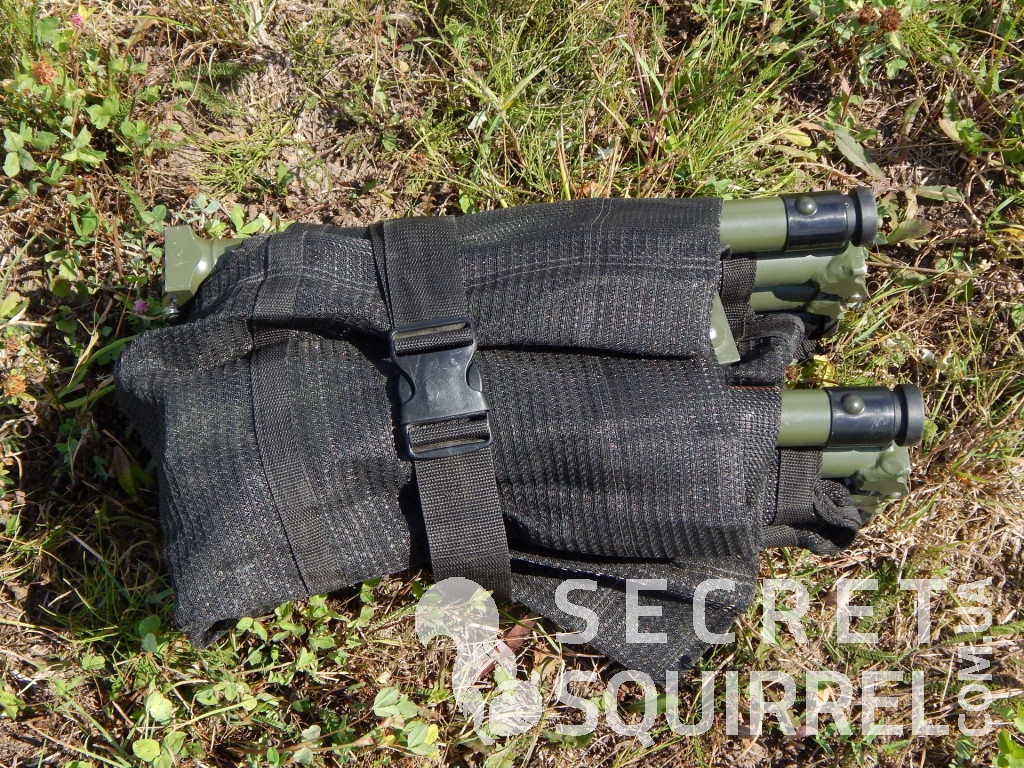
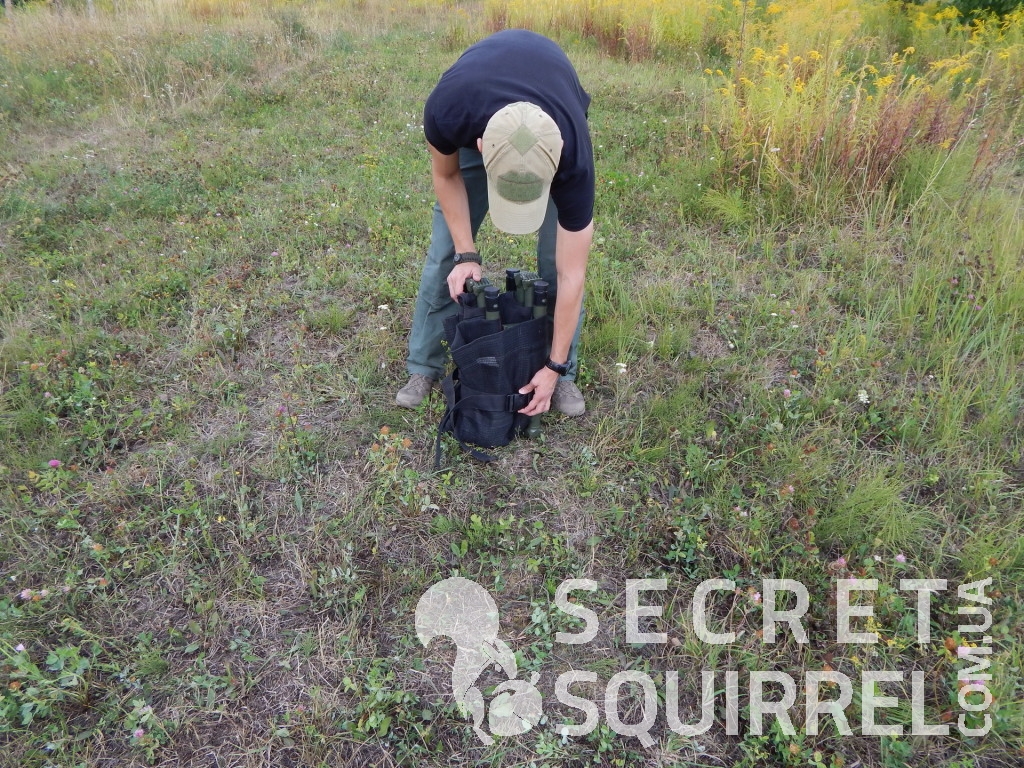
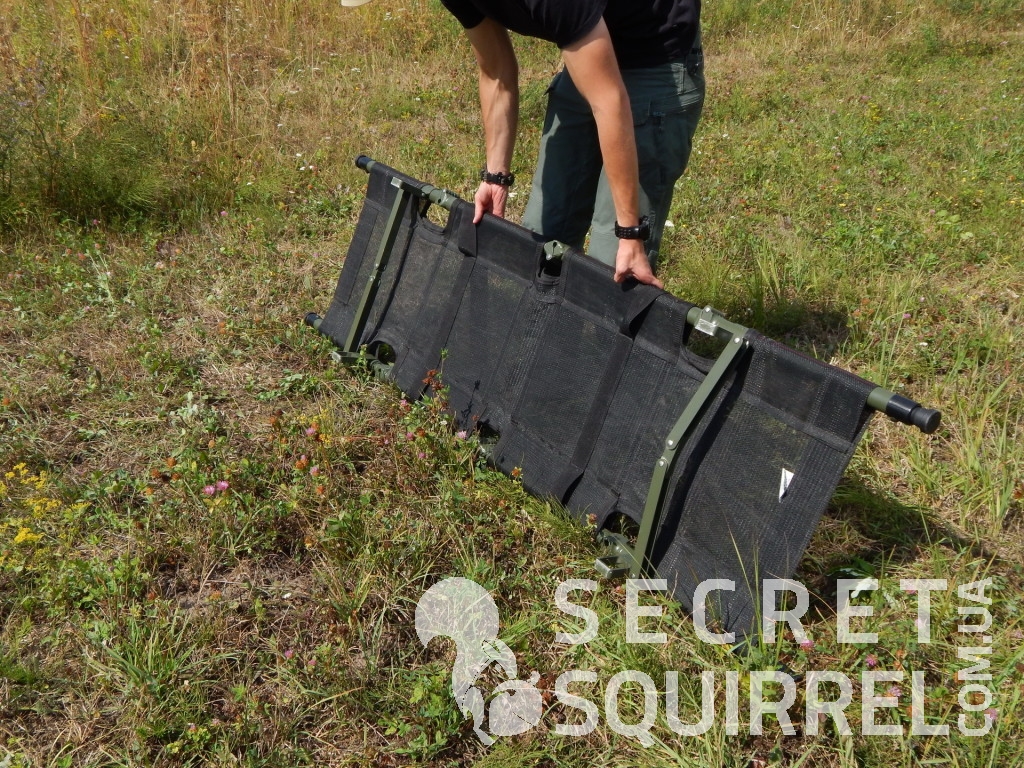
The Talon II Model 90C is a folding semi-rigid litter with a four-section design, rigid elements, folding ergonomic handles, and a polymer canvas that is not afraid of moisture, biological fluids, and harsh field conditions. The model was created under US Army requirements as a compact evacuation system suitable for operation in narrow vehicle compartments, and after unfolding – compatible with standard NATO transportation formats.
Key Characteristics of the NAR Talon II Model 90C
-
Type: semi-rigid folding evacuation litter
-
Manufacturer: North American Rescue
-
Dimensions when folded: 20.5 × 8.7 × 9.4 in
-
Dimensions when unfolded: 90.2 × 22.4 × 5.9 in
-
Weight: 16 lbs 5 oz (7.4 kg)
-
Number of points for IV poles: 6
-
Patient securing straps: 2
-
Approximate static load according to the manufacturer: up to 1,800 lbs (816 kg)
Several commercial descriptions also indicate a payload of around 1,200 lbs (544 kg) – this is important to consider when cross-checking specifications between different sellers.
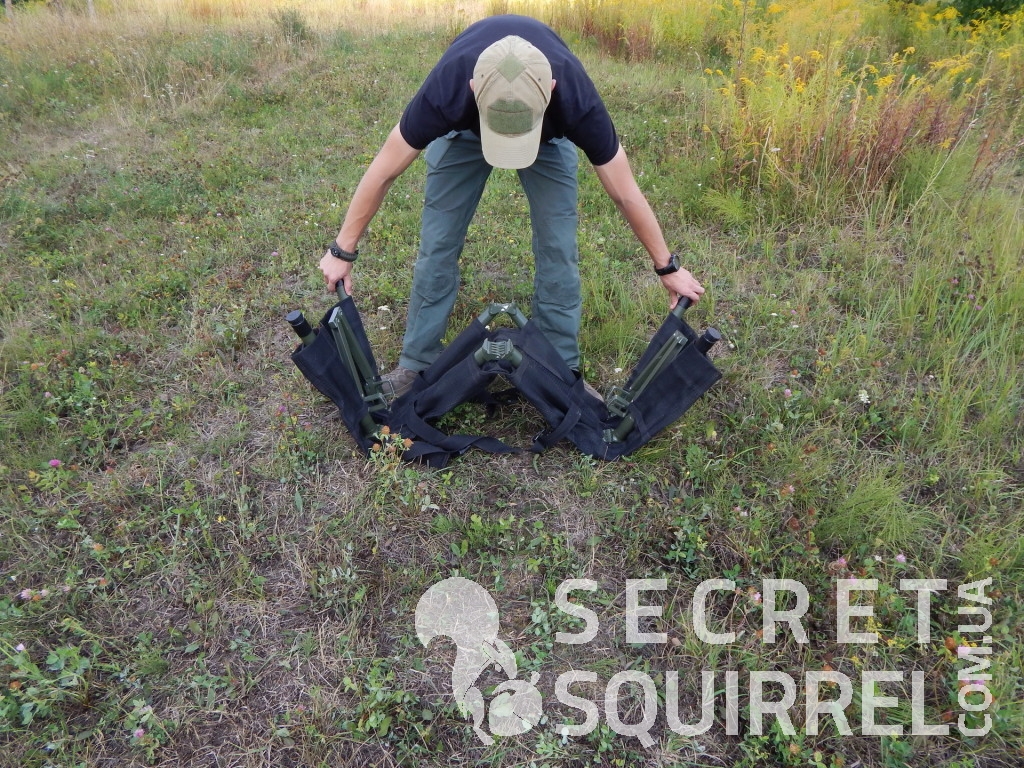
One of the key ideas behind the Talon was the ability to work in cramped vehicle compartments where classic bulky litters are simply inconvenient. When folded, the Talon takes up relatively little space, and after unfolding, it transforms into a full-fledged evacuation platform. That is why it is often viewed as a compromise between the compactness of a portable solution and the functionality of "adult" litters for transport and stabilization.
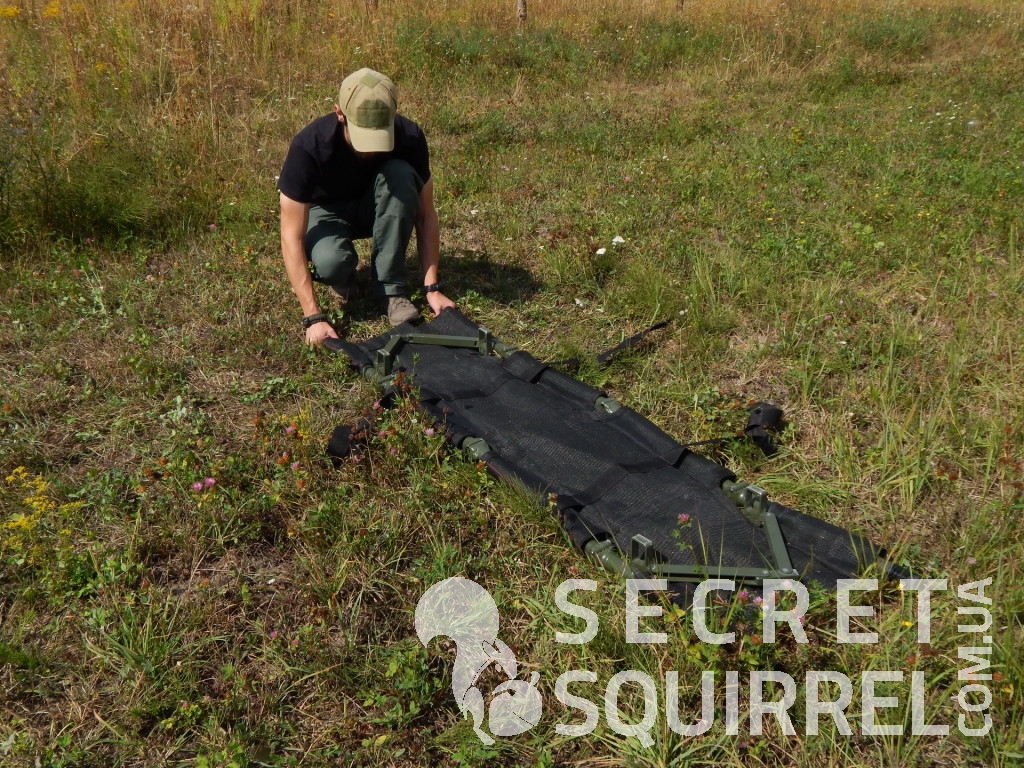
Design of the Talon II 90C: Where Their Strength Lies
1) Rigid elements and elevation above the ground
One of the main advantages of the NAR Talon II Model 90C semi-rigid litters over soft analogues is the presence of poles and feet that lift the casualty off the surface. In practice, this means not only a little more comfort, but also a very down-to-earth benefit: the person does not lie directly on wet ground, snow, cold concrete, or in grass that saps heat from the body faster than one would like.
In tactical medicine, the issue of hypothermia is not a decorative topic for textbooks. Even in the warm season, a wounded person who is losing blood, in a state of shock, or lying motionless for a long time is significantly more vulnerable to hypothermia. And while at the stage of emergency extraction under fire one sometimes has to act on the principle of "grab them first – think about comfort later," at the next stages of evacuation, it is better to provide the casualty with a more stable and isolated platform rather than just putting them on the ground.
2) Ergonomic handles instead of "pull it however you can"
Another strength of the Talon II 90C is its rigid folding handles. These are not textile loops that cut into the palms and force you to compensate for the weight with constant wrist tension. Here, full-fledged handles with an ergonomic shape are used, which give better control over the litter and reduce carrier fatigue during transport.
The practical plus is that it is easier for two people to work with rigid geometry than with a soft "sagging" design. The litter does not fold in the center under the casualty's weight as often happens with soft solutions, and the movement itself becomes more predictable – especially on stairs, in doorways, between the vehicle and the receiving department, in the back of an evacuation vehicle, or on rough terrain.
A separate plus – the handles fold away when they are not needed. For MEDEVAC crews, armored vehicles, ambulance transport, or civilian rescue vehicles, this is not a small thing, but a very tangible space saver.
3) Canvas that does not turn into a wet rag
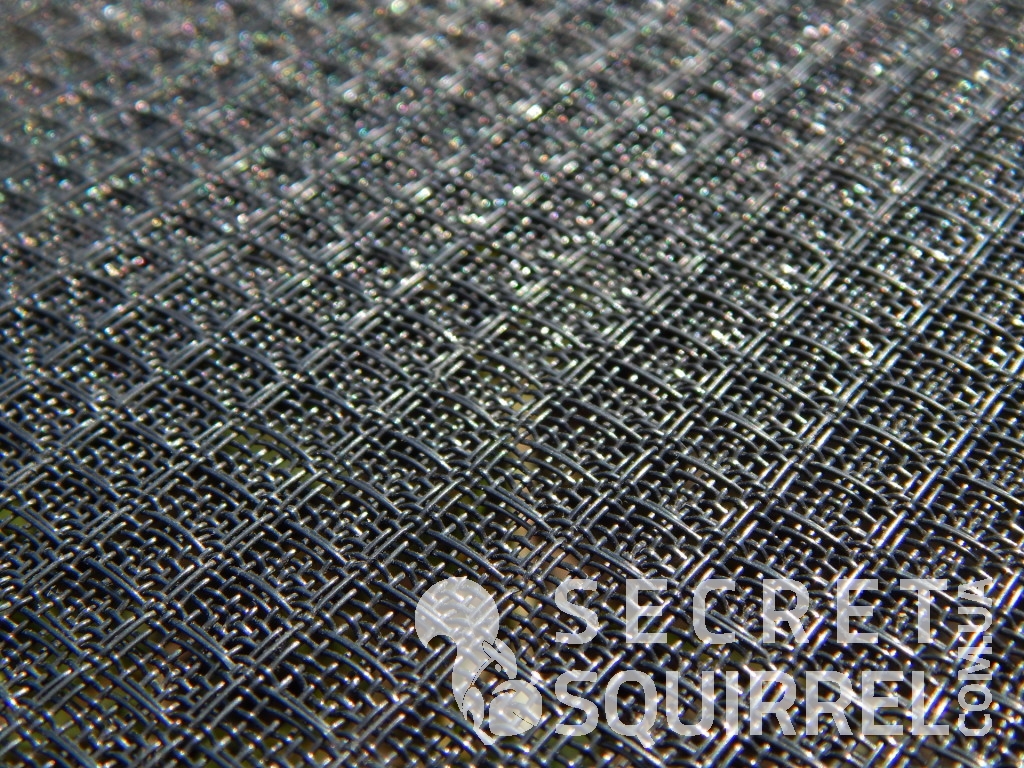
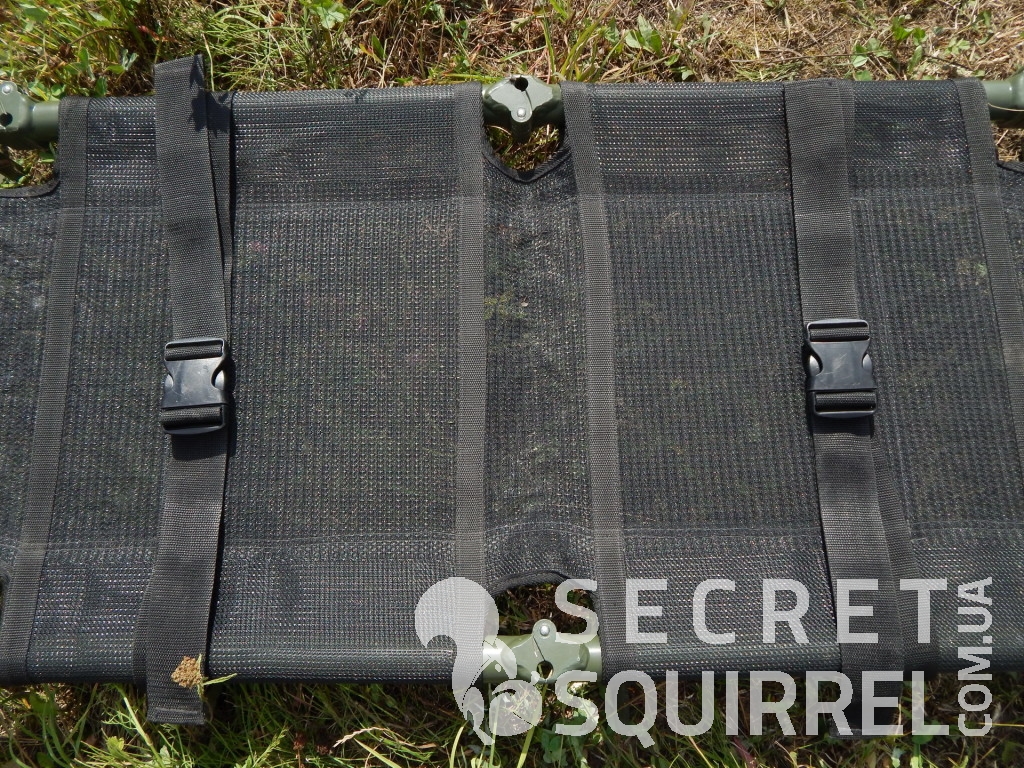
The main surface of the Talon II 90C is made of a durable polymer material with a 3D weave. This is one of those points that is easy to underestimate until you actually start using the litter in the field, rain, mud, blood, sweat, water, snow, dust, and everything else that any evacuation generously shares.
Such a canvas has several advantages at once:
-
does not absorb water or biological fluids;
-
is faster to clean and disinfect;
-
does not add extra weight after contact with moisture;
-
tolerates intensive field use better.
In other words, if soft litters after a difficult episode can resemble a wet tourist hammock, the Talon II 90C behaves much more pragmatically.
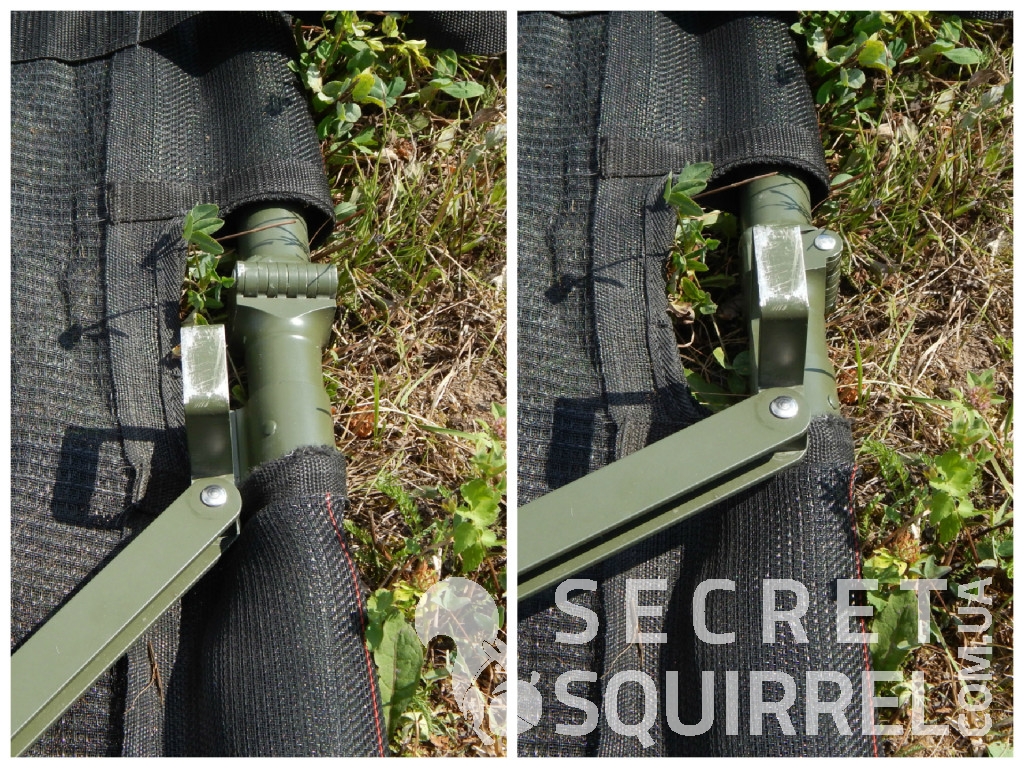
In open sources regarding this model, you can find two figures – around 1,200 lbs and up to 1,800 lbs of static load. The difference is explained by the fact that different sellers and reviewers sometimes operate with different parameters: some indicate the static limit, while others state a more conservative working load for practical operation. In any case, we are talking about a very durable platform designed for heavy patients, armor, gear, and a harsh operational mode.
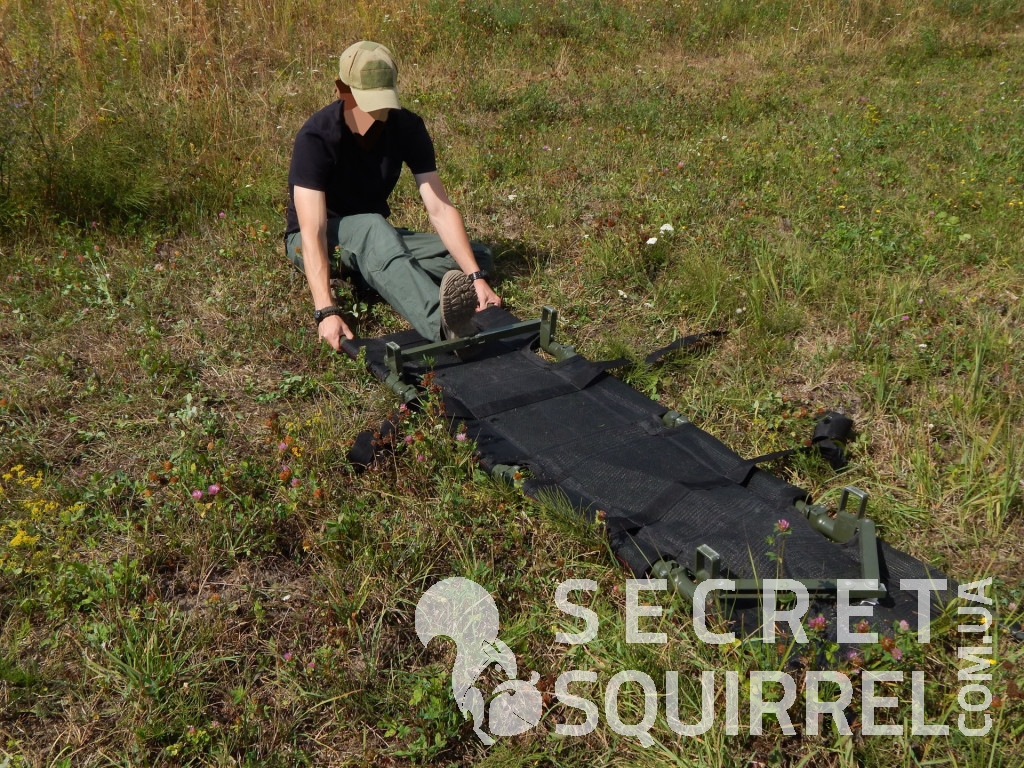
How the NAR Talon II Model 90C Unfolds
One of the reasons for the Talon's popularity is the combination of compactness with relatively fast deployment. When folded, the litter is convenient to store in vehicles, medical kits, or special bags, and deploying it does not require a separate engineering degree – although a few practice runs will certainly not hurt.
Basic unfolding logic of the Talon II 90C:
-
Undo the straps/fasteners holding the litter in its folded state.
-
Unfold the sections of the structure so that the litter opens lengthwise.
-
Align all joints, bringing the frame into its operational position.
-
Rotate the poles outward so that the system gains the necessary rigidity.
-
Lock the structural elements into the operational position.
-
Ensure that the litter stands feet down and the surface is ready to receive the casualty.
On paper, this looks simple – and generally, it is. But in real life, any evacuation gear should be unfolded and folded by hand more than once, bringing the process to automaticity. Because during exercises, on a training field, or in a real evacuation, you do not want to argue with the litter's mechanics when you already have a patient, darkness, mud, adrenaline, and someone's very loud voice in your ear.
Why is it important to practice unfolding in advance
Theoretically, the Talon II 90C can be quickly readied even by one person. Practically, however, it is much better when the team:
-
knows which elements to grab first;
-
understands how to properly orient the litter;
-
knows how to lock the frame without delays;
-
does not break the evacuation pace due to struggling with the mechanism.
In a good evacuation, the litter must be a tool, not a separate quest. This applies to all medical gear, which is useful only when supplemented by the skill to use it.
Patient Securing: A Small Thing That Decides a Lot
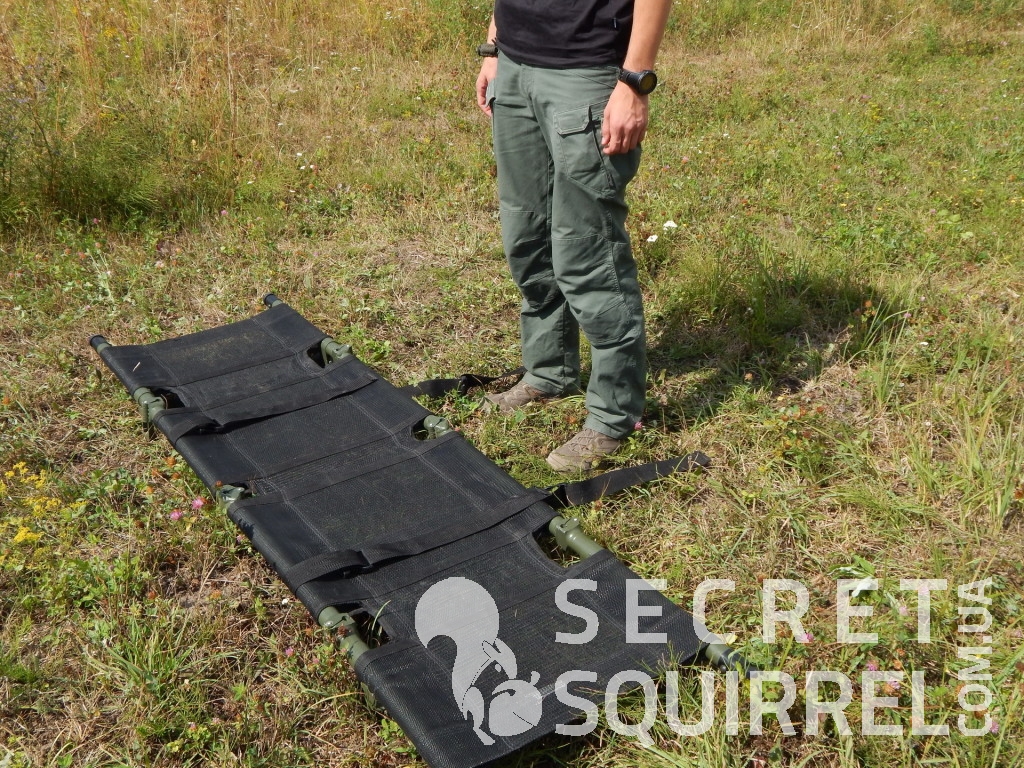
The Talon II 90C comes equipped with two patient securing straps. At first glance, a standard detail that is hard to imagine any litter without. But in operation, this is an important safety element, especially if the casualty needs to be carried over uneven terrain, loaded into a vehicle, carried down stairs, or transported further along the evacuation route.
Usually, the straps are used to secure:
-
in the chest/upper torso area;
-
in the hip area or above the knees.
In addition, the straps are useful for keeping a hypothermia blanket, extra insulation, or containment wraps in place if the patient needs to be transported in cold, rain, or strong winds.
6 Points for IV Poles – This is Practicality, Not Marketing
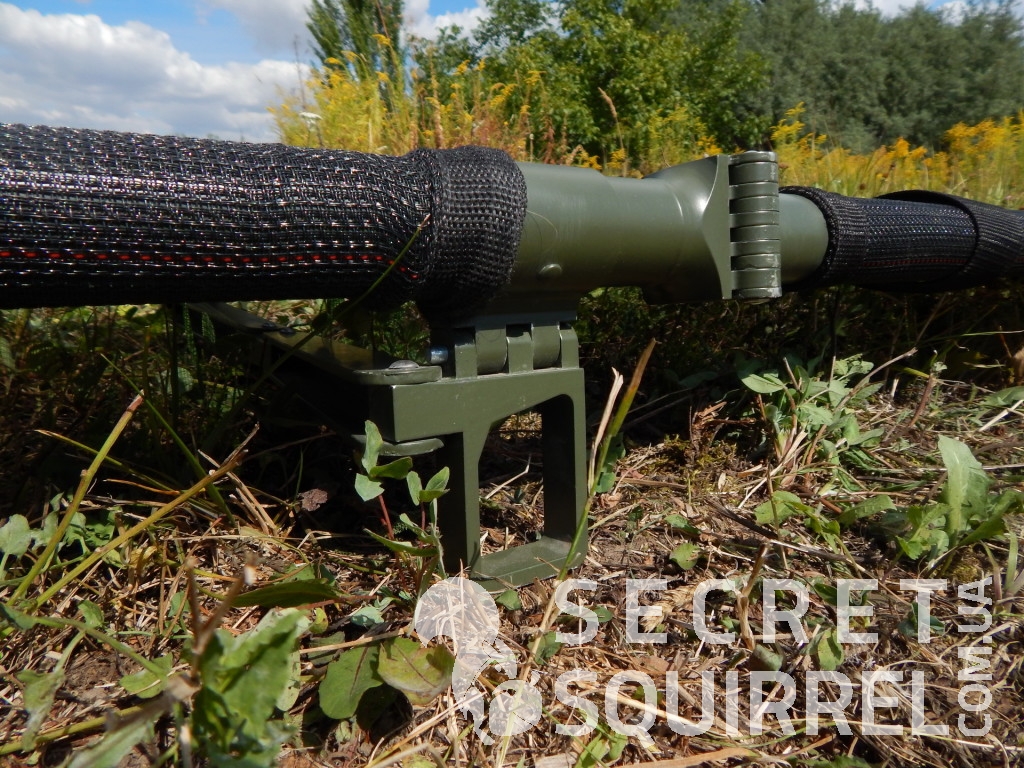
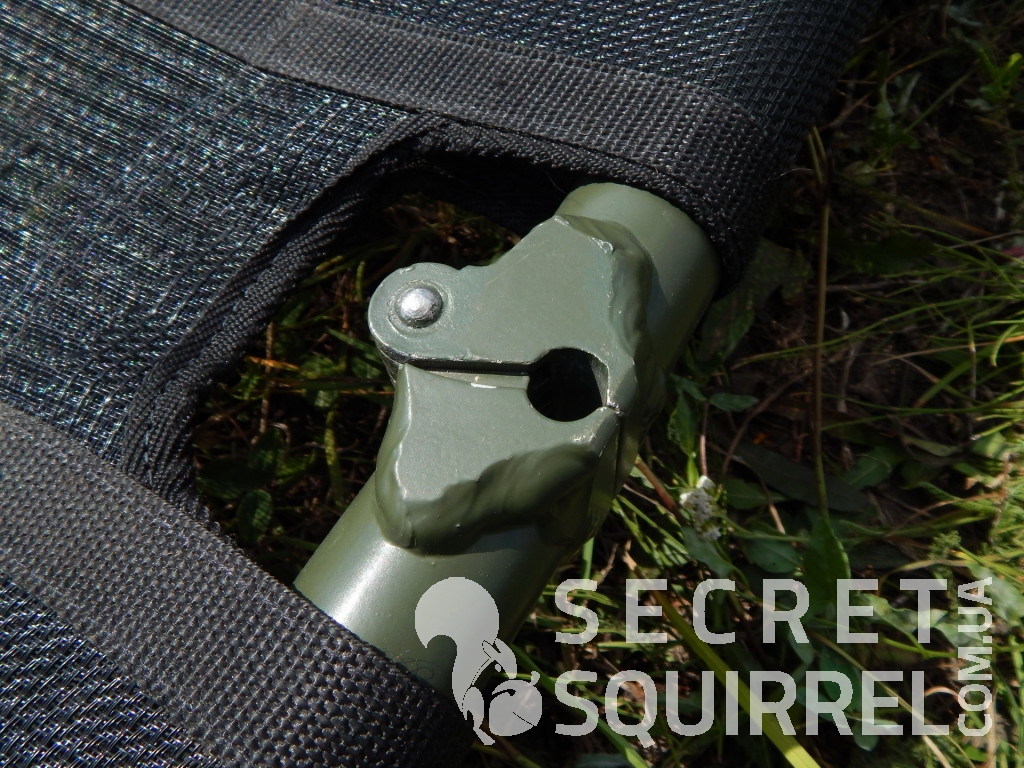
At the joint locations of the Talon II 90C structure, six attachment points for IV poles are provided. This means that the litter can work not only as a "carrying platform", but also as a more convenient base for transporting a patient who is already receiving infusion support.
For compatibility, the manufacturer offers its own accessories, but in field conditions, medicine has long learned to be creative. If necessary, temporary solutions for infusion are sometimes assembled from improvised means – though standard compatible elements are, of course, significantly more reliable and safer.
What Accessories are Compatible with the NAR Talon II Model 90C
One of the advantages of the North American Rescue Talon II Model 90C platform is not just the litter itself, but the ecosystem around it. Compatible solutions are available for the model, such as:
-
Talon Backrest for patient positioning;
-
carrying systems/harness solutions to ease the work of the carriers;
-
litters stands;
-
bags and backpacks for transporting the Talon II.
For a unit, an evacuation crew, or a rescue team, this means a simple thing: the Talon can be integrated into your own operational scenario, rather than adjusting the entire evacuation to a single litter format.
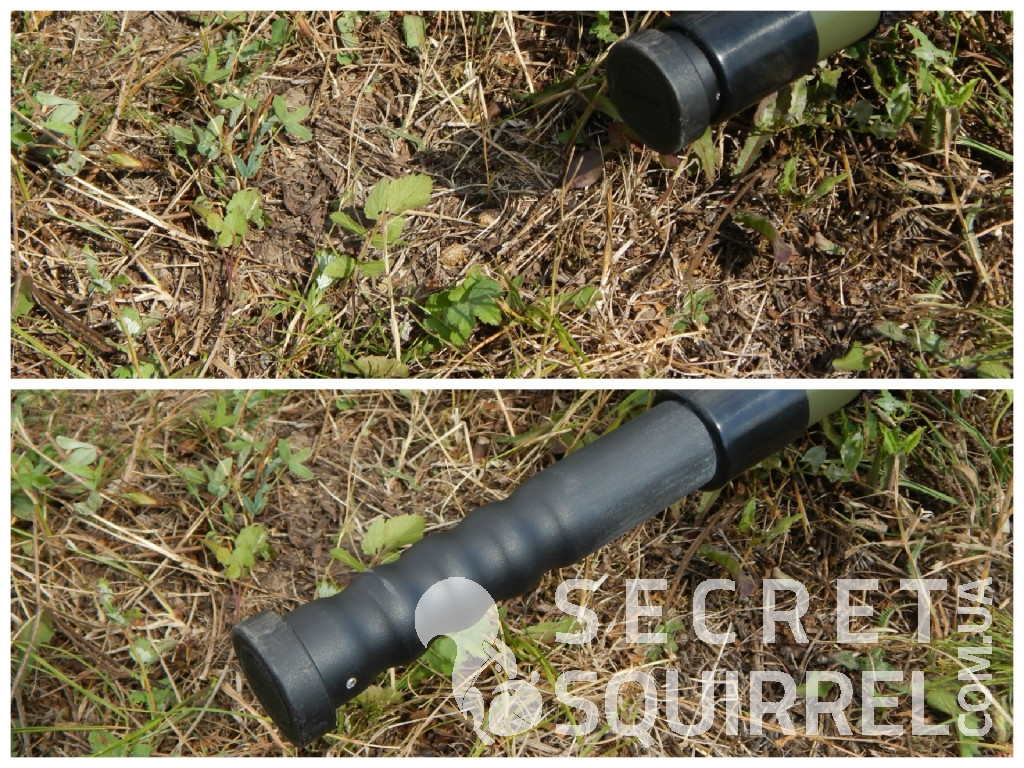
Due to its weight of around 16 lbs 5 oz, the Talon truly shines best where vehicles are available: evacuation cars, armored vehicles, helicopters, stabilization points, and rescue crews. But this does not mean it cannot be used on foot. It can – you just have to honestly understand the compromise: the more serious the litter, the more it "eats" into the resource of a group that is also carrying its own gear.
How Comfortable the Talon II 90C is for the Patient
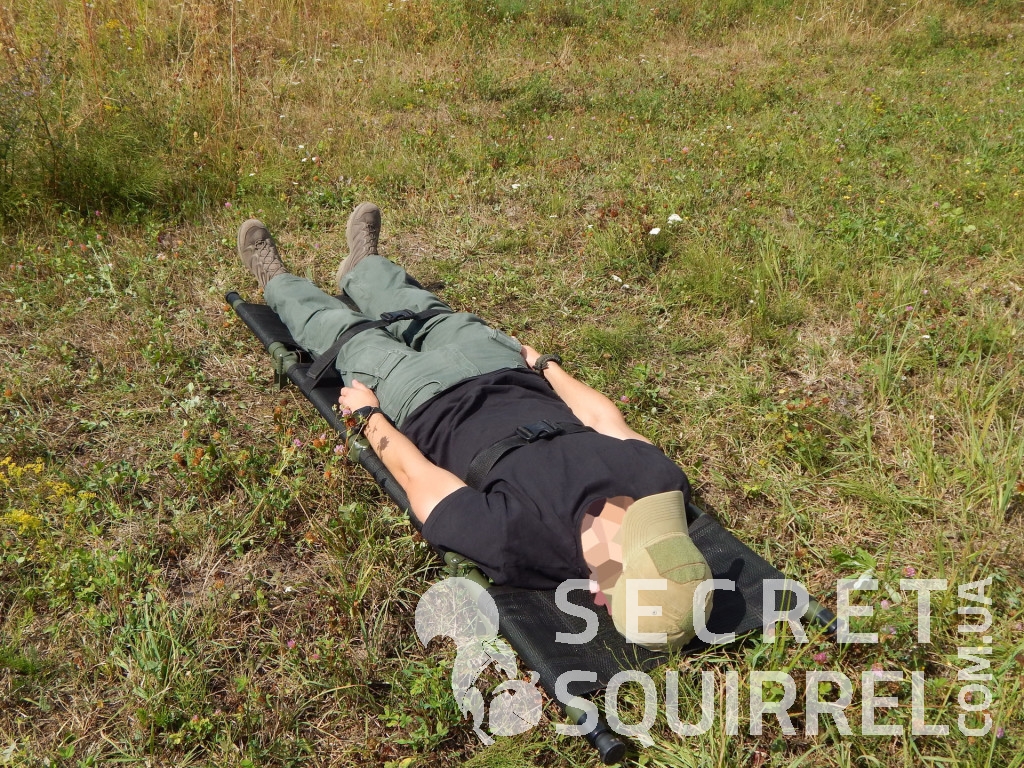
In terms of dimensions, the NAR Talon II Model 90C is fully sufficient to accommodate an adult casualty of average build, and the width of the structure is significantly better than many soft solutions where the patient's arms constantly try to "live a life of their own". The semi-rigid base, normal width, and rigid geometry provide three important advantages:
-
The casualty lies more stably.
-
It is easier for the carriers to control the center of gravity.
-
The movement process itself looks less chaotic.
This does not mean that the Talon turns evacuation into a business-class trip. No, this is still tactical medicine, not a health resort. But between "dragging a person on a canvas that lives its own life" and "carrying them on a more rigid platform with security straps", the difference is felt very quickly.
Who the NAR Talon II Model 90C is For
These litters are appropriate where regular, well-thought-out, multi-stage transportation of casualties is required, rather than just a one-time emergency dragging for 100 ft (30 m). First and foremost, they are of interest to:
-
military units;
-
CASEVAC/MEDEVAC crews;
-
tactical medics;
-
TCCC/TECC instructors;
-
search and rescue teams;
-
groups outfitting vehicles or medical kits for evacuation.
If the task is simply to have the lightest possible tool for a short extraction of a wounded person from a danger zone, then it is sometimes more expedient to look toward soft evacuation litters or ultra-lightweight solutions. Here, everything depends not on "what is cooler", but on the use case.
Does the Talon II 90C Have Weak Points
Yes, and they must be spoken of honestly as well.
1. Weight
16 lbs 5 oz is not a disaster, but it's no feather either. If a group operates on foot, without vehicles, under a full combat or rescue load, the Talon will be felt.
2. Price
North American Rescue products generally do not belong to the budget segment. The Talon II 90C is professional-grade equipment, not "something just in case for the trunk".
3. It is not a replacement for everything
The Talon does not eliminate the need for soft litters, sleds/tarps, SKED solutions, or rigid baskets for technical evacuation. It is a very powerful tool, but it is not always the best for all scenarios.
The North American Rescue Talon II Model 90C is one of the most famous and practical variants of semi-rigid tactical litters for the evacuation and transportation of casualties. Its strength lies in the right balance between compactness, rigidity, durability, and functionality. They provide what soft evacuation litters often lack: a stable geometry, better carrying ergonomics, elevation of the patient off the ground, compatibility with medical accessories, and greater suitability for longer evacuation routes.
To put it simply, the Talon II 90C is not a "magic wand", but a solidly designed working tool built not for the shelf, but for real loads. And if your scenario involves not just quickly pulling a wounded person out, but also getting them there properly, carrying them, transferring them, stabilizing them, and passing them further along, this solution has very strong arguments in its favor.

Igor Ivandikov — author of the article
Project Manager
Has over 2 years of experience working in the field of camping equipment. Well-versed in products for tourism, camping, and outdoor recreation.
Responsible for coordinating projects, monitoring deadlines, and ensuring the quality of task completion.
He enjoys football (soccer) and billiards, participates in competitions, and has won prizes on numerous occasions. He is a fan of active recreation.
FAQ: Answers to Frequently Asked Questions
1. How is the NAR Talon II Model 90C better than soft evacuation litters?
2. Can the Talon II 90C be used without vehicles, on foot?
3. Is the Talon II 90C suitable for winter conditions?
4. Is it worth buying the Talon II 90C for civilian use?