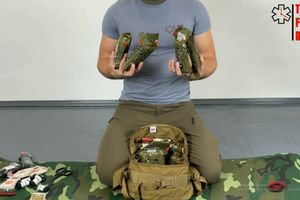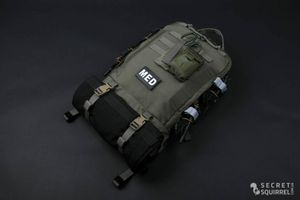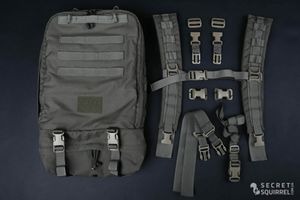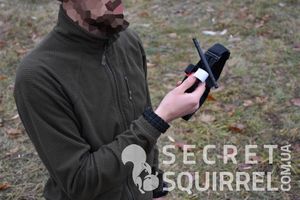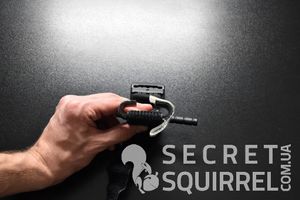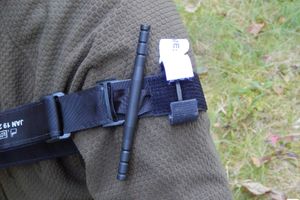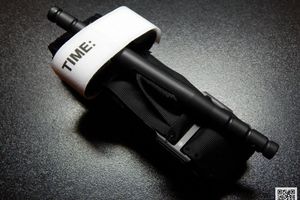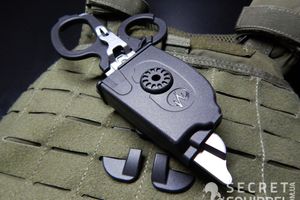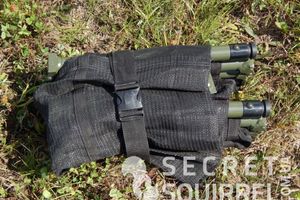
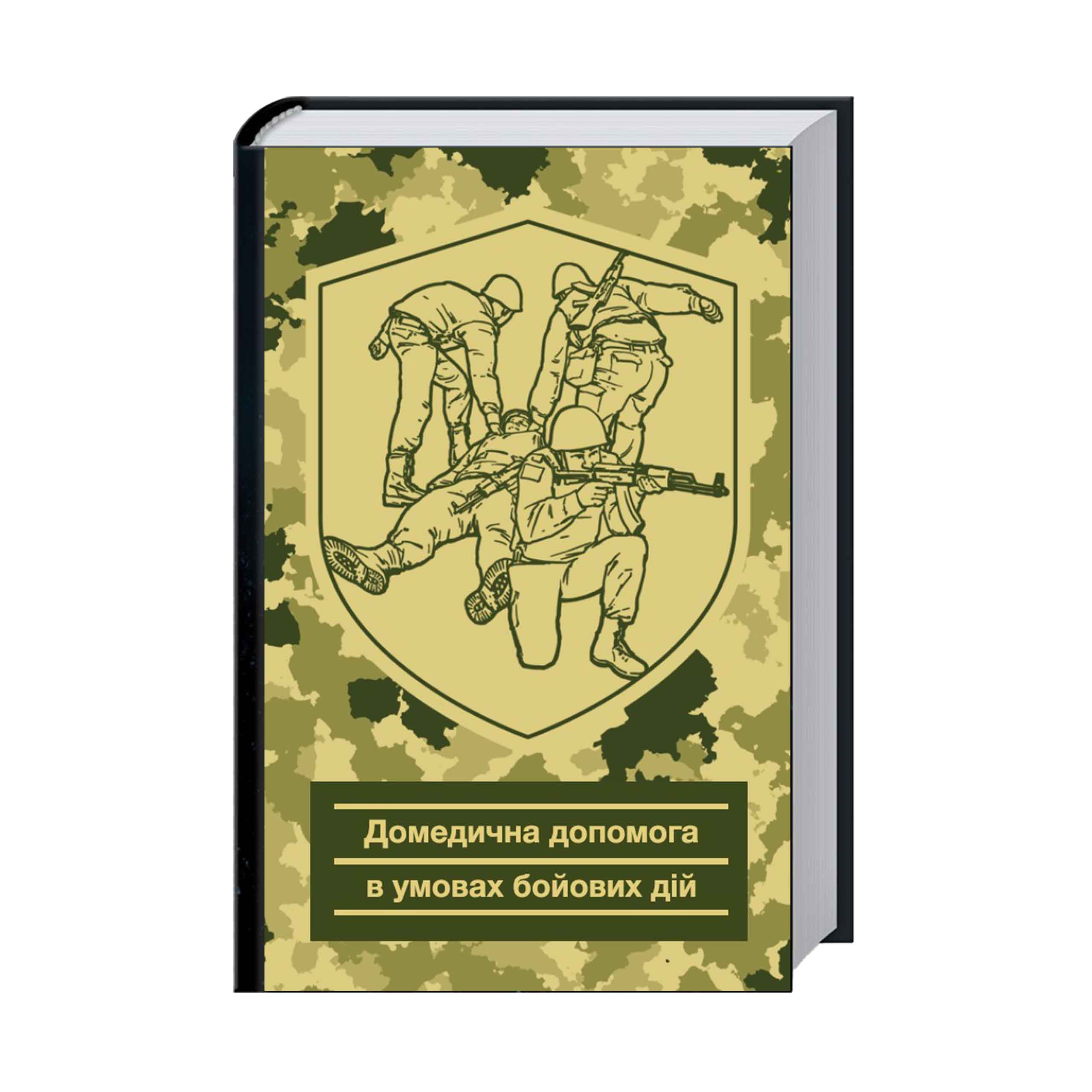
How to provide emergency medical care in a combat zone. This manual was issued by the Ministry of Health in cooperation with the National Guard of Ukraine. The brochure was made for the military who are on the advanced anti-terrorist operation. The book illustrates explanations: how to stop the bleeding, apply a tourniquet, and even properly transport the wounded during shelling.

Just a few years ago, the conversation about first aid in combat conditions often boiled down to a few key things: how to stop massive bleeding, how to use a tourniquet correctly, how to move a casualty to a safer place, and how to wait for evacuation. This was important. And it remains important. But the modern battlefield has long demonstrated that combat trauma is significantly broader than external bleeding alone.
An explosion can simultaneously cause head, chest, hearing, and internal organ injuries. A shrapnel wound can be combined with a fracture. A fall after a blast wave can result in a traumatic brain injury. Evacuation may be delayed for hours. And a single incident can leave multiple casualties at once. That is precisely why modern tactical medicine is no longer just a collection of isolated techniques from an individual first aid kit (IFAK). It is a system that accounts for the nature of the trauma, the tactical situation, the skill level of the responder, the available gear, and the feasibility or impossibility of rapid evacuation.
In 2020, the manual "First Aid in Combat Conditions", prepared by the Ministry of Health of Ukraine in cooperation with the National Guard of Ukraine, was considered relevant. At that time, the manual served as a practical guide for military personnel, particularly regarding hemorrhage control, the use of a tourniquet, and casualty transport under fire. Today, however, this material is interesting for another reason as well. It allows us to see what has remained unchanged in tactical medicine, what has evolved, and, most importantly, why it changed. A guide from the Punisher military surplus store will help us explore this.
From the 2020 Manual to TCCC 2026
Let us start with the main point: the old manual did not become "wrong" simply because of its age. Medical knowledge does not work on the principle of "a new protocol comes out – discard everything old". Fundamental principles remain extraordinarily resilient: first, account for safety, identify immediate life threats, prioritize the most critical conditions, continuously reassess the casualty, and ensure their subsequent movement to the next level of care. However, the granularity of the system has grown significantly over these years.
Today, the foundation of the international TCCC approach is the current edition of the TCCC Guidelines dated May 1, 2026. The guidelines cover three main tactical phases: Care Under Fire, Tactical Field Care, and Tactical Evacuation Care. Concurrently, Ukraine has formed its own regulatory framework for tactical pre-hospital care. The current Order of the Ministry of Defense of Ukraine No. 436 dated June 29, 2024, as amended in 2025, defines the scope of care for the security and defense forces and explicitly establishes the MARCH PAWS algorithm. Thus, today we have not merely a checklist for a soldier, but a multi-tiered system.


MARCH PAWS: Why Modern Tactical Medicine Is Far Broader Than Bleeding
Ukrainian regulations define MARCH PAWS as an algorithm for examining and rendering care to a casualty with continuous reassessment of their condition. The name itself illustrates how broad the subject is.
-
M – Massive bleeding
-
A – Airway
-
R – Respiration
-
C – Circulation
-
H – Hypothermia/Head injuries
-
P – Pain
-
A – Antibiotics
-
W – Wounds
-
S – Splinting
This is not just a convenient acronym for memorization. It is a demonstration of how the very mindset regarding combat trauma has evolved.
M – Massive bleeding: Bleeding Remains Critical
We begin with what truly has not changed. Massive bleeding remains one of the most dangerous immediate threats to life. That is why critical hemorrhage control is one of the highest priorities in tactical medicine. The tourniquet has not disappeared. Pressure dressings, wound packing, and other hemorrhage control measures also remain part of the system. Today, however, it is far more important to understand the place of each tool within the overall algorithm, rather than treating the tourniquet as a universal remedy for any injury.
A tourniquet is not synonymous with tactical medicine. It is merely one tool for controlling bleeding. If an injury is located in an anatomical zone where a tourniquet cannot be applied, a different approach is required. That is why modern algorithms include not only tourniquets but also other hemorrhage control methods. Ukrainian regulations explicitly assign the relevant skills according to the training levels of military personnel.
A – Airway: A Person May Be Conscious, but the Airway Is Already at Risk
Airway issues are one of those aspects easily underestimated when viewing combat medicine solely through the lens of bleeding. Following trauma, loss of consciousness, or facial injuries, the situation can change very rapidly. Here, the distinction between civilian and tactical medicine becomes especially clear.
On the battlefield, the question is not only what needs to be done, but also precisely when it should be done. The current TCCC Guidelines 2026 explicitly state that under conditions of direct threat, airway management is usually deferred until the Tactical Field Care phase. Thus, a correct medical action can be the wrong action if performed at the wrong moment.
In tactical medicine, "doing more" does not always mean "doing better". If the responder and the casualty are under immediate threat, attempting a complex medical procedure may create additional risk for both. Therefore, TCCC begins not with the medical kit, but with the tactical situation.


R – Respiration: Breathing Is Not Just "Is the Person Breathing"
Chest trauma is another major category that cannot be reduced to simple bleeding. Blast effects, shrapnel, gunshot, or penetrating wounds can cause severe respiratory impairment. The defining feature of such injuries is that the physical appearance of the casualty does not always accurately reflect the severity of their condition. A person may speak, move, and remain conscious while simultaneously suffering from a problem that, without proper care, poses an immediate threat to life. Therefore, assessing respiration is a standalone step in the algorithm, not a secondary addition after bleeding control.
Blast trauma can extend far beyond a visible wound. A single blast event can simultaneously cause penetrating and blunt trauma, chest injuries, traumatic brain injury, burns, and acoustic damage. That is why modern tactical medicine increasingly deals with combined trauma rather than an isolated wound.
C – Circulation: Circulation and Shock
Even when external bleeding has been successfully controlled, it does not mean the danger has passed. The casualty may have significant internal bleeding or may be developing traumatic shock. That is why the modern algorithm does not end after the first successful intervention. The casualty must be regularly reassessed. This principle is directly codified in Ukrainian regulatory documents: examination and care are conducted according to MARCH PAWS with continuous reassessment of the condition.
The most serious injury is not necessarily the one that is most visible. A large wound on a limb immediately attracts attention, but internal damage may look far less dramatic on the outside. Tactical medicine teaches responders to focus not on what looks the most horrific, but on what poses the greatest immediate threat to life.

H – Head Injuries and Hypothermia: Two Easily Underestimated Problems
What is combined into a single block within MARCH PAWS actually covers two very distinct issues.
Traumatic Brain Injury (TBI)
A blast wave, fall, impact, shrapnel, or other mechanisms can cause a head injury. Here lies an important nuance: being conscious does not rule out a serious injury. That is why modern guidelines emphasize the reassessment of neurological status. Among the updates in TCCC 2026, specific changes regarding airway management and traumatic brain injury during Tactical Field Care are highlighted.
Hypothermia
Hypothermia is often associated with winter. For a severely wounded casualty, this assumption is a mistake. Heat loss can occur due to blood loss, wet clothing, contact with cold ground, prolonged wait times for evacuation, and other factors. This is not a matter of comfort. Hypothermia can worsen the condition of a severely wounded casualty and negatively affect blood clotting.
A casualty must be kept warm even when you yourself do not feel cold. This is one of the best examples of how environmental perception differs between a healthy individual and a severely traumatized organism.
P – Pain: Pain Management Is Also Part of the Modern Algorithm
Pain is not merely an unpleasant symptom. For a severely wounded casualty, intense pain can further compromise their physiological and psychological state. Therefore, modern tactical medicine treats analgesia as a distinct component of care. However, qualifications are particularly critical here.
Different medications and routes of administration correspond to different levels of training. Ukrainian regulations explicitly distribute pharmaceuticals across the levels of tactical pre-hospital care. Thus, an IFAK may contain medication, but the presence of the medication does not mean that every service member has the authority or training to administer it.
A – Antibiotics: Another Feature of the Modern System
Antibiotics are not given "just in case". In tactical medicine, their use is tied to the nature of the trauma, infection risk, environmental conditions, and the responder's level of training. This is a clear example of how the modern system has moved away from the simplistic logic of "if there is a medication in the pouch, it must be used". Medical interventions must be justified. Ukrainian regulations include antibacterial drugs in the list of medical countermeasures for tactical pre-hospital care, but their availability and application depend on the level of training.
W – Wounds: A Wound Is Not Just a Hole in the Skin
Battlefield wounds can vary widely: shrapnel, gunshot, lacerations, burns, or combined injuries. They may be accompanied by fractures, vascular damage, nerve damage, internal organ injuries, and other trauma. That is why modern medicine increasingly avoids evaluating a wound in isolation. Understanding the overall traumatic picture is far more critical.
A single individual may suffer from multiple distinct types of injuries simultaneously, each requiring a different approach. For example, an explosion can cause a shrapnel wound, a fracture, a burn, and a TBI all at once. Thus, the concept of polytrauma is far from a theoretical term in modern tactical medicine.
S – Splinting: Fractures Also Have Their Place in the Algorithm
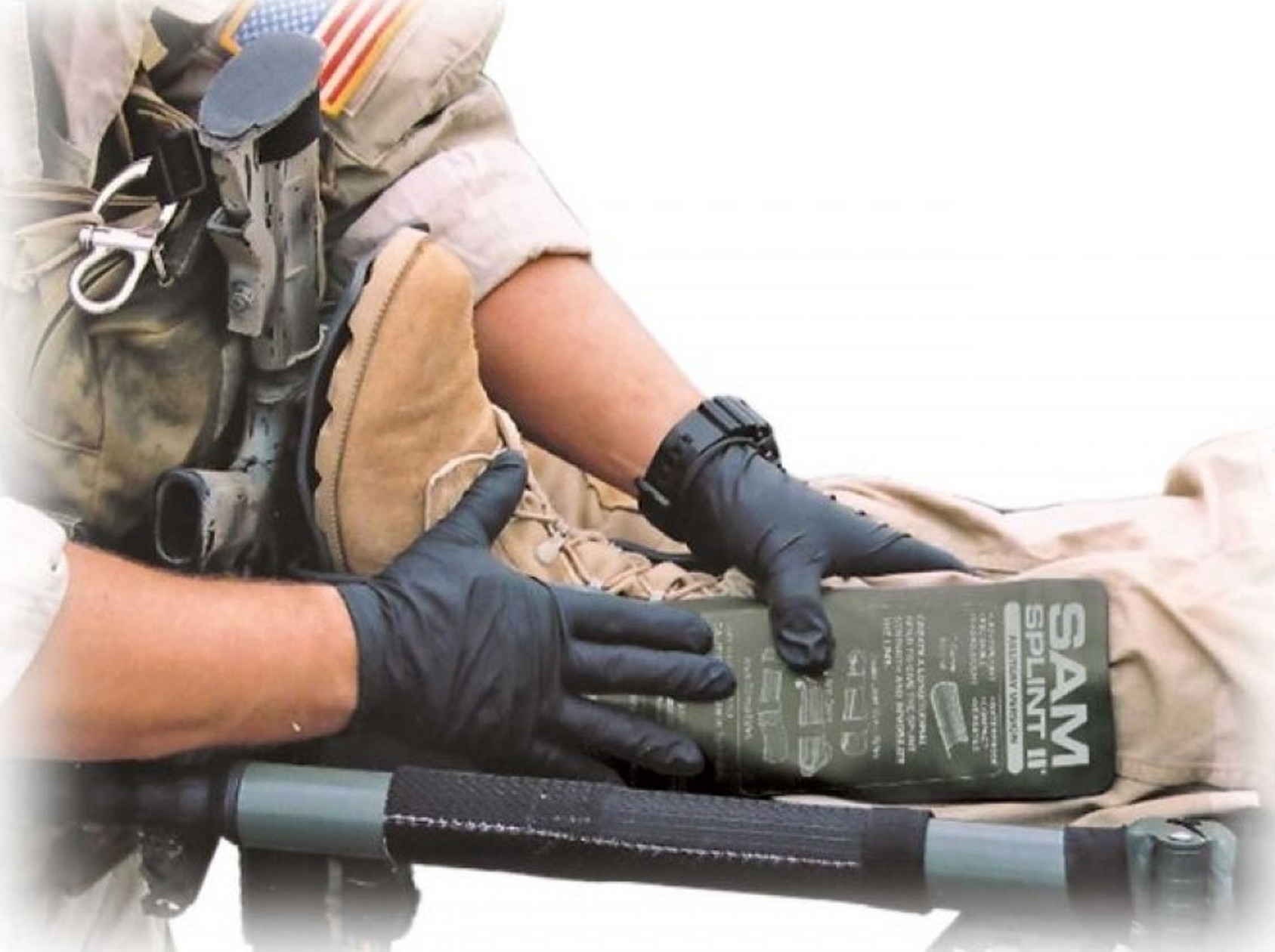
A limb fracture can be extremely painful and dangerous, but it is not always the primary issue that needs addressing. This is where MARCH PAWS demonstrates the principle of prioritization. If critical bleeding, respiratory distress, and a fracture are present simultaneously, the sequence of actions is dictated not by what looks most severe, but by the threat to life. Splinting becomes part of systematic care only after immediate life-threatening conditions are controlled.


What Else Has Modern Warfare Changed?
MARCH PAWS explains the medical logic. However, another factor exists: the operational environment itself. In recent years, it is not only the protocols that have evolved; warfare itself has transformed.
The proliferation of unmanned aerial systems, constant surveillance, artillery and mortar strikes, high volumes of fragmentation injuries, widespread landmining, and complex evacuation routes have created an environment where medical care must increasingly be delivered under extreme time and resource constraints.
This does not mean that "new rules were invented for every type of wound". What has changed is the increased probability of combined trauma and delayed evacuation, forcing the system to become more flexible.
Modern tactical medicine is gradually moving away from the idea that a problem can be solved simply by carrying more gear. Even the largest medical pouch cannot compensate for a lack of skills. Furthermore, excessive gear adds weight, takes up space, and hinders rapid access to essential items. The question should not be "What else can I put in my IFAK?", but rather "What injuries am I realistically going to encounter, what skills are required to treat them, and who exactly is qualified to perform those interventions?".
From One Casualty to Multiple: Triage
There is another scenario easily overlooked when reading about first aid: what should be done when there is more than one casualty? In combat conditions, this is a very realistic scenario. This creates the necessity for triage – establishing priorities among multiple casualties.
Ukrainian regulations explicitly incorporate triage into the skill sets for tactical pre-hospital care. This reinforces why tactical medicine cannot simply be a rigid list of instructions for a single casualty. Sometimes the hardest decision is not what action to perform, but determining whom to treat first.
In tactical medicine, the "first person seen" is not necessarily the "first in line for care". Priority is determined by severity of condition, immediate life threat, available resources, and the tactical situation.
Psychological Support Is Not Secondary
Another detail of the modern system that is easily missed: a casualty is not merely a body with a specific set of injuries. They are frightened, potentially disoriented, in severe pain, and unaware of what is happening to them.
Current Ukrainian regulations explicitly require continuous communication with the casualty and psychological support during treatment. TCCC also stresses casualty communication: explaining what is happening, offering reassurance, and maintaining calm interaction helps reduce anxiety while providing ongoing insight into the casualty's mental status.
Talking to a casualty serves as both psychological support and a diagnostic tool for monitoring their condition. If a casualty stops responding, becomes confused, or changes their pattern of response, it provides critical information to the responder.


Evacuation: No Longer Just "Carrying the Casualty Out"
The 2020 manual specifically mentioned casualty transport under fire, and that principle remains valid today. However, evacuation is now viewed as a much broader process. TCCC designates a distinct phase – Tactical Evacuation Care – and the modern system mandates passing information regarding the casualty's condition and interventions already performed to the next echelon of care. Moving the person is not enough; continuity of care must be maintained.
What If Evacuation Is Delayed or Unavailable?
This is where the war has introduced one of the most critical adjustments to tactical medicine. The conventional model of "Injury → First Aid → Evacuation → Hospital" does not always align with reality. Evacuation can be delayed by the tactical situation, lack of safe routes, vehicle damage, distance, or other factors. Consequently, a distinct framework has emerged: Prolonged Casualty Care (PCC) – managing a casualty when rapid transfer to the next level of care is impossible.
The Ukrainian TCCC framework includes a dedicated set of PCC guidelines covering the management of traumatic wounds, TBI, burns, airways, and other conditions during prolonged care.
In modern tactical medicine, the core question is no longer just "How do I stabilize the casualty until evacuation arrives?", but "How do I maintain their state if evacuation is delayed for an extended period?". This represents a major shift in mindset.
What Has Remained Unchanged?
Despite all the new protocols, medications, technologies, and equipment, the fundamental logic remains virtually unchanged:
Safety comes first. You cannot effectively save a casualty by creating another victim.
Immediate life threats take priority. Not every injury requires the same speed of response.
Conditions must be reassessed. A successfully performed intervention does not mean the danger is over.
Care must be systematic. A single action does not replace a comprehensive assessment.
Evacuation is part of the process. A casualty must not simply "disappear" from sight after initial aid is rendered.
Finally, training is more important than equipment.
What Has Changed?
What has changed above all is the depth of the system. Today in Ukraine, tactical pre-hospital care is divided into four levels: basic, intermediate, advanced, and expert. The basic level covers self-aid and buddy aid for all service members, whereas higher levels require specialized professional training.
Approaches have evolved regarding:
-
Airway assessment;
-
Chest trauma;
-
TBI;
-
Hypothermia;
-
Hemorrhage control;
-
Analgesia;
-
Antibiotic therapy;
-
Wound management;
-
Immobilization;
-
Triage;
-
Evacuation;
-
Documentation;
-
Prolonged casualty care during delayed evacuation.
International guidelines continue to be updated. For example, the TCCC Guidelines 2026 explicitly outline updates regarding airway management and traumatic brain injury care.
Has the 2020 Manual Lost Its Relevance?
As a sole source of modern protocols – yes, it is no longer sufficient. As a historical and educational resource – no. It clearly demonstrates the foundation upon which the current system was built. Nevertheless, the conversation has fundamentally shifted by 2026. The tourniquet has not vanished. The need to rapidly stop critical bleeding has not vanished. The necessity of evacuation has not vanished. Yet alongside them, there is now a far deeper understanding of what happens to a human body following a blast, a fall, a shrapnel or gunshot wound, combined trauma, or a prolonged delay in evacuation. That constitutes the primary evolution.
Tactical Medicine Is Not About "Knowing More Procedures"
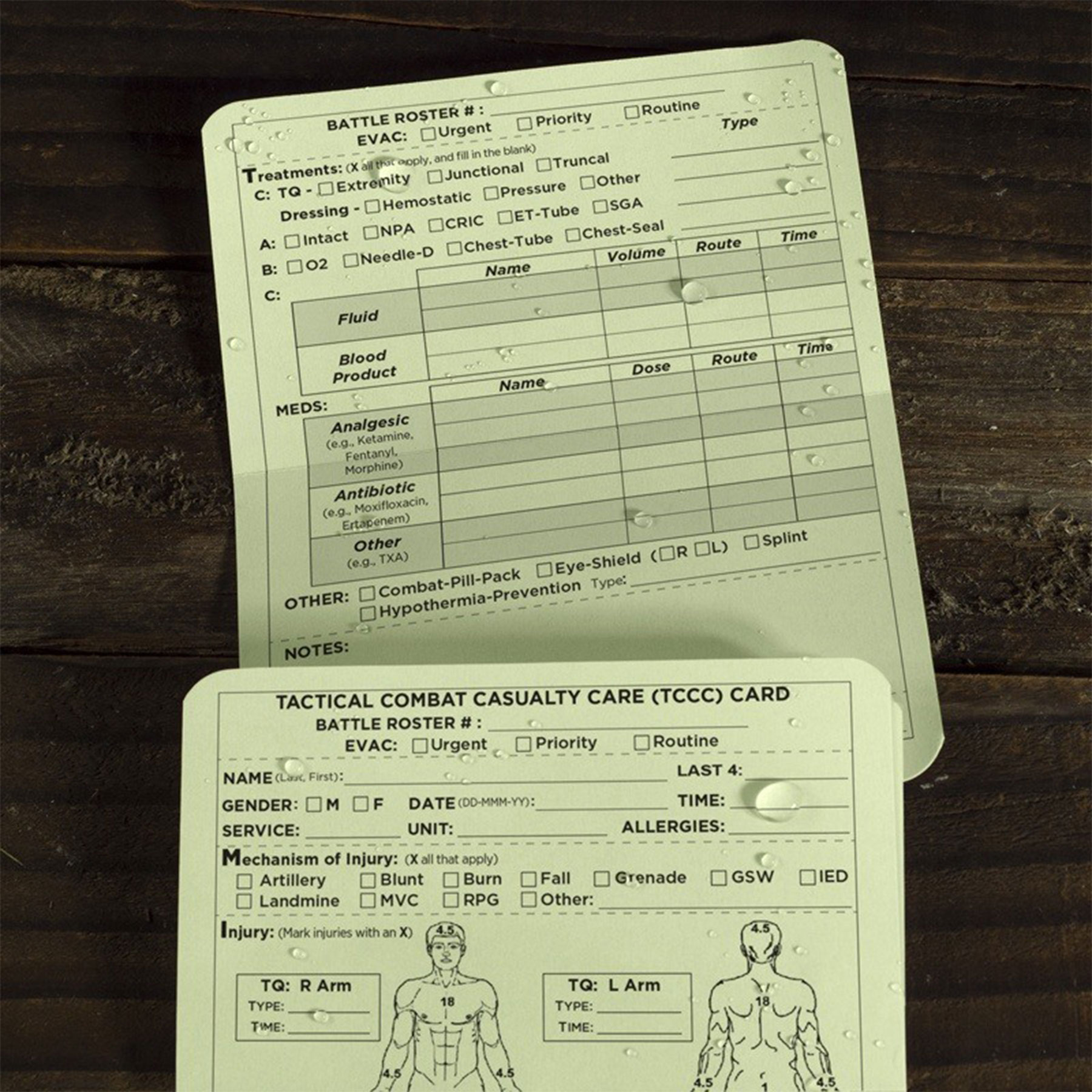
This is perhaps the most vital conclusion. Modern tactical medicine has become more complex not because someone wished to add ten more items to an old list. It became more complex because reality proved to be more complex. Trauma can be combined. There may be multiple casualties. Evacuation may be impossible. The tactical situation can shift in an instant. And the person rendering aid may possess only basic training. Therefore, the modern approach is not the mechanical execution of an instruction manual. It is the ability to assess the situation, determine priorities, perform available interventions, reassess the casualty's condition, and hand them off to the next echelon of care.
At first glance, constant updates to medical guidelines might seem like a drawback. In reality, the opposite is true. If a protocol changes based on new research, clinical experience, and combat casualty data, it means the system is learning from past mistakes and outcomes. That is why the current edition of the TCCC Guidelines 2026 differs from previous versions, and why Ukrainian tactical pre-hospital care standards were updated in 2025. In tactical medicine, this is not a weakness; it is a sign of growth.


In 2020, a manual was relevant if it explained the basics of combat first aid to service members: how to stop bleeding, use a tourniquet, and transport a wounded casualty under fire. In 2026, that alone is no longer sufficient to describe the full picture.
Modern tactical medicine encompasses a much broader range of issues: critical hemorrhage, airway compromise, chest trauma, circulation issues and shock, traumatic brain injuries, hypothermia, pain, wounds, fractures, blast and combined trauma, triage, evacuation, and prolonged casualty care during delays. The Ukrainian regulatory framework explicitly incorporates MARCH PAWS, four levels of tactical pre-hospital care, continuous condition reassessment, and the requirement for casualty communication. The current TCCC Guidelines continue to adapt based on new data and combat experience. Yet the foundational concept remains unchanged: in a critical situation, you must not simply do something – you must correctly identify what saves life right now. That is what best explains the evolution of tactical medicine over recent years: not a transition from "a tourniquet to a more complex medical kit", but a transition from an isolated set of skills to a comprehensive system for battlefield decision-making.
NEED HELP CHOOSING?
Our specialists will help you navigate the tactical medicine range and select the right equipment for your needs and conditions of use.
Get a consultation
FAQ: Answers to Frequently Asked Questions
1. What is first aid in combat conditions?
2. How does tactical medicine differ from civilian first aid?
3. Why is it necessary to continuously reassess a casualty?
4. Is the 2020 "First Aid in Combat Conditions" manual still relevant?