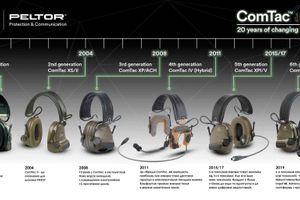
Just a few years ago, many people treated hearing protection much like safety glasses at a shooting range: "I'll just shoot once – it's fine". But after your first serious training sessions, or working alongside a machine gun, mortar, or artillery piece, that attitude changes completely and very quickly. Because hearing is a deceptive thing. It doesn't just "blow out" instantly like a lightbulb. Instead, the damage accumulates gradually: ringing in the ears, deafness at specific frequencies, and constant static noise after shooting. And very often, people only notice it when a portion of their hearing is gone for good.
That is precisely why today, active electronic earmuffs for the military are no longer considered an "expensive shooting range accessory" but a standard piece of equipment. And not just for the military either. High-quality active earmuffs for shooting are heavily utilized by instructors, hunters, competitive shooters, vehicle crews, and individuals who regularly operate in high-noise environments. To help you properly select this tactical accessory for your needs while factoring in critical details, here is a guide from the Punisher military store.
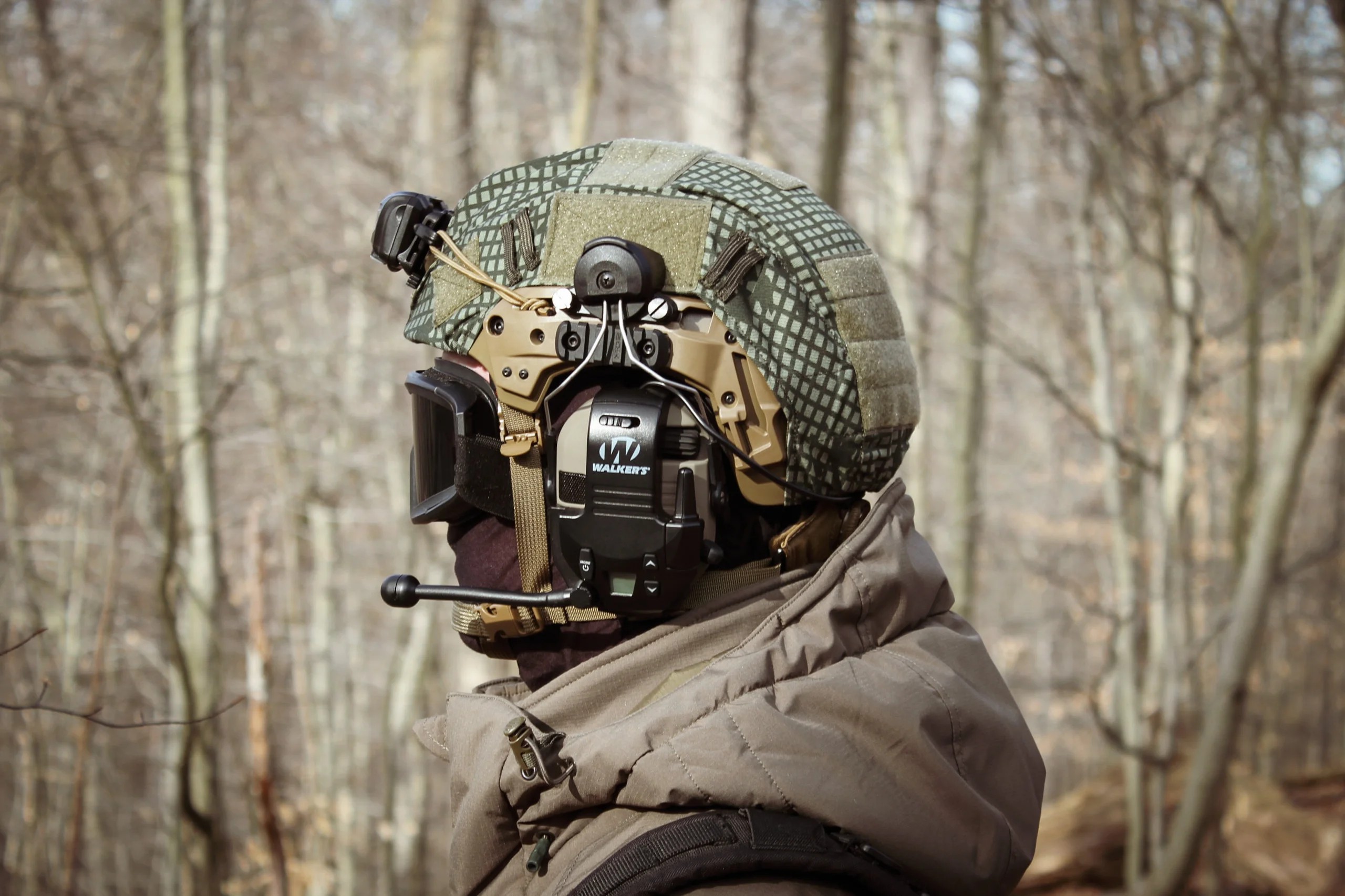
What Are Active Earmuffs and How Do They Work
Many people assume that active hearing protection refers simply to "headphones that muffle sound". In reality, the operating principle is far more interesting. Active tactical earmuffs perform two tasks simultaneously: they suppress dangerous loud noises and amplify quiet ambient sounds. This means a gunshot, explosion, or shockwave is cut off by the electronics almost instantaneously, while conversations, footsteps, or commands are actually amplified.
Consequently, by wearing active tactical earmuffs, you can often achieve a clearer "auditory picture" of your surroundings than you would without them. This becomes especially noticeable in forests, at training grounds, or at night. From personal experience, I can say that after using your first proper set of active hearing protection, going back to conventional passive earmuffs is incredibly difficult. It is roughly equivalent to switching from a Soviet-era field telephone to modern digital communications – sure, the old way technically worked, but the difference is felt instantly.
The first mass-market active electronic earmuffs for shooting gained popularity among competitive shooters and hunters back in the 1980s and 1990s. However, it was modern military conflicts that sharply increased demand for active hearing protection across militaries worldwide.


Do Active Earmuffs Protect Against Concussions?
This is one of the most frequently asked questions. And it is vital to be honest here: active electronic earmuffs do not provide total protection against concussions.
A concussion is the result of a blast wave impacting the entire body, not just the ears. Therefore, even the best military active earmuffs cannot completely "negate" the physical impact of a close-range explosion.
However, they genuinely help reduce the sheer load on your auditory system and minimize the risk of acoustic trauma from gunshots, blasts, and prolonged ambient noise. This is especially critical for:
-
machine gunners;
-
mortar crews;
-
artillery units;
-
armored vehicle crews;
-
assault groups;
-
instructors at training fields.
Because of this, active earmuffs for artillery have essentially become standard issue in most modern armed forces.

Types of Active Hearing Protection
In practice, the market is currently split into several core categories.
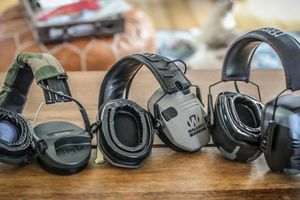
Classic Active Earmuffs
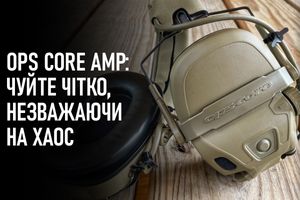
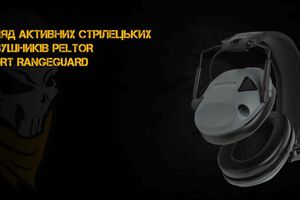
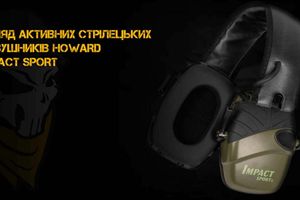
The most widespread option. Features two ear cups, microphones, electronics, and volume adjustment controls. These are the active earmuffs for shooting that you see most frequently at training ranges. They perform exceptionally well for training drills, tactical exercises, hunting, and general field use.
Active Earmuffs with a Headset
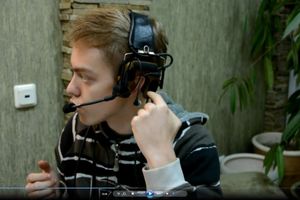
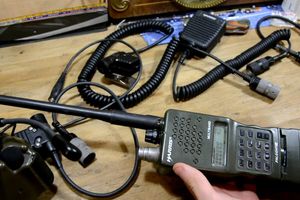
This represents a military or professional-tier application. These active earmuffs with a headset allow you to plug into a radio and communicate via a PTT (Push-To-Talk) button. This is where the difference becomes astronomical. When you no longer need to scream over the roar of vehicle engines or gunfire, squad coordination improves dramatically. From personal experience, I will tell you: after working with a proper headset, it is very hard to go back to holding standard radios in your hands.
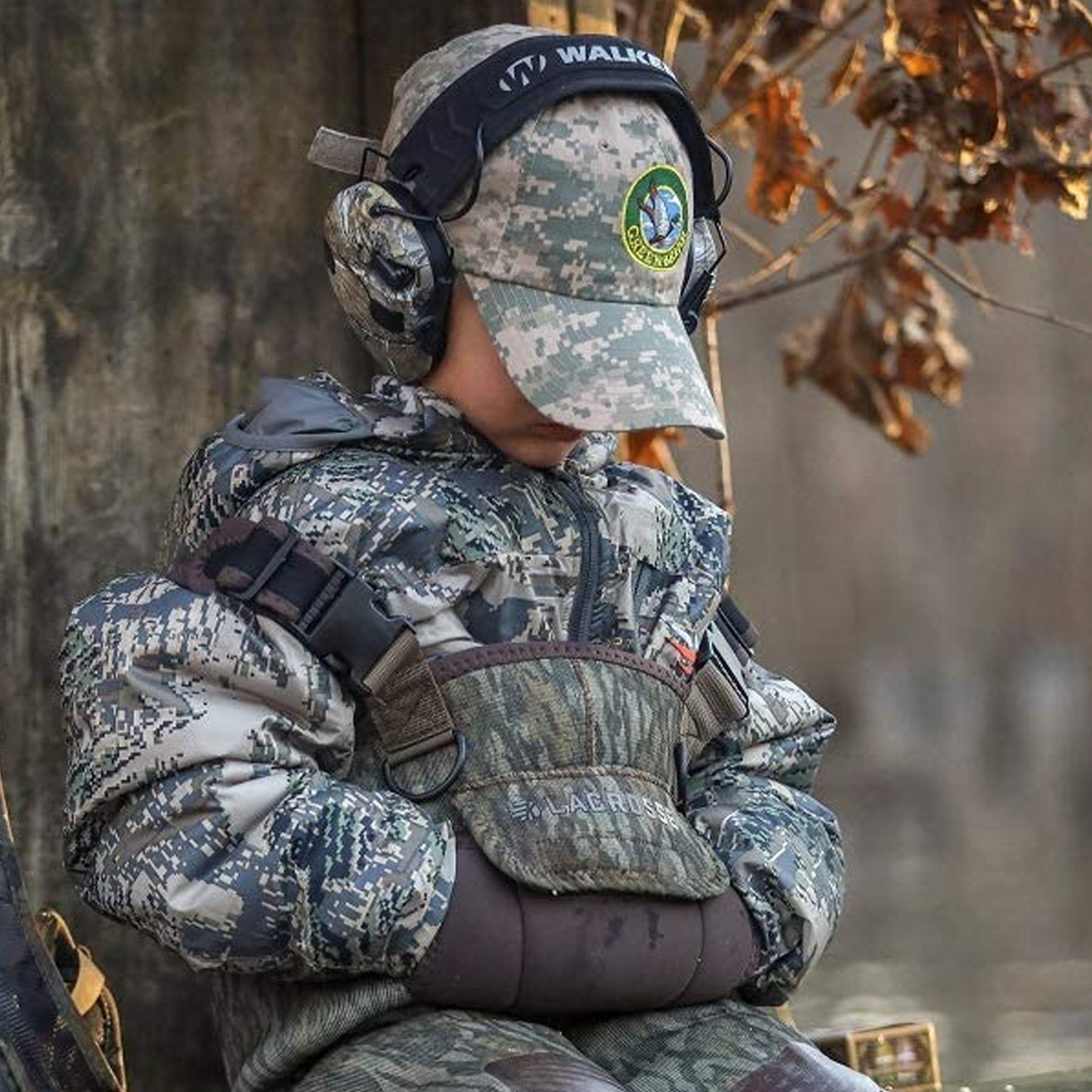
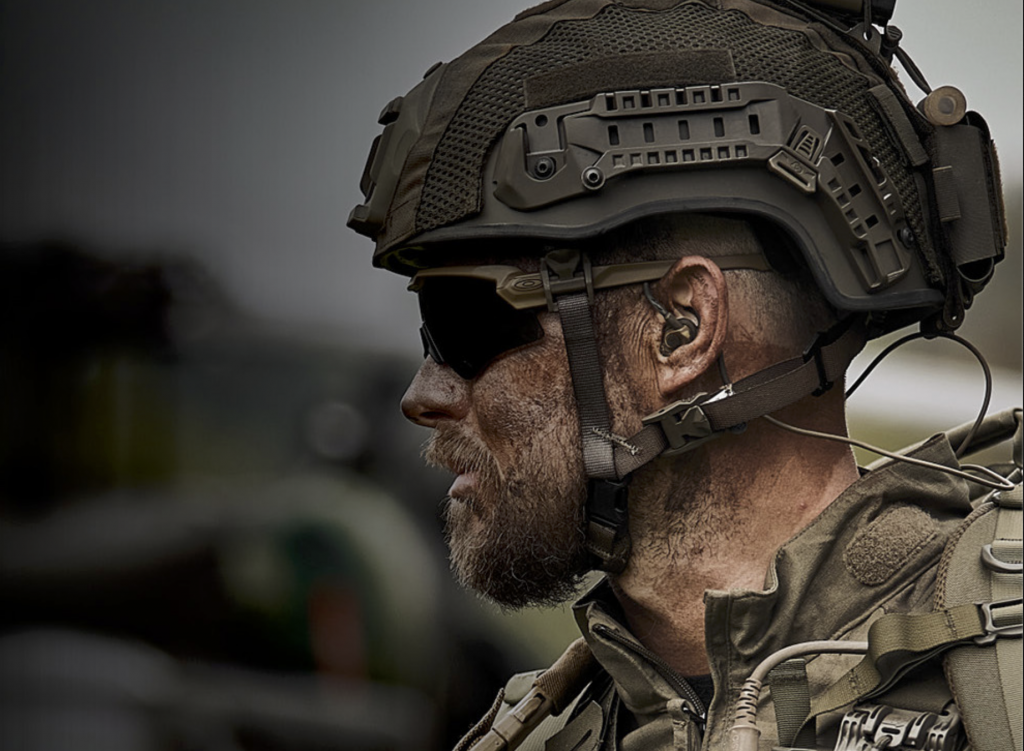
Helmet-Compatible Active Earmuffs
A distinct category. Standard bulky ear cups do not always fit properly underneath ballistic helmets. For this reason, helmet-compatible active earmuffs frequently feature:
-
Thinner profile ear cups.
-
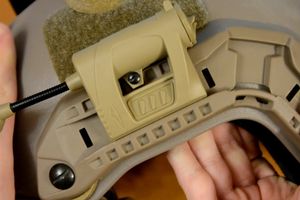
Specialized ARC rail adapters.
-
A lower overall profile.
-
Native integration with helmet accessory rails.
This is particularly crucial for assault operations and working inside tight transport vehicles.
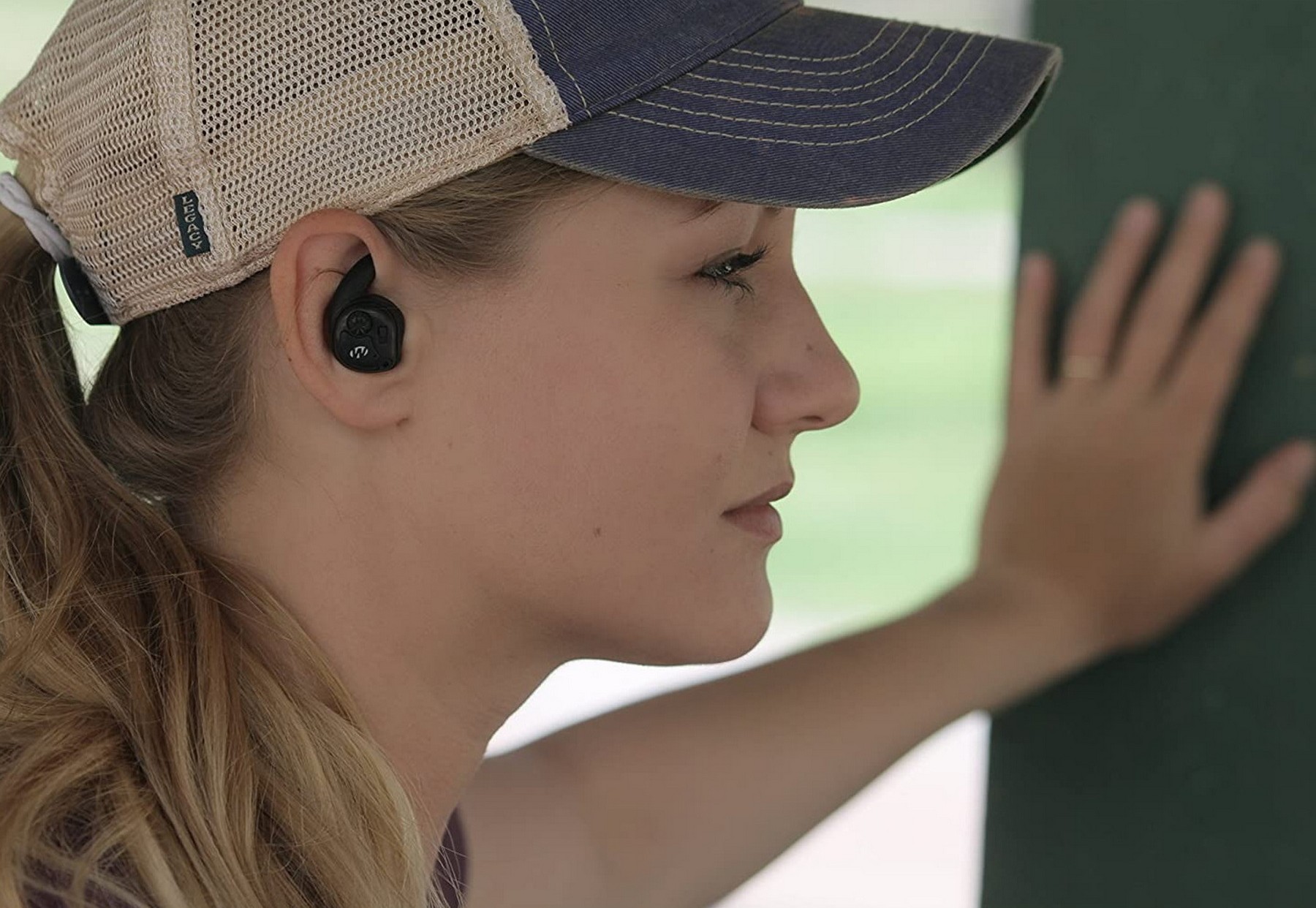
Active Electronic Earplugs
Yes, solutions like this exist as well. These are compact, in-ear active hearing protection systems. They are significantly smaller but come with their own set of nuances:
-
shorter battery life;
-
a more finicky fit;
-
heavy reliance on selecting the correct ear tip size.
On the upside, active electronic earplugs integrate flawlessly with helmets, hoods, and bulky winter clothing.


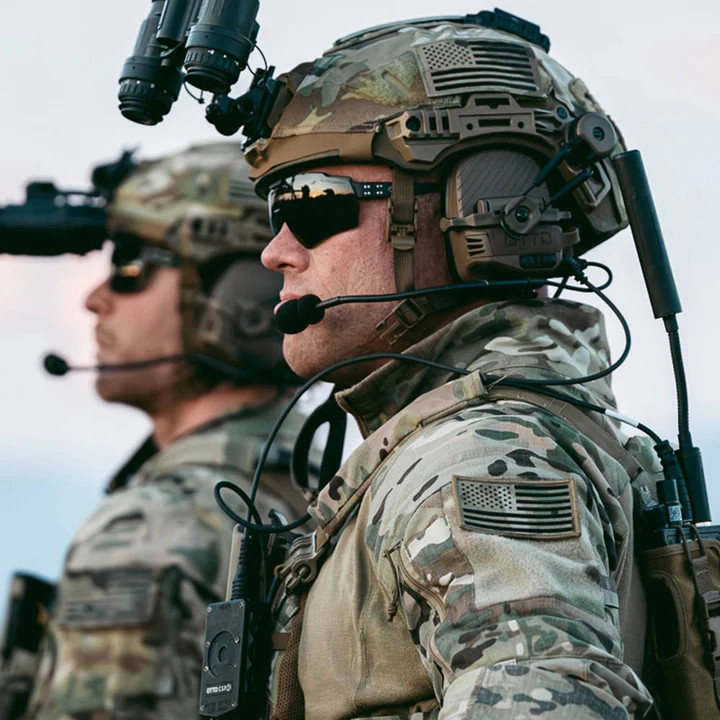
Some advanced modern military headsets employ directional hearing technology – the onboard electronics allow the user to pinpoint the source direction of a sound even more accurately than they could with an unassisted ear.
How to Choose Active Hearing Protection for the Military
This is where the most critical part begins. The vast majority of mistakes occur not because a certain model is inherently "bad", but because it was incorrectly matched to the task at hand.
Noise Reduction Rating (NRR)
One of the primary specifications to look out for. The NRR indicates the level of noise attenuation. For shooting and military applications, a rating of roughly 22-30 dB is considered normal, depending on the model. However, here is a vital nuance: the numbers printed on the box do not tell the whole story. The fit of the earmuffs, as well as their compatibility with your helmet and ballistic glasses, heavily influences real-world protection.
Electronics Quality
Cheap active earmuffs frequently suffer from a common flaw – the audio quality feels "dead". Meaning, the microphones technically function, but the surrounding environment sounds entirely artificial. With high-end models, the exact opposite is true; they allow you to clearly hear footsteps, speech, rustling leaves, verbal commands, and the direction of sound. This is absolutely critical.
Comfort
If a pair of military active earmuffs pinches your head after just 20 minutes, you simply won't wear them. Especially during the summer. Therefore, high-quality gel ear cushions and a manageable weight are incredibly important factors.

Active Earmuffs for Hunting – Is There a Difference?
Yes. Hunters typically prioritize and place higher value on:
-
natural sound reproduction;
-
a compact form factor;
-
lightweight construction;
-
long battery autonomy.
Conversely, military and tactical models place their primary emphasis on:
-
helmet compatibility;
-
integrated communication headsets;
-
rugged durability;
-
reliable performance in mud and heavy rain.
Certain modern active earmuffs with integrated microphones can automatically amplify low-level ambient sounds to such a degree that the user begins to hear footsteps or movement long before they would without electronic hearing protection.
Common Selection Mistakes
From personal experience, here is what people most frequently get wrong:
-
Buying the absolute cheapest models just "to try them out," only to be disappointed by static hiss, audio delays, and poor sound positioning.
-
Failing to check compatibility with their specific helmet profile.
-
Picking thick, bulky ear cups for active shooting scenarios inside vehicles.
-
Ignoring long-term wear comfort.
Additionally, users often forget about replacement batteries or checking runtime autonomy. Believe me: having your earmuffs die on you in the middle of active operations is incredibly frustrating.

Which Active Earmuffs to Choose Today
It all boils down to your specific operational tasks:
-
For basic firearms training and indoor ranges, simple active earmuffs for shooting will suffice.
-
For tactical deployment and military work, it is best to look toward active earmuffs with an integrated headset and helmet rail compatibility.
-
For vehicle crews and artillery personnel, a high NRR rating and clear, reliable communications are paramount.
Above all, never treat hearing protection as a secondary detail. Having good hearing during combat operations is often just as critical as having a quality optic.


Active earmuffs for the military have long since moved past being an "accessory exclusive to special forces". Today, they are a standard tool for hearing preservation, communication, and enhancing situational awareness. The more an individual works around firearms, heavy machinery, or explosive hazards, the faster they come to realize this.
High-quality active tactical earmuffs do not make you invulnerable. However, they genuinely help preserve your hearing, allow you to receive commands more clearly, react to situations faster, and suffer less fatigue from non-stop environmental noise. This isn't just marketing copy – it is a highly practical piece of field gear.

Vitalii Buniak — article author
Military gear consultant
Before 2022, he worked as a sales assistant at the Panisher store. After the start of the full-scale invasion, he joined the Armed Forces of Ukraine, gaining real combat experience.
Thanks to his combat experience and deep knowledge of tactical gear, Vitalii serves as a personal expert of the Panisher online store in the fields of:
- Clothing and footwear
- Equipment
His recommendations help customers choose reliable and functional gear for any conditions.
FAQ: Answers to Frequently Asked Questions
1. Are active earmuffs necessary for shooting?
2. Do active earmuffs protect against concussions?
3. Why are active earmuffs better than passive ones?
4. Are active earmuffs suitable for hunting?