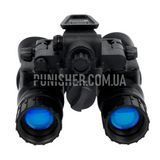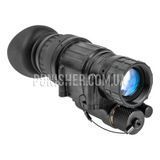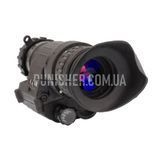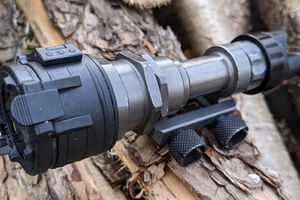
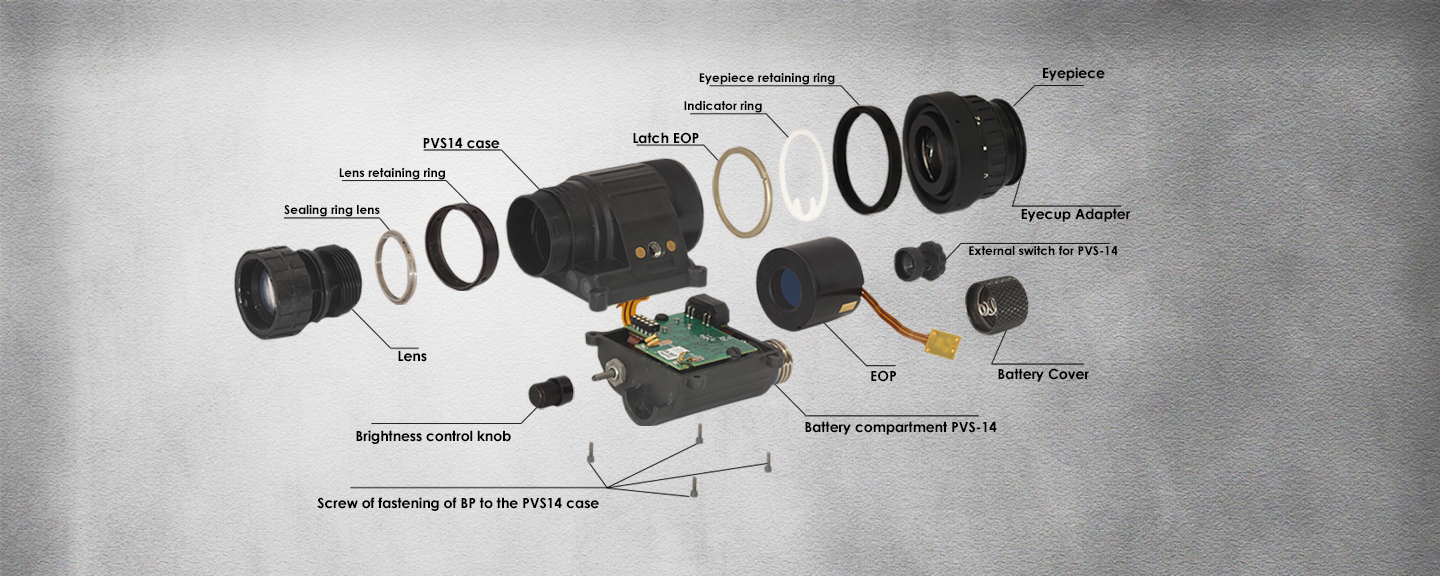
The AN/PVS-14 night-vision monocular is considered one of the most popular night-vision devices in the world. It is used by military personnel, instructors, hunters, and security operators. Its simplicity of design and modular construction principle make this NVD highly repairable.
In this article, together with the Punisher military store, we will look at what parts the PVS-14 consists of, where to find components, and how to perform a basic assembly of the device yourself, even with zero prior experience.

What PVS-14 Consists Of
Any AN/PVS-14 is built on a modular principle. The main elements of the system are the housing, optics, battery compartment, and the image intensifier tube.
Therefore, the easiest way to build your own PVS-14 is to purchase a PVS-14 Housing Kit. Think of it like an AR-15 parts kit that has everything you need to build an AR-15 except the lower receiver (lower). Regarding a PVS-14 housing kit, it includes everything except the image intensifier tube (IIT).
Here is a list of the parts you typically get in a PVS-14 housing kit:
-
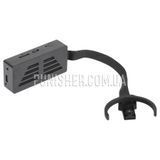
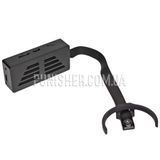
Battery Housing (Single Battery Configuration).
-
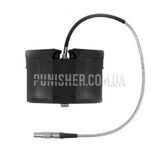
Battery Cap w/ Tether.
-
Monocular Housing.
-
Tube Retainer.
-
25mm Eye Piece Assembly.
-
Neck Cord.
-
Purge Screw.
-
Purge Screw O-Ring.
-
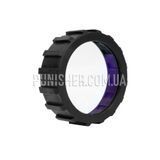
Objective Lens Cap.
-
Close Focus Stop.
-
Objective Cell O-Ring.
-
Eye Cup Assembly.
-
Objective Assembly.
-
Eye Cup Adapter.
-
Battery/Monocular Housing O-Ring.
-
Light Pipe.
-
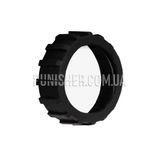
Objective Lock Ring.
-
Lens Paper.
-
Battery Housing Screws x4.
-
Operator’s Manual.
There are some parts in there that you don’t really need. They are highlighted in BOLD in the list above. PVS-14 housing kits cost anywhere from $700 to $1000 depending on the retailer. You can also go with upgraded components like Vyper housing or the Hyper aluminum housing by DEP Technologies. They also make titanium lock rings for added bling, but you pay more for such things.
From my experience in repairing optics: most problems with the PVS-14 arise not because of complex electronics, but due to small mechanical parts – for example, worn seals or loosened lock rings. That is why the ability to replace a module without completely disassembling the device is a huge advantage of this platform.
The AN/PVS-14 platform was developed in the late 1990s as a universal night vision system for the US Army. Its design was intentionally made modular so that military personnel could quickly replace components in field conditions.
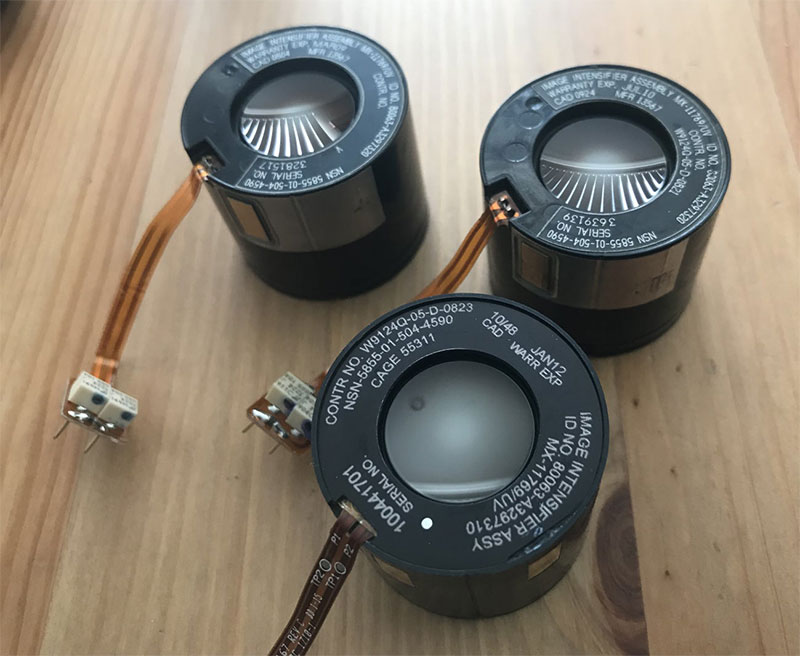
Image Intensifier Tubes (IIT): The Heart of the Device
There are two main types of IIT tubes: MX-10160 and MX-11769. The difference is manual gain vs no manual gain. Gain is like the brightness of the screen inside the tube that you are looking into. There is a knob on the PVS-14 to adjust the gain if you have a 11769 style tube. See the pigtails (flexible ribbon cables) on the three tubes in the photo above? The pigtail is how you know it is a 11769 style. 10160 tubes do not have this ribbon cable. In some cases, you can de-solder a pigtail on a 11769 and turn it into a 10160 tube if needed.
Why would you need a 10160 tube instead of a 11769 tube? Well, certainly not for a PVS-14 build. But many dual-tube binocular night vision devices do not have manual gain, so the pigtail is not used, and there is simply no room for it in those housings.
From field experience, I will say: manual gain control is useful when the lighting conditions change very rapidly – for example, when operating in urban environments.
The most common placement for the device today is a ballistic helmet – this combo successfully complements protection with a convenient ability to see more in the dark without giving away your position.
What Else You Need Besides Parts and Hands Growing from the Right Place
The tools you will need to assemble your PVS-14 are not specialized:
-
Allen wrenches 0.050 & 5/64;
-
Small flat-head screwdriver;
-
Compressed air duster aerosol can;
-
Lens cleaning pen;
-
Hotel key card or a similar rigid plastic credit card that you can cut up.
In practice, the main rule here is simple: work as carefully as possible. Threaded connections in the housing are often made of polymer and are easy to damage.
Assembling the device yourself allows you to save anywhere from 30% to 50% of the cost of a factory-built device.
Main Stages of PVS-14 Assembly
-
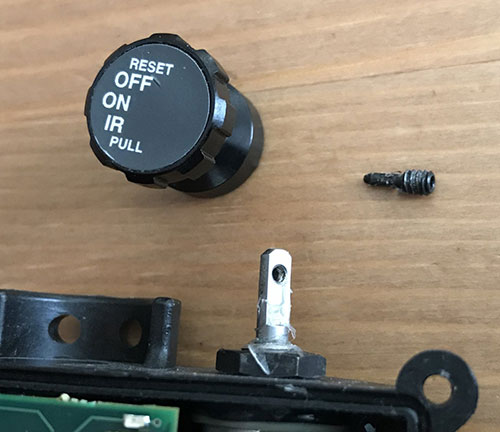
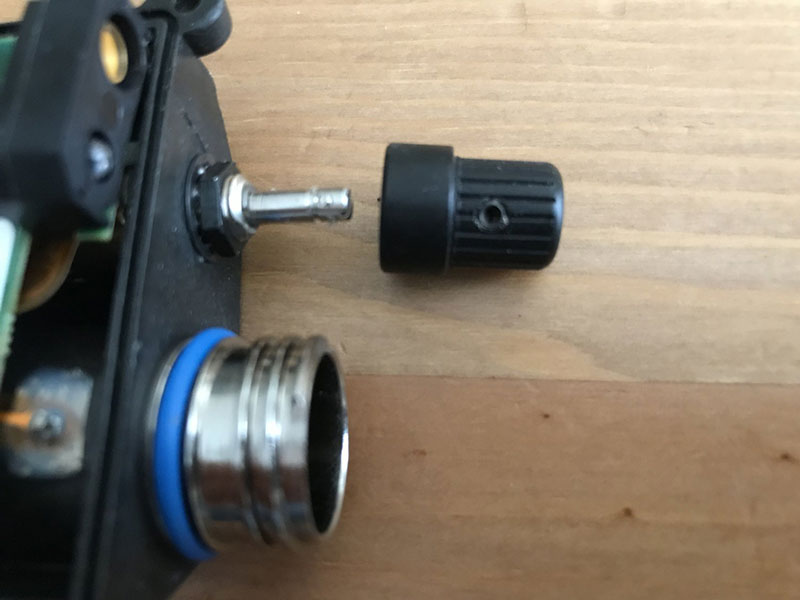
Battery Housing: First of all, you need to assemble the PVS-14 battery housing. Most housings will have these parts pre-installed, but just in case, here is what you need to do. The power knob has a small set screw/pin. You need a 0.050 Allen wrench to tighten it. Be careful when you install this screw. The pin can bottom out if the knob is not properly aligned, and if you try to force it, the hex socket of the screw will strip very easily. I am talking about the hex socket for the Allen wrench, not the threads.
-
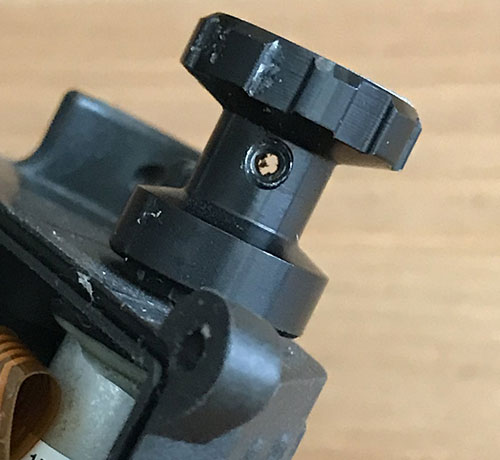
Gain Control Knob: Next up is installing the manual gain knob. It uses a similar size set screw, just without the pin. Slide the knob over the silver rod. Use your 0.050 Allen wrench to tighten the set screw into the indentation you see on the silver rod in the photo below.
-
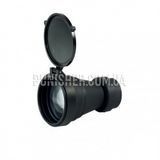
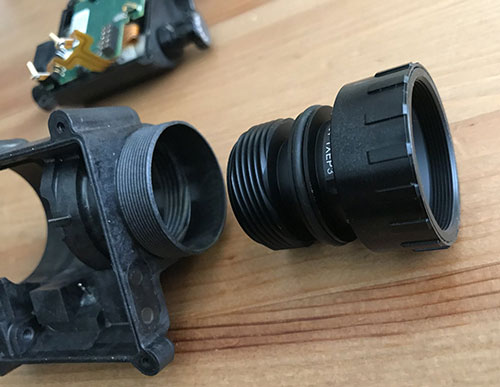
Objective Lens: The second step is installing the objective lens into the housing. You need to install the objective lock ring before you screw in the objective lens. Before you screw in the objective lens, clean the back of the lens using a lens cleaning pen or a cloth for cleaning glasses. There is also a close focus stop. I am missing both the lock ring and the close focus stop on this PVS-14, so I cannot show them to you. But once you install the lock ring and the objective lens, you need to screw on the close focus stop from inside the housing. This prevents you from unscrewing the objective lens right out of the housing. The PVS-14 has a shallow depth of field. You can either focus at infinity (and everything close will be out of focus) or you can focus on something close (but everything far away will be out of focus). To focus on close things, you unscrew the objective lens. If you unscrew it far enough, it will come out if you don't have the close focus stop installed. Do you need it? Not really, just be mindful of how far out you unscrew the objective lens.


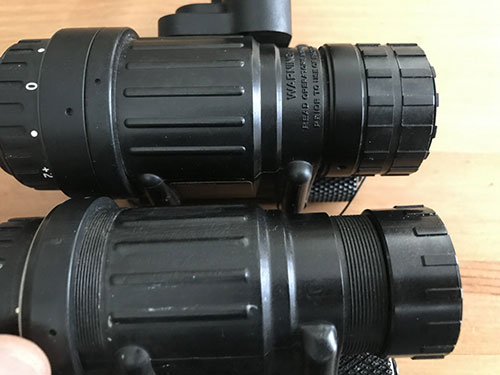
Some PVS-14 objective lenses are different from others. Here are two different objective lenses I have come across. The one on the left is the type I see the most on PVS-14s. Not sure where or who makes the one on the right. The lens on the right is extremely tight, and I should use some silicon grease to make its movement smoother.
-
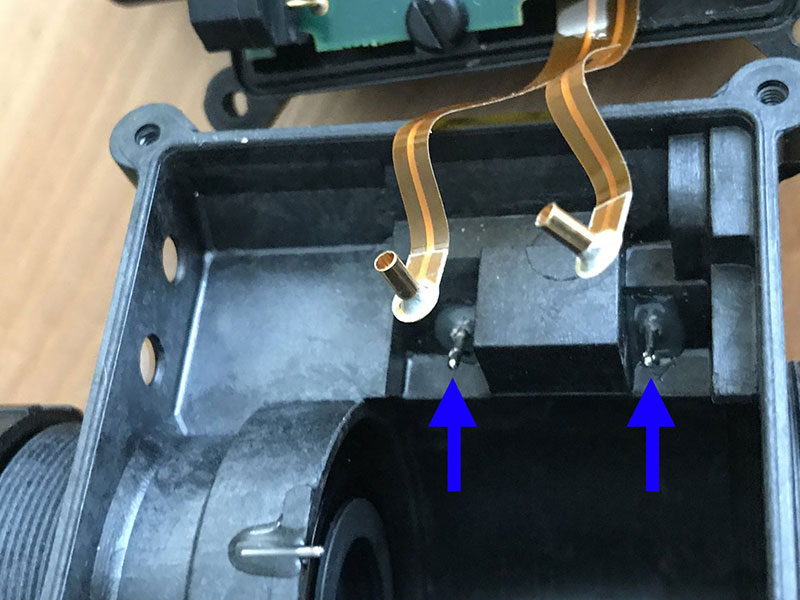
Connecting the Housings: Plug the battery housing into the monocular housing. If you look inside the monocular housing, two small pins are sticking up. They correspond with external contacts that are on either side of the threaded hole for attaching a J-Arm. The battery housing has a ribbon cable with two leads that need to be plugged onto those two pins. I use a small flat-head screwdriver to push these brass/copper-looking cylinders onto their matching pins.
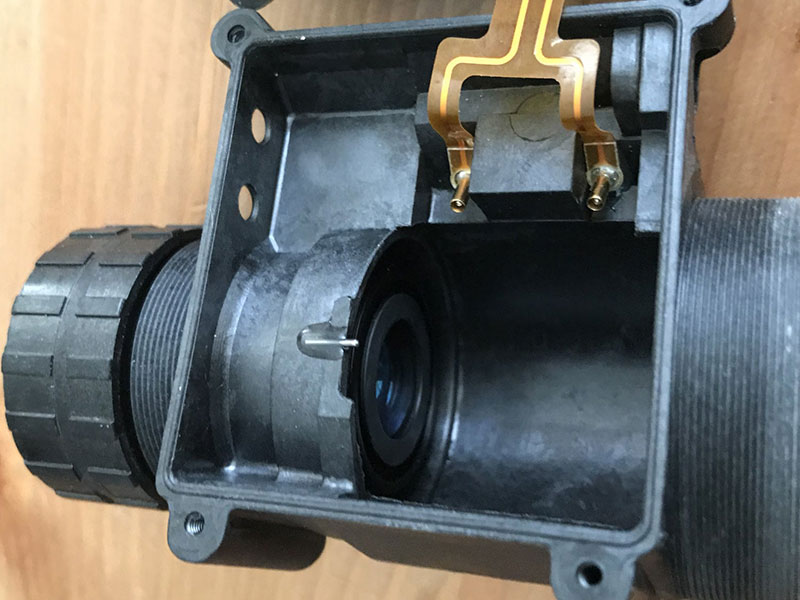
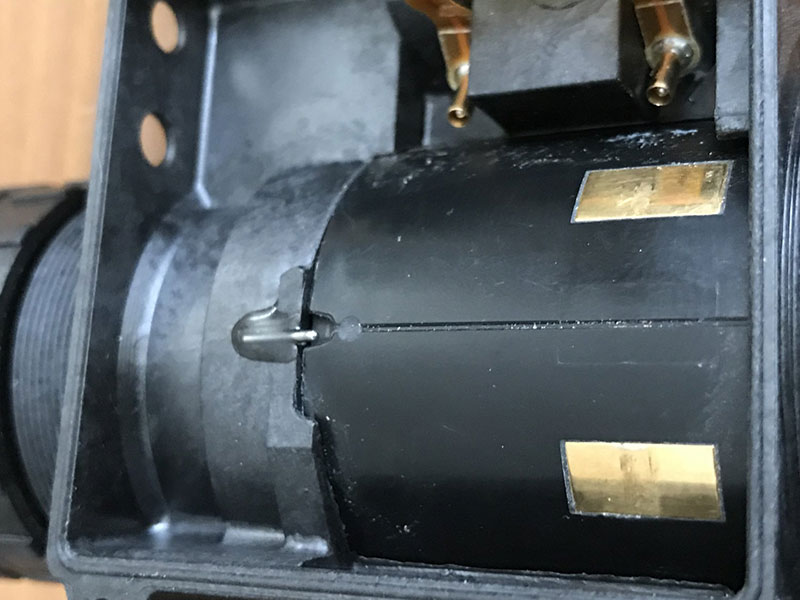
See that small metal pin epoxied into the monocular housing? That is an anti-rotation pin to keep the image intensifier tube from spinning once installed inside the housing.
-
Installing the IIT: The next step in building your own PVS-14 is to install the image intensifier tube (IIT). If you are using a 11769 tube with a pigtail, make sure the pigtail goes in first. Then insert the tube. There will be a small notch at the bottom edge of the tube. Line this up with that pin in the monocular housing. Before you seat the tube all the way in, blow it clear with the canned air duster.
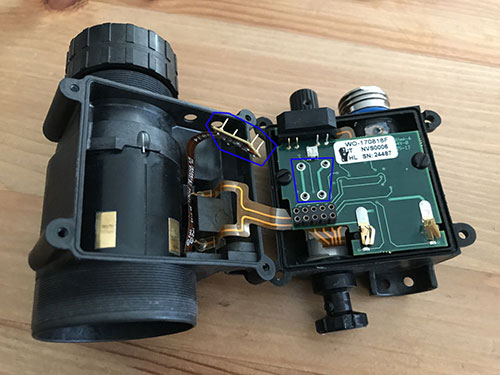
If you have a 10160 tube, you can ignore this step. If you have a 11769 tube, then read on. The 11769 pigtail has a small chip with four pins. Those correspond with holes on the battery housing board. I circled them in blue. Plug them into the board, as shown in the photo below. Here is the chip partially installed. Press down gently until the chip makes contact with the board.
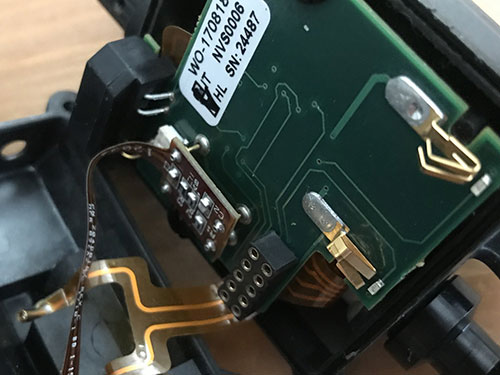
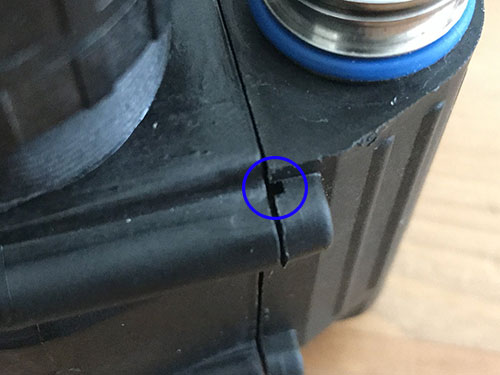
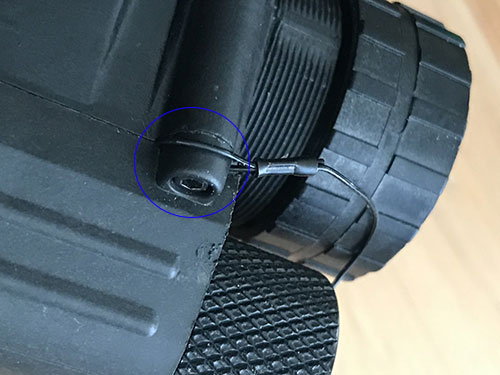
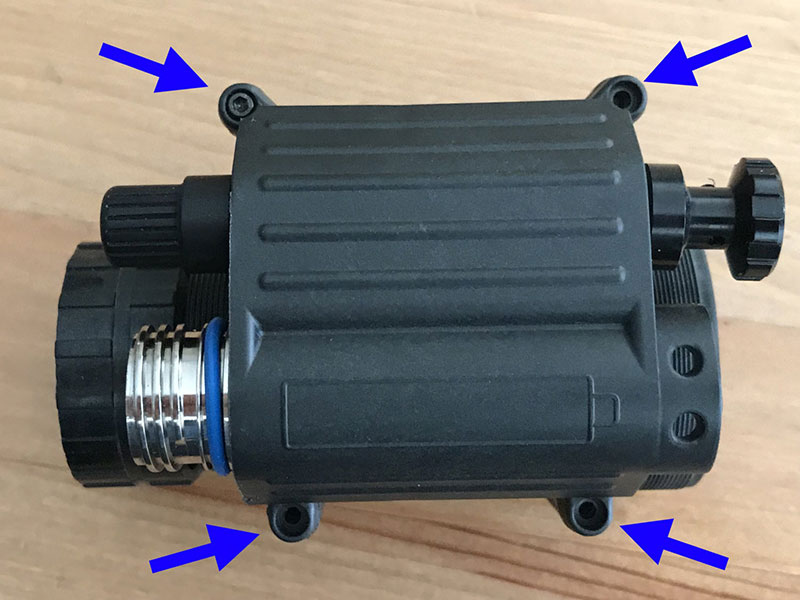
Now carefully fold the battery housing over the monocular housing, watching the ribbon cables fold in on themselves. If you look at the AA battery compartment side of the housing, one of the screw ears has a molded-in notch. This is for the battery cap tether. You need to loop the tether over this little part before you screw the housings together. Then take your 5/64 Allen wrench and tighten the four battery housing screws.
-
Securing the IIT: Now you need to lock the image intensifier tube in its place. Otherwise, it will slide back and forth and miss the contact points of the battery housing. If you tap the housing downward into your hand, it will reset the tube and turn back on. Ask me how I know. LOL
For a less "bubba-fied" budget solution, you simply drop the light pipe on top of the image intensifier. There is a small rectangular protrusion that you place over the spot where the 11769 pigtail goes into the tube.
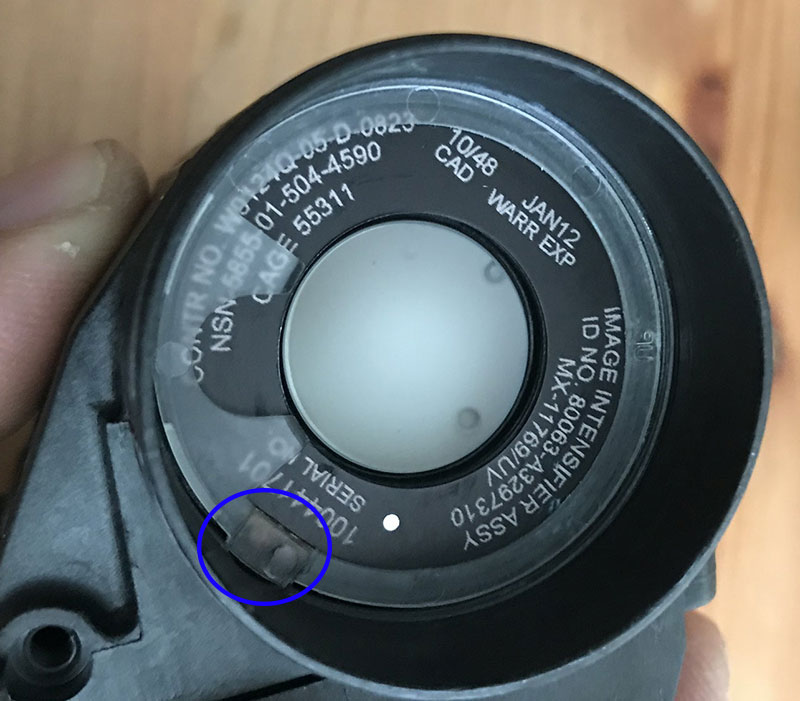
The last step in setting the tube is installing the tube retaining ring. This is where you need an old credit card or hotel key card. Cut it so it is as wide as the retaining ring. You could use a small flat-head screwdriver for this, but the card makes it easier to press down evenly and tighten the ring.
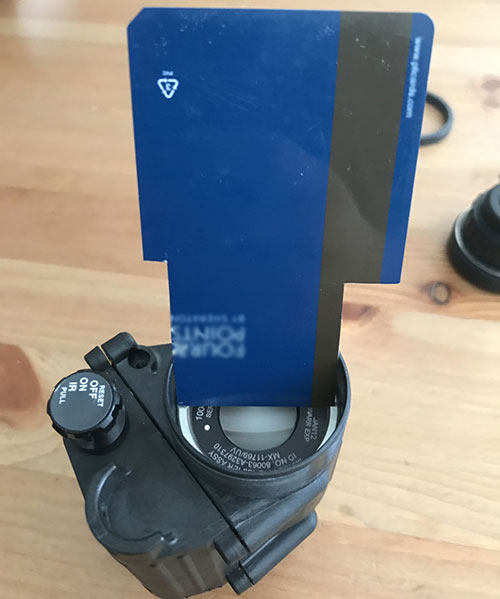
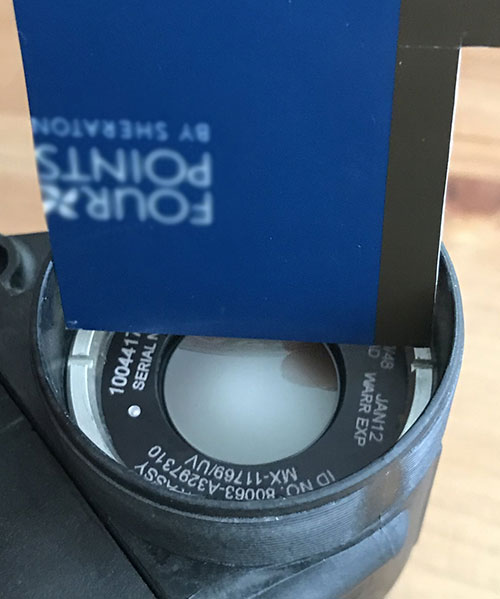
-
Eyepiece: Now install your eyepiece lock ring and the eyepiece. Be careful when screwing the eyepiece on, as the threads on the monocular housing are very fine and made of polymer. So cross-threading is very easy. Spray the tube and the eyepiece clear of any dust with the canned air duster or use the lens cleaning pen.
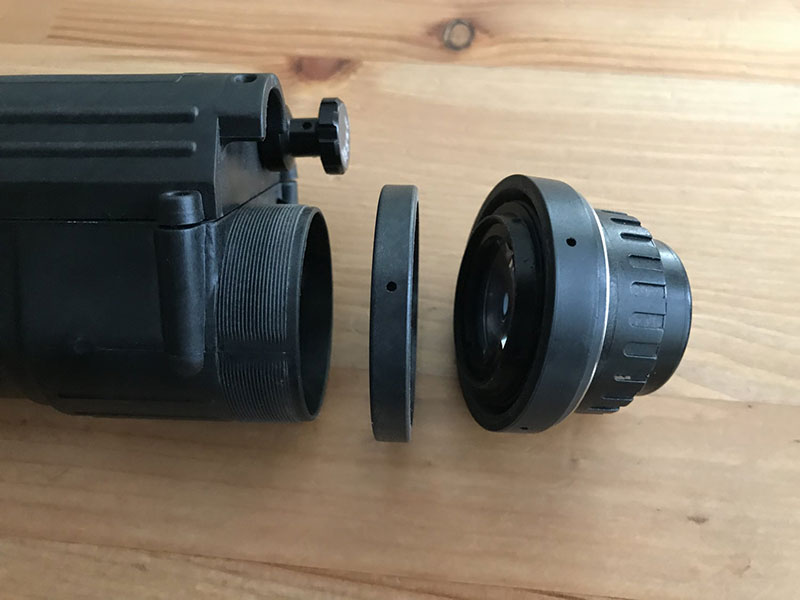
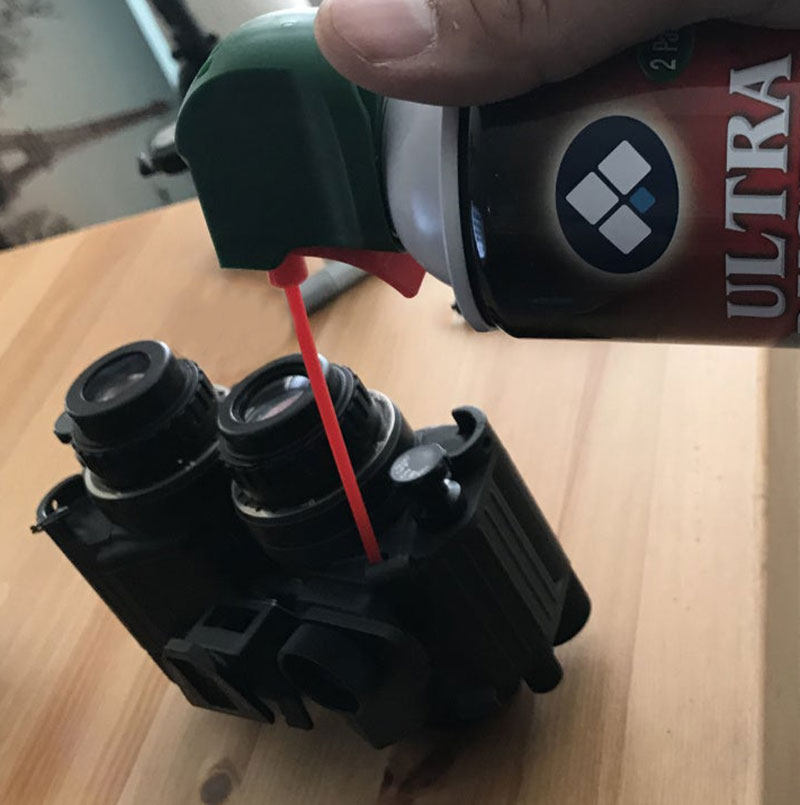
-
Purging (Nitrogen Purging): Then the last part is to install your purge screw and o-ring. Typically, factory night vision is purged with nitrogen, and some will tell you that you need proper equipment to do so. It certainly makes it easier to purge the PVS-14 if you have the right equipment, but it is up to you if you need to do it. If you live in a dry climate, you don't need to purge the night vision. If you live in a humid environment, it is possible that your night vision can fog up inside. There are some DIY methods of purging, but I have not tested them to see if they are viable. The first method is to use a can of compressed air. Carefully spray canned air into the purge hole and then quickly install the purge screw. Supposedly, this will replace the air inside the housing and reduce its susceptibility to fogging. The other method, which I have not heard of anyone trying, is to use nitrogen purging kits meant for wine bottles.
-
Focusing: Once your PVS-14 is complete, you need to set the focus to your eyes. Look through the eyepiece and rotate the objective lens to focus on something about 10 feet (3 meters) away. Ideally, look at something that has large words or fine detail. Then adjust the rear eyepiece, which has a built-in diopter. Get that rear focus as crisp as possible. Then readjust the front lens to focus at infinity.
Many modern civilian night vision devices actually copy the architecture of the PVS-14 because it turned out to be extremely successful from a repair and upgrade perspective.
Final Costs to Build Your Own PVS-14
Is it cheaper if you buy brand-new components? Not really. I know that isn’t what you want to hear, but the IIT is the most expensive part of the build. The retail price of the tubes can be $2,000-$3,600, depending on the specs, and if you want white phosphor, the price will be closer to the higher end of the spectrum. However, just like used firearms, you can find diamonds in the rough. You need to shop around. There is no singular place to buy such gems. But if you shop around for used aka “blem tubes” (tubes with blemishes), you can occasionally find good deals.
Below is what I call “blemtastically cheap”. This tube is not very desirable and looks like it has contracted a deadly disease. But if you actually look where the blems are, they are on the outer edge, which is called Zone 3. There is a small blem in Zone 2. Zone 1 is the area in the center, and that is relatively clean. You can actually use this tube for shooting at night at a flat range.
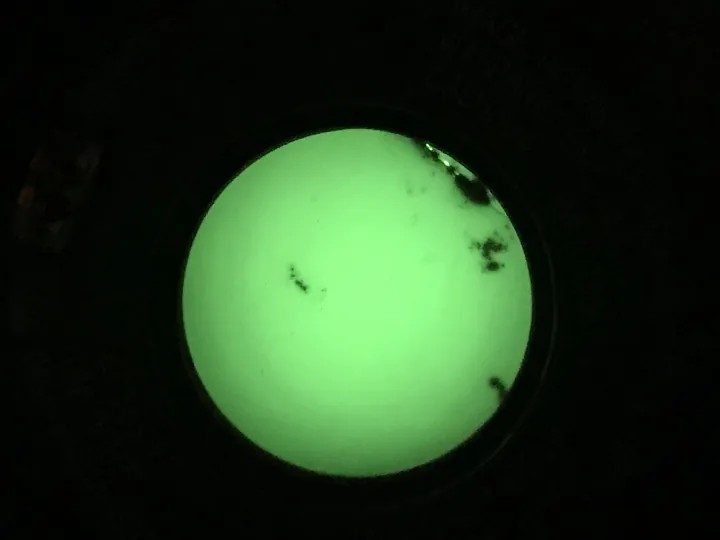
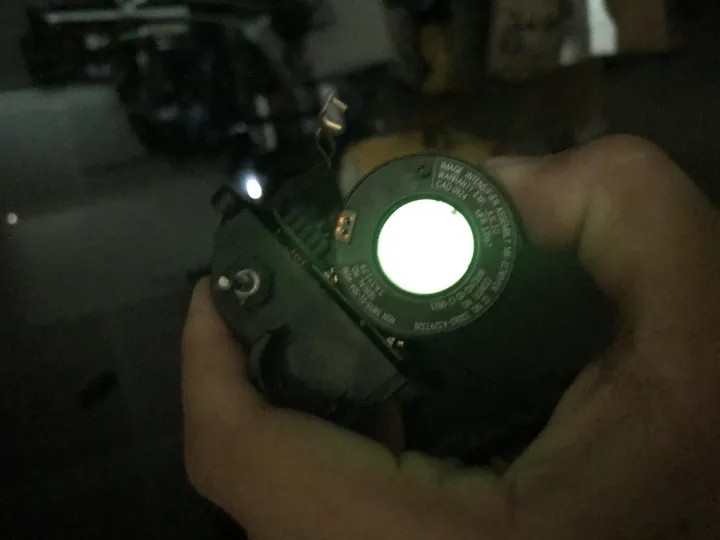
You can actually press an intensifier tube into the battery housing to test the tube before you install it. Obviously, do this somewhere dark. Most Gen 3 intensifier tubes are autogated, so you should not have to worry about burning them out. Just don’t have them look out into daylight.
There are two contacts on the board in the battery housing. Turn the power to ON and touch the battery housing to the corresponding contacts, and the tube should turn on. I did this to take a picture of the blem in the photo above.
Here is a video I did showing how ANVIS lenses cannot see green dots. The first two tubes you see are blem tubes inside PVS-14s. The green phosphor cost me only $500, and the white phosphor cost me $1,000. That was just for the tubes, no housings or optics. If you can overlook a small blemish, you can find some really good deals.
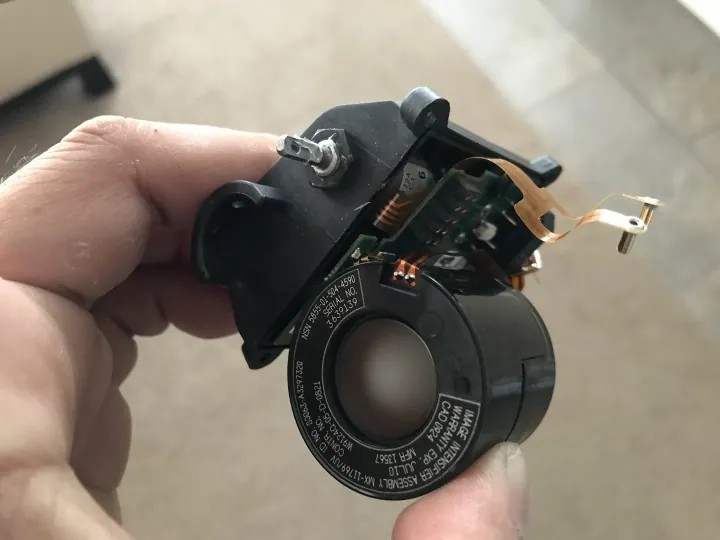
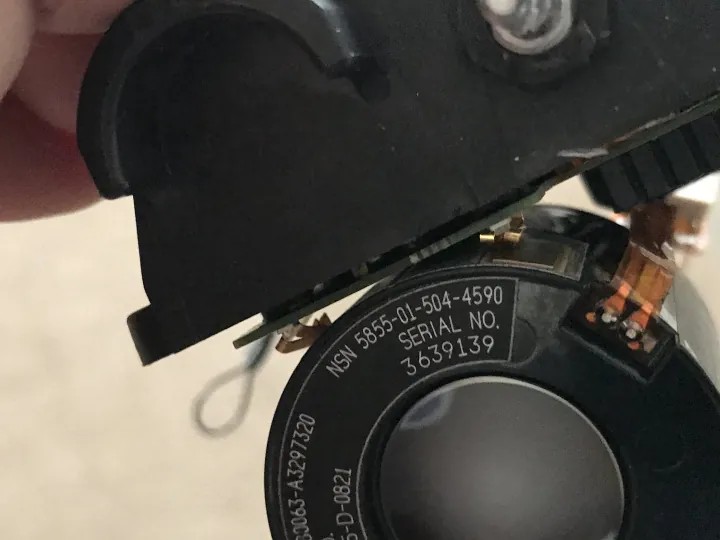
You can also look at less popular image intensifier tubes, like Photonis. When I built my ANVIS9 goggles, I came across a pair of Gen2+ commercial Photonis green tubes a guy had, and he only wanted $900 for the pair. Blem-free!! They are not quite as good as my Gen 3 L3 tubes, but they work. I can see in the dark and I can shoot in the dark. If you manage your expectations and build your own PVS-14 with cost-cutting compromises, you can find a happy medium and enjoy the darkness more often.
Even after a detailed review, not everyone will want to engage in NVD repair on their own. So, if you have doubts and feel it's time to delegate this task, entrust it to our specialists with a guarantee of success! To get acquainted with the terms and order a repair, click here.

Vitalii Buniak — article author
Military gear consultant
Before 2022, he worked as a sales assistant at the Panisher store. After the start of the full-scale invasion, he joined the Armed Forces of Ukraine, gaining real combat experience.
Thanks to his combat experience and deep knowledge of tactical gear, Vitalii serves as a personal expert of the Panisher online store in the fields of:
- Clothing and footwear
- Equipment
His recommendations help customers choose reliable and functional gear for any conditions.
FAQ: Answers to Frequently Asked Questions
1. Can I assemble a PVS-14 on my own?
2. What is the most important part of an NVD?
3. Is it difficult to repair a PVS-14?
4. Why might the device fog up from the inside?