Many people think that a fire is something out of the movies: sirens, huge flames, explosions, and chaos. But in real life, everything looks much more insidious. First, the smell of burning appears, then a light smoke, followed by a few seconds of confusion – and it is precisely at this moment that people often lose precious time.
To put it briefly, if you ask "what is a fire?" – it is an uncontrolled process of burning that poses a threat to life, health, property, and the environment. That is why the topic of fire safety remains critically important for both civilian life and military environments.
In dugouts, garages, workshops, field kitchens, at positions, or even in a regular apartment, the risk of fire has become much higher today due to generators, charging stations, wood-burning stoves (bourgeuikas), cheap extension cords, and a large number of electrical appliances. And while people on the Internet often look up strange things like "what does a fire in someone else's house mean in a dream", in real life, it is much more important to know the emergency procedures during a fire and understand how to behave during a fire without panic and fatal mistakes. Let's break it down here and now with a guide from the Punisher military store.
Fire is Not an Accident: Top Causes of Ignitions
To be honest, most serious fires start due to mundane negligence.
Problems particularly often arise from:
-
overloading the electrical network;
-
faulty chargers;
-
cheap Chinese extension cords;
-
improper use of generators;
-
violation of the operating rules for wood-burning stoves;
-
storing fuel near heat sources.
From personal experience, I will tell you: people highly underestimate the temperature of ordinary things. A generator, inverter, or even a power station, after long operation, can heat surrounding materials so much that a fire becomes only a matter of time.
In field conditions, makeshift electrical wiring becomes a separate issue. Very often, wires lie directly over wood, fabric, or insulation. Any short circuit – and a fire develops literally in minutes.
Even a small amount of thick black smoke can completely disorient a person in a matter of dozens of seconds. In a dark, smoke-filled room, the brain very quickly loses its sense of direction, and the air becomes unfit for breathing.

What is a Fire and What Are the Classes of Fire
A basic understanding of the topic begins with a simple fact: fire classes do not exist just for show. The type of ignition determines exactly what can be used to extinguish it.
The main types of fires:
Class A – when wood, paper, or fabric is burning.
Class B – when fuel, gasoline, or oil is burning.
Class C – gas ignitions.
Class D – metals are burning.
Class E – live electrical equipment is at the center of the ignition.
Class F – cooking oils or other fats serve as the source of fire spread.
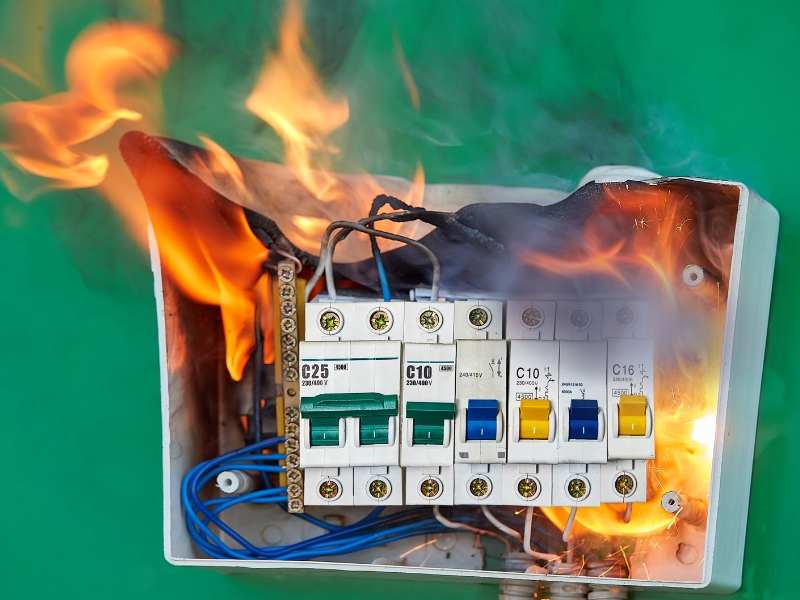
This is exactly why fire classification is critically important. For example, pouring water on an electrical panel or a battery is one of the most dangerous and common mistakes.
Most people who die in a fire do not die from the flames, but from the products of combustion. Smoke in a closed room can become deadly in just a few minutes.
How to Tell if You Can Extinguish a Fire Yourself
There is a simple rule:
If the flame is bigger than you or is spreading very quickly, you need to evacuate, not play the hero.
A fire extinguisher is only effective at an early stage of ignition. If smoke is already blocking visibility, the temperature is rising sharply, and the fire is moving to the walls or ceiling, there is practically no chance of localizing the fire.
Particularly dangerous are:
-
ignitions of accumulators;
-
burning of lithium batteries;
-
fuel fires;
-
electrical wiring ignitions;
-
fires in enclosed spaces.
For instance, modern drone batteries, power banks, and charging stations can produce highly aggressive burning with toxic smoke and re-ignition.

How to Properly Use a Fire Extinguisher
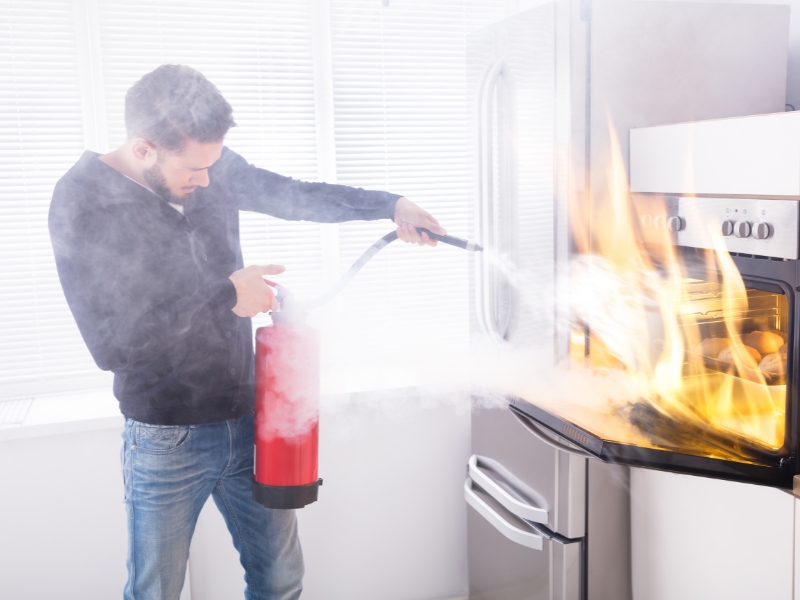
Most people keep a fire extinguisher "just in case." But when a real fire happens, chaos ensues. Someone forgets to pull the pin. Someone directs the stream at the top of the flame. And someone uses the wrong type of fire extinguisher entirely.
Dry Powder Fire Extinguisher
The most universal option. It is suitable for electrical, fuel, and most household ignitions. Its main advantage is its versatility. But there is a downside: in an enclosed space, the powder instantly impairs visibility and breathing. After activation, the room literally fills with a dense cloud.
Carbon Dioxide CO₂
Ideal for electronics and equipment. Leaves no mess after use. But this is exactly where a dangerous mistake very often happens – people grab the metal discharge horn.
The thing is, during operation, the temperature of the horn drops sharply, and you can get a severe burn in literally seconds. Therefore, you must hold such an extinguisher only by its designated handle!
Water or Foam
Works well on fabric, paper, wood, and furniture. However, it is absolutely unsuitable for electrical, gasoline, or live equipment fires. Despite this, attempts to douse an electrical panel with water during a fire still occur regularly.
The average operating time of a standard fire extinguisher is only 8-15 seconds. That is why you need to act quickly and aim at the base of the flame, rather than chaotically "spraying" the extinguishing agent.
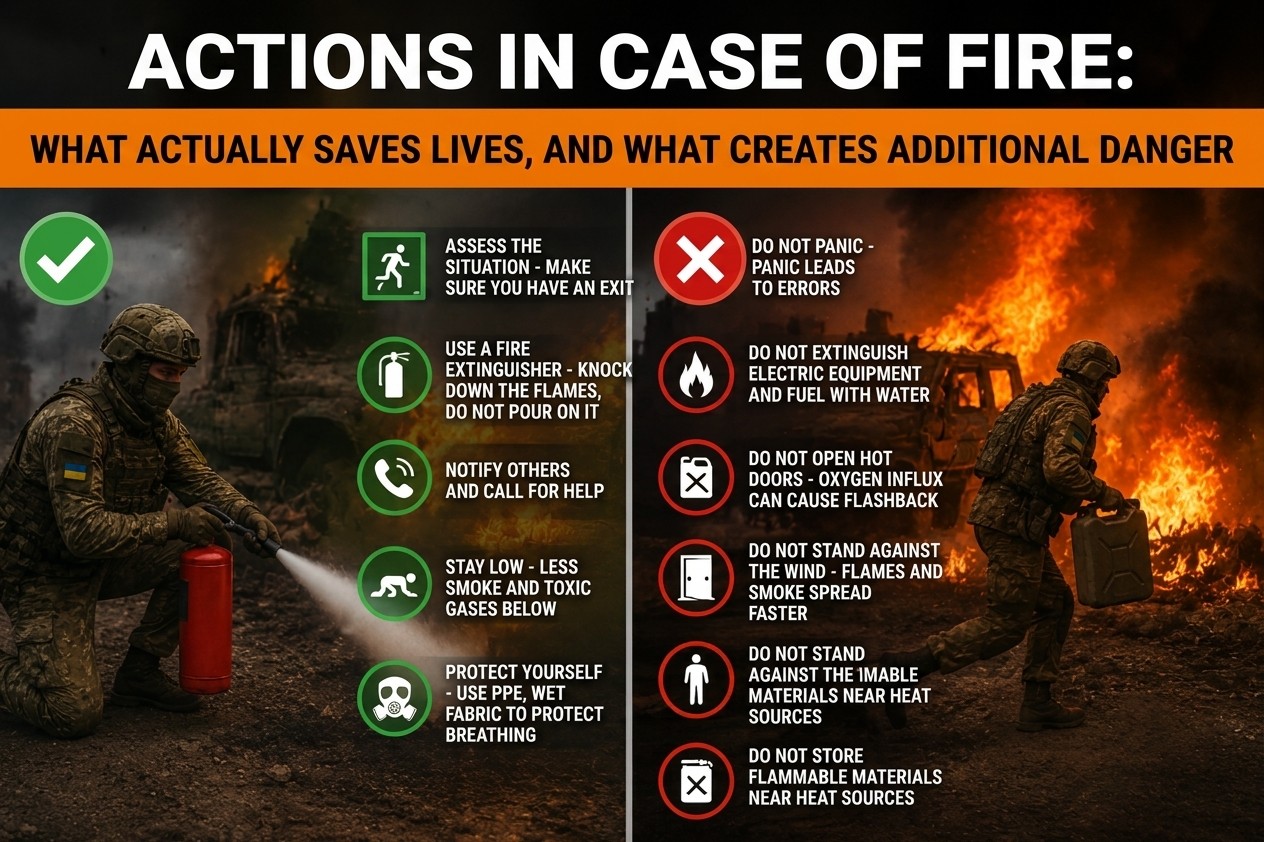
Fire Action Protocol
Under stress, the brain functions much worse. That is why it is better to know the emergency action protocol in advance.
Steps to Salvation:
-
Assess the scale of the ignition.
-
Warn everyone around.
-
Call emergency services.
-
If the ignition is small, use the appropriate fire extinguisher.
-
Always leave yourself an escape route.
-
If the smoke becomes heavy, evacuate immediately.
Panicked Internet queries often look like "fire number" – a strange phrasing, but clear in essence. Thus, it is worth memorizing in advance: in Ukraine, the emergency number for rescuers is 101 or 112.

How to Behave During a Fire: Proper Evacuation
When a room fills with smoke, the situation changes very rapidly. Smoke rises upward, so you need to move as low to the floor as possible. One of the most dangerous mistakes is running in a smoke-filled room. A person loses orientation very quickly.
If possible:
-
cover your mouth and nose with a damp cloth;
-
move along the wall and closer to the floor;
-
do not open windows unnecessarily;
-
do not use the elevator.
In high-rise buildings, an elevator during a fire often becomes a deadly trap due to smoke accumulation or power outages.
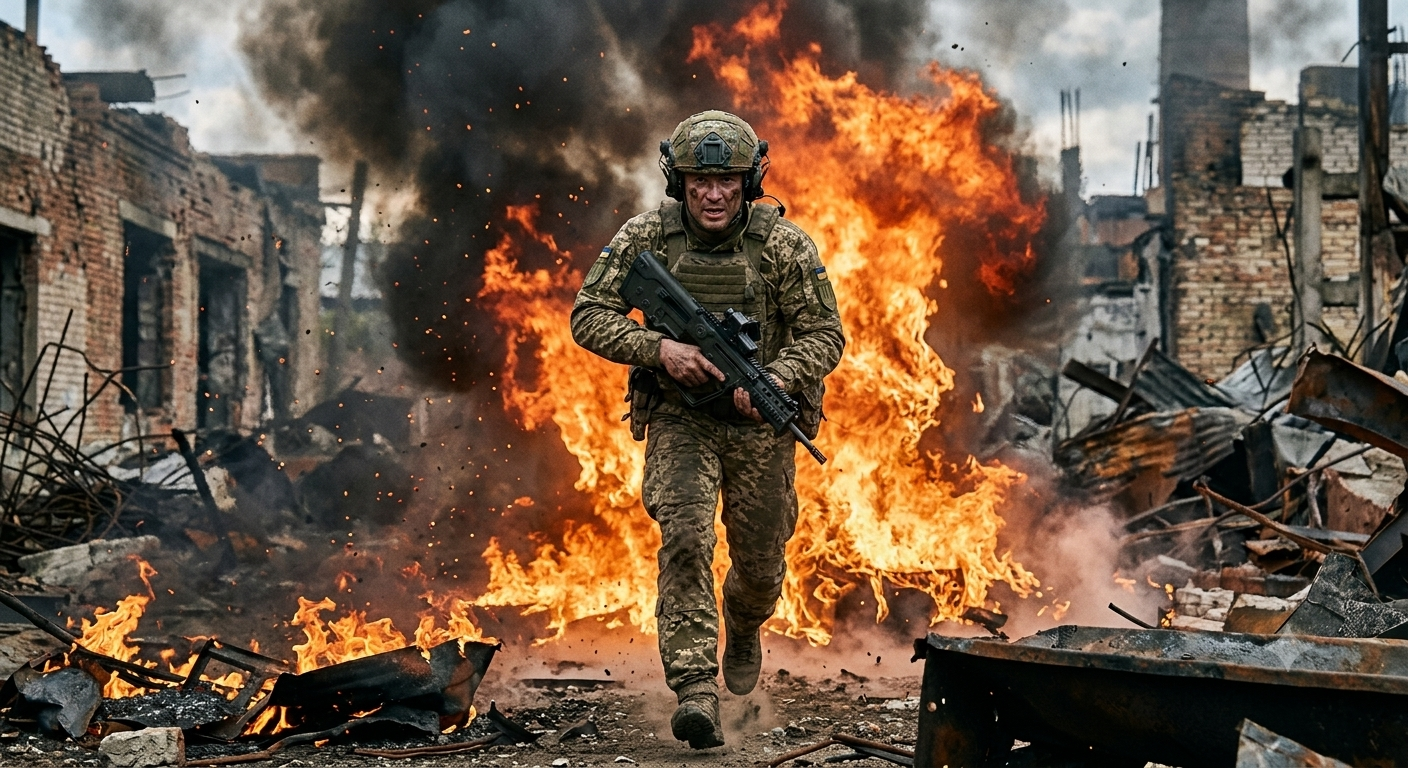
In an active combat zone, it is advisable to wear fire-resistant gear to protect yourself from brief contact with open flames (the path to safety often leads through flames).
Even a small amount of thick black smoke can completely disorient a person in 20-30 seconds.
The Most Dangerous Mistakes During a Fire
In practice, most problems are created not by the fire itself, but by the behavior of people.
Typical mistakes:
-
attempting to save personal items instead of evacuating (documents, laptop, gear – none of this is worth your life);
-
opening windows during intense burning;
-
using water on electrical fires;
-
panicking;
-
moving chaotically;
-
improper use of a fire extinguisher;
-
ignoring the smell of burning;
-
attempting to walk through thick smoke, standing at full height.
In field conditions, makeshift electrical wiring becomes a separate issue. Especially in dugouts and temporary shelters, where wires often lie directly on top of wood, fabric, or insulation. Added to this is a large amount of fuel, accumulators, makeshift electronics, and the confined space of shelters.
A fire is a situation where minor mistakes very quickly become critical. If we briefly answer the question "what is a fire?" – it is not just fire, but a complex combination of hazards: smoke, panic, toxic combustion products, and incorrect decisions.
That is why a basic understanding of what a fire is, what types of fires exist, how fire classification works, and how to behave during a fire is not a "formality for a briefing", but a real survival skill.
A proper fire extinguisher, an understanding of its type, the correct action protocol during a fire, and a cool head often save much more than heroism. Most importantly, prevention is always cheaper and safer than any battle with fire. And in cases where contact with fire cannot be avoided, you can back up your body with flame-resistant clothing options.

Vitalii Buniak — article author
Military gear consultant
Before 2022, he worked as a sales assistant at the Panisher store. After the start of the full-scale invasion, he joined the Armed Forces of Ukraine, gaining real combat experience.
Thanks to his combat experience and deep knowledge of tactical gear, Vitalii serves as a personal expert of the Panisher online store in the fields of:
- Clothing and footwear
- Equipment
His recommendations help customers choose reliable and functional gear for any conditions.
FAQ. Frequently Asked Questions
1. What fire extinguisher is best to have at home or in a car?
2. Why shouldn't you hold the horn of a CO₂ fire extinguisher?
3. How should one properly move in a smoke-filled room, and is it worth opening windows during a fire?
4. What should you do if a battery or power bank catches fire?