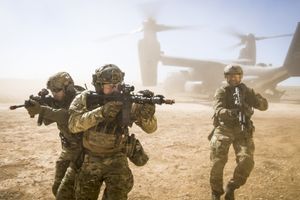
Urban warfare has long become an integral component of modern conflicts. While a few decades ago major combat engagements took place out in the open, today military personnel are increasingly required to operate inside buildings, industrial complexes, subterranean structures, and dense urban environments. This is where CQB (Close Quarters Battle) begins – engagement at extremely short distances where decisions are made in fractions of a second.
Room clearing stands as one of the most intricate elements of CQB. It demands a high level of training, seamless squad coordination, specialized gear, and relentless drilling. Even the most seasoned operators admit: no room is ever "simple". Therefore, together with a specialist from the Punisher military store, let’s explore the foundations of this tactical discipline and break down a quick video with a professional understanding of the subject.

What is CQB?
CQB (Close Quarters Battle) refers to conducting military operations in confined spaces where the engagement distance between opposing forces typically ranges from a few feet to a few dozen yards. These environments include:
-
residential homes;
-
office buildings;
-
warehouses;
-
industrial plants;
-
basements;
-
narrow hallways;
-
stairwells;
-
vehicles.
Unlike open terrain, confined structures offer virtually no opportunity to leverage long-range firepower advantages. Every corner, doorway, or piece of furniture can conceal a threat, and reaction time is measured in mere milliseconds. That is why CQB combines marksmanship skills, tactical combat casualty care, teamwork, spatial awareness, and psychological resilience.
Military analysts have repeatedly pointed out that during combat in dense urban areas, the highest risks emerge not on open streets, but inside structures. Consequently, NATO forces allocate a massive amount of training hours to indoor room clearing, making drills in specialized shoot houses a mandatory standard.
Why Is Room Clearing So Dangerous?
Inside an enclosed space, unpredictable variables multiply exponentially. A restricted field of view prevents operators from controlling an entire room simultaneously. Doors can open inward or outward, furniture creates blind spots, and stair landings introduce additional threat vectors. Compounding these factors are:
-
Intense noise and echoes.
-
Low-light conditions.
-
Dust and smoke.
-
Numerous physical obstacles.
-
Severe psychological stress.
This is precisely why even special operations units spend hundreds of hours training in specialized facilities, grinding team coordination to the point of muscle memory.
According to international estimates, over 55% of the global population currently resides in urban areas, a figure projected to approach 70% by mid-century. This indicates that future conflicts will increasingly occur in urbanized environments where structures, utility infrastructure, and dense surroundings play a decisive role. As a result, urban warfare readiness has become a top priority for modern armed forces.
The Core of Success – Teamwork
Popular movies often portray a lone hero single-handedly clearing an entire building. In reality, modern CQB relies almost exclusively on a well-trained element. Every operator is responsible for their own sector of fire, maintains continuous visual contact with team members, and executes according to established procedures. This methodology minimizes errors and dramatically increases force survival. Professionals place just as much emphasis on communication as they do on marksmanship. Even the sharpest shooter cannot make up for a breakdown in team cohesion.
During modern training sessions, a significant portion of time is spent on skills unrelated to firing weapons. Operators are taught movement mechanics, rapid decision-making, team communication, positive target identification (civilian vs. threat), working in low light, casualty evacuation, and applying combat medicine under extreme stress.
What Gear Is Used in CQB?
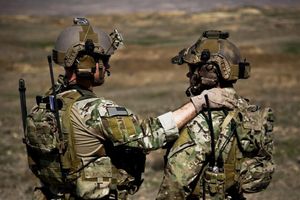
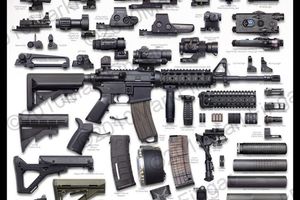
In close-quarters combat, the focus shifts from gear volume to gear ergonomics. Operators typically select compact setups that do not hinder movement through tight corridors or quick position transitions. A baseline loadout includes:
-
a compact assault rifle or carbine;
-
a red dot sight;
-
a magnifier, if medium-range capabilities are also required;
-
a weapon-mounted tactical light;
-
active hearing protection/headset;
-
plate carrier with an ergonomically configured load-bearing system;
-
tactical ballistic helmet;
-
Individual First Aid Kit (IFAK);
-
durable tactical gloves;
-
high-traction, comfortable combat boots.
Properly fitted military gear not only enhances mobility but also eliminates hung-up hazards during dynamic execution.

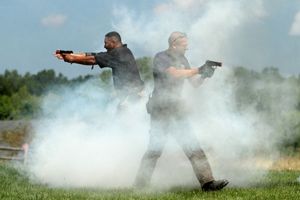
Instructors frequently utilize shot timers during training evaluations. Data reveals that upon entering a small room, primary critical events – assessing the space, threat identification, and initial engagement decisions – take place within just 2 to 5 seconds. This is why CQB is deemed a discipline where victory hinges not on raw strength or speed, but on training quality and the ability to operate methodically under pressure.
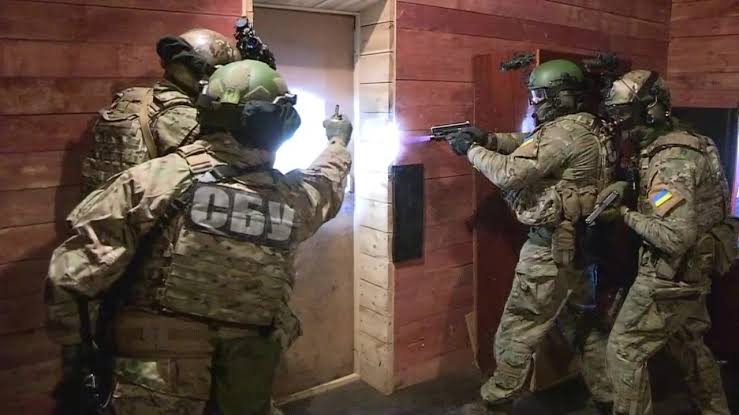
Why Does Lighting Play Such a Crucial Role?
The majority of structures encountered in combat operations suffer from poor lighting or total power loss. Because of this, a modern tactical flashlight has long been standard issue across military units. Its function extends beyond illuminating dark spaces – it enables rapid environmental assessment, target identification, and safer movement through hazardous areas. At the same time, light discipline requires specialized instruction, as any active light source can instantly compromise position.
Systematic room clearing doctrines first took shape during the 1920s and 1930s with police units operating in Shanghai. British special forces later adapted and refined these concepts, leading to widespread development of indoor combat tactics across global militaries post-World War II.
Personal Protective Equipment (PPE)
Inside a room, flying spall, concrete fragments, wood splinters, broken glass, and jagged metal pose as much of a hazard as incoming gunfire. Therefore, modern tactical loadouts feature:
-
Ballistic helmet.
-
Protective eyewear.
-
Active hearing protection.
-
Body armor with ballistic plates.
-
Knee and elbow pads.
This gear drastically reduces injury risks when moving through tight passages, clearing breaches, or negotiating rubble-strewn spaces.
Training Over Gear
Even the most expensive equipment cannot make an operator effective without continuous practice. CQB preparation encompasses:
-
physical conditioning;
-
marksmanship fundamentals;
-
spatial reasoning development;
-
team tactical maneuvers;
-
stress inoculation drills;
-
combat casualty care.
Only the relentless repetition of standard operating procedures ensures rapid, accurate execution under extreme operational pressure.
Special forces training utilizes specialized shoot houses – modular structures where walls, doors, and partitions can be reconfigured in just 15 to 30 minutes. This provides a fresh layout every run, preventing operators from memorizing floor plans and forcing them to adapt dynamically to unknown structures.
Common Rookie Mistakes
During introductory training phases, instructors focus primarily on discipline rather than speed. Frequent errors include:
-
Rushing and over-penetration.
-
Spatial disorientation.
-
Neglecting team communication and sectors of fire.
-
Poor equipment placement causing snag points.
-
Insufficient physical conditioning.
-
Lack of sustained training routines.
This is why seasoned operators constantly reinforce the rule: in CQB, speed comes from smooth execution – the winning team is not the one moving fastest, but the one operating with the greatest cohesion.
Close-quarters battle training requires purpose-built facilities, modular walls, moving target systems, video recording setups, and dedicated instructors monitoring every step. As a result, training a single CQB operator can incur significantly higher costs than standard marksmanship courses.
How to Prepare Your Gear?
Before any drill or operational deployment, operators verify that their loadouts do not restrict movement or catch on surroundings. Pouches must not snag on door frames or furniture, weapon slings must be properly adjusted, and IFAKs must remain immediately accessible with either hand. Equally essential is lightweight, high-mobility apparel and boots that offer reliable traction in slick or cluttered spaces. This is why many operators prefer modular loadout platforms that can be customized to match specific mission profiles.
Even if a team clears the same building dozens of times, instructors constantly shift furniture, re-angle partitions, adjust lights, alter target placements, and flip door swing directions. This forces operators to continuously process visual information rather than running on autopilot.
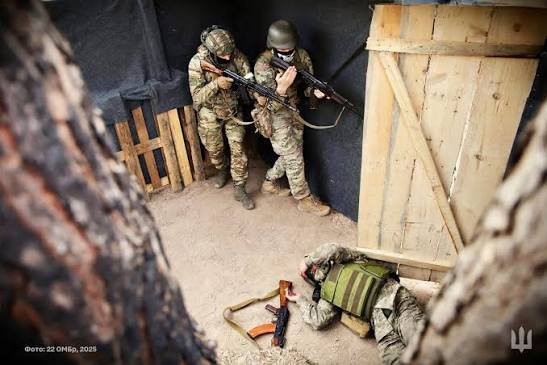
CQB is not about flashy maneuvers; it is about discipline, rigorous training, and functioning as a single cohesive unit. In confined environments, tactical advantage rarely belongs to the most heavily armed, but rather to those who have mastered self-control, team communication, and efficient gear employment.
A well-selected gear setup – from helmets and plate carriers to tactical lights, medical kits, and load-bearing gear – ensures tasks are carried out safely and effectively. If you are looking to purchase military gear in Ukraine, choose proven, field-tested solutions built for real-world demands and your specific mission profile.
If you have further questions, a comprehensive deep dive into CQB's origin history, evolution, prospects, equipment choices, squad mechanics, and psychological factors can be found in our article: "CQB: How Indoor Close-Quarters Battle Was Born and Why It Became the Ultimate Challenge for Modern Armies".
NEED HELP CHOOSING?
Our specialists will help you choose the optimal gear for your needs
Contact a specialist!

Vitalii Buniak — article author
Military gear consultant
Before 2022, he worked as a sales assistant at the Panisher store. After the start of the full-scale invasion, he joined the Armed Forces of Ukraine, gaining real combat experience.
Thanks to his combat experience and deep knowledge of tactical gear, Vitalii serves as a personal expert of the Panisher online store in the fields of:
- Clothing and footwear
- Equipment
His recommendations help customers choose reliable and functional gear for any conditions.
FAQ: Answers to Frequently Asked Questions
1. What does CQB stand for?
2. Why is room clearing considered the most challenging discipline?
3. What equipment is most critical for CQB?
4. Can you learn CQB on your own?
Step-by-Step Video Guide to Clean Up a Room
Video translation author: Combat Raccoon