When people first start exploring ballistic protection, a common confusion often arises: what exactly does Level IIIA mean, what does it actually protect against, and why are some armor panels soft while others resemble full-sized hard plates?
Many myths have emerged in recent years as military topics moved beyond specialized circles of law enforcement and armed forces. Today, ballistic protection is of interest to military personnel, medics, volunteers, security guards, journalists, sport shooters, and even civilians looking to enhance their personal safety.
It is crucial to clarify the main point right away: Level IIIA body armor is primarily protection against handguns and fragmentation, not a universal "invincibility against everything." Due to a misunderstanding of this fact, people sometimes expect a soft armor panel to perform tasks it was never designed for. This guide from the Punisher military store will help prevent such misconceptions.
What Does Protection Level IIIA Mean?
The IIIA class originates from the American NIJ (National Institute of Justice) standard, which serves as one of the most recognized benchmarks in the world of ballistic protection.
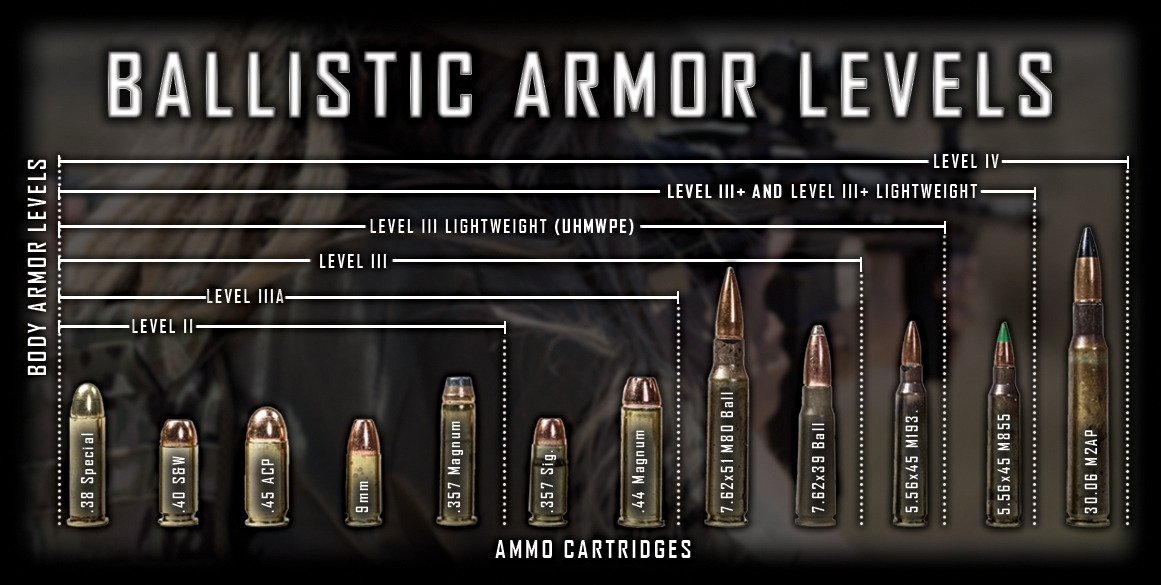
According to the NIJ 0101.06 standard, Level IIIA protection must ensure the stopping of .357 SIG FMJ Flat Nose and .44 Magnum SJHP rounds. Additionally, this protection usually covers smaller handgun calibers and a significant portion of fragmentation threats.
In practice, this means that IIIA is most commonly used in soft armor panels for concealed carry, in assault or lightweight configurations, for fragmentation protection, or as an additional layer of protection under plate carriers.
However, it is vital to understand: Class IIIA by itself is not designed to stop rifle rounds such as 5.45×39, 5.56 NATO, or 7.62×39. For these threats, hard armor plates of Level III or IV are required.
Most modern soft IIIA armor panels are capable of withstanding multiple hits within the test zone, rather than just one. This is why they are often referred to as multi-hit protection.
Why IIIA Remains Relevant
Despite the popularity of heavy hard plates, soft protection hasn't gone anywhere. On the contrary – for many tasks, it remains the most logical solution. This is especially evident where mobility, comfort, long-term wear, low weight, and concealability are critical.
From personal experience, the difference between "staying in armor for a few hours" and "wearing it all day" is felt very quickly. This is why soft IIIA is often used in situations where the balance between protection and user endurance is more important than the maximum protection level.
This is particularly relevant for drivers, crews of combat and civilian vehicles, medics, UAV operators, security structures, concealed carry, and operations in rear areas.
Materials Used in IIIA Armor
Modern IIIA armor panels are typically made from aramid fibers, UHMWPE (Ultra-High-Molecular-Weight Polyethylene), or hybrid solutions.
The most famous materials are Kevlar, Twaron, Honeywell Spectra Shield, and Gold Shield. They all work on a similar principle: absorbing and distributing the bullet's energy over a large surface area.
Different manufacturers combine materials in various ways to achieve:
-
lower weight;
-
reduced thickness;
-
better flexibility;
-
increased resistance to deformation.
Rimelig, Hybrid, and Steel: What is the Difference?
Some manufacturers categorize IIIA protection into several tiers based on materials and construction.
Rimelig – Base Soft Armor Panel
This is the classic version of IIIA soft protection, aimed at everyday use, training, security tasks, and field conditions. These panels are usually made of aramid materials. Their main advantage is affordability and a decent balance between weight and protection. Such solutions are most often used as a first soft armor purchase.
Hybrid – Lightweight Composite Solutions
Hybrid panels are typically created using several types of modern ballistic materials simultaneously. The core idea is to achieve lower weight, reduced thickness, better ergonomics, and comfortable wear. These armor panels are often noticeably thinner than classic aramid solutions, which is significantly felt during long-term use or while working in a vehicle.
Steel IIIA
A quick clarification is needed here: Steel IIIA solutions are much rarer than classic soft panels. Most often, these are specialized thin steel elements with an additional anti-fragmentation coating. One such coating is PAXCON, which is used to reduce the risk of secondary fragmentation and ricochets after impact.
However, one must understand that steel protection has its own characteristics:
-
Higher weight.
-
Rigidity.
-
Different ergonomics.
-
Specific behavior during fragmentation impacts.
This is why the modern market is increasingly shifting toward composite and polyethylene solutions.
One of the main reasons for the popularity of UHMWPE armor is its very low weight. Some modern polyethylene armor panels are significantly lighter than equivalent aramid solutions.
What to Look for When Choosing a IIIA Vest
One of the most common mistakes is looking only at the protection class number. In reality, certification, production date, material, thickness, weight, coverage area, comfort, ventilation, and compatibility with your plate carrier are all vital.
It is also important to remember that soft armor panels age over time. Moisture, UV light, mechanical stress, and improper storage all affect lifespan. This is why most manufacturers indicate a recommended service life, which is often around 5 years for soft panels.
IIIA and Fragmentation Protection
In modern warfare, fragments remain one of the most common threats. In this regard, IIIA often proves more relevant than many might think. Of course, everything depends on the type of fragment, distance, velocity, and angle of impact. But protection against secondary fragmentation and small shards is precisely why soft armor panels are widely used even alongside hard plates.
Soft IIIA armor panels are often used beyond just vests. They can be found in groin protectors, shoulder protection, side panels, and other elements of modular gear.


Level IIIA armor is not "armor against everything", but a very specific tool for specific tasks. Its main advantages are mobility, multi-hit capability, comfort, and effectiveness against most handgun threats and a significant portion of fragments.
This is why IIIA is actively used by military personnel, security agencies, medics, vehicle crews, journalists, and civilian specialists in high-risk areas. The key is to correctly understand the limits of such protection. A good body armor setup is not just the protection level on the label, but an adequate selection based on real tasks, conditions, and usage scenarios.

Vitalii Buniak — article author
Military gear consultant
Before 2022, he worked as a sales assistant at the Panisher store. After the start of the full-scale invasion, he joined the Armed Forces of Ukraine, gaining real combat experience.
Thanks to his combat experience and deep knowledge of tactical gear, Vitalii serves as a personal expert of the Panisher online store in the fields of:
- Clothing and footwear
- Equipment
His recommendations help customers choose reliable and functional gear for any conditions.
FAQ. Frequently Asked Questions
1. Does IIIA protect against rifles?
2. What does a IIIA vest protect against?
3. Which is better: Aramid or Polyethylene?
4. Is IIIA needed along with hard plates?