There are situations where the correct answer has long been laid out in the manual. And then there are those where the manual ends about a second before the most interesting part begins.
Non-linear thinking is not about wanting to do everything in reverse. Nor is it about a stubborn "I know better". It is about the ability to look at a problem from a different angle, abandon the obvious algorithm, and find a solution that works specifically under concrete conditions.
Ukrainian history of science, engineering, and military technology has plenty of examples of this approach. From aviation and welding to cybernetics and modern defense technologies. And interestingly, that exact same principle works brilliantly even in a much simpler question: how to choose military gear so that it genuinely helps rather than just looks tactical. Let's take a closer look with a guide from the Punisher military store.

What Is Non-Linear Thinking?
A linear approach goes something like this: there is a problem → there is a standard way to solve it → apply it → get the result. A non-linear approach starts with a different question: is the problem itself actually defined correctly?
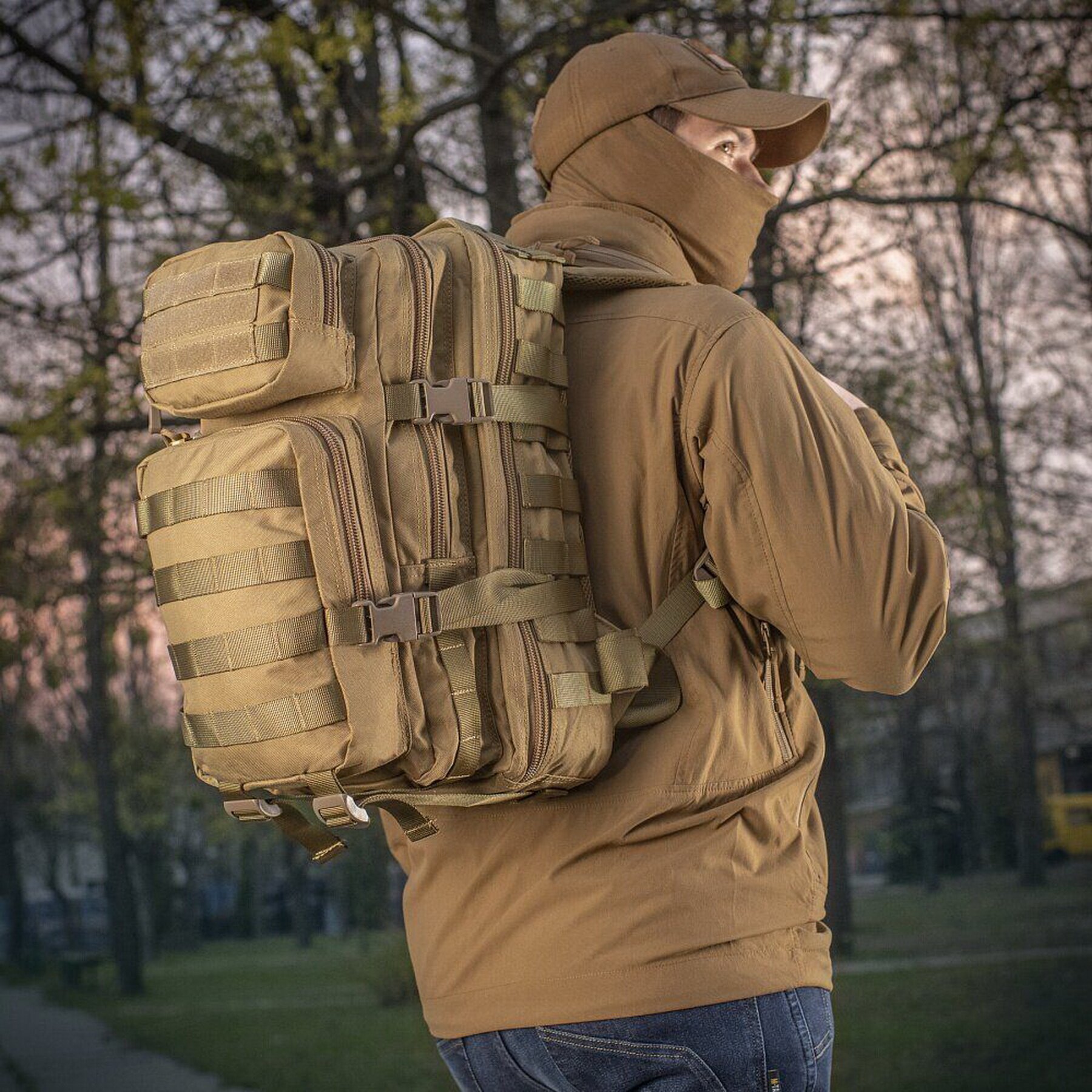
For example, a person needs a backpack. Linear logic might dictate: if you need to carry a lot of items, you should get the largest backpack. But in practice, it is not that simple. If equipment is constantly being moved between a vehicle, a building, and a position, an extra 0.5-0.7 cu ft (15-20 liters) can turn from an advantage into unnecessary bulk, weight, and dimensions. In such a scenario, a compact tactical backpack can be significantly more effective than a large one.
This is precisely where non-linear thinking begins: not "which backpack is the largest?", but "what task do I want to solve with it?" This principle works equally well for clothing, footwear, medical supplies, communications equipment, and everything we call tactical gear.
Ukrainian Inventions: When Rejecting Templates Yields Results
One could speak at length about non-linear thinking in the Ukrainian context, but it is important not to succumb to myths about a "special inventor gene". The ability to think outside the box is not a national biological trait. Instead, Ukrainian history truly offers many examples of scientists and engineers who did not confine themselves to off-the-shelf solutions.
Igor Sikorsky: The Aircraft Built to Take to the Skies
One of the most famous examples is Igor Sikorsky, a native of Kyiv. Today his name is primarily associated with helicopters, yet his early aviation work was no less illustrative. Kyiv Polytechnic Institute notes that Sikorsky entered aviation history as the designer of the first multi-engine aircraft and one of the creators of practical helicopter aviation.
The idea of a multi-engine airplane at the beginning of the 20th century was not obvious to everyone. Instead of merely refining existing light single-engine designs, Sikorsky took a different path: increasing size, engine count, capacity, and range. This exact approach clearly illustrates non-linear thinking: do not try to make an old system slightly better if the problem lies within the system itself.
Incidentally, Sikorsky's legacy is so closely tied to Kyiv that today the city's aviation and space history is featured in dedicated exhibits at KPI. Furthermore, in January 2026, the Ministry of Defence of Ukraine announced a memorandum regarding the restoration of the Sikorsky House in Kyiv to establish a museum there.
Sikorsky was born in Kyiv on May 25, 1889, and passed away in the USA in 1972. Thus, his journey from a Kyiv engineer to one of the world's most renowned aircraft designers spanned virtually the entire 20th century.
Yevgeny Paton: Welding Instead of Rivets
Another excellent example is Yevgeny Paton. In bridge building during the early 20th century, riveting was the traditional solution for metal structures. Paton viewed the problem more broadly: if the joining technology limits the further development of structures, one must change the underlying principle of creation rather than the structure itself. Thus, he focused on welding.
In 1934, the Electric Welding Institute was established in Ukraine – the world's first specialized center for scientific and engineering work in this field. Paton himself developed a comprehensive welding development program that combined research, experimental production, design work, and technology implementation.
From there, an unconventional idea transformed into a global technology. Developments from Paton's school were used to produce pipes, bridges, industrial structures, and military hardware. During World War II, automatic submerged arc welding was employed for the assembly-line production of tanks and other defense industry outputs.
This is a highly illustrative example: innovation does not necessarily consist of creating a completely new physical object. Sometimes it is enough to look at a familiar process and ask: "Why do we actually do it this way?"
Ivan Pulyui: Seeing Beyond What the Instrument Shows
Ivan Pulyui is another example of a Ukrainian scientist remembered today in the context of early X-ray research. Pulyui investigated cathode rays and developed his own gas-discharge tube design, known as the Pulyui lamp. His experiments made it possible to capture images using radiation that later became known as X-rays. Ternopil National Technical University and KPI maintain dedicated historical materials detailing his contributions.
Here, however, it is important not to oversimplify history into the phrase "Pulyui invented X-rays instead of Röntgen". Scientific history is far more nuanced. The discovery of X-rays is traditionally attributed to Wilhelm Conrad Röntgen, while Pulyui made major contributions to the research and practical capture of such images. This offers another lesson in non-linear thinking: real contributions do not always fit neatly into a catchy headline with a single author and a single date.
Viktor Glushkov: Information Technology Before the Era of Digitalization
In the 20th century, the Ukrainian scientific school demonstrated a non-linear approach in yet another domain – information technology. Starting in 1956, Viktor Glushkov worked in Kyiv on computing technology, cybernetics, computer science, and applied mathematics. In 1962, the Institute of Cybernetics of the Academy of Sciences of the Ukrainian SSR was organized based on the Computing Center, with Glushkov as its director.
Today, the notion that information, computing, and automated control can be critical for the state, economy, and defense seems obvious. But that is precisely why Glushkov's story is compelling: innovations often appear obvious only after someone has already proven they work. This brings us directly to modern military technology, where information, communications, sensors, software, and automation increasingly determine effectiveness just as much as physical hardware.
From Inventions of the Past to Ukrainian Defense Tech
Today, non-linear thinking in Ukraine is no longer confined to laboratories and design bureaus. It is literally reshaping the approach to warfare. Ukraine has created an ecosystem in which drones, unmanned ground vehicles (UGVs), artificial intelligence, electronic warfare (EW), communications equipment, and software products develop not in isolation, but as interconnected components of a single system. As of 2026, the Brave1 cluster reports over 2,500 companies and more than 5,000 developments, including 500+ UAV manufacturers, 200+ UGV manufacturers, and 200+ AI solution providers. Here, the primary trait of a non-linear approach is especially clear: do not attempt to defeat an adversary using their own methods, but rather change the model of confrontation altogether.
Drones: When Technology Goes Mass-Scale
Ukrainian UAVs are perhaps the most obvious example. The Ministry of Defence reported that in the first nine months of 2024 alone, over 140 Ukrainian unmanned aerial systems and 33 unmanned ground vehicles were codified and approved for service. For comparison, across all of 2023, there were 60 UAV systems and 9 UGVs codified.
This is no longer a story about "a single brilliant inventor creating a single brilliant device". It is a rapid innovation cycle: military personnel identify a need → engineers build a solution → it is tested → field experience feeds back to the developer → the next version evolves. This cycle represents non-linear thinking on an industrial scale.
Robotic Systems: Why Risk Human Life When a Machine Can Do the Job?
Another step forward is shifting dangerous tasks from personnel to robotic platforms. Ukrainian UGVs are already being deployed for logistics, evacuation, reconnaissance, and other roles. For example, the Sirko-S1 combines transport, reconnaissance, and other functions, featuring day, night, and infrared cameras alongside its own communications module to establish a mesh network.
Here again, a simple yet powerful shift in questioning occurs. Not: "How can a soldier better perform a dangerous mission?" But rather: "Is it strictly necessary for a soldier to physically be where the mission is being performed?" That is the exact moment when the framing of the problem changes, rather than just the tool.
Software: The Invisible Weapon
Even more fascinating developments are occurring in software. The modern battlefield increasingly resembles a distributed information system. Data from various sources must be gathered, processed, transmitted, and converted into decisions. A prime example is Ukrainian situational awareness software. Systems like Delta integrate reconnaissance streams from multiple sources into a single digital picture, whereas "Kropyva" acts as a localized tool capable of operating without an internet connection. Software ceases to be merely "something for a computer". It becomes an integral component of a combat system. This is another manifestation of non-linearity: an advantage can stem not from a greater quantity of physical resources, but from how effectively the system handles information.
Communications: Beyond Voice Transmission
Another example is the evolution of communication and relay systems. Brave1 specifically highlights technologies that utilize drones as relay platforms to ensure stable communications over long distances and rugged terrain. At the Defense Tech Innovations Forum 2025, systems capable of combining diverse channels – including LTE, CDMA, and radio communications – and integrating with third-party networks were demonstrated.
Thus, a drone is no longer just "flying". It can act as a sensor, a signal relay, a network node, or part of a larger digital ecosystem. This defines the core characteristic of modern Ukrainian defense tech: a single device no longer performs a single isolated function. It becomes a node within a system.

Non-Linear Thinking in Military Gear
Now let us return from high science to tangible gear you can hold in your hands. Imagine a typical scenario: someone opens a catalog, sees dozens of items, and tries to assemble a kit based on the logic "the more tactical, the better". This is one of the most common mistakes. Tactical gear should not exist to showcase its "tacticalness". It should solve specific tasks.
That is why a non-linear approach to equipment often appears paradoxical: less gear can be more effective, versatile gear can outperform specialized items, and an expensive piece of equipment can lose out to a simpler option if it does not fit the mission.
Tactical Backpacks: Not the Largest, But the Right One
Consider three real-world examples from the Punisher catalog:
-
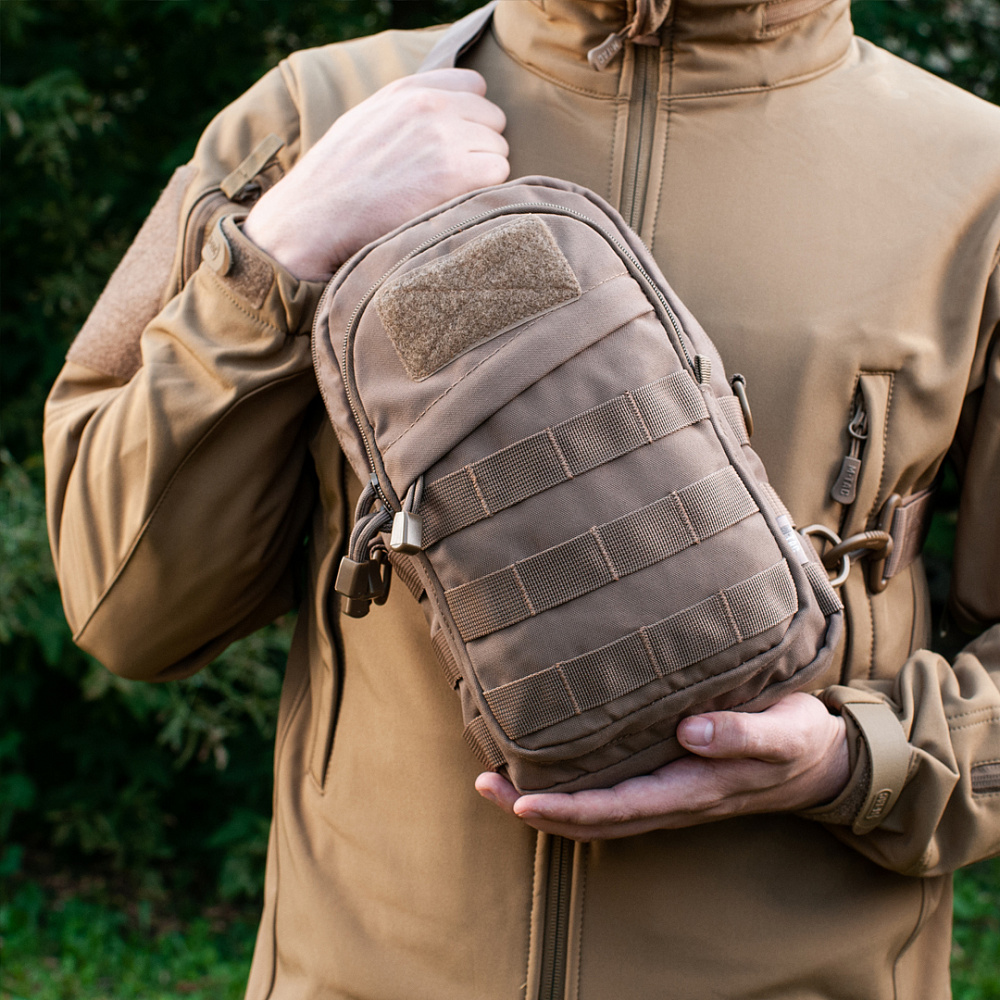
The M-Tac Assistant has a volume of just 244 cu in (4 liters). It is a compact sling pack featuring an adjustable strap for right- or left-shoulder carry, with MOLLE webbing on the front and sides. For a multi-day operation, this volume is obviously insufficient. But if the task is carrying a minimal set of essential gear that must remain constantly accessible, the situation changes drastically. A 244 cu in (4-liter) capacity transforms from a limitation into a major asset.
-
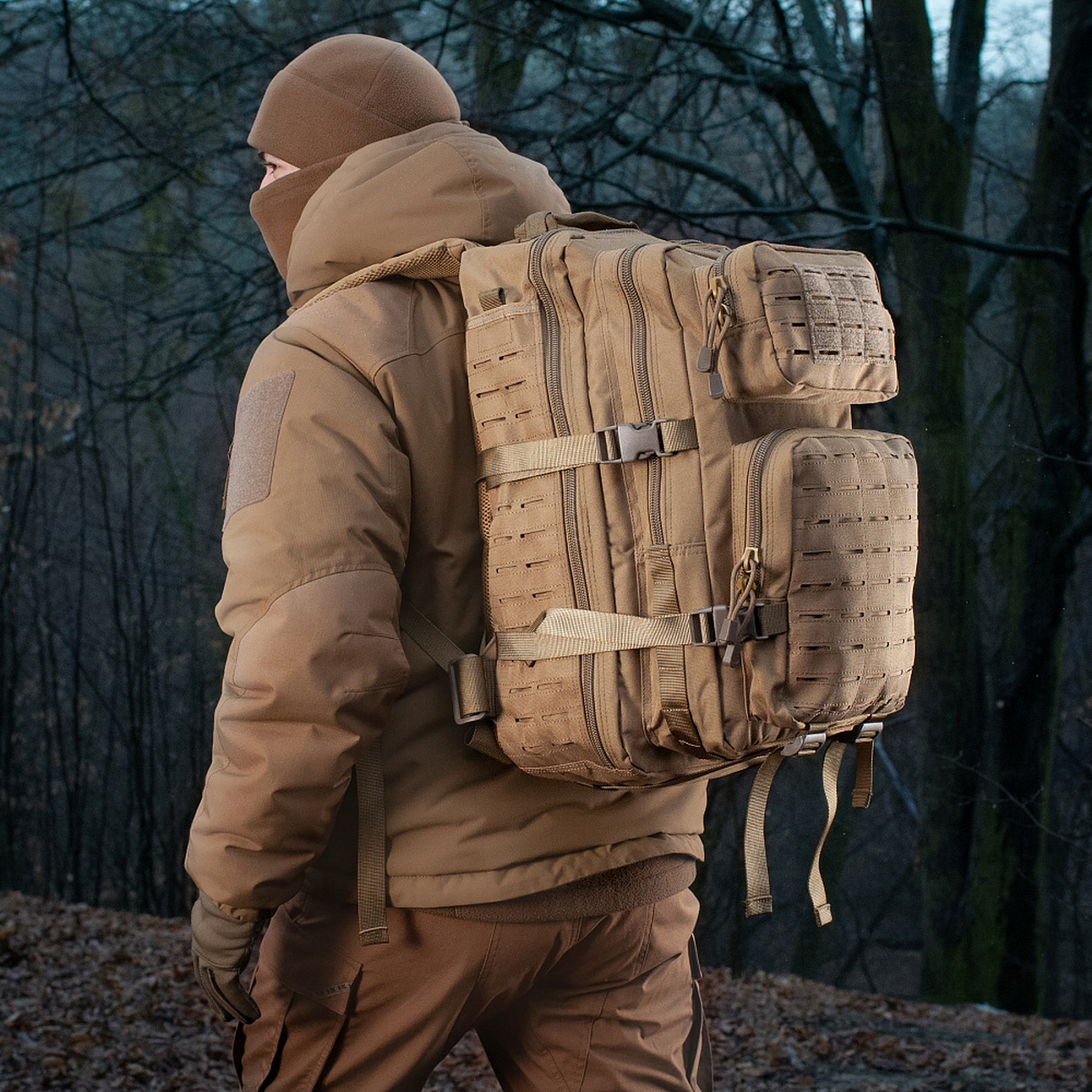
The next step up is the M-Tac Assault Pack at 1,220 cu in (20 liters). It features two main compartments, additional pockets, MOLLE on the front and sides, breathable mesh padding on the back and shoulder straps, and a removable waist belt. It weighs approximately 2.4 lbs (1.1 kg).
-
For expanded requirements, there is the M-Tac Large Assault Pack at 2,197 cu in (36 liters), weighing about 3.5 lbs (1.6 kg), equipped with two main compartments, secondary pockets, and MOLLE webbing.
Thus, asking "which tactical backpack is best?" is inherently flawed. A better question is: "What must I carry in it, for how long, and how frequently will I change locations?" That is non-linear thinking in action.

Tactical Backpacks
Models of different capacities for everyday carry, training, service, and field tasks.
Browse and choose!
On the M-Tac Assault Pack, the zipper pull tabs allow you to open compartments without removing your gloves. It is a small detail that illustrates the core principle: sometimes system efficiency is determined not by headline specs, but by a minor feature you only appreciate during real-world use.
MOLLE/PALS: Equipment as a Modular System
The non-linear principle is even clearer when examining MOLLE/PALS systems. The conventional approach to gear assumes the manufacturer decides beforehand where every pouch, pocket, or attachment point goes. A modular approach changes that logic completely. The base platform stays constant, while the configuration adapts to the user and the mission.
This is particularly evident in the M-Tac Large Assault Pack Laser Cut. Instead of traditional sewn-on PALS webbing, it uses a laser-cut slot system in a heavy-duty nylon panel compatible with standard MOLLE pouches. According to the product specifications, this design reduced the overall weight of the pack by approximately 35% compared to a traditional webbing build, while maintaining a 2,197 cu in (36-liter) capacity. You do not just get a "backpack with MOLLE". You get an adaptable platform – a fundamentally different philosophy.
Tactical Clothing: Function Over Form
The same logic applies to clothing. The cookie-cutter mindset dictates: "if it's tactical clothing, it must be as heavy, thick, and pocket-heavy as possible". But durability without mobility becomes a liability. Excessive fabric adds weight. An overabundance of pockets does not guarantee convenience. Heavy material in hot weather quickly becomes a source of extreme discomfort.
A prime example is the M-Tac Aggressor Gen.II Flex pants. These trousers are crafted from lightweight ripstop fabric treated with a water- and dirt-repellent Teflon coating. The design is tailored for more than just training grounds; it is positioned for range work, duty, travel, and everyday wear. A major emphasis is placed on freedom of movement. The "tactical clothing" here does not attempt to look overly militarized; instead, it offers versatile utility. This serves as a solid example of a non-linear solution: rather than building pants for a single scenario, the manufacturer makes them adaptable across multiple environments.
Therefore, when choosing tactical clothing, look beyond pocket counts and appearance. Material selection, fit, seasonality, freedom of movement, and realistic usage scenarios matter far more.


Tactical Footwear: "Tougher" Does Not Always Mean "Better"
With footwear, mistakes are even more obvious. Selecting an ultra-rugged boot might add unnecessary weight. Picking an extremely lightweight shoe could sacrifice waterproofing. Buying insulated winter tactical boots for active movement in above-freezing conditions leads to overheating. Consequently, the concept of "the best tactical boots" makes little sense without context. Hot weather and rapid movement demand one approach, while cold, wet, and stationary conditions require another.
The Punisher catalog, for instance, includes models like the Garmont T8 Extreme GTX, Lowa Z-6S GTX C, Belleville TR550 Hot Weather Multi-terrain Boot, Altama Maritime Assault Mid, and others. These are not direct competitors for "best overall boot," but rather specialized tools for distinct conditions. Choosing tactical footwear should not start with "which model is the coolest?", but with a practical assessment: where, when, and how far will you be walking in them?
Tactical Medicine: The Ultimate Example of Systems Thinking
To see non-linear thinking applied to military equipment at its highest level, look no further than tactical medicine. Tactical medicine is not just a first aid kit. It is a comprehensive framework of protocols, equipment, and actions designed to provide casualty care where standard civilian medical logic fails. Systems thinking is essential here.
A clear example is the North American Rescue Talon II Model 90C. It is a semi-rigid folding litter featuring sturdy handles and a compact design for transit. Unfolded, its dimensions measure 90 × 22.5 × 6 in (229 × 57 × 15 cm), weighing 16.5 lbs (7.5 kg), with a manufacturer-rated load capacity of 1,200 lbs (544 kg).
What do these numbers reveal? A length of 90 in (229 cm) is substantial when transporting empty stretchers. Engineers solved this by ensuring the folded frame remains remarkably compact. The design addresses both the need to transport a casualty and the requirement that the evacuation device remains manageable and space-efficient until needed. That is pure systems thinking.
The Talon II Model 90C elevates the patient approximately 6 in (15 cm) off the ground thanks to its rigid structural supports and built-in legs, while its handles can be retracted when space is constrained.
When Unconventional Solutions Become the Standard
Herein lies the paradox of innovation: an unconventional idea initially appears strange, then proves its effectiveness, gets copied, and eventually becomes so commonplace that people forget it was ever non-traditional. This pattern applies to many technologies taken for granted today – modular gear, digital command networks, automation, modern aviation, and advanced manufacturing were all once deviations from the norm. True innovation is not always futuristic; sometimes it is simply asking the right question at the right moment.
How to Apply Non-Linear Thinking When Selecting Gear
Follow a simple algorithm: start with the mission, not the product. Instead of "I need a tactical backpack", frame it as "I need to carry 11-22 lbs (5-10 kg) of gear during a shift". Instead of "I want tactical pants", say "I need trousers that allow full mobility, hard work, and good ventilation". Instead of "I need the toughest tactical boots", specify "I need to walk several miles daily across pavement, dirt, and wet grass". Instead of "I need a massive trauma kit", ask "which medical scenarios must I address, and how will I carry the kit?"
Once the problem is framed, evaluate product specs. The tactical supply store ceases to be a mere catalog and becomes a toolkit for building a custom system. Before buying military gear, step back from brand names, colors, and aesthetics, and ask a simple question: "What problem does this item solve?" If there is no clear answer, you likely do not need it.
It may sound surprising coming from an article about gear, but if you already own a functional backpack that fulfills your requirements, buying a new one simply because it features more MOLLE webbing will not make you more effective. If your current pants allow full mobility, do not chafe, and suit your environment, a newer pair will not automatically perform better just because it looks more "tactical". If your boots fit the season, terrain, and load, their price tag or technical labels alone will not dictate your results. Non-Linear thinking is not about constantly chasing the new; sometimes it is recognizing that your existing solution is already sufficient.
Non-Linear thinking begins when you stop automatically repeating familiar routines. This mindset helped historical scientists and engineers pioneer breakthroughs – from Sikorsky's aviation designs and Paton's welding techniques to Pulyui's radiation research and Glushkov's cybernetics.
In modern military gear, the principle applies just as directly. The right tactical backpack is defined by mission utility rather than maximum capacity; tactical clothing by performance rather than pocket count; and tactical boots by environmental fit rather than branding. Quality gear selection starts with a properly framed problem.
Most importantly, standard templates are not the enemy – they only become an obstacle when relied upon blindly without verifying whether they fit the specific situation at hand.
NEED HELP CHOOSING?
Our specialists can help you compare models, determine the right capacity, and choose a backpack to suit your needs.
Get a consultation

Igor Ivandikov – author of the article
Project Manager
Has over 3 years of experience working in the field of camping equipment. Well-versed in products for tourism, camping, and outdoor recreation.
Responsible for coordinating projects, monitoring deadlines, and ensuring the quality of task completion.
He enjoys football (soccer) and billiards, participates in competitions, and has won prizes on numerous occasions. He is a fan of active recreation.
FAQ. Frequently Asked Questions
1. What is non-linear thinking?
2. How does non-linear thinking differ from out-of-the-box thinking?
3. How can I apply non-linear thinking when choosing military gear?
4. Does a non-linear approach mean always choosing unconventional gear?