What makes a Ukrainian Ukrainian? Language, family, place of birth, culture, citizenship? Or perhaps something much more complex – an awareness of which community you belong to, where it comes from, what it has endured and what it has fought for?
History plays a far from decorative role here. If a person remembers its own past, it understands itself better in the present. If, however, the past is silenced for decades, taken out of context, concepts are substituted, or it is told in someone else’s words, it is not only the textbook that changes. Society’s understanding of itself changes.
That is why a conversation about the Ukrainian national idea is not simply a conversation about patriotic slogans. It is a conversation about historical memory, statehood, culture, symbols, and the right of a people to determine for itself who it is. That is why the Punisher military store guide suggests discussing this seriously and thoughtfully, in order to understand the subject and dot all the i’s.

What Is a National Idea and Why Is It Needed?
The phrase “national idea” often sounds so solemn that it becomes easy to stop seeing its actual meaning. Put simply, a national idea is a community’s understanding of its distinctiveness, values, historical experience, and future. But a nation is not simply people who live in the same territory. A modern political nation is formed around a much broader set of things: a common civic space, culture, language, historical memory, symbols, and an awareness of belonging to the same community.
National Identity – the Answer to the Question “Who Are We?”
Every person has their own identity. It consists of many levels: family, profession, city, culture, and personal beliefs. National identity is only one of them. But it becomes especially important when a community faces external pressure or the need to protect its own independence. Then the question “who are we?” ceases to be abstract. It becomes the question: What do we consider ours? Which history do we remember? Which symbols do we recognize? Which state do we want to preserve?
A passport and national identity are not the same thing. A passport determines a person’s legal status. Identity is much broader: it is formed through experience, culture, language, memory, social environment, and a person’s own awareness of belonging to a particular community.
Historical Memory: What a People Tells About Itself
History and historical memory are often used as synonyms. In reality, they are not quite the same thing. History attempts to reconstruct the past on the basis of sources, documents, archaeological finds, testimonies, and critical analysis. Historical memory is how society remembers, interprets, and passes that past on. And that is precisely why two communities may remember the same historical event differently. Memory lives not only in archives. It lives in family stories, books, songs, paintings, street names, monuments, museums, films, school curricula – and even in symbols that people wear on their clothing.
How Is the Memory of Generations Passed On?
Imagine a simple chain: person → family → generation → society → culture. A child may not know all the dates. But they know their great-grandfather’s surname. They may not have read dozens of historical monographs. But they recognize the trident. They may not remember exactly when the Ukrainian flag appeared in its modern form. But they understand that the blue-and-yellow flag represents Ukraine. This is how cultural memory works.
Historical memory does not live only in textbooks. A flag, coat of arms, song, photograph, family letter, or even a small metal pin can be a material carrier of memory – if there is a historical context behind the symbol that is understandable to the person.
The History of Ukrainian Lands Does Not Begin with Rus
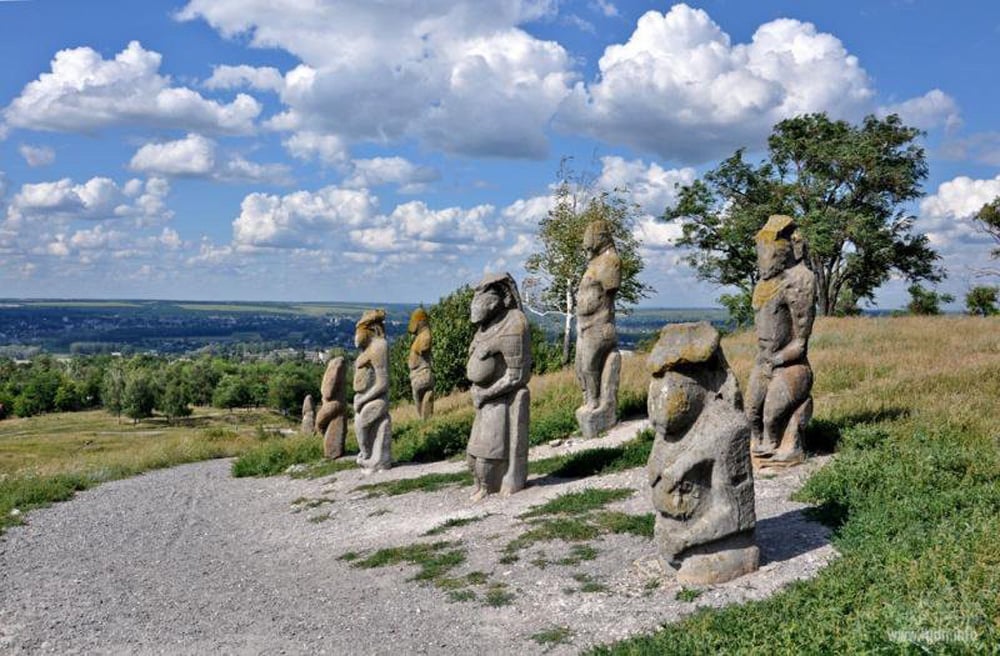
The history of the territories of modern Ukraine is much older than the history of Rus and, even more so, than the history of the modern Ukrainian nation. In different eras, numerous peoples and cultures lived and interacted here. Among them were the Cimmerians, Scythians, and Sarmatians. In the Northern Black Sea region, ancient Greek city-states existed that maintained trade and contacts with the local population and the nomadic peoples of the steppe. Later, this space experienced new waves of migration, political change, and cultural interaction.
However, it is important not to fall into another trap here. The Cimmerians were not Ukrainians. The Scythians were not Ukrainians. The Sarmatians were not Ukrainians. Nor can one mechanically draw a direct ethnic line from every ancient people to the modern Ukrainian nation. Ukrainian national identity formed much later. At the same time, the history of these peoples is part of the history of the lands where Ukraine exists today. It demonstrates how ancient and multilayered the cultural and political space of this region was.
It is also worth mentioning the ancient accounts of the Amazons separately. Archaeological finds do indeed testify to the existence of female warriors in some nomadic societies of the Northern Black Sea region. But turning the ancient image of the Amazons into the name of a specific people that supposedly lived on the territory of modern Ukraine would be an excessive simplification. Therefore, it is more accurate to speak not of one continuous ethnic line, but of a thousand-year history of a territory where peoples, cultures, political centers and forms of social organization changed. It was against this multilayered historical background that Rus later emerged.
How Is History Falsified?
To understand why historical memory is so important, it is worth examining how exactly it can be changed. The falsification of history does not always look like an outright invention. Sometimes the most effective way to change the past is simply not to tell people about some of the facts.
Suppression
The event is not in the textbook. It is not discussed at school. It is not shown in museums. It is not discussed publicly. One generation later, a person may sincerely believe that the event never happened at all. This is one of the simplest forms of manipulating historical memory.
Taking Facts Out of Context
The second method is much more subtle. The fact remains true, but its surrounding context is changed. For example, an event may be presented without the causes that led to it or without the consequences it produced. As a result, the reader receives not an invented fact, but a manipulative picture made up of real facts.
Substitution of Concepts
Sometimes it is enough to change the words. The same phenomenon can be described as:
-
a national liberation movement;
-
an uprising;
-
a rebellion;
-
separatism;
-
a civil conflict.
Words create the framework through which the reader perceives an event. That is why control over historical terminology has always been an important instrument of political power.
Appropriation of Historical Heritage
Another mechanism is to explain that the historical heritage of a particular region or state is actually exclusively part of the history of another political community. The issue of the heritage of Kyivan Rus is especially illustrative here.
Kyivan Rus: When Historical Heritage Becomes a Battleground
Kyivan Rus is one of the most complex subjects in Ukrainian historical memory. Although Rus is not the beginning of the history of Ukrainian lands, this period is one of the key stages of their medieval history.
The medieval state of Rus formed in the 9th-10th centuries, with Kyiv as one of its main political centers. Political institutions, trade, culture, literacy, and religious life developed here, leaving an enormous legacy for subsequent generations.
Kyiv was one of the main political, economic, and cultural centers of Rus. That is why the heritage of Rus became the subject of prolonged competition between different historiographical traditions. Historiography researchers directly regard the 19th century as a period when Kyivan Rus heritage was actively used to search for the origins of different national identities, as well as being an object of appropriation in Russian and Ukrainian historiographies. And this is an important lesson. Historical heritage matters not only because of what happened in the past. It matters because of how that past is used to explain the present.
Modern national names cannot be mechanically imposed on medieval history. That is why a professional discussion of Kyivan Rus is more complicated than the simple formula “it was modern Ukraine” or “it was modern Russia”. It is more accurate to speak about historical Rus, its political centers, population, culture, and the subsequent struggle of different states and national historiographies over its heritage.
Cossack Ukraine: Freedom, Military Tradition and Statehood
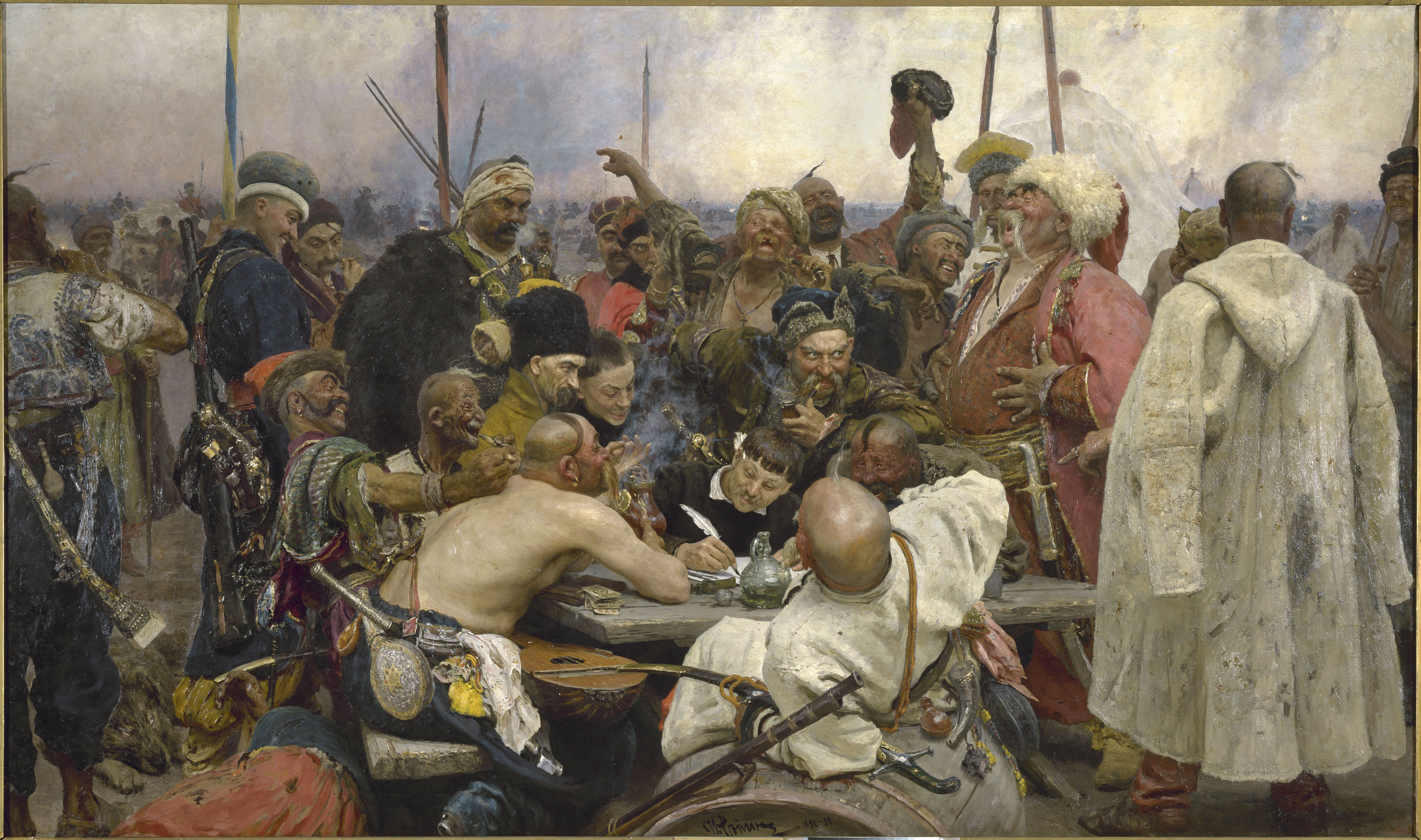
The next major layer of Ukrainian historical memory is the Cossacks. And here, too, it is important to move beyond the simplified image of a Cossack solely as an armed horseman in traditional sharovary trousers. The Cossacks were a complex social, military, and political phenomenon. The Zaporizhzhian Sich became a separate military-political organization, while the Cossack tradition included the election of some governing bodies, its own customs, military organization, judicial practices, and diplomatic contacts.
In the 17th century, the Hetmanate emerged on Ukrainian lands – an early modern Cossack state with its own governing bodies, territorial organization, army, finances, and legal norms. In other words, Cossack history is not only the history of war. It is also the history of political organization.
Pylyp Orlyk’s Constitution
In 1710, a document was drawn up that is now known as Pylyp Orlyk’s Constitution. It is important not to repeat the popular myth that it was literally “the first constitution in the world”. That is incorrect. The document emerged within a specific political and legal environment shaped by the Polish-Lithuanian Commonwealth, Cossack political culture, and European constitutionalism. But it is indeed an important monument of Ukrainian political and legal thought. It defined the rights and duties of the hetman, officers, and the Zaporozhian Host, and also provided for the role of the General Council.
The original of Pylyp Orlyk’s Constitution in Old Ukrainian was discovered only in 2008. The document was kept in the collections of the Russian State Archive of Ancient Acts in Moscow. Its authenticity is confirmed by the signature of Pylyp Orlyk and the seal of the Zaporozhian Host. Sometimes a historical artifact can literally wait for centuries to return to public memory.
The Ukrainian Revolution of 1917-1921: A State That Cannot Be “Invented” in 1991
If there is one historical period that particularly well demonstrates the importance of memory, it is the Ukrainian Revolution of 1917-1921. After the fall of the Russian Empire, the Ukrainian movement moved from demands for autonomy toward the creation of its own state. Ukrainian representative bodies, a government, an army, diplomatic structures, a financial system, and state symbols emerged.
In 1918, the Ukrainian People’s Republic proclaimed independence. The Ukrainian state of the revolutionary era existed under extremely difficult conditions of war and political instability, but its very existence refutes the popular notion that Ukrainian statehood supposedly emerged only on August 24, 1991. Modern Ukraine does not begin with a blank page.
Statehood Is Not Only a Name on a Map
The Ukrainian Revolution left behind much more than political declarations. During that period, there were:
-
State authorities.
-
An army.
-
Diplomatic missions.
-
Money.
-
State symbols.
-
Ukrainian educational and scientific institutions.
During the Hetmanate of Pavlo Skoropadskyi, for example, the Ukrainian Academy of Sciences was founded. But history does not end with victory. The Ukrainian Revolution was defeated, and Ukrainian state projects were destroyed by Bolshevik rule. That is precisely why memory of this period is so important.
Symbols That Outlived the State
The blue-and-yellow flag, the trident, and the anthem “Shche ne vmerla Ukraina” were not invented in 1991. The Ukrainian Institute of National Memory documents the use of blue-and-yellow symbolism during the revolution, the adoption of the blue-and-yellow flag as one of the state symbols, as well as the adoption of the Trident as the coat of arms of the Ukrainian People’s Republic in February 1918. In other words, modern state symbolism has a much deeper history than the period after independence was proclaimed.
The Trident became the state coat of arms of the Ukrainian People’s Republic on February 25, 1918. Blue-and-yellow flags were used by the Ukrainian movement even before the revolution of 1917. During the events of 1917-1921, they became one of the key symbols of Ukrainian state-building. Therefore, the modern Ukrainian flag is not simply two colors. Behind it stands a history of political struggle. And this is precisely where a symbol from the past literally moves into our present.
When History Is Changed Not by Facts, but by Language
The Soviet model of dealing with the Ukrainian past is particularly illustrative because it was not limited to the physical destruction of documents or people. The very system of concepts was changed.
The Ukrainian Institute of National Memory gives a telling example involving the revolution of 1917-1921: Soviet historiography displaced the concept of the “Ukrainian Revolution” and explained the events through the categories of the “Great October Socialist Revolution” and “civil war”. The event remained in history. But its meaning changed.
This is a very important point for understanding how propaganda works. It does not always say: “This never happened”. Sometimes it says: “It happened, but it meant something completely different”.
The Soviet Era: When History Becomes Official
For a totalitarian system, control over the past has practical significance. If the state determines whom to consider a hero, whom to consider an enemy, which events to study, which documents are available, which terms to use, and which tragedies can be discussed, it effectively influences public memory.
The Ukrainian experience of the 20th century demonstrates this problem particularly well. Repression against the intelligentsia, censorship, persecution of the Ukrainian cultural movement, suppression of the Holodomor, and the struggle against the Ukrainian liberation movement affected not only the contemporaries of these events. They affected what subsequent generations would know about them.
The Suppression of the Holodomor
The Holodomor is one of the clearest examples of how a tragedy can be pushed out of public memory. The problem is not only that millions of people died. The problem is also that for decades it was impossible to speak openly about the scale of the tragedy in Soviet Ukraine. Therefore, restoring memory of the Holodomor is not simply about returning a particular date to the calendar. It is about returning a voice to people whom others tried to force into silence.
Sometimes the absence of information is itself a historical fact. If an entire generation did not have the opportunity to speak freely about a particular event, that does not mean the event did not happen. It means that political restrictions influenced public memory.
Why Do Historical Myths Still Work Today?
One might think that in the era of digital archives, Google, YouTube, and open databases, it is no longer possible to falsify history. In reality, it has simply become harder to hide information, but not necessarily harder to create a myth.
The reason is simple. A person cannot personally verify every document. They trust sources. Therefore, it is important not only to have access to information, but also to know how to verify it.
A Simple Myth vs. a Complex History
A myth is always convenient. It can consist of a single sentence: “These people never existed”. Real history, however, requires dozens of pages of explanation. Therefore, critical thinking is one of the best vaccines against historical manipulation.
There is no need to automatically believe every Ukrainian historical claim simply because it is patriotic. And there is no need to automatically accept a Russian or Soviet narrative simply because it was present in textbooks for a long time. History must be verified.


Ukrainian Identity Does Not End on the Pages of a Textbook
This is where history meets the present. Knowing that the Ukrainian People’s Republic existed is important. Knowing the history of the Cossack state is also important. Understanding the origins of Ukrainian symbols is certainly important. But historical memory exists only when it is passed on.
A book passes on knowledge. A museum preserves artifacts. A song carries memories across generations. A flag makes belonging visible. A patch allows a person to carry a symbol with them. A pin turns a historical or cultural image into a personal detail. A T-shirt, hoodie, or cap can become part of the modern language through which a person demonstrates their own cultural belonging. And this is where something interesting begins. Symbols do not simply remind us of the past. They help the past remain present in modern life.
Why Do We Wear History?
In the military environment, symbolism has long had a practical and identification-related meaning. A patch can indicate affiliation with a unit. A flag – a state. A chevron – a formation. But beyond its purely military function, there is another level – the cultural one.
A Book – Memory That Is Read
For example, Punisher features Rainshouse – a Ukrainian veteran publishing project that combines books, military themes, and contemporary Ukrainian symbolism. Here, a book stops being simply a product. It becomes a way to learn more. Don’t know? Read it.
A Flag – A Symbol Visible from Afar
The Ukrainian flag needs no translation. Two colors can say more than a long text. At Punisher, for example, there is an M-Tac Ukrainian flag measuring 90×150 cm – a simple object, but one with enormous cultural context. And this is a good example of how history can literally occupy a place in everyday space.
A Patch – A Symbol That Is Always Nearby
A patch is much smaller than a flag. But that is precisely what makes it special. It can be on a backpack, jacket, uniform or gear.
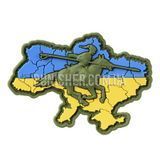
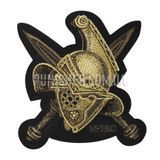
Among Punisher’s assortment, for example, there is the Rainshouse “Ідея Нації” patch – a contemporary symbol that requires little explanation for a person who understands its context.
A Pin – A Small Thing with a Big Meaning
A pin takes up only a few centimeters. But symbolically, it can mean a great deal. For example, the Rainshouse “Ідея Нації” metal pin is literally a small object that transfers a particular image from the cultural sphere into everyday life.
The size of a symbol does not determine its significance. A flag can be as large as a wall. A pin may be only a few centimeters. But both can perform the same function equally effectively: reminding a person which community they consider themselves part of.


Ukrainian Merch as a Modern Language of Identity
Patriotic clothing is often perceived simply as souvenir merchandise. But contemporary Ukrainian design has gone much further. T-shirts, hoodies, caps, patches and pins have become a way to talk about culture, war, history, humor, character and values without lengthy explanations. This is particularly visible in the work of Ukrainian manufacturers who create their own visual language.
When Tradition Stops Being a Museum Exhibit
Rainshouse also works with more than just books. Peklo.Toys takes a different approach – reinterpreting images through contemporary design, clothing and patches.
For example, the Peklo.Toys “Вовкулака” patch is no longer a historical artifact. It is a contemporary cultural product. But it works according to the same principle: image → symbol → interpretation → memory. And this is an important point. National culture should not be frozen in the 19th century. It should continue creating new images.
Symbols Do Not Replace History – They Remind Us of It
Here it is important to draw a line. A flag cannot replace a textbook. A patch cannot replace an archive. A T-shirt cannot replace historical research. But a symbol can become the first point of interest.
A person sees a patch. They ask what it means. They search for information. They find a book. They read about a historical figure or event. They compare sources. They pass the knowledge on to a child. And this is how cultural memory works. Not through abstract “genetic memory”. But through people. Through language. Through families. Through culture. Through the objects we create, preserve, and pass on.
Sometimes history begins with a small patch. Not because a patch can replace knowledge. But because a symbol can raise a question. And the right question is already the beginning of research.
Reviving Historical Memory Is Not a Return to the Past
Remembering history does not mean living in the past. On the contrary. A person who understands where they came from has more tools to consciously decide where to go next.
Ukrainian historical memory is not one date, one figure, or one symbol. It is a multilayered history in which different eras and political traditions replaced one another: ancient cultures and peoples on the territory of modern Ukraine → Rus → princely states → Cossack tradition → Hetmanate → Ukrainian national movement of the 19th century → revolution of 1917-1921 → liberation movements of the 20th century → restoration of independence in 1991 → modern Ukraine.
This chain does not mean that all historical eras were the same or that the modern Ukrainian nation existed in its current form for a thousand years. It means something else. Ukrainian statehood and Ukrainian self-awareness have historical depth. And this history does not need to be invented. It needs to be known.
National Idea: Not to Invent the Past, but Not to Let It Be Taken Away
A strong national idea does not need mythologization. It does not need to prove that all Ukrainians thought alike for a thousand years. There is no need to invent nonexistent facts. There is no need to turn complex history into a set of convenient legends. On the contrary. A strong identity can withstand difficult questions. It can acknowledge mistakes. It can speak about defeats. It can remember controversial figures. It can compare different sources. And at the same time, it does not lose the main thing – an understanding of its own historical continuity. Because a nation is not a museum in which all exhibits must be flawless. It is a living society that remembers its past, draws conclusions from it, and continues to create a new history.

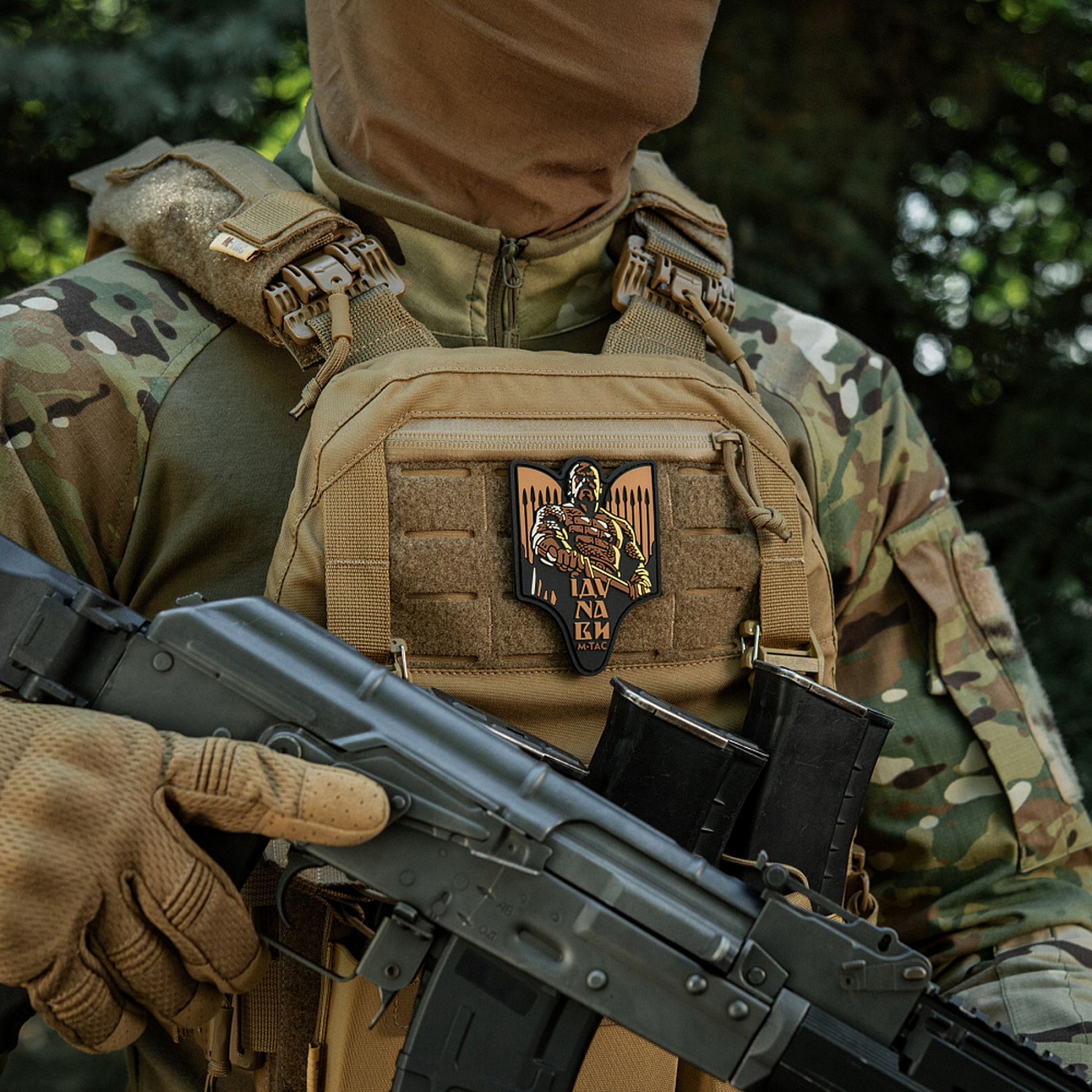

The Ukrainian national idea is not a single phrase that can be printed on a flag. It is formed from historical memory, culture, language, the tradition of statehood, shared symbols, and contemporary experience. That is why the struggle for one’s own history is at the same time a struggle for the right to determine for ourselves who we are.
History can be silenced, distorted, taken out of context, or told in someone else’s words. But it is much harder to erase if a person continues to read, study, discuss, and pass it on to the next generation.
Memory begins with knowledge. And identity begins with understanding what exactly we remember.

Igor Ivandikov – author of the article
Project Manager
Has over 3 years of experience working in the field of camping equipment. Well-versed in products for tourism, camping, and outdoor recreation.
Responsible for coordinating projects, monitoring deadlines, and ensuring the quality of task completion.
He enjoys football (soccer) and billiards, participates in competitions, and has won prizes on numerous occasions. He is a fan of active recreation.
FAQ. Frequently Asked Questions
1. What is the Ukrainian national idea?
2. What is historical memory?
3. How is the history of Ukraine falsified?
4. Why are Ukrainian symbols important for national identity?