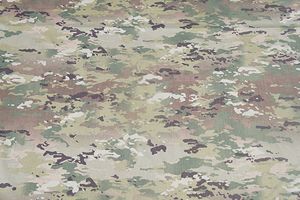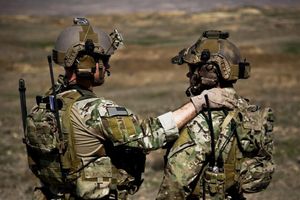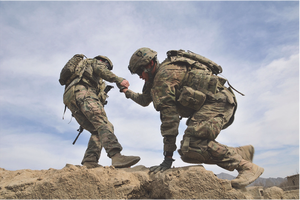
When people hear the phrase "American special forces," the same image usually pops up in their heads: a night-operating helicopter, thermal imagers, night vision devices, a lightning-fast assault, and a group of silent guys in multicam who vanish before anyone even realizes what happened.
For years, movies, games, and media have forged the image of a "universal super-soldier" who is equally proficient at parachuting, fighting in the jungle, directing airstrikes, conducting sabotage, rescuing hostages, and scuba diving. In reality, however, the US Special Operations Forces system is far more complex. It is not a single "special forces" unit, but an entire ecosystem of units with distinct specializations, tasks, and approaches to warfare. Interestingly, while many of them might look similar on the outside, they operate in completely different ways. The guide from the Punisher military store is here to help clear up who is who and what exactly they do.
Why US Special Operations Forces Are So Diverse
If you look at the US Special Operations Forces (SOF) from the outside, it might seem like they all do roughly the same thing: assault, eliminate, and conduct raids. But that is about the same as comparing a surgeon, a rescue worker, a combat engineer, and a pilot just because they all wear a uniform. In real operations, every unit fulfills a highly specific function.
Some specialize in counter-terrorism operations, direct action assaults, and capturing or eliminating high-value targets. Others train allied militaries, organize reconnaissance, coordinate aviation, evacuate the wounded, work with local populations, or secure maritime operations.
From personal experience working with military topics, I will tell you: one of the biggest mistakes civilians make is thinking that "special forces" always consists entirely of assaulters. In fact, any serious special operation resembles a complex clockwork mechanism where, without logistics, communications, aviation, intelligence, and medical support, even the finest assault element quickly turns into an isolated group.
Many American special operations operators do not wear official insignia of their units in public spaces for years. Some units strictly avoid media exposure even today.
Delta Force – When Tasks Become "Too Delicate"
Delta Force is one of the most famous US special units, although officially its activities are highly classified. Within the military community, Delta has long been associated with precise counter-terrorism operations and surgical strike raids –tasks requiring speed, precision, and maximum autonomy. These are the units usually brought up when discussing the capture of high-value targets, the elimination of terrorist organization leaders, hostage rescue, or operating in "gray zones."
Interestingly, entering Delta is possible not only from the Army Special Forces. Candidates are selected from various branches of the military, though predominantly from the Rangers and the Green Berets. While the stereotypical special forces unit is often portrayed in mass culture as brute force, Delta operates more like a surgical tool: minimum noise, maximum precision.
Green Berets – The Special Forces That Fight Through Others
The United States Army Special Forces, or "Green Berets", are perhaps one of the most misunderstood units in popular culture. Many believe that their main tasks are raids and assaults. In reality, the key specialization of the Green Berets is Foreign Internal Defense: training, supporting, and organizing allied forces.
Simply put, these are the people who can deploy to another country, organize the training of local militaries, establish interoperability, assist with organizational structure, teach tactics, and navigate local specificities. Because of this, the Green Berets dedicate an enormous amount of attention to language training, regional cultures, population engagement, and diplomatic skills. In a way, they are more like military "architects of conflict" rather than classic assaulters.
Candidates for the United States Army Special Forces frequently undergo language training tailored to specific regions of the world. For special operations, this is critically important.
Rangers – Speed, Aggression, and Assault
The 75th Ranger Regiment represents a completely different philosophy. If the Green Berets are about "subtle work", the Rangers are often associated with lightning-fast, hard-hitting operations. Their primary advantage is rapid deployment and the ability to act highly aggressively at a high tempo.
In the military environment, Rangers are often described as the force that enters first, breaks resistance, maintains the tempo, and establishes a beachhead for others. Historically, the 75th Ranger Regiment evolved from combat experience dating back to World War II, and today it remains one of the most combat-effective light infantry strike formations in the US.
Night Stalkers – The People Who Bring Special Forces in the Dark
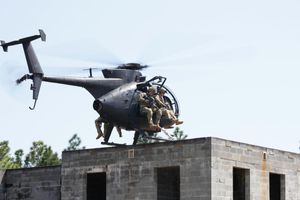
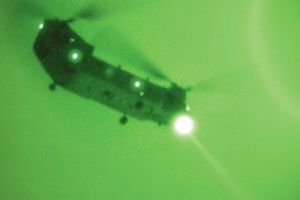
The 160th Special Operations Aviation Regiment is a unit without which modern American special operations would look entirely different. Their job is to provide aviation support to special operations forces. They are the ones who insert teams behind enemy lines, evacuate operators, work at night, fly in extreme weather conditions, and support assault groups – often at extremely low altitudes. Their helicopters have long been part of modern military aesthetics (MH-47 Chinook, MH-60 Black Hawk, and Little Bird). But behind the beautiful picture lies a highly complex profession where a pilot's mistake at night can cost the lives of the entire team.
Navy SEALs – Arguably the Most Famous Special Forces in the World
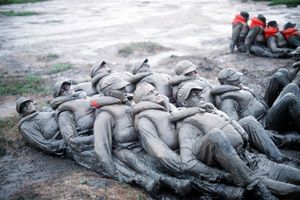
The United States Navy SEALs became a media legend long before TikTok and YouTube. The acronym SEAL stands for Sea, Air, and Land. Meaning, the unit was created to be as versatile as possible: for effective operations at sea, in the air, and on land.
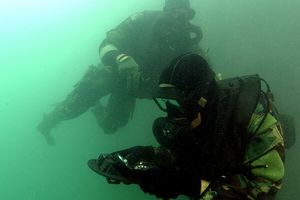
The defining characteristic of the Navy SEALs is the maritime component of their operations. This is why, historically, they have worked extensively with maritime insertions, covert infiltration, coastal zones, offshore platforms, and vessels. However, modern conflicts have long since blurred rigid boundaries, and today SEALs can operate virtually anywhere.
DEVGRU – The Shadow Pinnacle of the Navy SEALs
SEAL Team Six is a unit frequently dubbed the "elite of the elite." Officially, it is the Naval Special Warfare Development Group. DEVGRU is primarily associated with the most complex counter-terrorism operations of the US Navy. If regular SEALs already look like elite special forces, DEVGRU is the next tier, where the selection process becomes almost fanatically rigorous.
Despite the popularity of the term "SEAL Team 6," the official structure of the unit is far more complex, and the name itself remains partly a historical legacy.
SWCC – The People Without Whom Maritime Operations Are Often Impossible
Special Warfare Combatant-Craft Crewmen are the crews of high-speed combat watercraft. They are shown less frequently in movies, but in reality, they are the ones who transport teams, provide fire support during landings, operate in coastal zones, and secure evacuations. At times, their role resembles a mix of a sailor, machine gunner, driver, navigator, and rescue specialist.
Marine Raiders – Marines Specialized in Special Operations
The Marine Raiders are the special operations component of the US Marine Corps. They are often compared to the Green Berets due to their work with allied forces. However, owing to their "Marine roots," the Raiders additionally possess a strong emphasis on maritime operations, boarding platforms, coastal tasks, and disrupting enemy logistics.
Recon – The Eyes of the Marine Corps
United States Marine Corps Reconnaissance Battalions carry out deep reconnaissance for the Marine Corps. Their work does not always look spectacular. Often, it involves surveillance, stealthy movement, route scouting, information gathering, and fire direction. Honestly, this type of work frequently proves to be psychologically more demanding than "cinematic" assaults.
Combat Controllers – The People Who Manage the Chaos of the Skies
The United States Air Force Combat Control Team consists of some of the most critical specialists in modern warfare. These are the individuals who coordinate aviation, manage air traffic, direct strikes, and organize aircraft operations in combat environments.
Imagine the chaos of a large-scale operation: helicopters, attack aircraft, drones, artillery, and medical evacuations. Somewhere in the center of this chaos sits a small group of people with radios, keeping the entire situation from turning into a catastrophe.
Following the 2010 earthquake in Haiti, American Combat Controllers effectively managed a completely overwhelmed airport under emergency conditions using a bare minimum of equipment.
Pararescue – The People Who Fly In for the Wounded
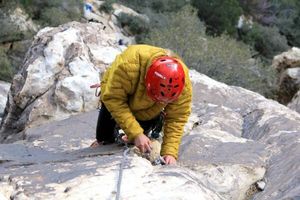
The United States Air Force Pararescue, or PJs, is one of the most respected specialties within the US military community. Their primary mission is to save lives. Not to "shoot heroically," but specifically to extract personnel from aircraft crash sites, inaccessible terrain, combat zones, and anywhere else during medical evacuations.
Because of this, PJs combine military training, parachuting skills, mountaineering, medicine, and rescue techniques. Many within the military community openly state: if anyone has the right to be called "angels of war," it is the PJs.
MSRT – Coast Guard Special Ops
The Maritime Security Response Team operates at the intersection of counter-terrorism, maritime security, and law enforcement. Their tasks are highly specific:
-
boarding vessels;
-
countering maritime terrorism;
-
dealing with hazardous materials;
-
responding to threats in the aquatic environment.
Air Naval Gunfire Liaison Company (ANGLICO) – Air, Naval, and Artillery Fire Control Liaison Company
ANGLICO’s primary mission is to maintain communication with friendly forces and coordinate directly with other branches of the military. This means they can direct helicopters, aircraft, artillery, and missile forces on which targets to strike and when during major combat engagements.
They support other U.S. military branches and ensure seamless coordination with allied foreign forces. Therefore, they train extensively in a variety of missions to be effective for everyone, whether it’s the U.S. Army Special Forces, British commandos, or the Israeli Defense Forces.
Special Operations Are Not Just About Assaulting
One of the most crucial points often misunderstood by people outside the military realm is that special operations forces are a massive support system. Aside from assault groups, there are analysts, psychological operations specialists, combat meteorologists, communicators, drone operators, information support teams, and CBRN (Chemical, Biological, Radiological, and Nuclear) defense specialists.
A modern special operation resembles a complex ecosystem of technology, logistics, and coordination far more than a "movie-like raid." Naturally, a significant role is played by the contract military uniforms of the US Army, which are rightfully considered a benchmark in terms of gear.
Core Principles of US SOF:
-
Humans are more important than hardware.
-
SOF cannot be mass-produced.
-
Quality is better than quantity.
-
Competent SOF cannot be created after emergencies occur.
US Special Operations Forces are not "one single super-unit," but a diverse toolkit engineered for distinct tasks. Some units are built for rapid assaults, counter-terrorism operations, and targeting high-value individuals. Other units train allies, rescue downed aircrews, coordinate aviation, conduct reconnaissance, and secure maritime operations. This multi-tiered system is precisely what has made the American SOF component one of the most famous in the world. Above all, behind all the media-driven "coolness" lie years of training, narrow specializations, and a vast number of personnel whom viewers in movies usually do not even notice.

Vitalii Buniak — article author
Military gear consultant
Before 2022, he worked as a sales assistant at the Panisher store. After the start of the full-scale invasion, he joined the Armed Forces of Ukraine, gaining real combat experience.
Thanks to his combat experience and deep knowledge of tactical gear, Vitalii serves as a personal expert of the Panisher online store in the fields of:
- Clothing and footwear
- Equipment
His recommendations help customers choose reliable and functional gear for any conditions.
FAQ. Answers to Frequently Asked Questions
1. How does Delta Force differ from the Navy SEALs?
2. Who are the Green Berets?
3. How do the Rangers differ from other special operations units?
4. Who are the Night Stalkers?