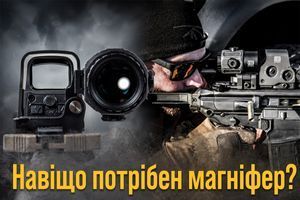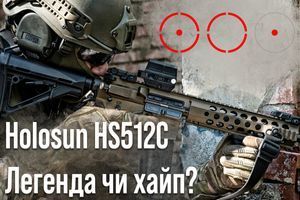
Just twenty years ago, red dot sights remained an expensive accessory for many, seen mostly in photos of special forces units or competitive shooters. Today, the situation has changed so dramatically that it is hard to imagine a modern carbine without a compact illuminated reticle instead of classic iron sights. From military personnel and law enforcement officers to hunters, sports shooters, instructors, and airsofters – the red dot sight has become one of the most critical elements of a firearm system.
The reason is simple. A good red dot does not magically turn a shooter into a sniper. Still, it allows for significantly faster target acquisition, cuts down aiming time, and enables shooting with both eyes open without losing situational awareness. In real-life scenarios, this often means more than just comfort – it means precious seconds that can determine the outcome of a drill, a hunt, or even a battle.
Yet, this is precisely where many make their first mistake. Some choose a sight based purely on price, others based on brand popularity, and still others rely solely on friends' advice without considering their own specific tasks. As a result, a device ends up on the firearm that either fails to meet operating conditions or fails to realize its full potential.
So how do you choose a red dot sight correctly? Which characteristics actually matter, how do open and closed models differ, and what mistakes should you avoid? Let's break it down together with a specialist from the military surplus and tactical gear shop Punisher.

What Is a Red Dot Sight and Why Has It Become the Standard of Modern Shooting?
To put it as simply as possible, a red dot sight is an optical device that projects an illuminated aiming reticle in such a way that the shooter perceives it as being "at infinity". Because of this, there is no need to focus your eyes simultaneously on the front sight, rear sight, and the target. It is enough to align the light dot with the object – and you can take the shot.
It sounds mundane, but this exact feature triggered a true revolution in marksmanship. While classic mechanical iron sights force the brain to constantly switch focus between three different focal planes, a red dot essentially reduces this process to a single action. Human vision operates more naturally, allowing the shooter to focus entirely on the target and surrounding environment.
This advantage becomes especially noticeable during rapid-fire shooting, engaging moving targets, or in low-visibility conditions. It is no coincidence that most modern militaries around the world transitioned long ago to red dot sights as their primary optic for close- and medium-range combat.
However, the path to this status was quite long. The first commercial red dot systems appeared in the second half of the 20th century, but the real breakthrough came in the 1970s when the Swedish company Aimpoint introduced one of the first practical electronic red dots. Since then, the technology has been constantly refined: battery life increased, dimensions shrank, impact resistance improved, and new reticles appeared.
Today, the market offers dozens of manufacturers, but the overall direction of development remains unchanged: sights are getting lighter, more autonomous, more durable, and better integrated into modern firearm systems. This evolution accelerated especially rapidly after the onset of full-scale war in Ukraine. Real combat experience demonstrated that a modern military red dot must withstand dust, mud, rain, impacts, extended operation without battery replacement, and compatibility with night vision devices. That is why closed red dot sights, capable of performing where open models begin to lose their advantages, are gaining immense popularity today.
Interestingly, the human eye perceives a bright illuminated dot significantly faster than traditional front and rear iron sights. That is why even experienced shooters, after transitioning to a quality red dot, frequently shorten their time to first aimed shot without making any changes to their shooting mechanics. This is not sight "magic" – it is a characteristic of the human brain, which reacts faster to a high-contrast visual reference.
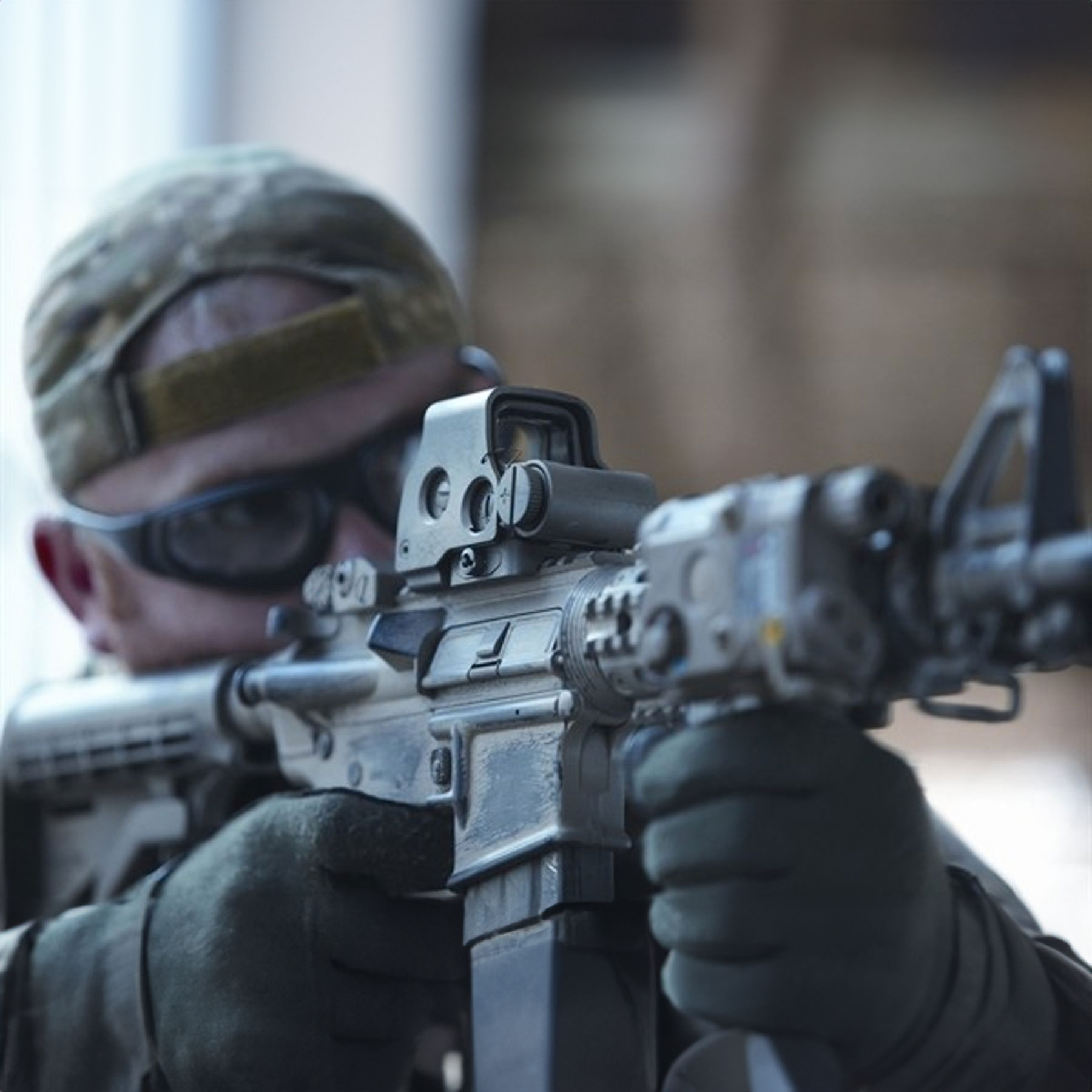

Open vs. Closed Red Dot Sights: Which Is Better for Your Specific Tasks?
This is perhaps the most frequent question tactical optics consultants hear. And the answer, as is often the case, is not as simple as one might hope. You will often hear categorical claims: some say open models are a thing of the past and the future belongs solely to closed ones. Others argue: why pay extra for unnecessary protection when an open red dot is lighter and more compact? In reality, both points of view are only partially accurate.
To understand the difference, imagine a standard car. A convertible offers excellent visibility and a sense of freedom, but it is hardly the best choice for off-roading in a heavy downpour. An SUV, by contrast, is slightly bulkier, but feels confident where other vehicles are forced to stop. Open and closed red dot sights differ in much the same way.
Open Red Dot Sights: Maximum Compactness and Speed
Open models are easily recognizable by their characteristic design: in front of the shooter is a single protective lens, while the LED emitter sits exposed. This specific architecture made them incredibly popular among sports shooters, hunters, and owners of compact firearms. Their primary advantages are obvious right from the first impression.
First and foremost – light weight. Most open models weigh only a couple of ounces. For IPSC competition shooting, dynamic drills, or handguns, this is a massive advantage. The center of gravity barely shifts, the gun returns to the sightline faster after recoil, and arms tire less during long training sessions.
The second advantage is a wide field of view. Due to the lack of a bulky housing, the shooter sees more of the surrounding space. This is especially felt when engaging multiple targets or rapidly transitioning fire.
Equally important is compactness. Open red dots have become the standard for modern "Optics Ready" handguns with factory optic cuts, where every fraction of an inch in height matters.
However, any engineering design is a compromise. An open layout means that the LED emitter, although partially protected, remains more exposed to environmental factors. Dust, wet snow, mud, water droplets, or even dense grass can block or distort the reticle. If the lens itself gets dirty, shooting comfort also drops noticeably. For a civilian shooter, this isn't always critical. But when a weapon is used daily, in any weather, without the ability to regularly clean the optic, such minor details cease to be minor.
Interestingly, open red dots were the primary catalyst for the revolution in practical shooting. Following their widespread adoption, IPSC athletes' scores began improving so rapidly that many courses of fire had to be revised, elevating competition to an entirely new level.
Closed Red Dot Sights: When Reliability Trumps Saving Every Ounce
If an open red dot can be compared to a sports car, a closed red dot is more like an armored SUV. It is not as sleek, but it is built to operate where equipment undergoes a true test of durability every single day. Its defining feature is a sealed housing with two lenses, inside of which the LED emitter, electronics, and optical path are completely protected. Thanks to this design, rain, dust, sand, snow, or thick mud have virtually no effect on performance. Even if one lens gets partially dirty, the second remains protected, and the sight remains fully functional. This specific feature has made closed models the standard for most military and law enforcement units worldwide.
A modern soldier does not choose when to operate. They may spend hours in the rain, crawl through wet mud, dismount from an armored vehicle, snag the sight on a doorway, or accidentally slam it against a concrete wall. Under these conditions, the key criterion is no longer weight, but the equipment's ability to keep working after everything it endures.
Another advantage of the closed construction is superior mechanical rigidity. A solid body handles impacts and vibrations better, which is crucial for service weapons, large-caliber carbines, or long-term mounting on vehicle platforms.
Modern battery life deserves special attention as well. While early generations of electronic sights required frequent battery changes, current top-tier models run for years without being turned off. Some sights deliver up to 50,000 hours of runtime on a single battery, utilize solar panels for auxiliary power, and automatically enter sleep mode when the firearm is motionless. This is why an increasing number of shooters who preferred open models just a few years ago are switching to closed systems today.
Naturally, there are trade-offs here too. Closed red dots are typically heavier, slightly bulkier, and more expensive to manufacture. Additionally, the thicker housing slightly restricts peripheral vision, though after a few training sessions most shooters stop noticing it. But when speaking of military applications, service duty, extreme weather operation, or long-term field use, the closed design is increasingly considered the "gold standard" today.


Why the War in Ukraine Changed Attitudes Toward Closed Red Dots
Full-scale war became the harshest proving ground for all forms of tactical optics. Equipment features tested for decades on proving grounds were suddenly tested daily in Ukraine – in rain, dust, mud, concrete debris following shellings, during long marches, and in assault operations. It became blatantly clear that an optic's main enemy isn't just weapon recoil. Fine sand, sticky mud, water, condensation, extreme temperature drops, and continuous mechanical impacts proved far more dangerous.
While an open red dot can sometimes simply be wiped clean with a cloth, that option may not exist in the middle of combat. A dirty emitter or a stray water drop at a critical moment can severely hinder aiming when there is no time to fix the situation. That is why many modern combatants increasingly favor closed models. This doesn't mean open sights have become bad—they continue to perform excellently in sports, hunting, or on civilian firearms. However, combat experience clearly demonstrated that when reliability comes first, structural durability almost always outweighs saving a couple of ounces.
As we can see, the question of "which red dot is best" has no universal answer. The better question is: what operational conditions do you specifically need it for? That should be your starting point when choosing, rather than fashion or brand popularity.


Which Red Dot Characteristics Actually Matter?
Opening any manufacturer's catalog can make your eyes glaze over with numbers, acronyms, and marketing jargon: MOA, Solar Failsafe, Shake Awake, IP67, Multi-Reticle System, NV Mode... To someone choosing a red dot for the first time, it looks almost like a spaceship manual. But if you strip away the advertising slogans, only a few practical characteristics truly impact shooting efficiency. Those are the ones you should focus on first.
Reticle Size (MOA): Why Smaller Isn't Always Better
This parameter causes the most confusion. Some believe that the smaller the dot, the more accurately you can shoot. Others advise getting the largest dot possible because the eye acquires it faster. The truth, as usual, lies somewhere in the middle.
MOA (Minute of Angle) is an angular measurement showing the physical area the aiming dot covers at a specific distance. To simplify, at a distance of 100 yards:
-
1 MOA covers approximately 1.05 inches;
-
2 MOA covers approximately 2.1 inches;
-
4 MOA covers approximately 4.2 inches;
-
6 MOA covers approximately 6.3 inches.
So which dot size should you choose?
1 MOA
Maximum precision. These sights are best suited for medium-range shooting or when paired with a magnifier. The small dot does not obscure small targets, but acquiring it quickly with the eye is slightly harder, especially during rapid mounting.
2 MOA
Many experts call this size the sweet spot today. The dot is clearly visible even on a bright sunny day while not obscuring a target silhouette at 100 to 200 yards. It is no surprise that most modern premium tactical red dots utilize 2 MOA.
4-6 MOA
These reticles are picked up much faster by peripheral vision. They work exceptionally well at close range and in dynamic shooting, but at 150-200 yards, they can cover a significant portion of the target. Thus, dot size selection always depends on your intended use case.
If you operate primarily within 25 to 100 yards, a larger dot is fully justified. If you plan to use a magnifier or engage in more precise fire, you are better off choosing a 2 MOA or even 1 MOA dot.
Reticle Types: A Single Dot or a Multi-Reticle System?
A decade ago, the choice was simple – a red dot and nothing else. Today, the landscape has changed dramatically. Many modern models allow switching between several reticle options:
Classic Dot
The simplest and most versatile option. It does not clutter the field of view, does not distract attention, and works well for virtually any scenario. That is why the classic dot remains the choice of a vast number of professionals.
Circle
A large outer ring makes rapid alignment significantly easier. At close ranges, the brain almost instantly "centers" the target inside the ring, allowing for faster engagement. This is especially noticeable indoors or during quick directional transitions.
Circle-Dot
This variant has gained the most popularity in recent years. It combines the advantages of the previous two options. The large ring helps quickly index the weapon upon mounting, while the center dot provides precision aiming. It is no coincidence that many modern Holosun tactical optics feature this system.
Psychologists studying human vision have long noted an interesting pattern: the brain finds the geometric center of a circle much faster than it locates an isolated small dot. This is why combined reticles often provide faster target acquisition, even if the shooter doesn't consciously realize it.
Reticle Brightness: Brighter Does Not Mean Better
Many buyers evaluate a red dot by the principle: the brighter the dot shines, the better the sight. In reality, this is one of the most common mistakes. An overly bright reticle begins to "starburst" or bloom before the eye, washing out fine target details. This is especially noticeable for people with astigmatism: instead of a crisp dot, they might see a star, a comma, or a glare.
A high-quality red dot is distinguished not by maximum brightness, but by a wide range of adjustment steps. The lowest setting must be dim enough for night vision compatibility, while the highest setting must remain crisp under direct sunlight without blooming out of shape. That is why modern optics often feature 10-12 daylight settings alongside several dedicated night vision levels.
Battery Life: Why 50,000 Hours Is More Than Just a Marketing Metric
Not long ago, shooters were accustomed to turning off their red dots after every range session to preserve battery life. Modern electronics have completely transformed operational expectations. A rating of 50,000 hours represents over five years of continuous operation. In practice, such a sight can be left turned on 24/7 without worrying about sudden failure at a critical moment.
Modern power-saving technologies contribute significantly to long battery life. The most common feature is automatic sleep mode (referred to under various brand names like Shake Awake). The concept is simple: if the firearm remains still for a set period, the sight temporarily shuts off illumination, instantly waking back up upon detecting the slightest movement. Some models also incorporate built-in solar panels, which power the electronics under sufficient ambient light and further conserve battery reserves.
Housing Ingress Protection: What IP67 and IP68 Mean
Another frequently underrated specification. The IP rating indicates how well the housing is sealed against dust and moisture. For modern tactical optics, IP67 is considered the baseline minimum, offering complete dust protection and temporary immersion in water. IP68 delivers higher waterproof protection, permitting longer submersion under water at manufacturer-specified depths.
However, the IP rating is only part of the story. Seal quality, housing strength, and overall manufacturing standards remain equally vital. Two sights with identical IP markings can behave very differently after years of real-world field use.


Parallax, Magnifiers, Night Vision, and Mounts: Nuances Often Thought of Too Late
Once you've selected housing type, dot size, and battery life, most buyers assume the hardest decisions are behind them. In truth, this is where the subtle details begin – the ones that aren't obvious in a store but daily affect user comfort. These details often dictate whether a red dot becomes a cherished part of your setup or a compromise you end up regretting.
Parallax: One of the Most Misunderstood Concepts
The term "parallax" sounds complex, which is why many myths surround it. In reality, the principle is straightforward. Imagine looking through a car window. If you move your head slightly, objects behind the glass appear to shift position relative to one another. A similar phenomenon occurs in optical devices.
In a high-quality red dot sight, the illuminated dot should stay precisely on target even when your eye alignment shifts slightly off-center. This is why manufacturers advertise terms like "Parallax Free" or "Parallax Free at 50 yards".
It is important to understand one detail: completely parallax-free optics do not exist in physics. Every manufacturer optimizes design for a specific distance, typically around 50 yards. At other distances, minor residual parallax may exist, but in quality models, it is so negligible that it has no practical impact on accuracy. Do not let this spec intimidate you. If you use a modern red dot from a reputable brand and maintain a consistent cheek weld, parallax will not be an issue.
Magnifiers: When a Red Dot Alone Isn't Enough
The primary advantage of red dots is speed. However, you cannot bypass physics. At a distance of 20 yards, a person can see a target clearly without magnification. At 300 to 400 yards, even a large silhouette becomes quite small, and fine details disappear.
This is where magnifiers come in – compact optical magnifiers mounted behind the red dot. The most common models offer:
-
3× magnification – versatile all-around choice;
-
5× magnification – for extended distances;
-
6× magnification – when maximum detail identification is required.
Their major advantage is versatility: with a quick flip of the wrist, a shooter can swing the magnifier to the side and instantly return to a 1× red dot. You effectively get two systems in one:
-
A fast optic for close-quarters engagement;
-
An optical system for precise shots at medium ranges.
This combination has long been a staple among military and law enforcement units worldwide.
A magnifier does not alter the actual precision or alignment of the red dot sight itself. It merely enlarges the image seen by the shooter. That is why a quality "red dot + magnifier" setup allows for effective engagement out to 300-400 yards without changing your primary optic.
Night Vision Device (NVD) Compatibility
A decade ago, Night Vision mode was considered an exotic feature. Today, the widespread adoption of night vision devices among military and special units has made it standard for modern tactical optics.
Why can't you simply turn down the brightness on a standard dot? Because even the lowest daytime setting remains excessively bright for an image intensifier tube. Instead of a crisp aiming point, the operator sees a massive flared halo washing out the target. Modern red dots include dedicated ultra-low brightness levels specifically calibrated for NVD use.
If you don't use night vision gear, this feature isn't critical. However, it serves as valuable future-proofing if your mission profile or gear setup changes later on.
Mounting Height: The Detail That Dictates Ergonomics
Buyers often focus entirely on the sight itself, forgetting the critical role played by its mounting height above the bore axis. The mount determines how natural your cheek weld will be, whether you retain access to back-up iron sights (BUIS), and whether the system integrates smoothly with other accessories.
Absolute Co-Witness
The red dot sits at the same height as the iron sights. The benefit is immediate use of iron sights through the optic window without shifting your head position.
Lower 1/3 Co-Witness
Many instructors consider this the most comfortable setup today. Iron sights sit in the lower third of the optic window, leaving the center field of view clear. If the optic fails, simply drop your eye slightly to sight through the irons. For modern AR-15 platform carbines, the lower 1/3 has increasingly become the industry standard.
Glass Quality: The Hidden Specification
When viewing red dots in a store, all lenses may look identical. In reality, differences can be night and day. Optical glass purity and anti-reflective coatings directly dictate:
-
Light transmission.
-
Image contrast.
-
Color neutrality.
-
Distortion resistance.
-
Reflection reduction.
Inexpensive models frequently exhibit a distinct blue or green tint that distorts environmental colors. High-quality sights minimize these artifacts to where the shooter forgets they are looking through an extra piece of glass. This is crucial during extended observation: fewer distortions mean less eye fatigue and longer operational focus.
Housing Materials: When Structural Integrity Matters
Another easily overlooked parameter is housing material. Most modern mid-tier and premium red dots use aircraft-grade aluminum alloys (e.g., 6061-T6 or 7075-T6). Aluminum offers an ideal strength-to-weight ratio, handling recoil and heavy mechanical stress.
For optics built for extreme operational conditions, titanium elements are increasingly used to better resist impacts and deformation, albeit at a higher manufacturing cost.
Polymer housings have a place in budget or airsoft setups. However, for hard-duty service use or harsh field conditions, metallic construction is strongly recommended.



Choosing a Red Dot Sight Based on Your Specific Tasks
There is an old rule equally true for firearms, vehicles, and outdoor gear: there is no absolute "best" model – only the best model for a specific application. The same applies to red dot sights.
An optic engineered for a special forces operator's carbine may be completely unnecessary for a hunter. Conversely, a compact open red dot ideal for IPSC competition is rarely optimal for a soldier operating in rain, mud, or snow. Before purchasing, ask yourself one honest question: "What specific task do I need this red dot for?" Everything else flows from that answer.
For Hunting
Hunting moved past sole reliance on high-magnification scopes long ago. For driven hunts, dense brush, or quick shots at moving game at close range, a red dot is frequently the superior option. Its main advantage is speed: no wasting precious seconds obtaining eye relief or aligning iron sights. Place the dot on target and press the trigger.
Hunters should prioritize:
-
Wide field of view;
-
Minimal weight;
-
Sealed weatherproofing;
-
Quality glass without glare;
-
Sufficient brightness range for dawn and dusk conditions.
If hunting in harsh weather, choose a closed red dot that won't be compromised by rain, wet snow, or brush debris.
Shooting ergonomics studies demonstrate that when engaging moving targets, most shooters using a red dot break their first aimed shot faster than those using traditional iron sights. That is why these optics have become standard not only for military personnel, but for many professional hunters as well.
For Sports & Competition
Practical shooting serves as a laboratory for arms and accessories manufacturers, spawning technologies that later transition into the military domain. In disciplines like IPSC, USPSA, or 3-Gun, the core criterion isn't extreme range, but speed between target transitions. Competitive shooters look for:
-
Minimal weight.
-
Maximum field of view.
-
Small dot size (2 MOA).
-
Rapid activation.
-
Ergonomic control layout.
This explains why open models remain popular among sports shooters – every fraction of an ounce matters when driving a gun fast.
For Airsoft & Force-on-Force Training
Airsoft is often underrated as a training tool, which is a mistake. It provides an accessible platform to practice:
-
Weapon mounting;
-
Safety manipulation;
-
Rapid target indexing;
-
Movement and shooting on the move;
-
Team communication and tactics.
All of this can be drilled without expending costly live ammunition. Airsoft platforms can use budget optics or professional-grade optics if the user desires 1:1 realism with their duty weapon.
The key precaution is front lens protection. A 0.20g-0.40g plastic BB at close range can shatter optic glass. Experienced players always install transparent lens protectors or killflashes to absorb impacts.
For Duty & Combat Operations
Modern conflicts have permanently altered red dot requirements. While compactness and speed were once primary, modern combat demands:
-
Absolute reliability.
-
Mud and debris resistance.
-
Impact survival.
-
Night vision compatibility.
-
Extended battery life.
-
Magnifier compatibility.
-
Field serviceability.
This explains why military forces are overwhelmingly standardizing closed red dots. In modern combat, you may not have time to clear an open optic's emitter. Rain, explosion dust, mud, snow, and debris cease to be dealbreakers when the optical system is fully enclosed inside a sealed housing. Models like the Holosun HS512C, Aimpoint CompM5, Aimpoint Duty RDS, EOTech EXPS3, or SIG Sauer Romeo8T are increasingly common sight choices in real combat environments.
Remember: even the best red dot is just one element of a gear system. Its full potential is unlocked only when integrated with a properly setup rifle, quality mounts, active hearing protection, night optics, and modern loadout gear.


Is It Worth Buying the Most Expensive Red Dot Sight?
This question crosses almost every buyer's mind. The answer isn't as cut-and-dry as it seems. Premium models genuinely deliver:
-
Superior structural durability;
-
Higher optical clarity glass;
-
Superior weather sealing;
-
Extended battery performance;
-
Rock-solid electronics;
-
Proven field track records over years of service.
However, that does not mean every user needs a top-tier optic.
If your firearm is used primarily for recreational range trips, competition, or home defense, mid-tier modern optics frequently offer the ideal balance of price and performance.
Conversely, for duty use, law enforcement, or combat deployment, cutting corners on optics is a false economy. In a critical situation, equipment reliability matters just as much as marksmanship skills.
Common Mistakes When Choosing and Using a Red Dot Sight
Mounting a red dot and turning on the dot seems straightforward. In practice, however, many owners make errors after purchase that can negate the advantages of even the most expensive optic.
While manufacturers have perfected lenses, housings, and electronics over the years, the human element remains. Most issues stem not from optic failure, but from improper selection or operation. Let's look at the most common pitfalls:
Mistake #1: Buying the Cheapest Model "Just to Start"
The desire to save money is understandable, but the adage holds: "Buy cheap, buy twice". Inexpensive knockoffs and ultra-budget red dots suffer from:
-
Inability to hold zero under recoil.
-
Poor impact resistance;
-
Severe parallax errors;
-
Weak environmental sealing;
-
Subpar glass quality;
-
Rapid battery drain.
This might suffice for airsoft or casual plinking, but not for hunting, duty, or defensive firearms. A red dot is a primary sighting tool that must work reliably when a shot counts.
Mistake #2: Neglecting Proper Zeroing
A common misconception is: "It shoots close enough to center out of the box". The key phrase here is close enough. Every red dot must be properly zeroed after mounting. Common zeroing distances include:
-
25 yards – fast initial zero;
-
36 yards – popular versatile zero;
-
50 yards – ideal compromise zero for carbines;
-
100 yards – traditional precision zero.
Distance selection depends on your caliber, barrel length, and operational requirements. After zeroing, verify your point of impact at varied distances to understand your setup's trajectory.
Professional instructors often emphasize: "You don't just zero the red dot – you zero the complete system of shooter + firearm + optic + ammunition." Identical rifles can exhibit different points of impact due to ammo variances, mount torque, or individual shooting technique.
Mistake #3: Setting the Dot Brightness Too High
Intuition suggests that brighter is better, but the opposite is true. An excessively bright setting:
-
Increases perceived dot size (blooming);
-
Obscures fine target details;
-
Accelerates eye fatigue;
-
Causes starbursting and internal housing reflection in low light.
The Golden Rule: Set reticle brightness only as high as necessary to see it comfortably against the background. This is why auto-brightness adjustments are becoming a standard feature in modern optics.
Mistake #4: Forgetting About Battery Maintenance
Even if a manufacturer claims 50,000 hours of runtime, that doesn't mean you should ignore battery health for years. Experienced shooters follow simple preventive maintenance rules:
-
Replace the battery once a year on a set date;
-
Swap batteries before major deployments or hunts;
-
Replace after extended storage periods.
The cost of a fresh battery is negligible compared to the risk of an optic going dark at a critical moment.
Mistake #5. Improper Care
Another typical situation is wiping the lens with whatever happens to be at hand: a napkin, a jacket sleeve, a paper towel, or even the hem of a t-shirt. All of these gradually leave micro-scratches on the anti-reflective coating.
Proper care is much simpler:
-
First, blow off the dust or remove it with a soft brush.
-
If necessary, use a special optical cleaner.
-
Wipe only with a microfiber cloth.
A few minutes of proper care can extend the life of your optic by many years.
Mistake #6. Buying a Sight "Just in Case"
This is another psychological trap. A person reads dozens of reviews, sees the gear used by special forces, and decides: "I'd better buy the most powerful option right away". But do you really need a military closed red dot with night vision modes, a titanium housing, and magnifier compatibility if the firearm is used only a few times a year at a civilian shooting range? Sometimes the answer is yes. But very often – it is no. A smart choice begins not with the brand, but with an honest answer to the question: "Under what conditions will this sight operate 95% of the time?" This prevents you from overpaying for features you will never need while ensuring you don't skimp on those that truly matter.

Just twenty years ago, red dot sights were perceived by many as equipment for a narrow circle of professionals. Today, the situation has changed dramatically. They have become a standard piece of gear for military personnel, law enforcement, athletes, hunters, and recreational shooters. The reason is simple: a modern red dot sight allows you to acquire targets faster, reduce aiming time, and maintain full situational awareness.
However, there is no one-size-fits-all model. Open red dots attract users with their minimal weight and wide field of view, while closed ones offer maximum reliability in rain, dust, or snow. For some, compactness and speed will be decisive; for others, night vision compatibility, long battery life, or the ability to work with a magnifier will matter most. That is why the right choice always starts with your tasks, and only then with the brand or price.
As the experience of modern military conflicts shows, quality optics have long ceased to be a luxury. It is a key component of an effective firearm system, where every detail – from the weapon to the mount – works as a single unit. If approached thoughtfully, a red dot will become not just an accessory, but a tool that helps fully unlock a shooter's potential in any condition.
NEED HELP CHOOSING?
Our specialists will help you choose a red dot sight based on your needs, firearm, and intended use.
Get a consultation

Vitalii Buniak — article author
Military gear consultant
Before 2022, he worked as a sales assistant at the Panisher store. After the start of the full-scale invasion, he joined the Armed Forces of Ukraine, gaining real combat experience.
Thanks to his combat experience and deep knowledge of tactical gear, Vitalii serves as a personal expert of the Panisher online store in the fields of:
- Clothing and footwear
- Equipment
His recommendations help customers choose reliable and functional gear for any conditions.
FAQ: Answers to Frequently Asked Questions
1. Which red dot sight is better: open or closed?
2. What reticle dot size should I choose?
3. Can a red dot sight be used without a battery?
4. Do I need a magnifier for my red dot sight?