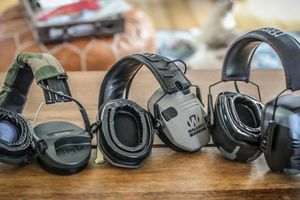
A tactical headset has long ceased to be just "shooting earmuffs". In modern gear, it simultaneously protects hearing from gunshots and impulse noise, helps you hear your surroundings, and provides reliable communication via radio.
Among professional solutions, the 3M PELTOR ComTac line occupies a special place. And while navigating the ComTac generations can be tricky, the question of choosing between ComTac XPI or ComTac VIII arises especially often. At first glance, the difference is simple: XPI is a time-tested model, VIII is the newer generation. But behind these two names lie different approaches to sound processing.
In this article, together with a guide from the Punisher military store, we will examine how the 3M PELTOR ComTac XPI and ComTac VIII differ, which specifications truly matter, how long the headsets run on batteries, what changed in the new model, and who should choose each of them.


ComTac XPI: A Proven Classic
3M PELTOR ComTac XPI is a professional active headset designed to protect hearing, amplify low-level sounds, and enable communications in high-noise environments. Its primary advantage is structural simplicity and an operational scheme refined over years of use.
The XPI utilizes ambient active listening: quiet ambient sounds are amplified, while hazardous noise levels are suppressed. This allows users to stay aware of their surroundings without removing the headset.
Various connection options are available for communications, including configurations with NATO or PELTOR pinouts. Therefore, before purchasing, it is important to look not only at the name ComTac XPI, but also at the specific modification and connector type.
According to 3M data, the XPI weighs approximately 11.8 oz with batteries, uses 2 AAA batteries, and has a stated operating time of approximately 200 hours depending on battery type and temperature. For the headband model, the stated SNR is 28 dB.
What Do We Get in Practice?
The ComTac XPI is a solution for those who primarily need a reliable active headset without a complex ecosystem of additional features. It is well-suited for:
-
military service;
-
shooting ranges and training;
-
working with radio equipment;
-
wearing under a combat helmet;
-
situations where battery life is of critical importance.
And it is this last point that deserves special emphasis.

3M Peltor ComTac XPI
Explore the full range of 3M Peltor ComTac XPI active headsets in our catalog.
View and order now!
The XPI's stated 200-hour battery life is more than four times longer than the stated approximately 50 hours for the ComTac VIII. This means a newer model does not automatically equate to longer battery autonomy across all aspects.

ComTac VIII: A New Approach to Sound Processing
The 3M PELTOR ComTac VIII represents the next evolutionary step in the ComTac series. Here, the manufacturer focused not merely on hearing protection and radio transmission, but on more sophisticated processing of the ambient sound environment. One of the key features of the VIII is Mission Audio Profiles (MAP). The user can select from five profiles:
-
Observation – for stationary surveillance.
-
Patrolling – for dismounted patrols.
-
Conversation – for face-to-face communication.
-
Comfort – for enhanced comfort during prolonged wear.
-
OFF – disabling active ambient amplification.
This is a significant departure from the more traditional XPI approach.
The ComTac VIII also features Soundscape technology, designed to optimize sound perception based on the acoustic environment. As a result, the user receives a more modern control system over what they hear through the headset.
Another essential function is Earplug Mode. It allows the headset to be used in conjunction with passive earplugs while preserving the ability to receive ambient audio through the active system.
Battery Life: The XPI Advantage
Here, the situation is clear-cut. The ComTac VIII operates for approximately 50 hours on two AAA batteries, whereas 3M states approximately 200 hours for the XPI. At first glance, this might appear to be a drawback of the new model. In reality, the reason is obvious: the VIII uses a more complex digital audio processing system and additional sound algorithms. Therefore, when choosing, ask yourself a simple question: What matters more to you – maximum battery autonomy or advanced audio processing? If your headset operates continuously in field conditions where battery replacement might be difficult, the XPI's advantage is highly practical.


ComTac XPI vs ComTac VIII: Key Differences
|
Specification |
ComTac XPI |
ComTac VIII |
|
Generation |
previous generation |
newer generation |
|
Type |
active tactical headset |
|
|
Power Supply |
2×AAA |
2×AAA |
|
Stated Operating Time |
≈200 hrs |
≈50 hrs |
|
SNR |
28 dB |
depends on configuration, up to ≈29 dB |
|
MAP |
No |
Yes |
|
Soundscape |
No |
Yes |
|
Earplug Mode |
Yes |
Yes |
|
Mounting |
headband/helmet configurations depending on model |
headband/helmet mounting option with appropriate accessory |
|
Communications |
depends on modification |
single/dual comm depending on modification |
|
Microphone |
dynamic |
noise-canceling dynamic, IP68 in relevant versions |
|
MIL-STD-810H |
— |
tested in accordance with MIL-STD-810H |
|
Primary Advantage |
battery autonomy and proven design |
more modern sound processing and control |
Specifications may vary depending on the specific part number and headset configuration, so it is necessary to verify the exact Part Number prior to purchase rather than relying solely on the series name. For the ComTac VIII, 3M separately offers single comm and dual comm variants, different connectors, and various configurations.
Which Is Better: ComTac XPI or ComTac VIII?
There is no universal answer. If you need a reliable active headset with long battery life, the XPI remains a very practical option. It is especially attractive to those who:
-
do not require complex audio profiles;
-
already own PTTs and accessories suited to a specific pinout;
-
want to minimize dependency on replacement batteries;
-
look for a time-tested design;
-
use the headset primarily for shooting and radio communications.
Meanwhile, considering the ComTac VIII is more logical if a more modern audio processing system is your priority. You should choose the VIII if:
-
More precise management of your acoustic environment is essential.
-
You require Mission Audio Profiles.
-
You operate frequently across varied acoustic environments.
-
Soundscape technology is important to you.
-
You want a more modern version of the ComTac headset.
-
You plan to build a new comms setup without being tied to legacy equipment.
In the ComTac VIII, the battery compartment is constructed as a sealed single-side module, and the product itself is rated for operation in a temperature range from approximately -40 to +131 °F. 3M also specifies saltwater resistance – immersion in 5% saltwater to a depth of 6.6 ft for 30 minutes.

Do Not Confuse the Headset with a Specific Configuration
This is one of the most critical considerations when selecting a 3M PELTOR tactical headset. The name ComTac VIII or ComTac XPI alone does not indicate how the headset will physically interface with your radio. For example, ComTac VIII options include:
-
single comm;
-
dual comm;
-
NATO wiring;
-
PELTOR wiring;
-
various connector types;
-
versions with or without a downlead microphone.
3M explicitly lists 4-pin U/174 and 5-pin U-384/U options for the ComTac VIII depending on configuration. Therefore, the headset + PTT + radio assembly must be treated as a unified system. Otherwise, you risk purchasing an expensive professional headset that physically connects to your equipment but fails to function as expected.
Can ComTac Headsets Be Mounted on a Combat Helmet?
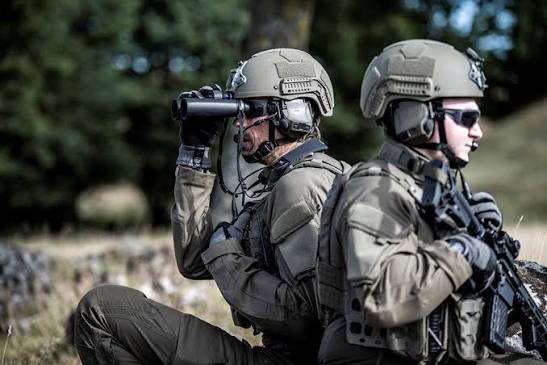
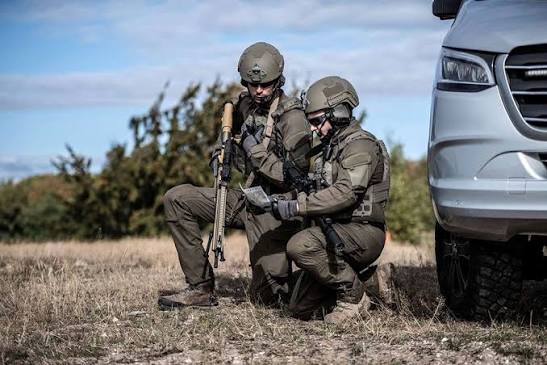
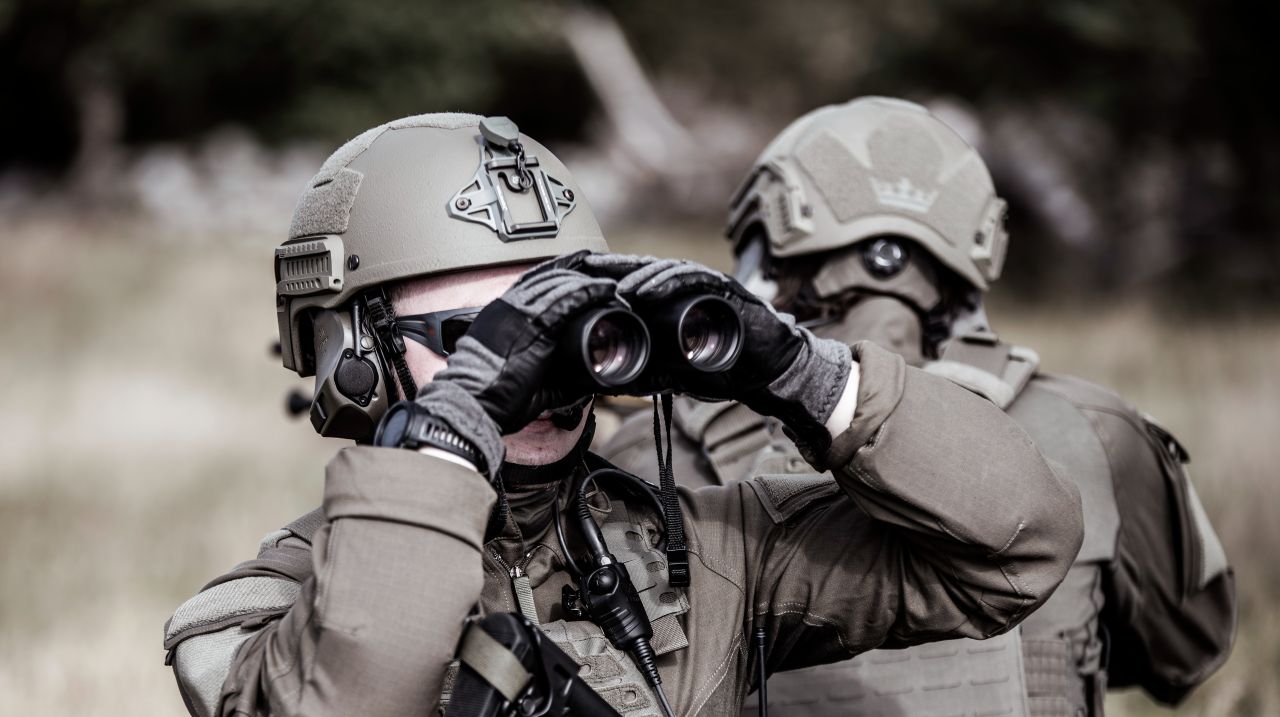
Yes. Both series are available in configurations designed for use with tactical helmets. For the ComTac VIII, 3M provides the ability to convert the headset for helmet rail mounting using the appropriate accessory.
However, there is a nuance here as well. If you regularly wear a combat helmet, active earmuffs, eyewear, and other gear, you should plan the whole setup in advance. Improper cup positioning or excessive clamping pressure can reduce comfort and compromise hearing protection effectiveness. That is why, when assembling gear, you must consider the entire headborne system configuration: helmet → mounts → headset → eyewear → NVG/NVG mount → other equipment.
What About Hearing Protection?
Both the XPI and VIII are active headsets, meaning they perform two functions simultaneously: protecting hearing from dangerous impulse noise and allowing you to hear ambient surroundings. This is fundamentally important.
An active headset should not simply "block out everything". On the contrary, its task is to attenuate hazardous sounds while allowing the user to perceive voices, movement, commands, and other environmental cues. What then is the difference between the models? In the ComTac VIII, 3M explicitly states protection against impulse and continuous noise, environmental listening, and Earplug Mode.
In the ComTac VIII, stated microphone protection in select configurations complies with IP68, with 3M noting the capability to withstand immersion up to 9.8 ft for 30 minutes. This does not mean the headset should be deliberately used underwater, but it demonstrates the component's level of environmental durability.
ComTac VIII Is Not Merely a "New XPI"
This is perhaps the most important takeaway from the comparison. Looking solely at the model name, it might seem that the ComTac VIII is just an XPI with a few extra features. In reality, the engineering approach differs. The XPI relies on proven simplicity, reliability, and long battery life. The VIII relies on sophisticated digital audio processing and adaptation to the acoustic environment.
Therefore, the question "which model is better?" should be replaced with: "Which model better suits my specific mission needs?" For extended field deployments where replacing batteries must be kept to a minimum, the XPI offers a compelling argument – approximately 200 hours of runtime. For a user seeking a more modern audio control platform, MAP, Soundscape, and next-generation features, the ComTac VIII represents a more logical choice.
3M Peltor ComTac VIII
Explore the full range of 3M Peltor ComTac VIII active headsets in our catalog.
Browse and choose yours!
The PELTOR ComTac line is not used exclusively by military forces: 3M also positions ComTac as a professional solution for law enforcement agencies. The company explicitly describes the series as hearing protection and communication gear for challenging acoustic environments.
3M PELTOR ComTac XPI is a choice in favor of a proven design, simplicity, and exceptionally long battery life. Meanwhile, 3M PELTOR ComTac VIII is a more modern platform focused on advanced audio processing, Mission Audio Profiles, Soundscape, and broader adaptability to acoustic environments.
Thus, if you simply need a reliable active headset for shooting, radio communications, and wearing under a helmet, the XPI remains a very practical choice. If you are building a modern comms setup and want to maximize active ambient processing, you should look toward the ComTac VIII. Most importantly – always verify the specific Part Number, connector type, wiring format, and compatibility with your radio and PTT. In tactical communications, these details are often more critical than the branding on the earcups.
If you plan to purchase military gear in Ukraine, select your headset not in isolation, but as part of a complete system: radio + PTT + headset + helmet + mount. This approach ensures you receive not just an expensive kit, but a truly functional communication and hearing protection system.
NEED HELP CHOOSING?
Our specialists will help you understand the specifications and choose the optimal model for your needs.
Get a consultation

Igor Ivandikov — author of the article
Project Manager
Has over 2 years of experience working in the field of camping equipment. Well-versed in products for tourism, camping, and outdoor recreation.
Responsible for coordinating projects, monitoring deadlines, and ensuring the quality of task completion.
He enjoys football (soccer) and billiards, participates in competitions, and has won prizes on numerous occasions. He is a fan of active recreation.
FAQ: Answers to Frequently Asked Questions
1. Is the ComTac VIII better than the ComTac XPI?
2. Can the ComTac VIII be used with earplugs?
3. Are ComTac headsets compatible with combat helmets?
4. Does the ComTac VIII feature Bluetooth?