The red dot sight has long been the standard for military personnel, law enforcement officers, and competitive shooters. It allows for instantaneous target acquisition at close ranges, but as distance increases, another problem arises – even the best red dot won't help if the human eye can no longer clearly distinguish the object.
That is precisely why magnifiers are growing increasingly popular. These compact units are mounted behind a red dot sight and literally in a second transform it into a versatile system for engagement at both short and medium distances. In this article, together with a specialist from the Punisher military store, we will take a detailed look at how magnifiers work, whether they affect shooting accuracy, which magnification power you should choose, and who truly needs such a system.
What Is a Magnifier and Why Do You Need It?
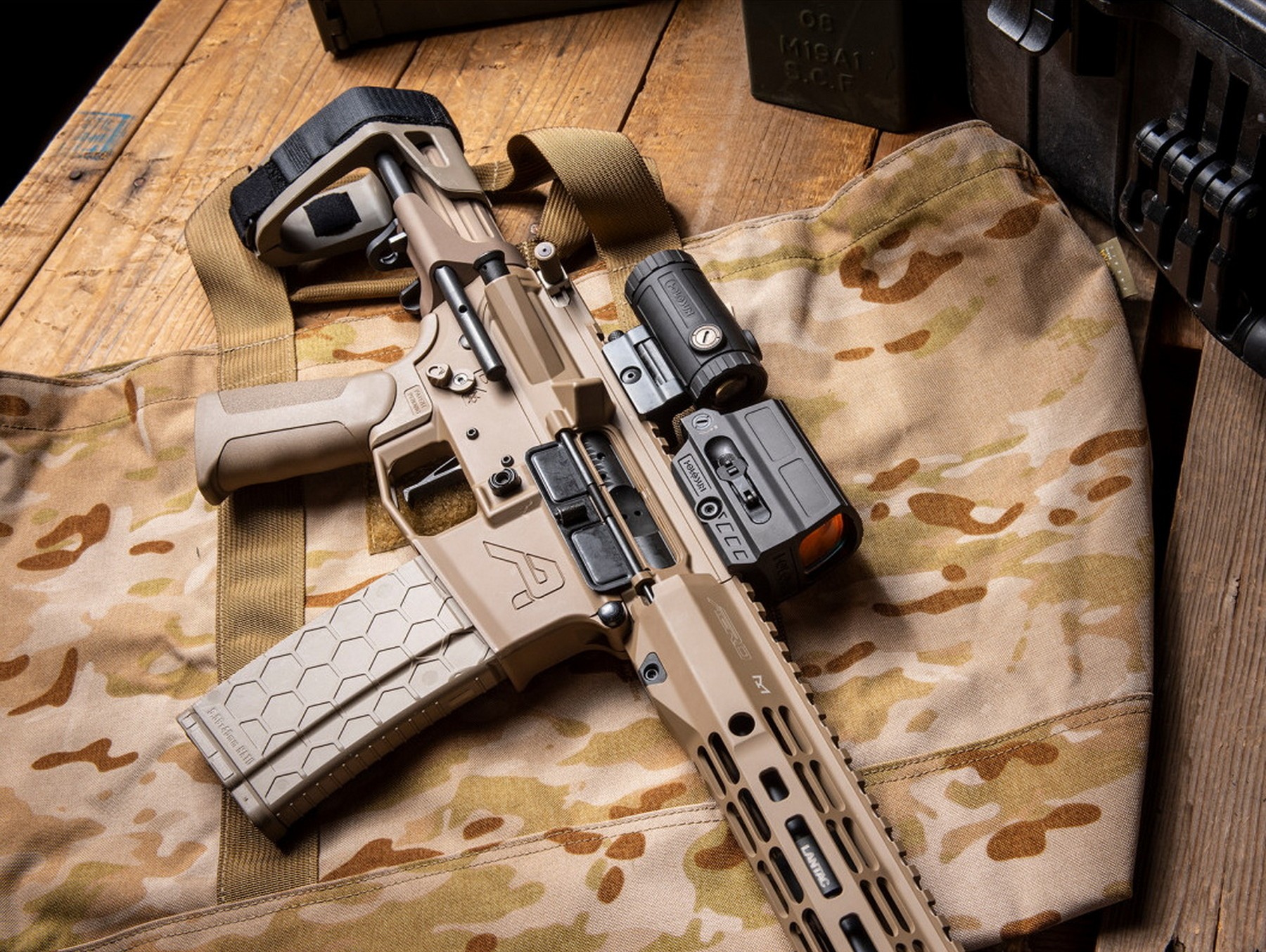
If you ask someone seeing a magnifier for the first time what it is, the most common response is: "a small optical scope". And that is one of the most common misconceptions. A magnifier is not a scope in the traditional sense of the word. It has no reticle, is not used independently of the red dot, and does not determine the point of aim. In fact, it is a compact telescope whose sole job is to magnify the image generated by the red dot sight. The term magnifier best describes its precise function.
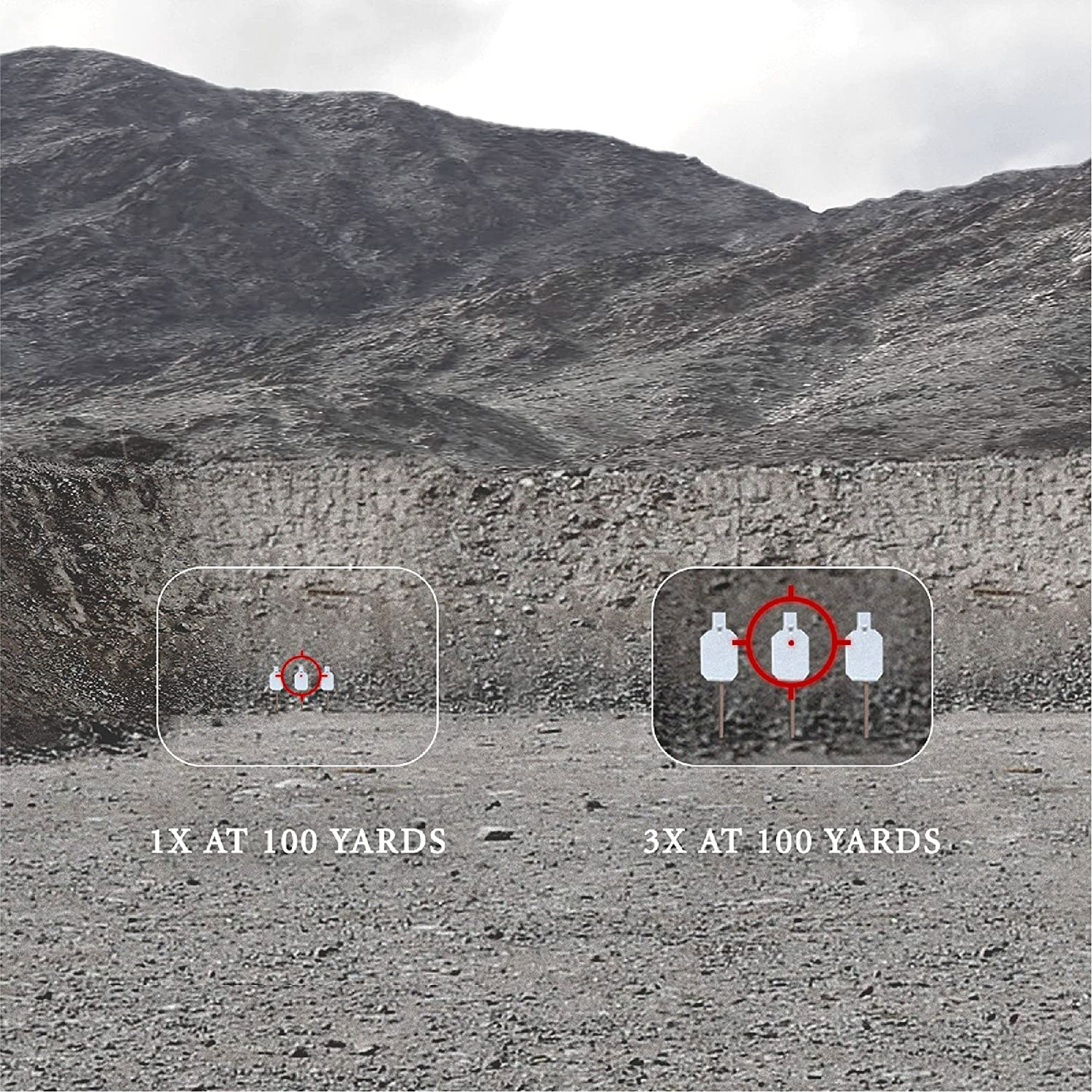
Once a magnifier is installed, the shooter sees absolutely every element of the image enlarged: the target, terrain, obstacles, and even the red dot's aiming point. This is why many beginners are surprised when, after mounting a 3x magnifier, their tiny dot suddenly appears significantly larger. In reality, it is not just the dot that scales up, but the entire field of view, while the aiming geometry remains entirely unchanged.
In practice, this means a very simple thing. If a person at a distance of 330 yards looks like a dark silhouette without magnification, mounting a magnifier makes their contours, gear, weapon position, or cover much more noticeable. This does not automatically make the shooter more accurate, but it allows for a much better assessment of the situation and a more precise choice of aiming point. Therefore, a magnifier cannot strictly be called a tool for increasing accuracy. It is more accurate to say that it extends the effective distance of a red dot sight while preserving its primary advantage – speed. And speed is the main reason for the popularity of magnifiers among the military.
Imagine a scenario. An assault team is operating in an urban environment where contact with the enemy can occur literally a few feet away. A few minutes later, they break out into open terrain where targets are located 270 to 440 yards away. If you rely solely on a red dot, engaging distant targets becomes significantly harder. If a classic high-power optical scope is installed instead, another problem arises – target acquisition speed drops drastically during close-quarters battle.
It was specifically for such scenarios that the Red Dot + Magnifier concept was created, which is now utilized by many militaries around the world. When necessary, the magnifier is instantly flipped to the side, allowing the shooter to work through the red dot alone again. When there is a need to identify or engage a target at a longer distance, the magnifier is flipped back onto the optical axis just as quickly. This versatility is the primary driver of its popularity.
Many believe that the magnifier is a relatively recent invention that emerged alongside modern red dot sights. In reality, the first experiments with magnifiers for red dots took place back in the late 1990s. However, the real push for their development came from combat operations in Iraq and Afghanistan. It was there that soldiers faced situations where red dots performed exceptionally well in urban settings, but at distances over 220 yards, there was a pressing need for better target identification. Since then, the Red Dot + Magnifier configuration has become one of the most popular solutions for versatile carbines. Today, such setups are widely used not only by military personnel but also by law enforcement, sport shooters, and hunters.
Why Is a Magnifier Not a Rifle Scope?
This question regularly comes up even among civilian carbine owners. Externally, a magnifier closely resembles a compact scope: an aluminum body, two lenses, focus adjustment, and a Picatinny rail mount. However, the similarities practically end there.
A classic rifle scope is an independent sighting system. Inside, it contains a reticle, windage and elevation adjustment mechanisms, and in many modern models, illumination, ballistic reticles, or rangefinding elements. The scope itself is responsible for aiming the weapon at the target, which is why it must strictly be zeroed after installation.
A magnifier works on an entirely different principle. It does not generate an aiming reticle and plays no part in the aiming process. All the information the shooter sees has already been created by the red dot. The magnifier's sole task is to enlarge that existing image before it reaches the eye. This is why, after installing a quality magnifier, you do not need to re-zero your weapon. If the red dot was zeroed correctly, the point of impact remains the same. This is one of the main advantages of such a system compared to swapping one scope for another.
It is common to hear the opinion that a magnifier "changes" shooting accuracy. In reality, that is not entirely correct phrasing. It does not affect shot mechanics, ballistics, or the position of the aiming reticle. Its advantage lies elsewhere: the shooter can see the target better and control their aim more precisely, especially when dealing with distances over 220 yards.
From my own experience, I can say that this is where many draw a false conclusion upon their first encounter with a magnifier. A shooter mounts it, sees a significantly larger aiming dot, and assumes that accuracy must have suffered. In truth, this is merely an optical effect. The entire image expands simultaneously – both target and dot – so their relative proportion stays identical. If the red dot provided accurate targeting before mounting the magnifier, that property doesn't go anywhere after installation.

How Does a Magnifier Work?
Despite its fairly simple design, the operational principle of a magnifier frequently confuses. Some believe it "adds power" to the red dot itself, while others are convinced the magnifier alters the rifle's zero or functions like a standard scope. In reality, it is much simpler.
A red dot sight forms a light-based reticle and projects it in such a way that the shooter sees the dot as if it were set at infinity. This allows the user to observe both the target and the reticle simultaneously without constantly shifting focus between different distances. This is precisely why red dots are so fast in operation.
The magnifier is mounted behind the red dot, closer to the shooter's eye. It does not interact with the rifle or the reticle directly – it only magnifies the optical image that has already been formed. As a result, the shooter sees the same image, but at a larger scale. This is why a magnifier simultaneously enlarges:
-
the target;
-
the surrounding terrain;
-
the aiming reticle;
-
any other objects within the field of view.
This is one of its key differences from digital zoom or certain modern electronic sights that can scale only a portion of the image.
Why Doesn't a Magnifier Change the Point of Impact?
One of the most frequent questions among carbine owners goes something like this: "Do I need to re-zero my rifle after installing a magnifier?" In the vast majority of cases, the answer is no. The reason is that the magnifier is not involved in establishing the sight line. It sits downstream of the red dot and affects neither the position of the reticle nor the bullet's trajectory. In other words, if your red dot was zeroed at 100 yards, after installing the magnifier, the weapon will remain zeroed at those same 100 yards.
Then another question arises: why are there adjustment screws on the body of most magnifiers? Their purpose is frequently misunderstood. These adjustments are not for zeroing the rifle, but for centering the magnifier's optical axis relative to the red dot. After mounting the magnifier, the aiming dot should sit roughly in the center of your field of view. If it is shifted left, right, up, or down, shooting won't become less accurate, but using the system will be far less comfortable. Centering screws are used precisely to eliminate this misalignment. Put simply, they adjust the image, not the weapon.
Why Does a Magnifier Enlarge the Aiming Dot Too?
This is another feature that often surprises shooters when they first try an optical magnifier. Suppose you are using a red dot with a 2 MOA aiming point. After installing a 3x magnifier, the dot appears to be nearly three times larger. This is completely normal. A magnifier cannot distinguish between the target and the reticle; to the optical unit, it is all a single image. Therefore, absolutely everything the shooter sees is magnified.
In practice, this creates almost no issues. For instance, a 2 MOA dot covers roughly 2.1 inches at 100 yards, about 4.2 inches at 200 yards, and approximately 6.3 inches at 300 yards. Mounting a magnifier does not change these values – it only changes how your eye perceives them. The target scales up in the exact same proportion, so the ratio between dot size and target size remains unchanged. That is why quality red dot and magnifier manufacturers emphasize that a magnifier does not impact system precision as long as everything is properly mounted and zeroed.
Construction of a Modern Magnifier
At first glance, a magnifier seems like a fairly simple device, but behind its compact housing lies a complex optical system. Most modern models consist of a durable aluminum body housing several lens groups. These lenses are responsible for enlarging the image while minimizing optical distortion. Higher-end models feature Fully Multi-Coated (FMC) optics, which boost light transmission, reduce glare, and enhance contrast. This becomes especially noticeable when operating at dusk or in adverse weather conditions.
On the rear of the housing, there is typically a fast-focus eyepiece ring (diopter adjustment). It is often confused with a target focus mechanism, but it is actually used solely to compensate for the specific shooter's vision. Once set correctly for your eye, you rarely need to touch this adjustment again.
Most military-grade models feature an objective lens diameter of 0.94-1.02 inches (24-26 mm), providing an adequate field of view without adding unnecessary bulk. The weight of a modern magnifier usually ranges from 8.8 to 12.3 ounces (250-350 grams), and together with its mount, about 12.3 to 17.6 ounces (350-500 grams). That is why adding a magnifier barely alters the balance of a modern carbine.
Flip-to-Side – The Magnifier's Greatest Advantage
If a magnifier had to be unbolted from the rifle every time you didn't need it, it hardly would have become so popular. The introduction of Flip-to-Side (FTS) mounts caused a true revolution. The working principle is exceptionally simple: the magnifier is attached to a hinged mount that allows it to be swung away from the optical axis in a single motion. The red dot remains firmly in place, allowing the shooter to instantly revert to unmagnified 1x operation.
In practice, this takes less than a second and requires no tools or equipment removal. It is this feature that made magnifiers so indispensable to military personnel. In real combat, engagement distances can shift in a matter of seconds. While magnification is only an obstacle during room clearing, it immediately becomes an asset upon breaking out into open terrain.
From personal experience, after a few training sessions, flipping the magnifier between active and stowed positions becomes almost automatic. It takes about as much time as toggling a safety selector or adjusting your grip. That is why experienced shooters rarely view a magnifier as an isolated accessory – it simply becomes part of the carbine's overall ergonomics.
Eye Relief, Field of View, and Exit Pupil: Why These Specs Matter More Than Magnification
Most buyers focus primarily on magnification power when selecting a magnifier. This is logical: numbers like 3x, 5x, or 6x instantly show how much "closer" the target will appear. However, in practice, experienced shooters often evaluate completely different specs first – eye relief, field of view (FOV), and exit pupil. These parameters determine how comfortable shooting will be, especially in high-dynamism environments.
Experience shows that a magnifier with lower power but a wider field of view often proves more effective than a higher-magnification model. The reason is simple: in actual combat, it is critical not just to see the target, but to acquire it quickly upon mounting the rifle.
Eye Relief – The Distance That Forgives Mistakes
Eye relief is the distance between the magnifier's eyepiece lens and the shooter's eye where a full image can be seen without edge vignetting. For most modern magnifiers, this metric ranges between 2.16 and 2.95 inches (55-75 mm), though some models reach up to 3.15 inches (80 mm). A difference of half an inch might seem trivial, but it often dictates operational comfort.
If eye relief is too short, the shooter must position their head with extreme precision every single time. Shift your head slightly too far forward or back, and the full image disappears into "scope shadow," narrowing your view and slowing target acquisition. This is particularly noticeable when shooting:
-
Wearing body armor.
-
Wearing a helmet.
-
Using active hearing protection.
-
From unconventional shooting positions.
-
Around cover or barricades.
This is why professional optics manufacturers pay just as much attention to eye relief as they do to glass quality.
From personal experience, after several hours of drills, the difference between magnifiers with 2.16 in (55 mm) vs 2.75 in (70 mm) eye relief becomes striking. The latter actively "forgives" minor cheek-weld errors, letting you acquire the sight picture much faster.
Field of View – The Spec Most People Forget
Another parameter many underestimate is Field of View (FOV). This is the width of terrain visible through the magnifier at a specific distance, usually specified at 100 yards (or 100 meters). For example:
-
a solid 3x magnifier offers a field of view of roughly 33-39 feet at 100 yards (11-13 m at 100 m);
-
5x models typically drop to around 21-24 feet at 100 yards (7-8 m at 100 m);
-
6x models can shrink down to 15-18 feet at 100 yards (5-6 m at 100 m).
The higher the magnification, the smaller the area of terrain you can observe. Therefore, higher magnification does not always translate to better performance.
Consider two scenarios. In the first, you need to quickly locate multiple targets moving through trees or structures. In the second, you need to closely observe a single isolated object at long distance. In the first case, a wide field of view is vastly more important than extra magnification power. In the second, the opposite holds true. This is why most military instructors advise evaluating shooting ergonomics first before obsessing over magnification numbers.
Exit Pupil: A Small Spec with Big Impact
Another specification rarely highlighted in promotional materials is the Exit Pupil. In simple terms, it is the diameter of the light beam exiting the magnifier's eyepiece and entering your eye. The larger it is:
-
The easier it is to find proper head alignment.
-
The less edge vignetting you experience.
-
The more comfortable it is to operate under stress.
-
The easier it is to shoot from awkward positions.
As magnification power increases, the exit pupil typically shrinks. This is why 5x and 6x magnifiers demand far more precise cheek weld than classic 3x units. On a flat shooting range, this difference might feel minor. But after a multi-mile march in full kit and under physical fatigue, it becomes painfully obvious.
During testing of modern military magnifiers, manufacturers evaluate not only optical quality but also the mechanical durability of Flip-to-Side mounts. A quality mount must withstand thousands of flip cycles without developing play or slop. In the professional segment, mount quality is often valued just as highly as the optics themselves: even the most expensive glass loses its utility if its mounting mechanism begins shifting or wobbling after a few months of hard use.

Which Magnification to Choose: 3x, 5x, or 6x?
This is the single most common question buyers face when shopping for a magnifier. Many automatically assume higher power is inherently better. In reality, it all comes down to your intended use case.
3x Magnifiers
3x models are universally considered the gold standard today. They are favored by military personnel, law enforcement, practical shooters, and everyday carbine owners alike. The reason is obvious: they offer sufficient magnification for medium-range work while causing almost no penalty to target acquisition speed.
In practice, 3x magnification reliably allows you to:
-
identify targets;
-
spot shot impacts;
-
engage targets out to roughly 330-440 yards, depending on target size and shooter skill.
Additionally, 3x magnifiers feature the widest field of view and the most forgiving eye relief. It's no coincidence that 3x remains the most widely issued power in military setups.
5x Magnifiers
The emergence of 5x models came as a response to the need for better target engagement in open terrain. That extra magnification genuinely helps you resolve details on objects beyond 330 yards. However, the trade-offs are a narrower field of view and a far less forgiving cheek weld. Thus, 5x is better suited for shooters with specialized needs: observation, precision shot placement, and dedicated mid-to-long-range engagements. For a general-purpose carbine, it represents a definite compromise.
6x Magnifiers
Six-power magnifiers are far less common. While they allow for superior observation of distant targets, they simultaneously feature the tightest field of view, the narrowest eye box, and the highest demand for solid shooting fundamentals.
In my view, a 6x magnifier should only be considered if you know for certain that you will regularly operate at long ranges. For the vast majority of military and civilian users, it will not offer a significant enough advantage to offset the loss in speed. When experienced instructors are asked what power they recommend for a first magnifier, their answer is almost unanimously 3x.
At What Ranges Is a Magnifier Truly Effective?
One of the biggest misunderstandings surrounding magnifiers is that many expect near-sniper capabilities from them. In reality, a magnifier does not turn a red-dot-equipped carbine into a precision sniper rifle. Its main function is to allow the shooter to see the target better, identify it faster, and aim more accurately at distances where the human eye begins to struggle.
Thus, magnifier efficiency must always be assessed holistically: factoring in target size, weapon system specs, ammunition, shooter skill, and environmental conditions. A given 3x magnifier might be an outstanding solution on a 5.56×45mm carbine, yet yield little benefit if the shooter lacks the fundamental skill to hit consistently at medium ranges.
Under 55 Yards – A Magnifier Is Hardly Needed
At short ranges, the primary strength of a red dot is maximum speed. The shooter operates both eyes open, acquires the target instantly, and wastes no time hunting for the reticle.
Flipping a magnifier into line of sight in this setting can actually hinder performance. The magnified view restricts peripheral vision, and any abrupt weapon movement becomes exaggerated. That is why during room clearing, CQB, or tight urban operations, most shooters flip the magnifier out of the way and rely on the red dot alone.
From 110 to 220 Yards – The Advantage Begins
It is within this range bracket that many first appreciate why a magnifier is worth having. Without magnification, a target remains visible, but fine details blur out. It becomes harder to tell whether a person is holding a weapon, taking cover, or whether they are even a valid threat.
Flipping up a magnifier changes the equation dramatically. You gain the ability to evaluate the situation clearly, control your point of aim with confidence, and break precise shots.
In practice, most users cite this exact range bracket as the "sweet spot" for a Red Dot + Magnifier setup.
From 220 to 330 Yards – Where the Magnifier Reaches Its Full Potential
For modern assault carbines, this represents a classic operational distance. Unmagnified shooting remains possible, but demands considerable expertise. The target occupies a very small portion of your visual field, and aiming errors become far more costly. This is where a magnifier shines brightest. It won't magically make a shooter more accurate, but it greatly facilitates:
-
Target identification.
-
Point-of-aim selection.
-
Shot placement observation.
-
Area surveillance.
For combat applications, this bracket is the natural habitat for 3x magnifiers.
From 330 to 550 Yards – It All Depends on the Mission
It's common to see marketing claims stating that a "magnifier enables effective engagements out to 650 yards." While technically possible, such statements require heavy qualification. At these ranges, entirely different variables dictate success:
-
external ballistics;
-
wind speed and direction;
-
barrel length;
-
ammunition consistency;
-
shooter marksmanship.
A magnifier cannot compensate for any of these variables. Yes, it helps you see the target better, but it will not replace a high-end rifle scope or proper long-range training. Speaking of effective engagements at 550 yards is only meaningful within the context of a specific rifle, ammunition, shooter, and environment.

There is a common misconception that a magnifier must be mounted as close as physically possible to the red dot sight. In truth, this is unnecessary. A small physical gap between the optics has zero effect on accuracy. It is far more critical to position the magnifier properly relative to the shooter's eye to achieve proper eye relief. Experienced instructors advise establishing a comfortable cheek weld first before torquing down the mount.
Magnifier vs. LPVO: Which Is Better?
This is arguably the most debated topic in recent years among carbine owners. At first glance, it might seem that an LPVO (Low Power Variable Optic) completely renders the magnifier obsolete. After all, variable magnification ranging from 1x to 6x or 1x to 8x seems like a far more flexible solution. However, things are not so straightforward.
An LPVO certainly offers greater versatility. The shooter can smoothly scale magnification depending on the scenario, and built-in reticles allow for holdovers without supplementary devices. Yet this flexibility comes with distinct compromises.
First, even top-tier LPVOs set to 1x rarely match the optical naturalness of a genuine red dot. Minor distortion, edge curvature, or restricted eye boxes can slow down acquisition at point-blank distances.
Second, a quality LPVO paired with a rugged mount often weighs between 24.7 and 31.7 ounces (700-900 grams). While a red dot plus magnifier setup lands in a similar overall weight bracket, the LPVO's mass remains permanently fixed on the receiver rail, whereas a magnifier can be flipped off to the side to streamline the rifle.
In my view, the key distinction lies not in weight or magnification, but in core design philosophy. An LPVO is a variable-power rifle scope. A magnifier is a tool to make a red dot more versatile without sacrificing its primary strength – maximum speed. This is why there is still no single consensus among military professionals as to which setup is superior. Both have strong merits, and the right choice ultimately depends on mission requirements.
Magnifier vs. Prism Scope?
Another common debate is choosing between a magnifier setup and a dedicated prism scope. Prism optics feature etched reticles that remain visible even if battery power fails. Many models also include bullet drop compensators (BDC) that simplify holds across varying distances. On the flip side, prism optics operate at a fixed magnification power. If you choose a 3x prism, you cannot quickly drop down to a true 1x view.
Here again, the red dot and magnifier combination holds the upper hand. With a quick flick of the wrist, the shooter can transition between unmagnified 1x and magnified observation – without swapping optics or losing time.
From my experience, a prism scope is an excellent fit for users operating predominantly at medium distances who do not require instant 1x capability. But if your shooting scenarios fluctuate rapidly – from point-blank distances to several hundred yards – the red dot + magnifier combo remains one of the most adaptable solutions available today.
Advantages and Disadvantages of Magnifiers
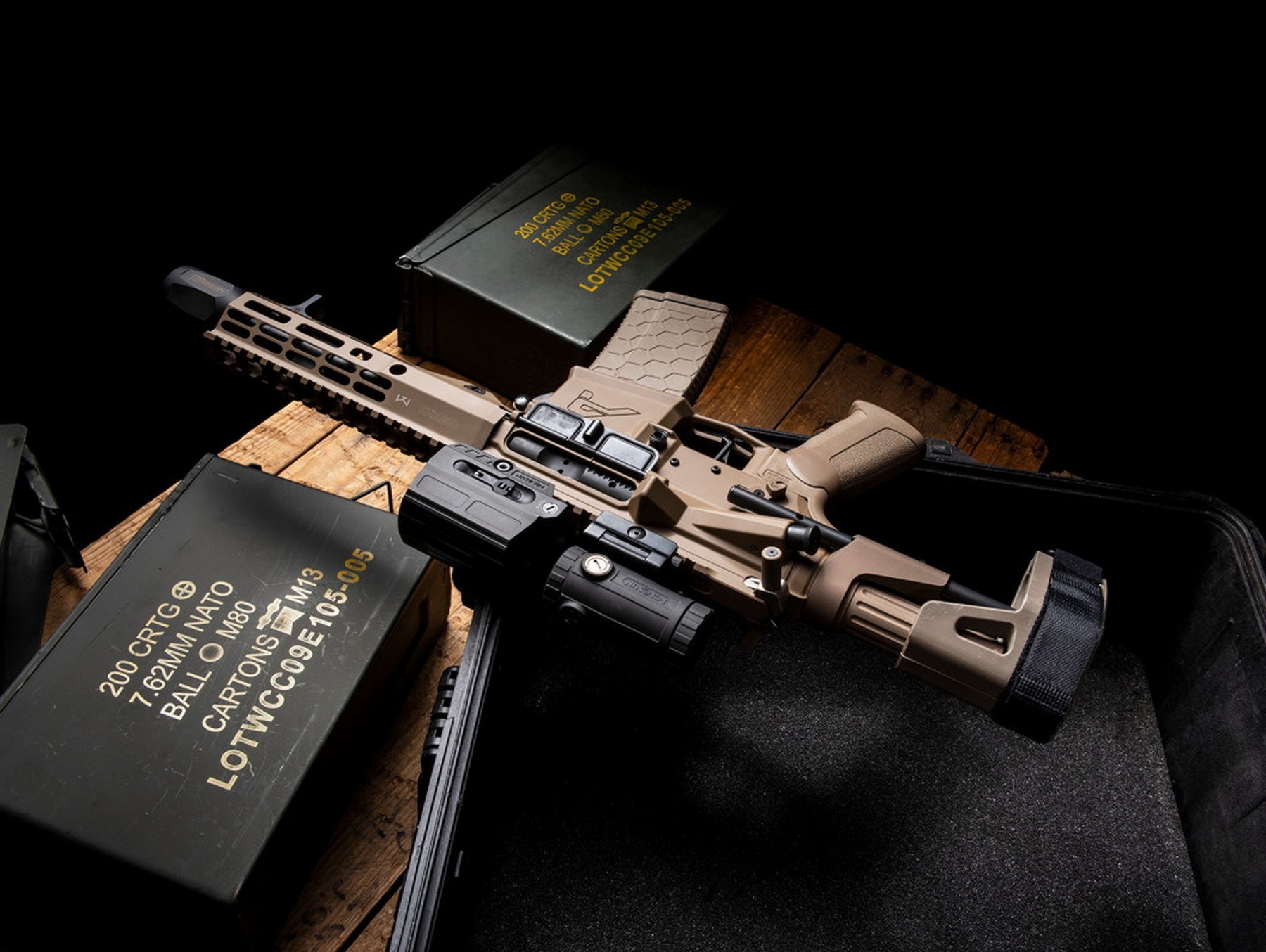
After years of widespread magnifier usage in modern military conflicts, one truth has become clear: it is not a "magic accessory" that instantly improves marksmanship. A magnifier simply expands the operational envelope of a red dot sight. If a shooter lacks fundamental gun-handling skills, no amount of magnification will compensate. However, in trained hands, a magnifier is one of the most efficient tools for maximizing carbine versatility:
-
Its single greatest advantage is the ability to adapt your rifle to changing engagement distances in under a second. When clearing buildings, working dense forest, or navigating trenches, simply swing the magnifier out of the way and run the red dot. The moment you face open terrain, the magnifier flips right back onto the optical axis.
-
Equally important is that a magnifier does not require re-zeroing after being mounted or flipped aside. Provided you use a quality mount, you get a consistent sight picture without shifting your point of impact.
-
Another benefit often overlooked by beginners is target identification. In modern tactical environments, seeing a human silhouette is not enough. You must confirm whether they are armed, using cover, surrounded by non-combatants, or if civilians are present in the sector. Here, even 3x magnification yields a massive tactical advantage.
Nevertheless, magnifiers carry definite limitations:
-
First and foremost is added weight. Depending on the model and mount, a magnifier adds roughly 12.3 to 17.6 ounces (350-500 grams). While manageable on a modern carbine, it does shift the weapon's balance point.
-
Another factor is field-of-view restriction under magnification. This is an unavoidable law of physics. The higher the power, the smaller the observable field. Consequently, even the highest-end magnifier cannot replace a red dot in CQB.
-
Finally, remember that a magnifier is an additional piece of optical gear. It demands periodic lens cleaning, mount inspections, and careful handling, even though modern military-grade units are well-sealed against shock, dust, and moisture.
Magnifiers and Night Vision Devices: Do They Work Together?
As modern combat increasingly shifts to low-light environments, many users wonder whether magnifiers can be paired with Night Vision Devices (NVDs). The short answer is yes, but with key qualifications.
The most prevalent military configuration pairs a head- or helmet-mounted night vision monocular (such as a PVS-14) with a weapon-mounted, night-vision-compatible red dot. In this setup, the NVD already increases the physical distance between your eye and the optic. Adding a magnifier makes the overall optical chain longer, heavier, and far more sensitive to precise head position. Consequently, magnifiers are used much less frequently with NVDs than in daylight operations. However, that does not render the combination useless.
When conducting nighttime observation or engaging medium-range targets after dark, a magnifier helps resolve silhouettes, vehicles, or equipment details. This is especially true in open terrain where distances exceed 220-330 yards. Yet the drawbacks must be weighed:
-
First, every added glass element degrades overall light transmission. While imperceptible by day, even subtle light loss at night degrades image quality through night vision optics.
-
Second, magnification narrows your field of view – a limitation felt even more acutely at night given the already restricted FOV of most NVDs.
For these reasons, most military operators pair magnifiers with night vision only when mission requirements explicitly call for enhanced target identification at distance. For close-quarters work or urban environments, running a standalone NV-compatible red dot is far more effective.
From experience, there is no one-size-fits-all formula. If nighttime operations constitute your core tasking, don't just buy a magnifier – test the complete system as a whole, including your helmet, NVD, active ear protection, and headgear. Only then will you know how practical the setup is under real-world conditions.
Magnifier Compatibility with Various Red Dot Sights
Before making a purchase, buyers frequently ask: "Will any magnifier work with any red dot?" Theoretically, yes; practically, not always. The underlying rule is that magnifiers are not proprietary to a single brand. Because a magnifier simply scales the visual image produced by the red dot, it can be paired across different manufacturers. However, to achieve optimal optical performance, several factors must be considered.
Aimpoint
Aimpoint effectively pioneered the modern magnifier concept. Their 3XMag, 3X-C, and 6XMag-1 series were designed primarily to pair with Micro T-2, CompM5, and other Aimpoint optics. Featuring minimal parallax error, premium glass, and crisp aiming dots, these combinations remain the benchmark today.
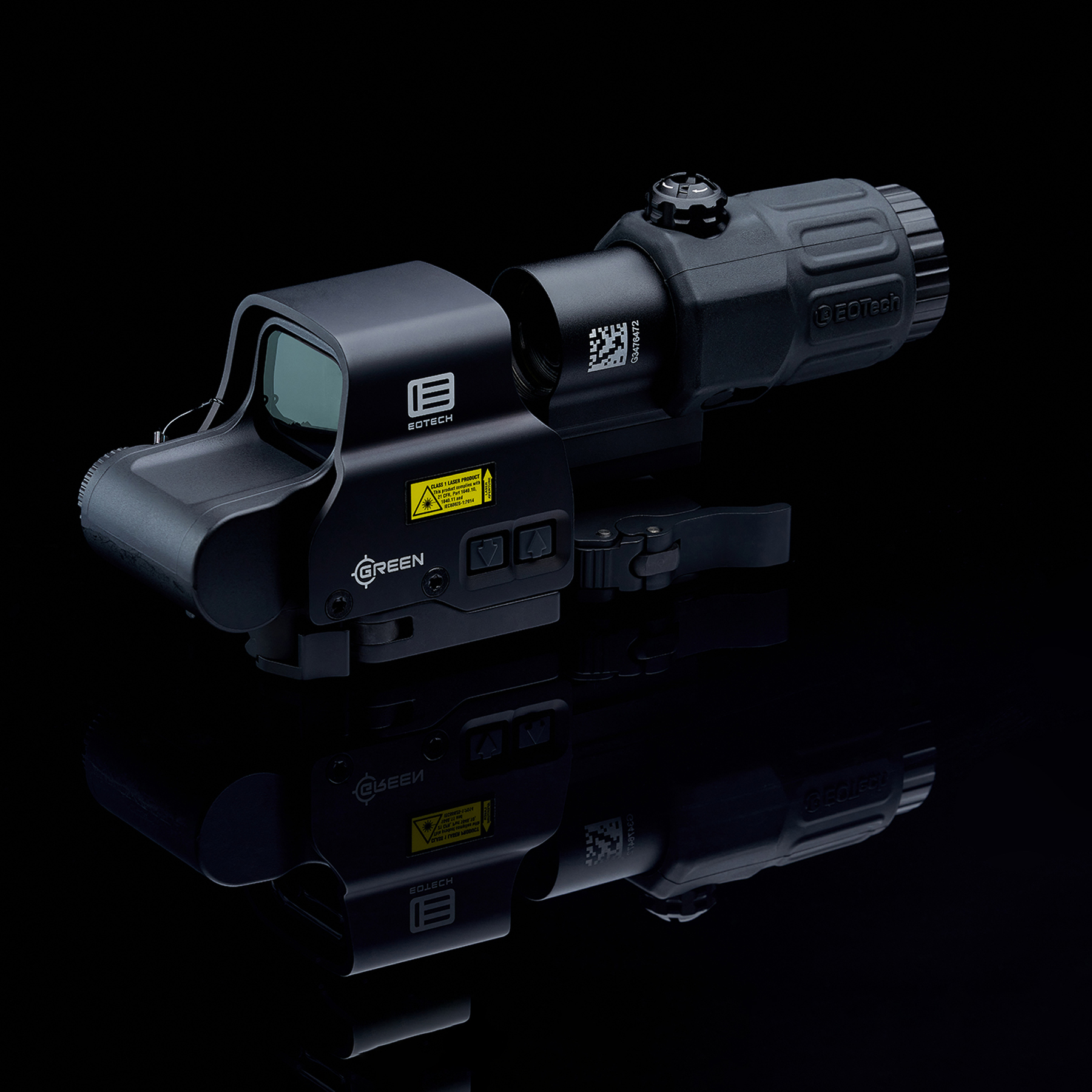
EOTech
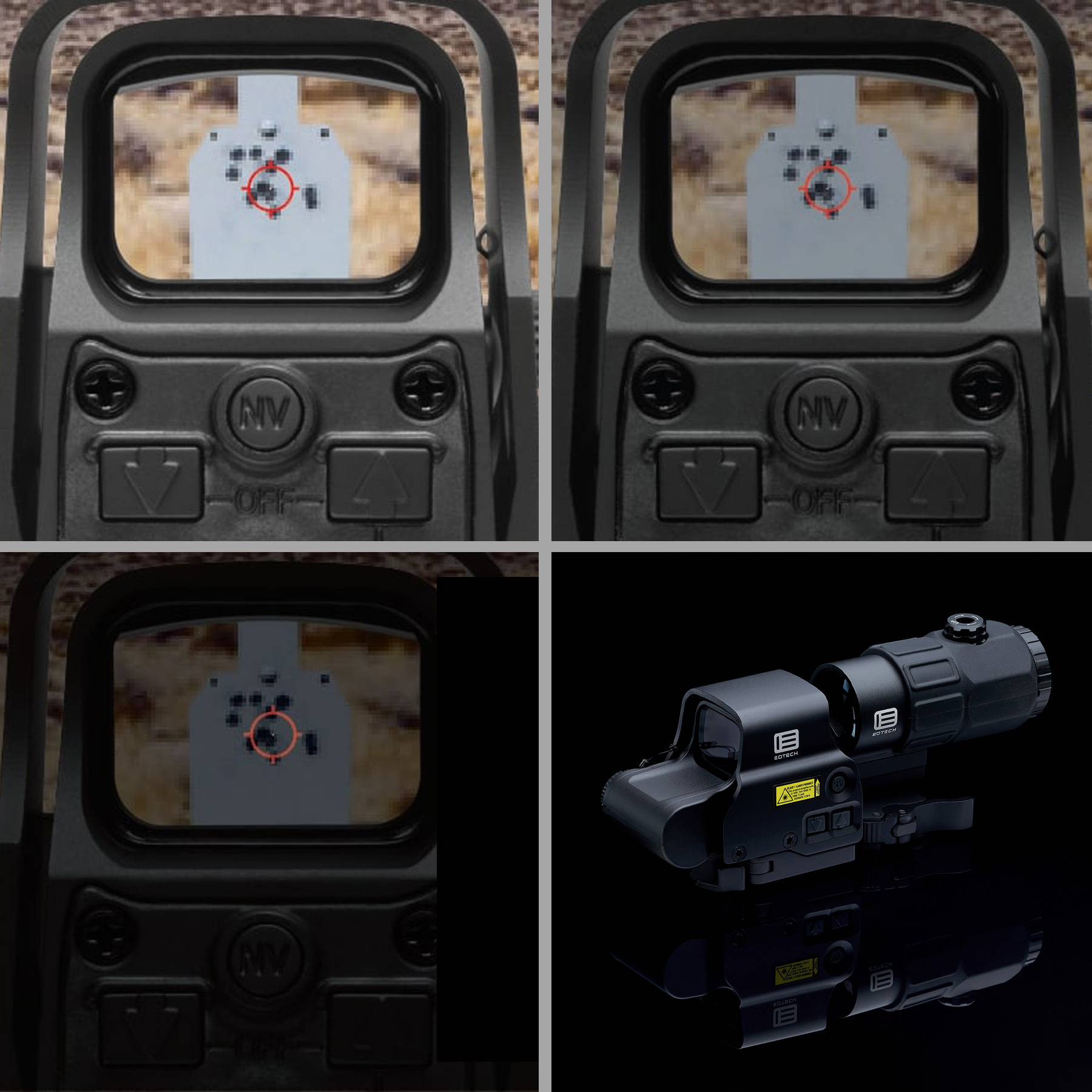
EOTech sights utilize holographic technology, meaning their reticle appearance under magnification differs from traditional LED red dots. Beginners sometimes notice that the outer ring and center dot appear more pixelated or grainy under magnification. This is entirely normal. While a holographic reticle looks smooth to the naked eye, magnifying it reveals its underlying laser structure.
In practice, this graininess has virtually no impact on shooting accuracy, making EOTech + magnifier combos a long-standing favorite for military use.
Holosun
Holosun red dots also demonstrate excellent compatibility with most modern magnifiers. Models featuring a fine 2 MOA dot or a Circle-Dot reticle perform especially well. However, budget-tier models may exhibit minor optical distortions that become more pronounced once magnified.
Other Manufacturers
Magnifiers are routinely paired with red dots from Sig Sauer, Primary Arms, Vector Optics, Vortex, Shield Sights, Meprolight, and many others. What matters most is not the brand logo on the housing, but achieving correct optical centerline height, using a rigid mount, and ensuring optical axis alignment.
In practical applications, mixing brands is routine. It is common to see a Holosun red dot paired with an Aimpoint magnifier, or vice versa. Provided the mount heights align properly, cross-brand configurations perform just as effectively as single-brand setups.
Not all red dot sights perform equally well when magnified. The higher the optical quality of the red dot and the lower its inherent reticle distortion, the cleaner your magnified sight picture will be. Professional shooters often remark that a magnifier doesn't hide a red dot's flaws – it amplifies them.
TOP 7 Magnifier Myths Shooters Still Believe
Despite magnifiers having long been a standard component of modern sighting systems, numerous myths still surround them. Some date back to their early introduction, while others stem from a misunderstanding of how optics function. Let’s break down the most common misconceptions that can affect your gear selection.
Myth #1: A Magnifier Increases Shooting Range
This is arguably the most widespread misconception. In reality, a magnifier does not increase the weapon's effective range. It affects neither muzzle velocity, kinetic energy, nor ballistics. Its job is much simpler: to help the shooter see the target better.
If a carbine and ammunition setup is effective at a certain distance, a magnifier simply makes it easier to realize that potential. Thus, it is more accurate to say that it expands the shooter's capabilities, not those of the firearm itself.
Myth #2: You Have to Re-Zero Your Rifle After Installing a Magnifier
This statement is also untrue. Because a magnifier is mounted behind the red dot and merely magnifies an already formed image, it does not alter the reticle's alignment relative to the bore.
If your point of impact shifts after mounting a magnifier, the cause almost always lies in improper installation, a low-quality mount, or a mechanical shift of the red dot sight itself.
Myth #3: A Magnifier Slows Down Your Shooting
This is partially true, but only if the shooter remains constantly in a magnified view. That is precisely why the Flip-to-Side system was engineered. At any moment, the magnifier can be flipped out of the way in a single motion, giving you all the speed advantages of a standalone red dot sight. In practice, experienced shooters perform this motion almost instinctively without taking their eyes off the target.
Myth #4: The Magnifier Must Be the Same Brand as the Red Dot
In truth, this is largely a marketing myth. Most modern magnifiers are fully compatible with red dots from different manufacturers. What matters most is not the logo on the housing, but achieving proper mounting height, alignment of optical axes, and overall gear quality. This is why cross-brand combinations like Aimpoint + EOTech Magnifier, Holosun + Aimpoint, Vortex + EOTech, or other brand mixes are frequently seen.
Myth #5: The Higher the Magnification, the Better the Magnifier
The logic seems sound, but it doesn't always hold. Increasing magnification almost always results in:
-
A narrower field of view.
-
Shorter eye relief.
-
A tighter, more demanding cheek weld.
-
Slower target acquisition.
This is why the majority of professional military personnel and competitive shooters continue to run 3x magnifiers. Sometimes, less really is more.
Myth #6: A Magnifier Completely Replaces a Rifle Scope
No. A rifle scope featuring a dedicated reticle, elevation/windage turrets, and variable magnification remains a far more functional solution for long-range shooting.
A magnifier was created for an entirely different purpose: to preserve the red dot's rapid acquisition speed while enhancing shooter performance at medium distances. Therefore, these two systems do not directly compete with one another.
Myth #7: Every Carbine Owner Needs a Magnifier
This isn't entirely true either. If your shooting takes place almost exclusively within 110 yards, the benefits of a magnifier will be minimal. However, if you regularly shoot in open terrain, train at distances of 220 to 440 yards, or want to make your carbine as versatile as possible, a magnifier becomes one of the most valuable additions to your red dot sight.
What to Look For Before Buying?
In short, I would recommend evaluating a magnifier in the following order of priority:
-
Optical Quality. High-grade lens coatings matter more than an extra unit of magnification.
-
Field of View. A wider picture significantly speeds up target acquisition.
-
Eye Relief. The more forgiving the cheek weld, the faster the shooter acquires the target picture.
-
Flip-to-Side Mount Quality. This component takes the brunt of physical stress under hard use.
-
Weight. Especially critical if the carbine is carried or operated for extended periods.
Only after these factors should you consider the magnification number itself (3x, 5x, or 6x).
In modern militaries around the world, a magnifier is increasingly viewed not as a standalone accessory, but as part of a modular sighting system. This means the weapon adapts to specific mission profiles without replacing the primary optic: run the red dot alone for close-quarters battle, deploy the magnifier behind it for medium ranges, or add a night vision device or thermal clip-on when night operations demand it. This modular approach allows shooters to reconfigure their setup rapidly without having to re-zero the rifle.
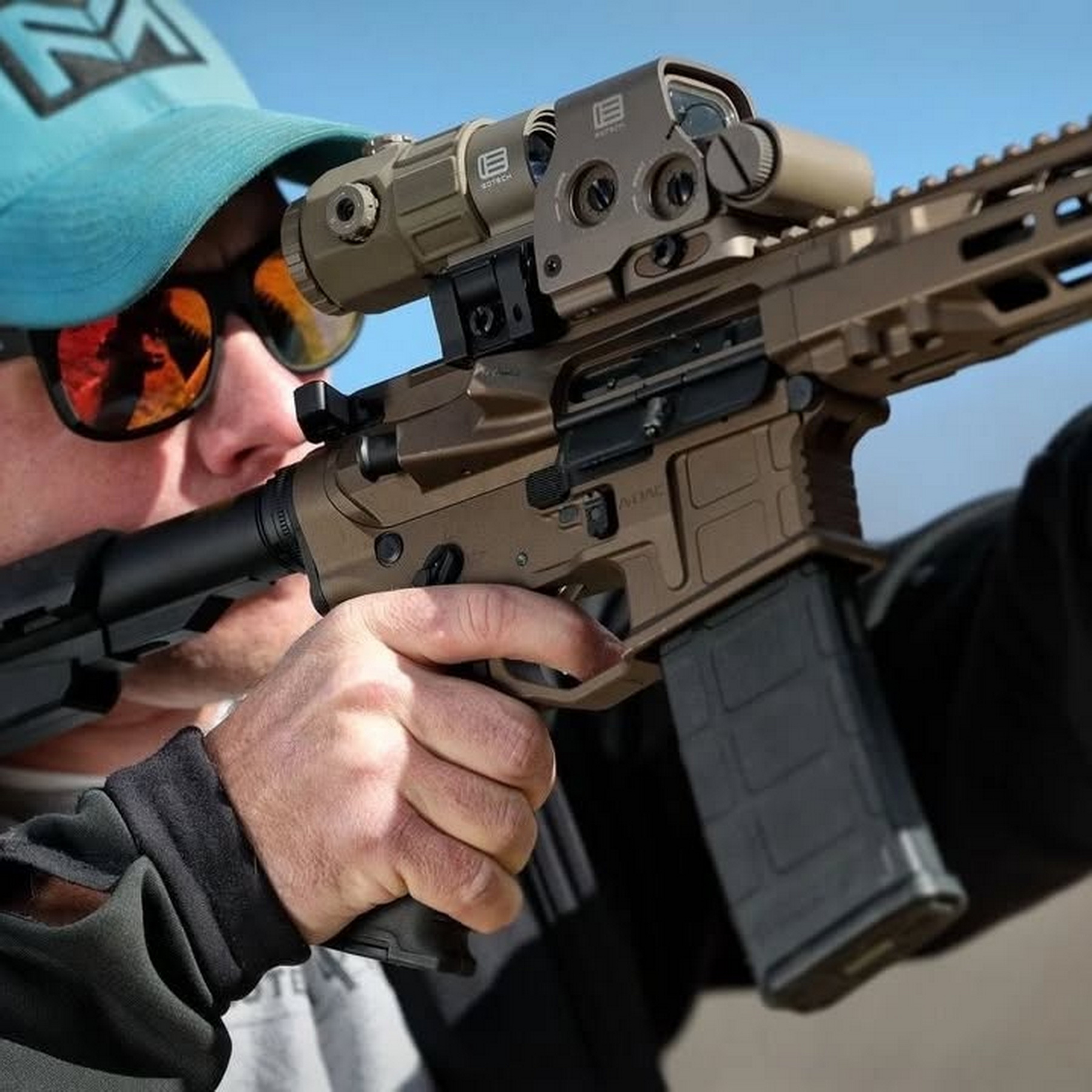
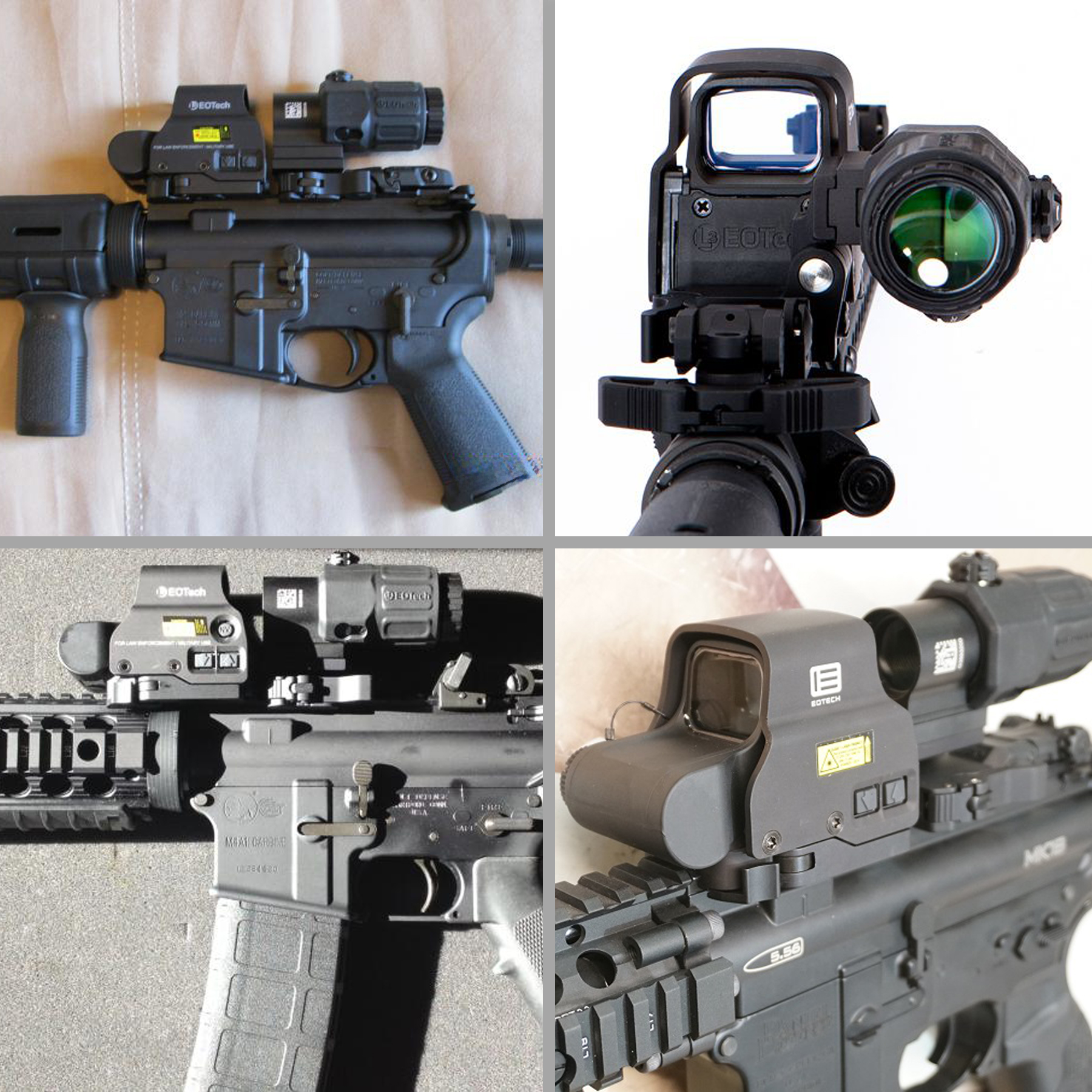
A magnifier is neither an alternative to a traditional scope nor a way to turn a carbine into a "sniper rifle." Its primary advantage lies elsewhere: it significantly extends the red dot sight's capabilities without sacrificing the close-range speed that is critical at short distances.
If you need a versatile system that performs with equal efficiency in close-quarters battle and at medium distances, a red dot + magnifier combo remains one of the best solutions available. The key is not to chase maximum magnification power, but to select quality optics, a reliable mount, and a setup tailored specifically to your operational tasks.
NEED HELP WITH YOUR CHOICE?
Our specialists will help you choose the optimal magnifier for your needs
Contact a specialist!

Vitalii Buniak — article author
Military gear consultant
Before 2022, he worked as a sales assistant at the Panisher store. After the start of the full-scale invasion, he joined the Armed Forces of Ukraine, gaining real combat experience.
Thanks to his combat experience and deep knowledge of tactical gear, Vitalii serves as a personal expert of the Panisher online store in the fields of:
- Clothing and footwear
- Equipment
His recommendations help customers choose reliable and functional gear for any conditions.
FAQ: Frequently Asked Questions About Magnifiers
1. Do I need to re-zero my rifle after installing a magnifier?
2. What is the best magnifier magnification power?
3. Can I use a magnifier without a red dot?
4. Magnifier or LPVO – which should I choose?