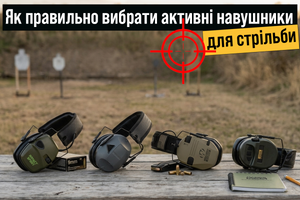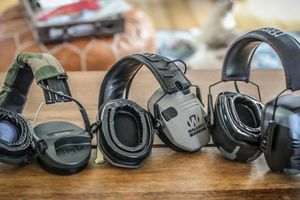
Imagine a typical shooting day: gunfire, instructor commands, engine noise, team chatter, radio traffic. Now factor in a scenario where you must simultaneously protect your hearing, maintain situational awareness, and stay connected via comms. Standard ear protection won't cut it. That is why professional military personnel, law enforcement operators, shooters, and tactical crews utilize active hearing protection headsets.
While many manufacturers populate the market, three names dominate the conversation: 3M Peltor, Sordin, and Ops-Core. At a glance, their headsets appear to serve identical functions. However, the contrast becomes stark once you look beyond the earcups and evaluate the underlying electronics, voice-transmission fidelity, radio/PTT integration, helmet compatibility, dual hearing-protection options, and real-world operational scenarios.
Let's dive in with a guide from the Punisher military gear shop to break down the key differences between 3M Peltor, Sordin, and Ops-Core, helping you select the right tactical headset for your specific operational requirements.
What Is a Tactical Headset and Why Do You Need One?
A tactical headset is far more than ear defenders with thick ear cushions. Its primary purpose is to integrate multiple critical capabilities into a single device:
-
Protect hearing from hazardous impulse noise levels;
-
Maintain awareness of environment sounds and verbal commands;
-
Amplify low-volume ambient audio;
-
Suppress dangerously loud sounds;
-
Enable two-way radio comms;
-
Transmit clear voice signals via boom microphone;
-
Seamlessly integrate with ballistic helmets and other loadout gear.
That final point is frequently overlooked. A high-tier headset shouldn't just deliver great audio – it must function as a modular component of your full gear loadout. For instance, a headset might offer stellar noise attenuation but interfere with your rifle's cheek weld. Another might produce crisp sound but lack compatibility with your specific PTT or radio unit. Or it might feel comfortable standalone but crowd your helmet setup. Therefore, asking "which headset is the best?" is the wrong approach. The right question is: which headset is the best fit for my specific mission profile?
Active headsets function via an external microphone array paired with digital signal processing. The external microphones pick up ambient sounds, internal circuitry processes the signal, and safe audio levels are relayed through internal earcup speakers – all while clamping down on high-decibel impulse spikes.
For example, 3M utilizes environmental microphones and digital signal processing in the ComTac VI for level-dependent hearing protection and situational awareness. An active headset doesn't merely deaden the environment – its goal is to keep essential audio crisp while keeping hazardous spikes fully regulated.

3M Peltor: Prioritizing Radio Comms and Professional Comms
When discussing professional-grade communication headsets, the 3M Peltor ComTac line stands as an industry benchmark. The ComTac architecture is engineered not merely for ear protection, but for full-spectrum operational comms in high-noise environments: ambient listening, hearing protection, and radio integration.
For instance, the current ComTac VI features high-fidelity speakers, digital audio processing, a noise-canceling boom microphone, and Mission Audio Profiles (MAP) that allow operators to tailor environmental ambient listening to specific tactical environments.
A particularly notable variant is the ComTac VI NIB. Its Natural Interaction Behavior technology enables short-range, unit-to-unit voice comms between headset users without relying on external radio networks. According to 3M data, the system supports up to four simultaneous speakers and over 60 listeners within an approximate 16-foot radius.
For the operator, this underscores a core reality: Peltor was built around comms integration. This makes ComTac an exceptional choice for users relying heavily on radio networks, PTT units, and complex comms architectures.
3M Peltor Strengths
-
Professional-grade comms platform.
-
High-fidelity voice transmission.
-
Highly effective microphone noise cancellation.
-
Advanced environmental listening capability.
-
MAP (Mission Audio Profiles).
-
Versatile mounting/headband configurations.
-
Seamless ballistic helmet mounting integration.
-
Comprehensive downlead/connector configurations.
System compatibility demands close attention here. ComTac models feature varying downlead types and pin configurations, meaning headsets, PTTs, and radios must be specified as an integrated comms suite rather than pieced together haphazardly.
The "ComTac" designation alone does not define a complete hardware configuration. Modern variants differ significantly by mounting style, comms channels, wiring schemes, and connector types. 3M explicitly offers headband vs. helmet-rail configurations as well as single- vs. dual-comm options. Selecting a Peltor requires evaluating the exact part number and model build, not just the base model name.
Sordin: Comfort, Natural Audio Processing, and Versatility
While Peltor is strongly linked to heavy radio comms, the Sordin Supreme Pro-X is widely chosen for a different set of advantages: long-term comfort, slim earcups, natural sound reproduction, and extraordinary battery endurance.
Modern Supreme Pro-X units feature the SordinHEAR2 audio system, offering distinct audio profiles tailored to various operational environments. Sordin rates the system for clear, natural ambient sound reproduction and amplification while capping output at a safe 82 dB(A).
Battery life is another standout metric for Sordin. The Supreme Pro-X delivers an estimated 400 hours of run time on a pair of standard AAA batteries. It also incorporates a four-hour auto-shutoff feature to conserve power and an integrated low-battery warning.
Despite its performance, the hardware retains a very slim profile. A baseline Supreme Pro-X weighs approximately 11.1 oz (314 g), while the Slim variant weighs around 10.2 oz (289 g) before factoring in specific mounting hardware.
What Makes Sordin Stand Out?
Earcup geometry. For a shooter, low-profile earcups aren't just an aesthetic feature – the tapered bottom rim minimizes interference with your stock weld during rifle placement. Additionally, ARC rail-compatible models allow operators to attach the headset directly to tactical helmet rails.
Sordin Strengths
-
Natural ambient audio reproduction;
-
Ultra-slim earcup design;
-
Approximately 400 hours of continuous battery life;
-
IP67 waterproof rating on designated models;
-
Waterproof microphone housings and battery compartment;
-
Auxiliary AUX input jack;
-
ARC-rail mounting options on select variants;
-
Exceptional ergonomics for extended wear.
These factors make Sordin an exceptional option for tactical shooters, military operators, or users seeking top-tier active ear protection without overcomplicating their loadout setup.

Ops-Core AMP: The Headset as an Integrated Helmet Component
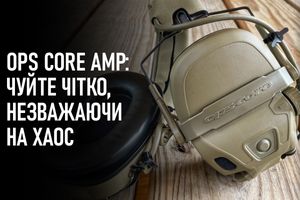
The Ops-Core AMP Communication Headset occupies a unique niche compared to conventional active ear defenders. Its design architecture centers around blending ear protection, comms networks, and ballistic helmets into a singular system.
A primary technical highlight of the AMP is its 3D Hear-Through technology. It is engineered to replicate natural 3D directional audio while maintaining full impulse noise protection.
An even more advanced capability is NFMI (Near Field Magnetic Induction) integration. When outfitted with NFMI-enabled configurations and compatible earplugs, the AMP provides true dual-layer hearing protection without severing radio comms capabilities.
For a casual range shooter, these features may prove excessive. However, for an operator building out a fully integrated, professional helmet setup, it delivers unmatched modularity and performance.
Ops-Core AMP Strengths
-
3D Hear-Through directional audio.
-
Professional-tier comms capability.
-
Exceptional modularity.
-
Direct system integration with tactical helmet platforms.
-
Quick-release mounting mechanisms.
-
NFMI dual protection option.
-
High-performance noise-canceling microphone.
-
Seamless dual hearing protection capability.
Under typical noise conditions, an active headset provides sufficient ear protection. However, in extreme sound environments (such as mechanized vehicles or heavy breaching), dual-layer protection – combining earplugs with over-ear cups – is required. On NFMI-equipped Ops-Core AMP setups, compatible wireless NFMI earplugs pass radio and ambient audio through the plugs under the cups, providing high-decibel protection without losing comms connectivity.
3M Peltor, Sordin, or Ops-Core: Key Differences Compared
To break it down simply:
3M Peltor
Core Focus: Professional Radio Communications.
Peltor excels for operators who rely on their headset primarily as part of a multi-channel radio network. ComTac provides advanced features for comms integration, PTT interfacing, and environmental listening.
Sordin
Core Focus: Comfort, Audio Fidelity, and Extended Battery Life.
The Supreme Pro-X is ideal when natural sound quality, slim geometry, and long runtime are paramount. Its 400-hour battery rating leads this product class.
Ops-Core
Core Focus: System Integration and Modularity.
The AMP is engineered for users seeking seamless integration between their headset, ballistic helmet, comms systems, and dual-layer ear protection.
Ultimately, your selection shouldn't hinge on brand prestige, but on matching the hardware to your mission demands.
If you require active hearing protection solely for standard target shooting, an array of high-end radio comms features will go unused. Conversely, if your role demands active comms, PTT integration, and helmet mounting, a basic range headset will quickly reveal its limitations. Tactical gear must always be evaluated as an interconnected system.
How to Choose a Tactical Headset
Before purchasing a tactical headset, evaluate these key operational questions:
-
Do you require two-way radio comms?
If your headset is solely for active attenuation and ambient hearing, option choices are broad. If you require full two-way comms, you must immediately confirm compatibility across your radio model, PTT unit, wiring format, and downlead connectors.
-
Will you wear it with a ballistic helmet?
If yes, look for models offering dedicated helmet-rail adapters or ARC-rail compatibility, as headband ergonomics vary under helmet shells.
-
How long will you wear it continuously?
For multi-hour missions, consider weight, cup profile, clamping force, cushion material, eye-pro stem compatibility, and rail-mount options.
-
How critical is battery endurance?
If long deployment runtimes without battery swaps are vital, Sordin's 400-hour rating offers a distinct edge.
-
Is dual-layer hearing protection required?
For high-decibel environments, select systems (like the Ops-Core AMP with NFMI) that combine over-ear attenuation with active in-ear plugs.
Common Mistakes When Selecting a Tactical Headset
Buying solely based on brand name
Assuming "it's Peltor so it will fit" or "it's Ops-Core so it's automatically best" is a flawed approach. Each brand offers distinct builds and pinouts.
Failing to verify radio/PTT compatibility
One of the most frequent mistakes. Always verify the entire chain: Headset + PTT + Radio Unit, rather than assuming a standard plug will function.
Ignoring helmet clearance
A headset that fits comfortably with a headband may create severe pressure points under specific helmet shells.
Focusing only on passive NRR ratings
Active headset performance depends heavily on digital audio processing and how effectively electronics suppress impulse spikes while preserving situational awareness.
Cutting corners on adapter quality
Even a top-tier headset will fail if paired with mismatched PTT adapters or cheap rail mounts.

3M Peltor, Sordin, and Ops-Core represent three distinct design philosophies aimed at a shared goal: protecting hearing, maintaining situational awareness, and delivering reliable comms.
If multi-channel radio communication is your top priority, 3M Peltor ComTac is a premier choice. If long-term comfort, natural ambient audio, slim cup geometry, and massive battery life matter most, the Sordin Supreme Pro-X remains an outstanding pick. If you are building an integrated helmet ecosystem where modularity, 3D Hear-Through, and dual-layer NFMI protection are critical, the Ops-Core AMP stands out.
Regardless of brand, the golden rule applies: never purchase a tactical headset in isolation from the rest of your kit. First map out your radio model, PTT type, helmet setup, duty duration, and required decibel protection. Once those variables are clear, choosing between Peltor, Sordin, and Ops-Core becomes straightforward – ensuring you get a fully functional tactical tool built for your operational needs.

Vitalii Buniak — article author
Military gear consultant
Before 2022, he worked as a sales assistant at the Panisher store. After the start of the full-scale invasion, he joined the Armed Forces of Ukraine, gaining real combat experience.
Thanks to his combat experience and deep knowledge of tactical gear, Vitalii serves as a personal expert of the Panisher online store in the fields of:
- Clothing and footwear
- Equipment
His recommendations help customers choose reliable and functional gear for any conditions.
FAQ: Answers to Frequently Asked Questions
1. Which is better: 3M Peltor or Sordin?
2. Can I connect a Sordin headset to a radio?
3. Can tactical headsets be mounted to ballistic helmets?
4. Do I need earplugs under an active headset?