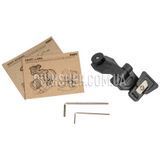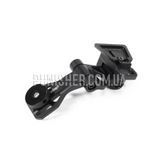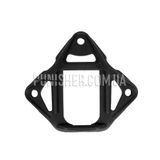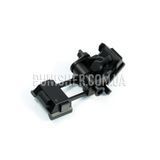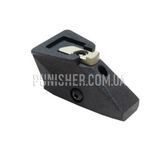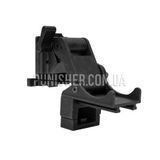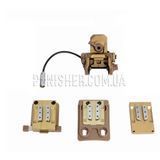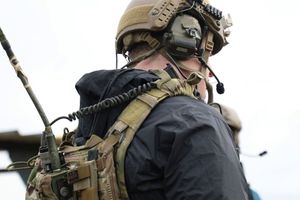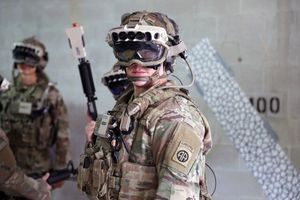
Modern mission requirements increasingly demand effective operation during nighttime. That is why mounting a Night Vision Device (NVD) to a helmet has become the standard for military and law enforcement units, as well as being actively used in tactical training, security, and airsoft. Properly securing an NVD to a helmet affects not only comfort but also safety, observation efficiency, and reaction speed.
In this article, in collaboration with the Punisher Tactical Gear Store, we will examine how to install an NVD on a helmet, the types of mounting systems available, their advantages and disadvantages, and I will share practical recommendations based on personal experience.
Why Mounting an NVD to a Helmet is Relevant
Using Night Vision Devices (NVDs) allows you to:
-
Navigate in the dark without using light that could give away your position;
-
Conduct observation and move at night;
-
Operate in limited visibility conditions;
-
Increase survivability and situational awareness.
From my own experience, I can tell you: a properly installed "night eye" on a helmet significantly reduces neck fatigue and allows you to work longer without losing concentration.
The first mass-produced systems for mounting night vision on helmets appeared in the U.S. military in the 1990s, coinciding with the widespread use of monoculars like the PVS-14.
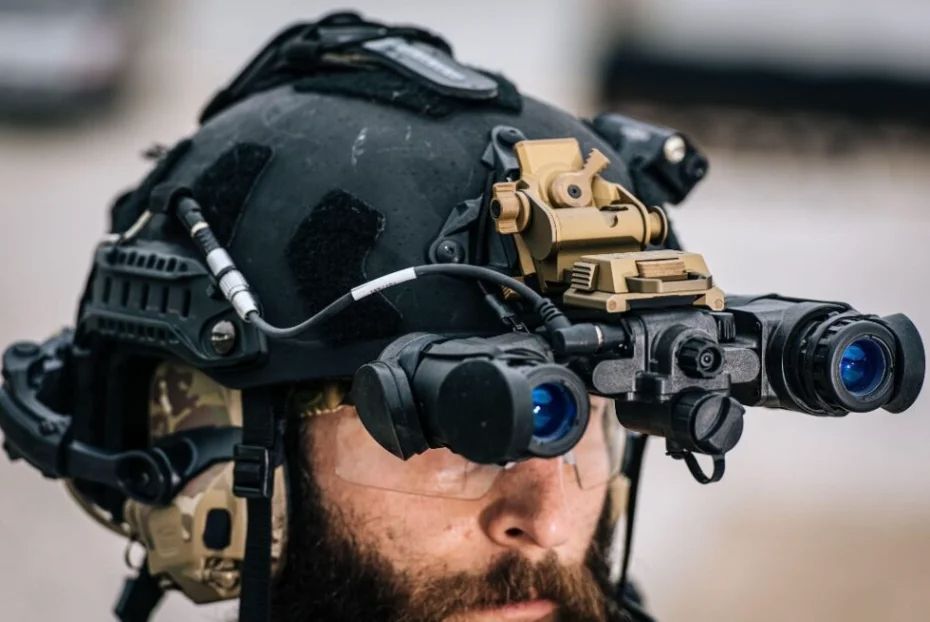
Core Elements of an NVD Mounting System
A full installation requires a set of components:
-
Helmet – Must be compatible with front-mounted shrouds (ARC rails or NVG platforms).
-
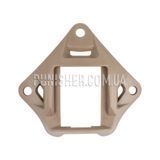
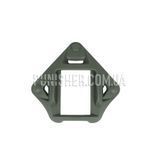
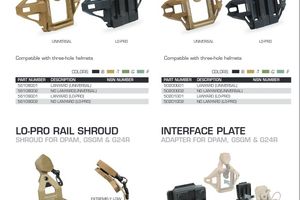
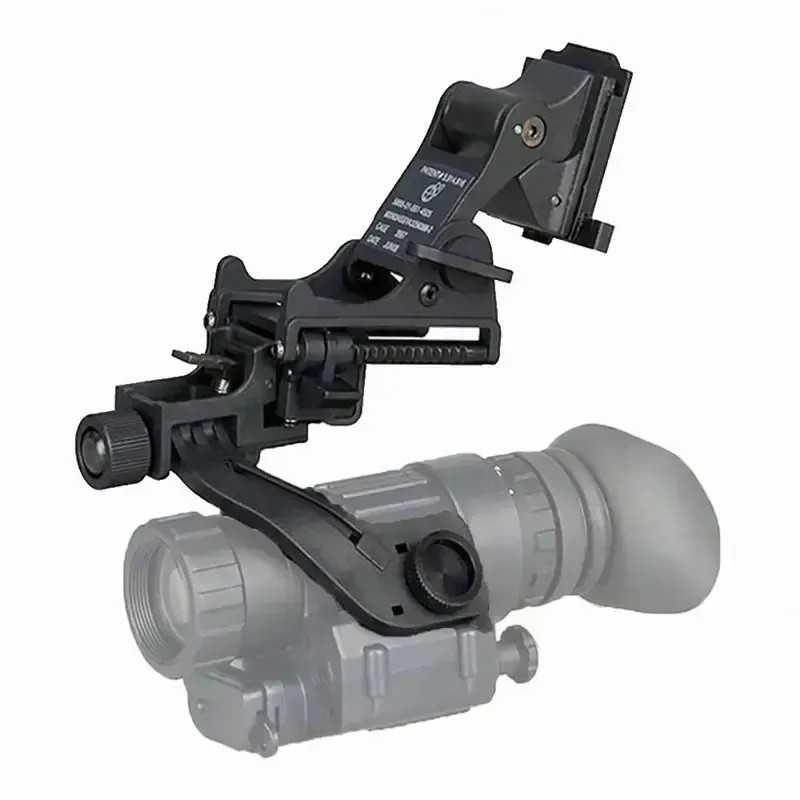
Shroud (NVG shroud) – The base platform on the front of the helmet to which the mounting mechanism is attached.
-
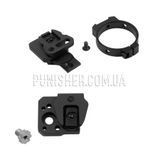
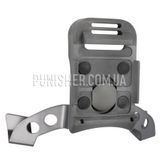
Mount – The movable mechanism that allows you to:
-
Flip the NVD up and down;
-
Adjust the eye relief (distance to the eye);
-
Lock the device in a stowed position.
-
-
Interface (J-arm or Dovetail) – Connects the device itself to the mount.

NVD Mounting Methods
1. Standard Bayonet Mount
The most common option for monoculars (e.g., PVS-14).
Advantages:
-
Affordable price;
-
Simple installation;
-
Lightweight.
Disadvantages:
-
Less rigid fixation;
-
Potential for "wobble" (play) during active movement.
From practice: Suitable for training and moderate loads, but for intensive work, it is better to choose a more rigid system.
2. Dovetail Mount
The professional standard for modern systems.
Advantages:
-
Secure fixation with zero wobble;
-
Better image stability;
-
Withstands active movement.
Disadvantages:
-
Higher cost;
-
Requires a compatible interface.
As a specialist, I recommend the dovetail system if the NVD is used regularly or in field conditions.
A weight difference of just 100-150g on the front of the helmet can significantly impact neck fatigue after several hours of operation.
Proper Installation Technique
Algorithm for installing an NVD on a helmet:
-
Check the security of the shroud attachment.
-
Insert the mount into the shroud platform.
-
Connect the J-arm or dovetail to the device.
-
Lock the NVD into the mount.
-
Adjust the following:
-
Eye relief (distance from the eye);
-
Height;
-
Tilt angle.
-
-
Set the balance (use a counterweight on the back of the helmet if necessary).
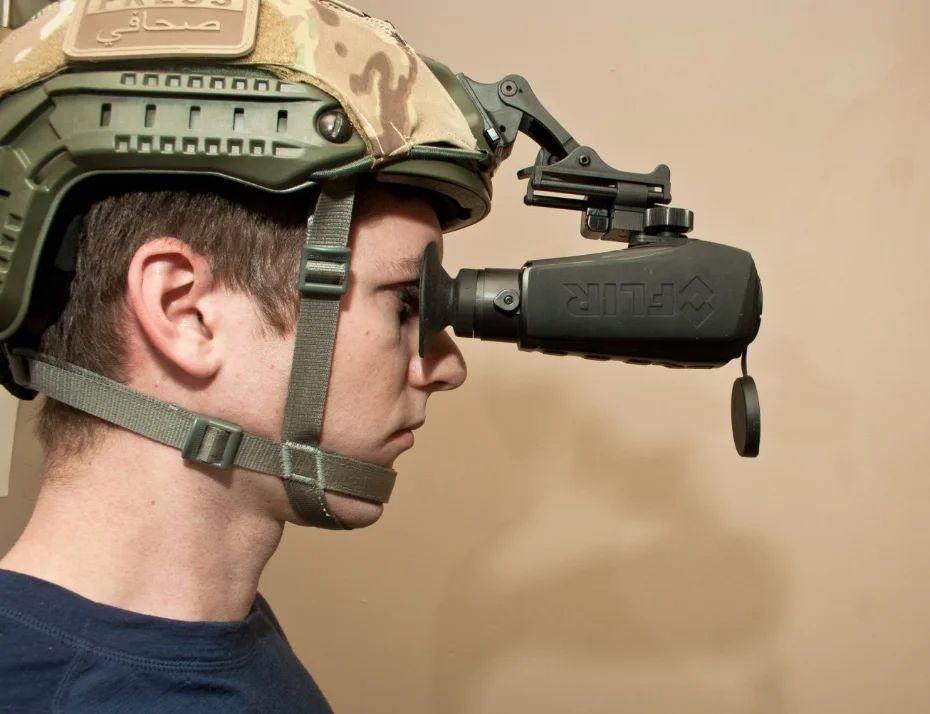
From personal experience: if the helmet "pulls forward," be sure to use a counterweight – it is critical for comfort.
Advantages of Helmet-Mounted NVDs
-
Hands-free operation;
-
Quick switching between modes;
-
Ability to operate weapons;
-
Better mobility;
-
Enhanced situational awareness.
Disadvantages and Limitations
-
Additional strain on the neck;
-
Need for proper balancing;
-
High cost of quality mounts;
-
Risk of damage if installed incorrectly.
From practice: Most problems arise not because of the NVD itself, but because of cheap or improperly selected mounts.
During active movement, an unbalanced NVD can increase the load on the neck by 2-3 times due to inertia.
What to Look for When Choosing a Mount
-
Compatibility with your specific NVD;
-
Interface type (bayonet or dovetail);
-
Material (aluminum alloy or reinforced polymer);
-
Presence of a "breakaway" mechanism (automatic release under high stress);
-
System weight.
Properly mounting a night vision device to a helmet is more than just a matter of convenience – it is also a matter of efficiency and safety. A high-quality mount, correct adjustment, and proper balancing allow you to work at night longer, with less fatigue and better control over the situation.
From my personal experience, I can say: skimping on the mount or balancing almost always leads to discomfort and decreased effectiveness. If the NVD is used regularly, it is worth investing in a reliable system right away.

Vitalii Buniak — article author
Military gear consultant
Before 2022, he worked as a sales assistant at the Panisher store. After the start of the full-scale invasion, he joined the Armed Forces of Ukraine, gaining real combat experience.
Thanks to his combat experience and deep knowledge of tactical gear, Vitalii serves as a personal expert of the Panisher online store in the fields of:
- Clothing and footwear
- Equipment
His recommendations help customers choose reliable and functional gear for any conditions.
FAQ: Answers to Frequently Asked Questions
1. Can an NVD be installed on any helmet?
2. Which is better – bayonet or dovetail?
3. Why does the image "float" during movement?
4. Is it difficult to install an NVD myself?
Don't know how to choose and install the mount correctly for a night vision device (NVG)?! Look! We'll show you how.
Starring:
FMA L4 G24 NVG Mount
Wilcox J-ARM Adapter for PVS-14 (Wilcox L2G20, Wilcox L2G24)
NVG J-Arm Adapter for PVS-14
Norotos RHNO Mount
Text read by Konstantin
Director, cameraman, lighting and editing: Sofia
Produced by Punisher production