In field conditions – whether it's combat, a night mission, or even a simple walk along a highway – visibility is never just "good" or "bad". It either works for you or against you. And most importantly, it must be controlled.
There is a simple but critical logic: at a certain moment, you must be seen quickly and unmistakably by your own. At another moment, you must not give yourself away at all. And passive protection exists precisely between these two states.
Passive protection is not about the gear itself. It's about understanding when to illuminate yourself and when to disappear. If active defense is a reaction, passive defense is a proactive game. It prevents a situation from becoming dangerous before something even goes wrong. Below, we’ll look at how this works in practice with a guide from the Punisher military store.


Brightness and Contrast: When You Need to Be Seen
There are many situations where invisibility is not a plus, but a direct risk. For example, when a medic is looking for a wounded person at night, or when you are moving along the shoulder of a road. In such conditions, the problem is not that you will be "spotted," but that people might simply fail to notice you in time.
To put it as simply as possible: a person in dark clothing appears before a driver just a few dozen meters away. This leaves almost no chance for a reaction. However, a reflective element can provide a lead of several hundred meters. And that is the difference between a "near miss" and a "tragic end."
That is why, in the rear, in tourism, or even in hunting, flickers, reflective tapes, and chemical light sources are used. You often see those Cyalume sticks for a reason – they mark the wounded, assembly points, and routes. It’s fast, simple, and works even in rain or frost.
Beacons (strobes) are another tool. They are more about control: marking a group, finding a person, or synchronizing movement. It’s important to understand that this isn’t about "shining for the sake of light," but specifically a managed increase in visibility.
By the way, hunters understood this long ago: a bright vest is not a weakness, but a way to avoid becoming an accidental target. This is a case where safety is more important than camouflage.
Our eyes catch motion and contrast much faster than color itself. Therefore, a small reflector in motion sometimes works better than fully bright clothing.

Identification: How to Avoid "Friendly Fire"
On the modern battlefield, a uniform no longer guarantees that you will be perceived correctly. The same MultiCam or Woodland can be on both sides. And this is where the most important thing begins – identification.
But it shouldn't be set to "permanent maximum" either. It must be controlled.
For example, colored armbands or tapes are a simple but effective solution. They are placed so that friendlies can see them, but without unnecessary "over-exposure." Patches like "Cat Eyes" are a brilliant invention: you see your comrade ahead of you, yet they don't shine for someone looking from the other side.
IR patches are another level. They are there, but they are invisible without Night Vision Devices (NVDs). This means you are simultaneously marked and stealthy.
The key point here is: identification isn't about "becoming bright." It's about sending a "friendly" signal to those who need to see it, and only to them, at the right moment.
Because under stress, any unknown silhouette is a potential threat. It’s better not to leave this moment to chance.
In hunting, bright colors save more lives than any camouflage – simply because they are visible.
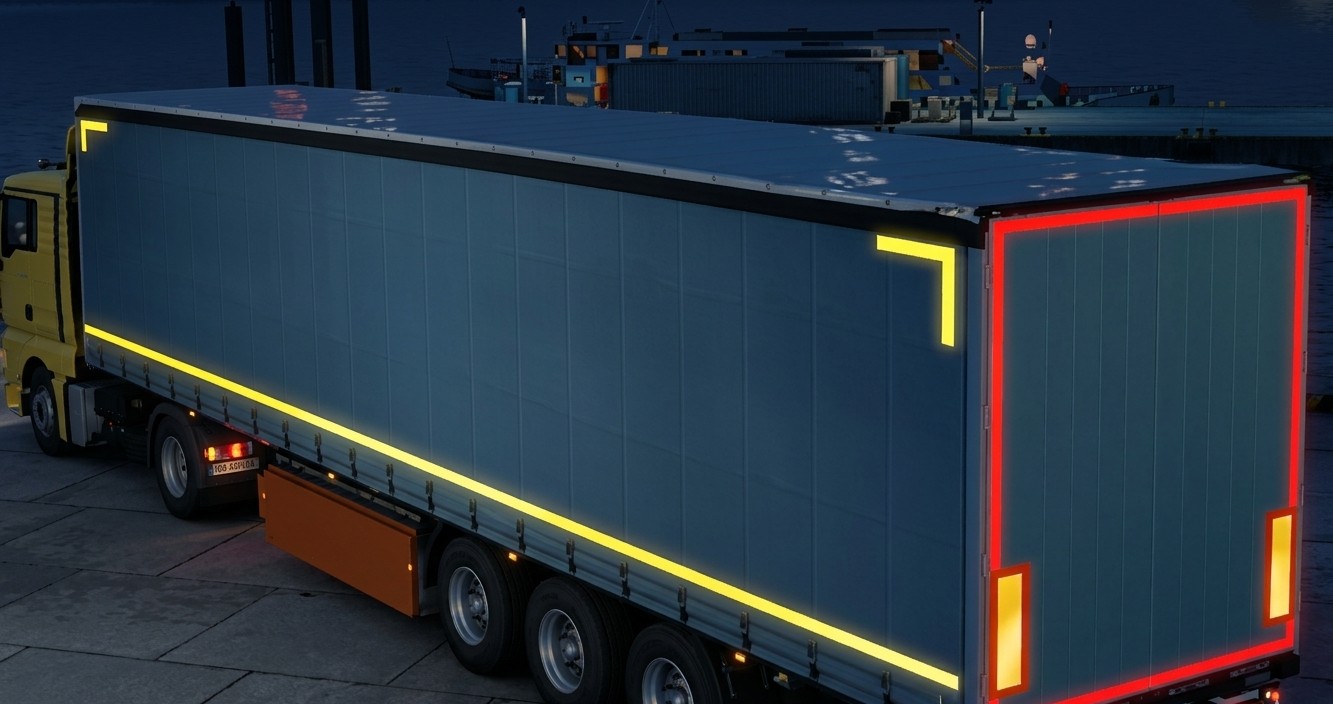
Passive Protection for Vehicles and Equipment
It's the same story with equipment – the question is not about making it visible all the time, but about making sure it is seen correctly when needed.
In the rear, it's simple: the better it’s seen, the safer it is. Reflective outlines, marker lights, and contrast elements are the basics.
But the closer you get to danger zones, the more careful you have to be. Excessive visibility there can work against you.
Moving unmarked equipment at night is a total lottery. It might be noticed too late, misidentified, or simply misunderstood. The consequences can vary from accidents to being targeted.
Buildings and Positions: When Recognition is Vital
With structures, it’s a bit different. You don't need to "blend in" here; you need to be clear.
A building or position should be readable immediately: what it is, what it’s for, and who is there. Large markers, symbols, and sometimes lighting or IR elements are used for this.
When there is no time for analysis, decisions are made in seconds. If an object looks unclear, it is perceived as a threat.
IR Masking vs. Passive Visibility: When You Shouldn't Shine
This is where it gets interesting – the balance.
There are situations where you must be as visible as possible. Evacuations, medical work, movement in the rear, and civilian tasks. Here, reflectors, beacons, and glow sticks are normal and necessary tools.
Then there are other conditions – the front line, the "grey zone," reconnaissance, and night movements. There, everything works in reverse.
Any light is a problem. Any extra signal is a chance to be seen by the wrong people.
In these conditions, you move to another level – IR. Patches and beacons that are visible only through NVDs. And sometimes, a total refusal of even that.
The main thing is not to overdo it. A typical mistake is taking a civilian flashlight or a bright beacon and turning it on where it is strictly forbidden. In the dark, it looks like a lighthouse. And not for your friends.
Even a faint light at night is visible at a huge distance – especially if someone is looking through optics or a thermal imager.
Common Passive Protection Mistakes
Interestingly, the problems usually aren't about a lack of gear. They are about using it at the wrong time or in the wrong way.
Someone shines where they shouldn't. Someone else, conversely, completely "disappears" where they need to be found. Very often, elements are simply dirty or covered and don't work as they should. And sometimes marking exists, but it’s so chaotic that it does more harm than good.
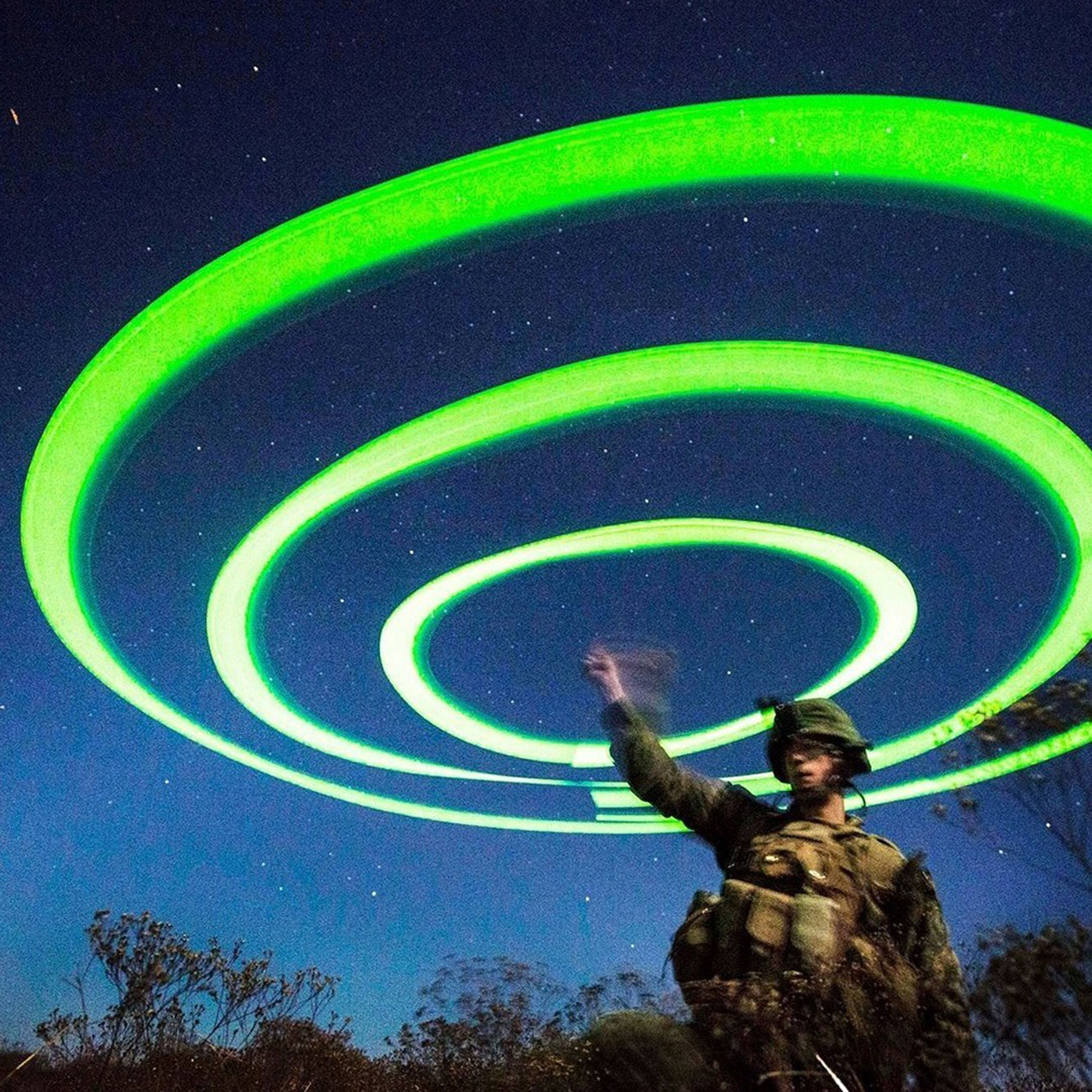

Passive protection is not about extremes. It’s not about "being visible" or "being invisible". It’s about control.
At the right moment, you let your allies find you. At another, you do everything to ensure no one else sees you. This is what defines safety today – not the mere presence of equipment, but the ability to correctly manage how and when you are seen.

Vitalii Buniak — article author
Military gear consultant
Before 2022, he worked as a sales assistant at the Panisher store. After the start of the full-scale invasion, he joined the Armed Forces of Ukraine, gaining real combat experience.
Thanks to his combat experience and deep knowledge of tactical gear, Vitalii serves as a personal expert of the Panisher online store in the fields of:
- Clothing and footwear
- Equipment
His recommendations help customers choose reliable and functional gear for any conditions.
FAQ. Answers to Frequently Asked Questions
1. What is passive protection in field conditions?
2. When should reflective elements be used?
3. When is it better not to use them?
4. What is more important: being visible or being stealthy?