

Not long ago, exoskeletons seemed like an element of science fiction, but today they are a real tool that is gradually being integrated into military affairs. Their role has become especially noticeable in units with high physical loads – particularly in the artillery, where a single shell can weigh dozens of kilograms.
An exoskeleton is a wearable mechanical device that enhances human movement, reduces muscle strain, and allows physically demanding tasks to be performed more efficiently. In a military context, this means one simple thing: a soldier maintains their performance for longer and completes more tasks without exhaustion. Let’s dive into the nuances together with the Punisher military store.

How an Exoskeleton Works: The Mechanics of Human Enhancement
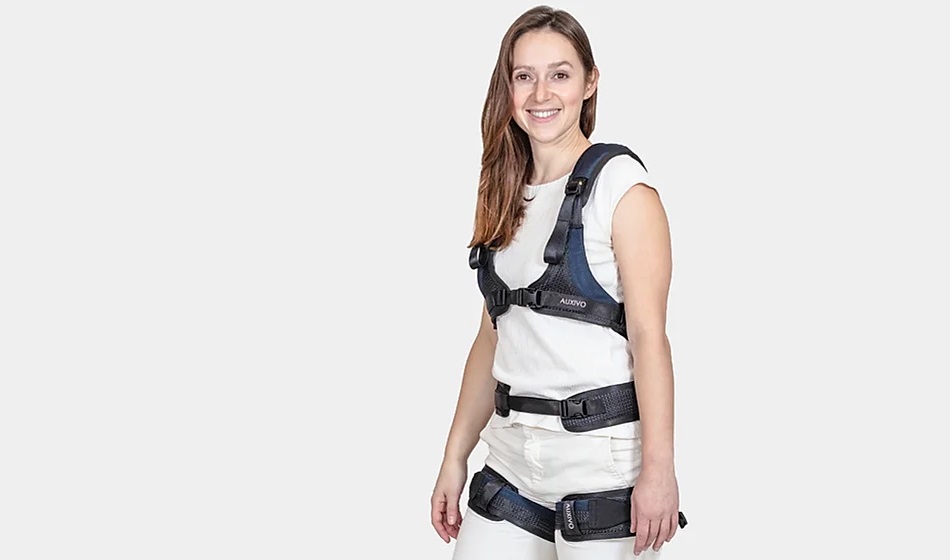
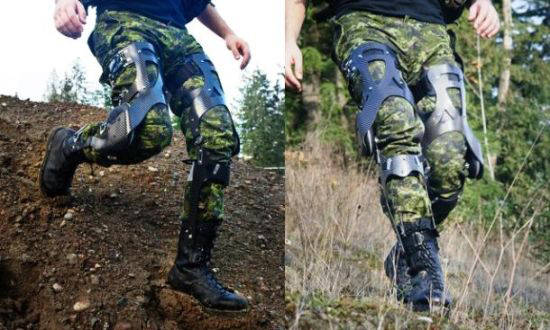
Modern exoskeletons are generally divided into two types: active (with motors and electronics) and passive (using springs, levers, and mechanical systems). The former provides more power, while the latter is simpler, lighter, and more reliable.
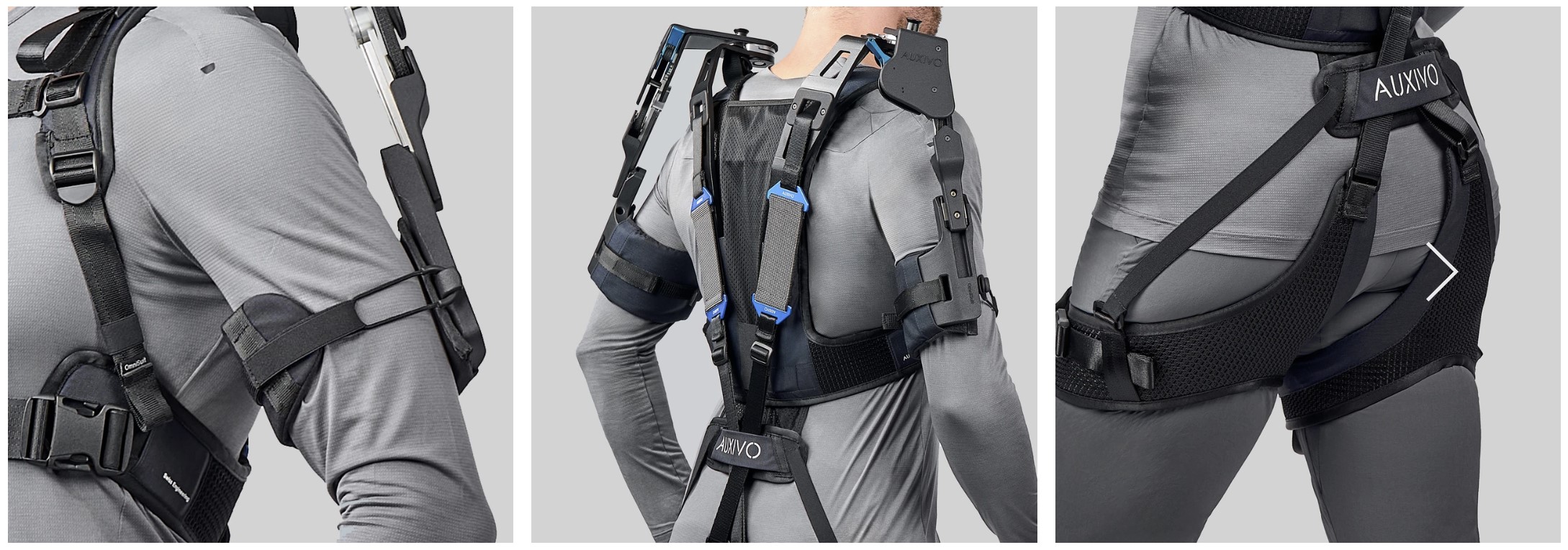
In most military scenarios, passive or hybrid solutions are used. For example, systems like the CarrySuit redistribute weight from the arms and back to the pelvis and legs, reducing the load on key joints. This is critically important when carrying ammunition or working for long periods in awkward positions.
In real-world conditions, the most effective systems are not "super-strength" exoskeletons, but those that simply relieve a portion of the load. The soldier doesn’t become "stronger" in the classical sense – they simply don’t feel "destroyed" after lifting 10-15 heavy objects.
Exoskeletons don’t necessarily need batteries – many models operate entirely mechanically, using the energy from the user's own movements.

Why the Exoskeleton is the "Artilleryman’s Friend"
Artillery is one of the most physically demanding specialties in the military. A single shell can weigh around 40-50 kg, and a crew may move dozens of these units in a single day.
Recent tests have shown that exoskeletons allow users to:
-
Reduce the load on the legs by approximately 30%;
-
Work longer without losing efficiency;
-
Complete logistical tasks significantly faster.
Specifically, Ukrainian military personnel are already testing exoskeletons that help carry heavy shells and even run with loads over significant distances. From an internal perspective, the main advantage isn't speed, but stability. The crew’s work tempo doesn’t "sag" even after several hours. This directly impacts the intensity of fire.
Modern military exoskeletons can fold down to a compact size – some models can literally fit inside a carrying case.

Applications Beyond Artillery
Despite the obvious benefits for artillerymen, the scope of exoskeleton applications is much wider. They are already actively used in logistics, engineering works, and even medicine.
For instance, light textile exoskeletons help support the back and hips during lifting, reducing fatigue and the risk of injury. Other models support the shoulders when working overhead, which is relevant for both military and civilian specialists.
The exoskeleton is not just about war. It is equally useful in the rear: in warehouses, vehicle repairs, evacuation, and rehabilitation after severe trauma or injuries. It is a universal tool that simply adapts to the task and has immense development potential in many spheres of life.
Some industrial exoskeletons allow users to lift loads as if they were several times lighter – effectively "tricking" the perception of weight.


Limitations and Reality Without Illusions
Despite all the advantages, exoskeletons are not yet a "magic weapon." They do not turn a person into a super-soldier and have their own limitations: dependence on ergonomics, the difficulty of adaptation, and restricted mobility in some models.
It is also important to understand that the technology is still in its developmental stage. Many solutions are prototypes or limited series undergoing testing in real-world conditions.
The Future: From Support to Enhancement
The trend is obvious – exoskeletons will evolve toward greater autonomy, integration with artificial intelligence, and weight reduction. In the long run, this means the emergence of systems that don't just help, but actively enhance a soldier's combat capabilities – from mobility to endurance.

Exoskeletons are already changing the approach to physical labor in the military. They do not replace the human, but they make them more effective, more resilient, and – most importantly – reduce the risk of exhaustion and injury. For an artilleryman, it is a true "friend" that allows them to work longer and faster. For a modern army, it is another step toward technological superiority.
And for Old Believers and anyone else who wants to make the most of their potential using existing technology, load-bearing systems and ergonomic backpacks are always there to help.

Vitalii Buniak — article author
Military gear consultant
Before 2022, he worked as a sales assistant at the Panisher store. After the start of the full-scale invasion, he joined the Armed Forces of Ukraine, gaining real combat experience.
Thanks to his combat experience and deep knowledge of tactical gear, Vitalii serves as a personal expert of the Panisher online store in the fields of:
- Clothing and footwear
- Equipment
His recommendations help customers choose reliable and functional gear for any conditions.
FAQ: Answers to Frequently Asked Questions
1. What is an exoskeleton, and what types are there?
2. Are exoskeletons used in the military?
3. Can exoskeletons replace humans?
4. Is this a technology of the future?