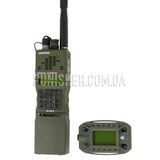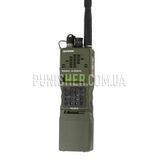


The TCA AN/PRC-152A is a replica of an American military portable tactical radio station from the Falcon III family by Harris Corporation. And, if you are not a service member or a law enforcement officer, but an ordinary citizen like me, the only way you can get anywhere close to original Harris Corporation AN/PRC-152 radio stations is at exhibitions like "Arms and Security", where Harris sometimes has its own booths. Let's dive into the topic together, drawing on the expert knowledge embedded in the guide from the Punisher military store.


Model Nuances
The reason for such exclusivity is not only an extremely wide coverage frequency range (30-520 MHz, 762-870 MHz, Narrowband: VHF 30-225 MHz, UHF 225-512 MHz, Legacy SATCOM: RX 243-270 MHz, TX 291-318 MHz, Highband (VULOS/P25): 512-520 & 762-870 MHz, Wideband: 225-450 MHz), the ability to transmit voice and streaming data (images, audio, video), but also encryption for data exchange up to top secret (Sierra ™ II -based, Type 1 encryption (suite A/B), NSA-certified).
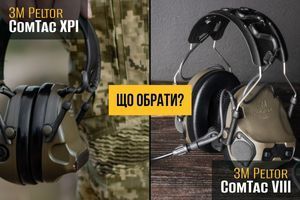
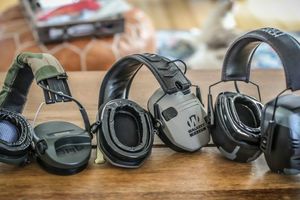
At the same time, ordinary people also have access to active headsets such as the Peltor Comtac III ACH Dual Comm. These headsets are specifically designed for use with those exact AN/PRC-148 and AN/PRC-152 radios, and in their absence, you face a whole lot of problems with how to connect them to widespread consumer radios like the Baofeng UV-5R and similar models.
By the way, this replica of the AN/PRC-152 radio stations can work with original headsets (3M Peltor, MSI Sordin, C4OPS, etc.) without any modifications or the need for adapters, converters, amplifiers, or microphone replacements.
Looking ahead, I also think it's worth noting what these replicas are and what they are not. In this case, we mean a complete visual copy of the Harris Falcon III family radio stations while maintaining the functionality of the main components (screen, keypad, connectors) and the resulting compatibility with some original accessories (batteries, antennas, headsets, etc.). The electronic components of the replica, however, in no way claim the functional capabilities of the original – it is a simple amateur radio, with no claims to streaming data transmission or encryption. Put simply, functionally it is the same Baofeng/Midland/Kenwood/Yaesu/Wouxun/Puxing inside an AN/PRC-152 body, making it less interesting to ham radio operators, and much more interesting to owners of original active headsets, airsofters, reenactors, etc. But first things first, and if at this point you haven't lost interest in this kind of product – allow me to introduce the TCA AN/PRC-152A military radio replica and its basic specifications.


Most modern military radios cost significantly more than a regular smartphone, not because of the "brand", but because of reliability requirements. They must operate after impacts, drops, rain, dust, temperature drops, and even while armored vehicles are in motion, when regular civilian electronics often fail.


The Technical Side of the "Coin"
At first glance, the technical specifications may seem like an ordinary list of parameters. But behind each of them lies a very practical advantage that determines the usability of the radio station in field conditions.
Aluminum Housing
The body is made of aluminum alloy, which provides high structural rigidity with a relatively low weight. Unlike plastic counterparts, aluminum withstands impacts, drops, vibrations during vehicle movement, and intense operation much better. In addition, the metal body dissipates heat from electronic components more efficiently, which positively affects operational stability during long communication sessions.
Full Compatibility with Original AN/PRC-152 Batteries
One of the important advantages of the TCA AN/PRC-152A is maintaining the standard battery connection interface. This means compatibility with batteries and a range of accessories designed for the original AN/PRC-152. Such unification significantly simplifies operation, especially if the user already has the corresponding equipment.
Two Independent Receivers (Dual Watch)
The radio station allows simultaneous monitoring of two different frequencies, even if they belong to different bands:
VHF (136-174 MHz);
UHF (400-480 MHz).
In practice, this means that the user can, for example, constantly listen to their group's internal channel while simultaneously monitoring a separate command or backup channel, instantly switching between them without needing to reprogram the station.
Operation in Two Most Common Bands
Support for VHF (136-174 MHz) and UHF (400-480 MHz) makes the radio versatile.
VHF usually provides better communication range in open terrain due to longer waves, while UHF performs better in urban environments, dense forests, or inside buildings where the signal has to pass through numerous obstacles.
That is why supporting both bands allows for more effective adaptation to various usage conditions.


The higher the operating frequency, the greater the role direct line-of-sight plays between subscribers. That is why even the most modern radio station will not always provide maximum range in a dense forest, urban area, or mountainous terrain without using repeaters or a properly selected antenna.
Built-in Relay Mode
The relay (repeater) function allows the radio station to be used as an intermediate link between two subscribers who cannot directly "see" each other due to terrain features, buildings, or significant distance.
Thanks to this, the reliable radio coverage zone can be expanded without installing a separate stationary repeater.
Maximum Output Power – 5 W
Transmitter power directly affects communication range and stability.
5 W is the maximum power allowed for most modern portable radio stations of this class. Under favorable conditions (open terrain, properly selected antenna, absence of significant obstacles), this is sufficient to ensure reliable communication over several kilometers. Actual range, as in any radio communication system, depends on terrain, antenna height, weather conditions, and radio interference levels.
Power Supply – Four 18650 Format Batteries
Unlike many civilian portable radios, the TCA AN/PRC-152A uses four 18650 lithium-ion batteries. This is one of the most common power cell standards in professional electronics, combining high energy density, durability, and availability.
The practical advantage of this solution is that if an individual cell fails, it can be replaced without needing to buy a whole new battery pack. Furthermore, the 18650 format is widely available on the market, so finding high-quality replacement cells is usually not a problem.
Total Battery Pack Capacity – About 8000 mAh
The total capacity of the battery pack is approximately 8000 mAh, which is a very good indicator for a portable tactical radio of this class.
A large energy reserve allows for longer operation without replacing or recharging the battery, which is especially important during long field trips, exercises, or other tasks where access to the power grid is limited. Actual battery life depends on conversation intensity, set transmitter power, dual receive mode usage, display backlighting, and other functions, but a reserve of around 8000 mAh provides significantly greater autonomy compared to many models equipped with lower-capacity batteries.
The elements are connected in a 2S2P scheme (two series-connected pairs connected in parallel), which aligns well with the 7.4 V operating voltage. This configuration is typical for such battery packs and provides an optimal balance between voltage, capacity, and current delivery (as well as a balance between battery life, compactness, and stable electronic performance).
Modulation Type – FM (F3E)
Frequency Modulation (FM) with the F3E standard is used for voice transmission.
It is this type of modulation that is widely used in analog professional radios due to good speech clarity, resistance to most household interference, and ease of use.
Built-in FM Receiver (87-108 MHz)
In addition to official communication, the TCA AN/PRC-152A features a built-in FM radio receiver supporting the standard 87-108 MHz band. This allows users to listen to regular FM radio stations when needed without using a separate device.
Dimensions
Radio Station: 70 × 255 × 45 mm.
Antenna: length 330 mm, diameter 20 mm.
These dimensions are as close as possible to the original AN/PRC-152, ensuring compatibility with most pouches, mounts, and modern tactical gear elements.
Weight – 966 grams
A weight of almost 1 kg might seem significant, but it is explained by the durable metal body, high-capacity battery, and a design as close as possible to the military prototype. For radio stations of this class, this is a completely typical figure, representing a compromise between reliability, battery life, and durability.


One of the main advantages of the Harris Falcon III family was not only communication quality, but also the ability to simultaneously transmit voice, GPS coordinates, text messages, and other digital data over secure channels. In fact, such a radio station is not just a communication tool, but an element of a modern military command system.
Package Contents
The TCA AN/PRC-152A comes in a case similar to the one T-REX is sold in. The case is made of rigid black ABS plastic, featuring two latches and a carrying handle. On the front, there is the manufacturer's logo and a website link.
Inside the case, everything is presented very nicely: there is soft foam with cutouts for the contents, where all items of the package fit precisely and neatly: the TCA AN/PRC-152A radio station itself, battery, battery charging adapter, power supply unit, antenna adapter and the antenna itself, and the manual.
Before moving on to a detailed acquaintance with the radio, its menu, and many available settings, let's pay a little attention to the included accessories:
Signal Catcher and Translator
The first of these is the antenna, which ensures device operation in the VHF 136-174 MHz and UHF 400-480 MHz bands. The antenna assembly consists of two parts: the antenna itself with a threaded mount and an adapter for a TNC Female connector (Threaded Neill-Concelman), stamped with support for the 136-520 MHz frequency range.
The included TCA AN/PRC-152A antenna belongs to the family of so-called Blade antennas – these are flat and flexible antennas that can be folded if necessary, providing you with extra user convenience. To secure the antenna in a folded position, there is even a small strap with Velcro at its base.
Since the radio station features a TNC connector, in addition to the stock antenna, you can connect both Whip antenna replicas from Triumph Instruments (TRI) and original Harris Corporation antennas. The effective range in the latter case, however, will be quite doubtful due to the replica's lack of synchronizing equipment inherent to original Falcon 3s, which actually allows them to have such a wide range of supported frequencies on a single antenna. I would still recommend sticking with the stock one, or replacing it with Whip antenna replicas only if external appearance is of critical importance to you.


It is precisely due to the popularity of original Harris AN/PRC-152s that many training and airsoft replicas appeared on the market. They allow users to practice working with modern equipment without using expensive specialized gear, access to which is often restricted.
Power Elements
The next included accessory is the battery, with an adapter for charging it and a power supply unit. The stock power unit, unfortunately, is designed for an "American" outlet, so you will also need to get an adapter for a "European" one. Fortunately, their cost is quite affordable.
It is worth noting here that the battery included with the TCA AN/PRC-152A is not entirely a standalone battery, but rather a battery shell/case. Unscrewing two bolts at the top of the body gives you access to four 18650 format batteries. The output voltage obtained from the four batteries is 7.4V with a capacity of around 8000 mAh.
This gives you the option to replace the power elements with higher capacity ones, charge them separately in external "smart" chargers like the Nitecore UM-20, or even swap them into other devices like flashlights if necessary. Also, depleted batteries can be replaced with charged ones directly in the field if you lack access to a socket, though you will still have to briefly interrupt radio usage in that case.
As for copying the battery casing, TCA approached the matter with complete responsibility. As a result, all dimensions, proportions, connections, and other features are observed, allowing the use of batteries from original radio stations with the TCA AN/PRC-152A, and charging TCA batteries in original Harris Corporation chargers. Needless to say, even the warning sticker on the batteries was reproduced.
They attach, like the originals, by aligning the contact tabs and rotating a quarter turn counterclockwise. Once connected, the battery is held by a small sliding latch on the right side of the radio.
Regarding the batteries, it is also worth noting a specific detail related to how the replica is delivered to you. As you know, transporting batteries by air is often subject to various restrictions and bans, so with urgent air shipping you might only receive the battery case without the power elements themselves. Sea freight makes this problem less relevant, so be sure to check with the seller regarding the inclusion of 18650 batteries in the delivery package.
To service the battery after purchase, you get an adapter equipped with two ports: one 12V input for connecting the charger, and a second USB-A output. At the top of the adapter, there is also an LED indicating charging progress: if it lights up red, the batteries are charging; if green, they are fully charged.
The presence of a USB-A output allows using the battery with the adapter as a portable power bank for charging smartphones and other consumer electronics using, for example, a JuggernautCase SLEEV with a QD cable.


The PRC standard in the radio station's name is not the manufacturer's name. It stands for Portable Radio Communications, an American military designation used for an entire family of man-portable radio communication equipment across different generations.


Controls and Connectors
Now that we are familiar with the included accessories, let's move on to the TCA AN/PRC-152A radio station itself. And we'll start with getting to know the controls and connectors.
On the top face of the radio station, there are two connectors and two controls: a volume control encoder and an operating mode selector. One connector is a TNC connector, where the antenna adapter and the antenna from the set are attached. On the opposite side is a 6-pin U-328 Male Connector (NATO standard), where PTT switches for active headsets like the 3M Peltor Comtac III ACH Dual Comm and similar models are connected via a U-329 Female Connector. To protect this contact from dirt, the radio features a plastic cap held by a short length of minicord. In the center is an encoder, which in the original is used to switch between preset channels, while in the replica it controls power on/off and volume adjustment. For this reason, the markings with numbers 1 to 8 on the encoder do not really correspond to reality, although visually copying the original.
At the base of the encoder is a selector with three preset positions corresponding to the following radio operating modes:
- PT – Standard mode – regular station operation on the specified frequency without using any tones, modulation, CTCSS/DCS subtones, DTMF, or other codes.
- LD – Programming mode – used for connecting a data cable and fine-tuning the radio station via computer. Since I did not receive a data cable or corresponding software, I cannot provide details, but I venture to guess that everything here is similar to programming a Baofeng UV-5R: firmware access, saving channels to memory, etc.
- CT – "Encrypted" mode – in quotes because, while mentioned as such in the manual, in practice it is nothing more than voice modulation. Only identical stations in the same mode will be able to properly reproduce your voice, and you, accordingly, will only hear calls with the same modulation. Unfortunately, I didn't have a second TCA AN/PRC-152A on hand to test in practice, but I came across reports that even after modulation, messages in this mode are easily understandable on other stations, so real encryption should not be relied upon.
On the left side wall of the TCA AN/PRC-152A, there are three more control buttons. The top button is designed as a two-position rocker switch, responsible for toggling the active frequency between the two available lines on the screen. Below it is a large Push-To-Talk (PTT) button, under which a smaller button is located. With its help, you can select one of 8 available DTMF codes, and holding it down activates the MONI signal.
On the right side wall, there are no controls, but a connector for a data cable is situated here, through which programming of this radio station is possible. After matching all pins, the connector is secured by a bolt, the thread for which is located between the pins.
On the rear wall, there are also no controls, but there are stickers indicating the manufacturer, model, serial number, and a couple of warnings.
However, the primary controls are, of course, the 15-key digital keypad and the backlit monochrome screen located on the front of the TCA AN/PRC-152A. While original Falcon 3s are single-channel, the TCA AN/PRC-152A is a dual-band and dual-channel station, so the screen will display two lines with frequencies simultaneously, toggled using that rocker button on the left side of the radio.
Frequency entry and menu navigation are performed using the ten-key digital keypad.
The [CLR] button performs the enter/select function and activates the station menu. The [ENT] button cancels a selection or takes you back one level in the menu. If I were TCA, I would swap the contacts of these buttons, as the labels clearly imply "Clear" and "Enter", yet their functions are reversed, which slightly confuses the user.
The [<] [>] buttons allow scrolling through values in certain menu items. Long-pressing the [<] button locks the keypad, while long-pressing [>] activates the FM receiver.
The [+] and [-] buttons are used for menu navigation and changing frequencies according to the set step value 19 – STEP.
During modern combat operations, quality communications are often no less important than precision weapons. If a unit loses the ability to coordinate its actions promptly, its effectiveness can drop drastically even with sufficient arms and ammunition.


TCA AN/PRC-152A Menu Description
Despite the overall good quality of the radio itself, the included manual leaves many questions. It contains minimal explanations regarding settings, and individual items are described very superficially. That is why users often have to figure out the functionality on their own or rely on the experience of other owners.
The menu architecture largely resembles the familiar Baofeng UV-5R layout, although individual items have been redesigned or added specifically for TCA functionality.
MIC.MD Setting – One of TCA's Most Useful Features
It is the MIC.MD (Microphone Mode) item that sets the TCA AN/PRC-152A apart from most budget portable radios. It allows selecting the type of connected microphone:
-
Electret;
-
Dynamic.
In practice, this means the station can work correctly with various military headsets without modifying electronics or using custom adapters. Owners of original 3M Peltor ComTac, MSA Sordin, and other professional headsets using dynamic microphones will particularly appreciate this feature.
Repeater
In addition to the basic menu items typical for this class of radios, the ability to use the station as a repeater was a welcome addition. Some operational features are described below:
-
The tested version of the station implements cross-band relay mode (VHF↔UHF).
-
When the radio's speaker is enabled, it allows you to hear messages transmitted on the repeater's receive frequency (RX). This is convenient, as your radio not only turns into a wearable repeater but also lets you monitor the airwaves yourself without requiring two stations (one for the repeater, one for personal use).
-
Pressing the PTT button allows sending messages on the repeater's transmit frequency (TX), which is also a great feature.
Power Output
When activating the repeater during testing, changing transmitter power via menu item 04 – POWER was not possible. The transmitter operates at maximum power, whereas having an option to lower it to save battery life and avoid inadvertently causing interference to other services on chosen frequencies would be desirable.
Software Capabilities
The TCA AN/PRC-152A menu contains significantly more settings than one might expect from a military radio replica. The user gains access to channel configurations, dual receiver operation, scanning, repeater functions, audio parameters, microphone type selection, PC programming, and other features.
At the same time, it should be understood that depending on the board revision and firmware version, some menu items may be reserved or only partially implemented. Therefore, before using a specific function, it is worth verifying its support on your device version.


Modern militaries pay increasing attention not to individual devices, but to creating a unified digital ecosystem. Radios, active headsets, commander tablets, drones, and navigation systems are gradually integrated into a single network, allowing much faster information exchange on the battlefield.
In summary, I must note that the TCA AN/PRC-152A is mainly interesting due to two advantages: direct integration with original active headsets, and almost complete external resemblance to original AN/PRC-152As from Harris Corporation. The very fact that this is a working radio station (albeit an amateur one) and not just a dummy box with stickers is pleasing in itself, not to mention compatibility with original headsets. As for the radio equipment capabilities, besides the built-in repeater and potential GPS support, it differs little from the Baofeng UV-5R. Whether this is enough to justify its high cost, substantial dimensions of 7 x 25.5 x 4.5 cm (Width/Height/Depth), and weight of 966 grams is up to you to decide.

Igor Ivandikov — author of the article
Project Manager
Has over 2 years of experience working in the field of camping equipment. Well-versed in products for tourism, camping, and outdoor recreation.
Responsible for coordinating projects, monitoring deadlines, and ensuring the quality of task completion.
He enjoys football (soccer) and billiards, participates in competitions, and has won prizes on numerous occasions. He is a fan of active recreation.
FAQ: Answers to Frequently Asked Questions
1. Is the TCA AN/PRC-152A a full replacement for the original Harris AN/PRC-152?
2. Who is the TCA AN/PRC-152A best suited for?
3. Why is a modern military radio station more than just a means of communication?
4. What should you look for when choosing a tactical radio station?