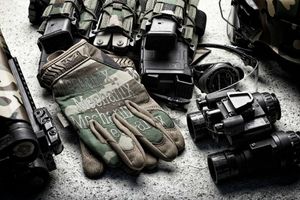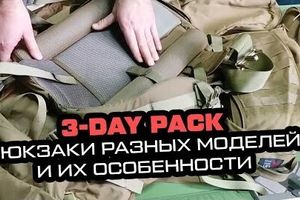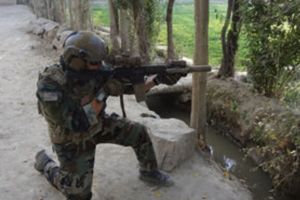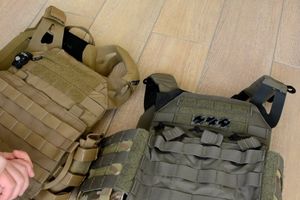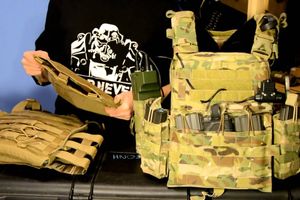
There are things that in words seem like mere entertainment, but in practice turn out to be significantly deeper. Airsoft is exactly from this category. From the outside, it may look like an "adult war game": camouflage, weapon replicas, radios, load-bearing gear, smoke, building assaults, and moving through tree lines. But you only need to get into a proper game once for the picture to change dramatically. You see not just a hobby, but an entire culture – with its own ethics, rules, safety techniques, discipline, team interaction, and a very distinct atmosphere where adrenaline, sport, tactics, and healthy fun coexist.
That is why airsoft has long gone beyond the formula of "shooting on a Sunday". For some, it is a way to reset their head after a working week; for others, a platform for practicing team interaction, movement, communication, and working in full gear; and for some, a complete lifestyle where each new game becomes a small field story. And if at one time airsoft was perceived as a niche entertainment for enthusiasts, today it is already a global community with thousands of clubs, fields, tournaments, MilSim projects, and a huge equipment market.
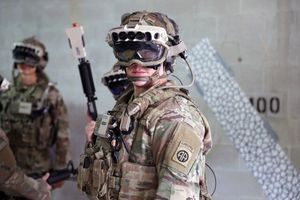
In the case of Ukraine, airsoft has another dimension. Against the backdrop of full-scale war, society looks completely differently at tactical culture, equipment, small group interaction skills, land navigation, communication, and basic discipline in handling weapon-like systems. Airsoft, of course, does not replace real military training and should not substitute for combat experience. But as a tool for training motor skills, stress resilience, communication, gear culture, and team play, it has long proven its practical value and is actively used as an element of instruction, both for recruits and for the combat cohesion of various combat units of the AFU. A specialist from the Punisher military store will tell us about all this in more detail.
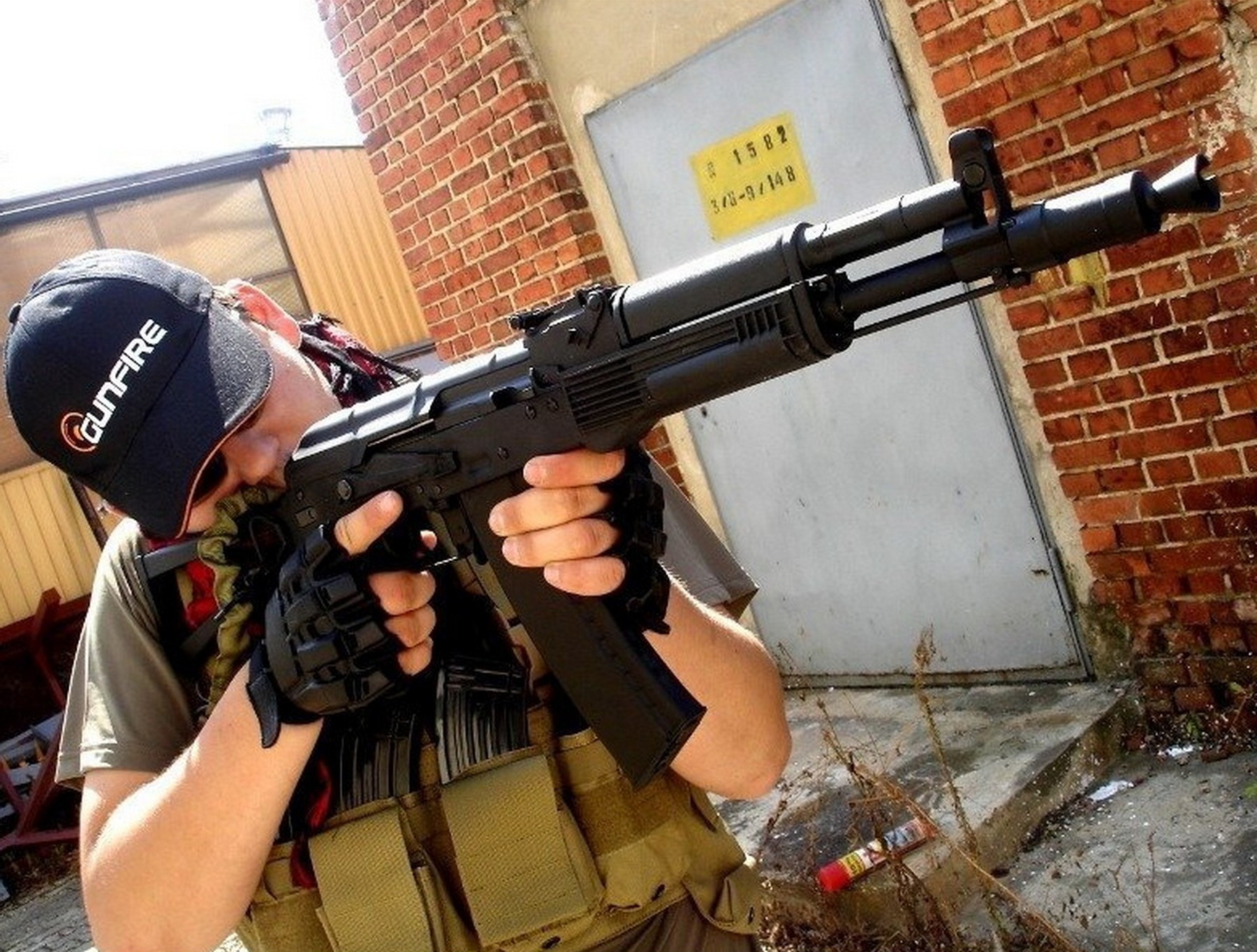
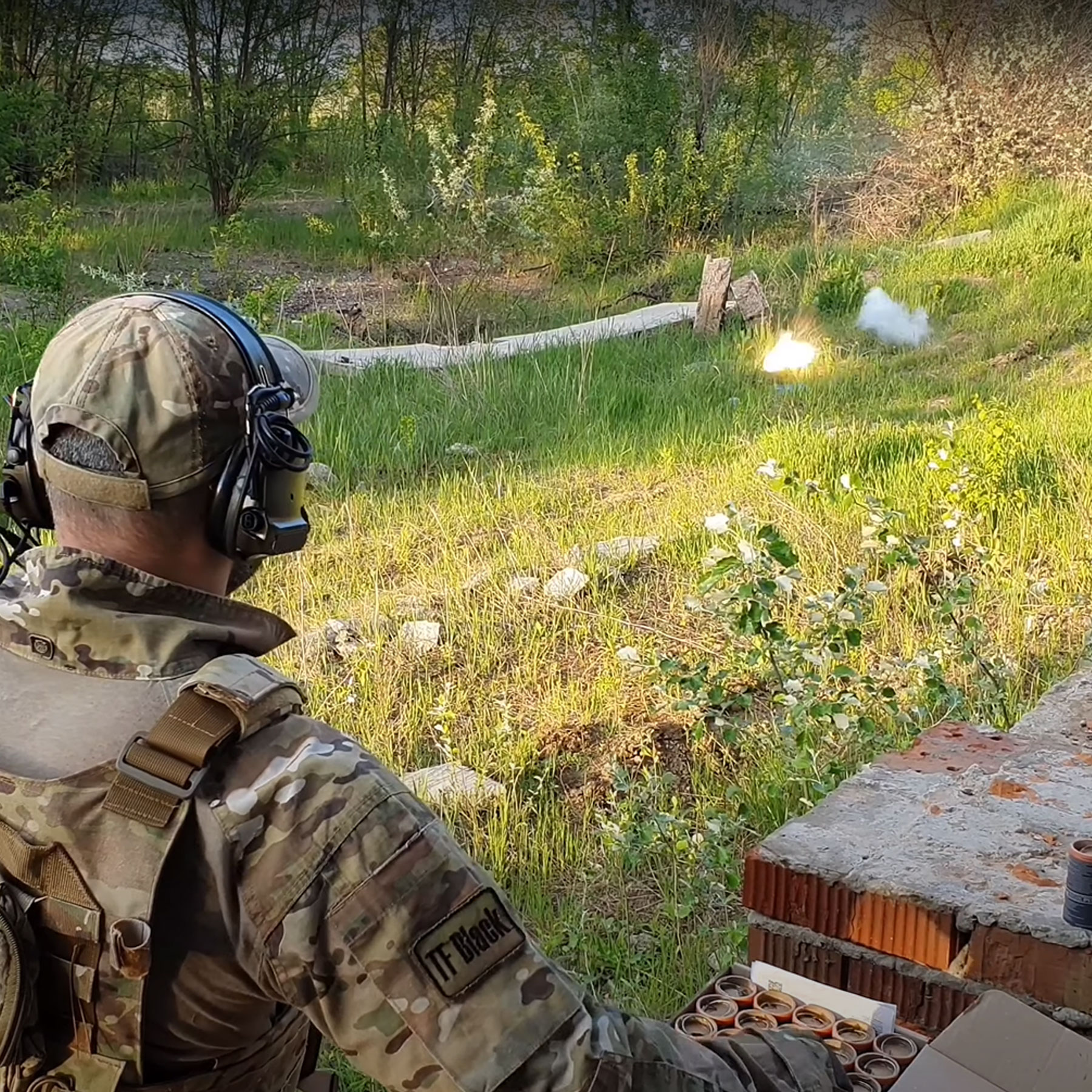
How Airsoft Appeared: From Japanese Replicas to Global Culture
The history of airsoft begins not on the battlefield, but with legal restrictions. In post-war Japan, the civilian circulation of firearms was tightly regulated, but interest in weapon culture never disappeared. In response to this, a market emerged for realistic but safer imitation systems – at first collectible, and later those that shot small-caliber plastic pellets. It was Japanese manufacturers like Tokyo Marui that actually laid the foundation of modern airsoft: replica standards, automatic electric guns (AEGs), form factors, magazine compatibility, hop-up designs, and the very idea of a safe simulation game. From Japan, this culture spread further – first to Asia, then to Europe, the USA, and other regions, where airsoft gradually developed its own local rules, clubs, tournaments, and subcultures. The history of the market development and the role of Japanese manufacturers in establishing airsoft as a standalone hobby are well described by specialized guides and industry reviews.
At the initial stage, airsoft was much closer to a club reconstruction entertainment than to a modern multi-format hobby. But with the development of electronics, batteries, affordable AEG systems, gas platforms, optics, gear, and an entire infrastructure of fields, it began to change rapidly. Today, the word "airsoft" covers not just a single game, but a whole spectrum of formats – from light Sunday skirmishes in the woods to intense 24-hour MilSim scenarios with a command structure, limited ammunition, radio discipline, and missions where you have to think more than shoot.
Why Airsoft is Still Relevant – and Why Its Popularity Does Not Wane
The secret to airsoft's longevity is that it stands on several pillars at once. The first is emotion. This is excitement, movement, adrenaline, the feeling of the moment when you are not just "present on the field" but literally living in the game: listening to the airwaves, watching the flank, catching a silhouette in a window, measuring a room assault by counting seconds. The second is the social aspect. A good airsoft game is rarely played "solo": communication, trust, synchronicity, discipline, and the ability to act not as an individual shooter but as part of a group are what matter here. The third is the applied value. Even if you leave aside all the romanticism of uniforms, camouflage, and the "tactical vibe", airsoft teaches very down-to-earth things: how to move in gear, how not to overload yourself with equipment, how sector distribution works, why communication is sometimes more important than the rate of fire, and why the best "upgrade" for a player is not a new replica, but a cool head.
In the world, airsoft has long become a full-fledged industry with separate branches: MilSim, speedsoft, CQB, themed scenario games, sports formats, club leagues, and festival events. Hundreds of fields and stores operate in Europe, the USA, and Asia, and manufacturers release new platforms, gear, and electronics for replicas every year. A separate direction is speedsoft, which increasingly gravitates toward a competitive format with short rounds, high dynamics, and a "sports" game setup. Specialized guides of 2025-2026 describe speedsoft as one of the most prominent modern branches of airsoft culture, where reaction, maneuver, and pace come to the fore, rather than maximum realism of equipment.
In Ukraine, airsoft has also long ceased to be a "strange hobby for a narrow circle". Yes, due to the war, many clubs, venues, and communities have gone through difficult transformations, and some people from the airsoft environment have transitioned to real military service or volunteering activities. But paradoxically, this has given airsoft a new weight: interest in tactical culture, equipment, communication, basic skills of team interaction, land navigation, handling gear, and the logic of "small groups" has grown in society. So for Ukraine today, airsoft is not just entertainment, but also an environment where many people learn discipline, teamwork, endurance, and competent use of equipment.
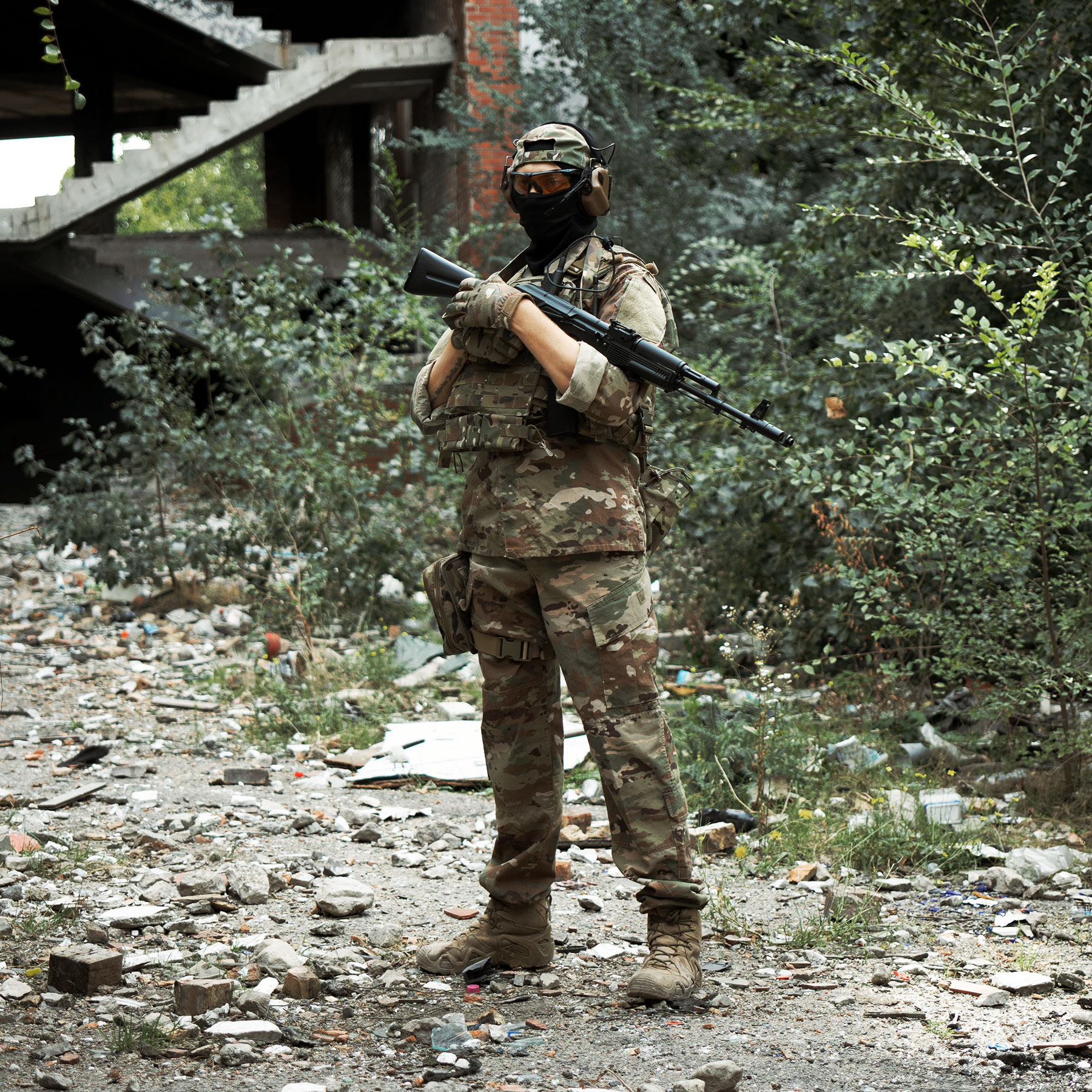
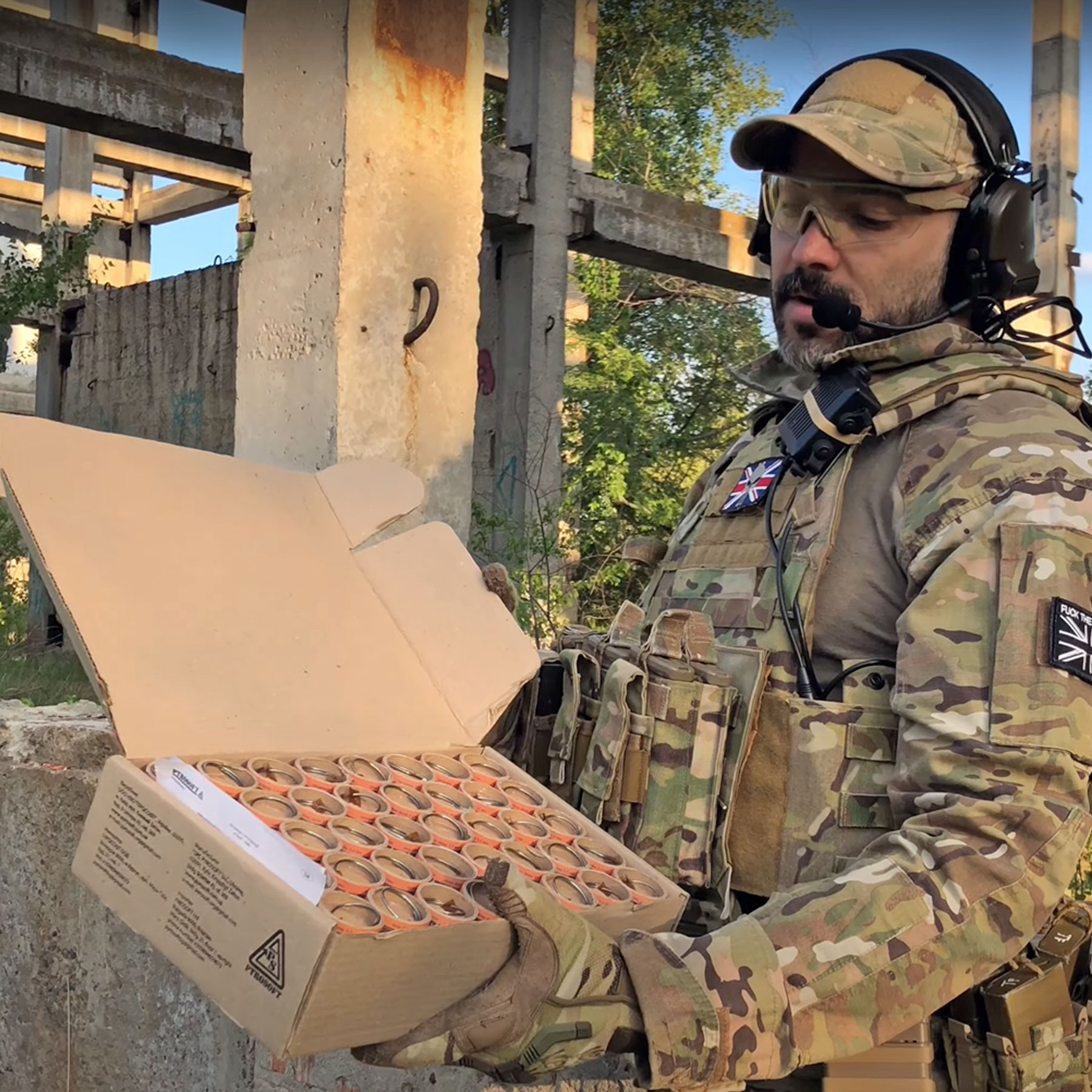
Airsoft as Training: What It Really Develops
Here, it is important not to slide into extremes. Airsoft is not military training in the full sense and does not replace professional instruction. But as a training tool, it truly offers a lot.
1. Team interaction
In a good game, it quickly becomes clear that "solo heroism" works only in the movies. In a real scenario, it is much more important whether you can convey information briefly and clearly, whether you understand your role in the group, and whether you are able to hold a sector, keep out of someone else's line of fire, and not break the general logic of the maneuver.
2. Working in gear
What seems comfortable in a store can turn into a millstone around your neck on the field. Airsoft very quickly teaches you to cut out the excess: uncomfortable pouches, poor magazine placement, extra weight on the plate carrier, a bad first-aid kit layout, the wrong sling, and cheap goggles that fog up in the second minute. Every game is a small audit of your own equipment.
3. Orientation and movement
Field scenarios, woods, urban areas, CQB, working the flanks, changing positions, searching for cover, controlling blind spots – all this develops spatial thinking and the skill to move not chaotically, but with an understanding of the terrain, distances, and sectors.
4. Stress resilience and concentration
When BBs are whistling around, the radio is crackling in your ears, and there is someone unknown in the room ahead, the brain quickly learns either to process information or to panic. Airsoft does not model real combat stress in the full sense, but as a simulator for attention, decision-making pace, and action in dynamics, it is highly useful.
What Formats of Airsoft Exist
One of the main mistakes of a beginner is to think that airsoft is the same everywhere. In fact, it is a whole set of different disciplines and scenarios that differ in pace, equipment requirements, style of play, and even player psychology.
Classic skirmish
This is the most common format. Short or medium-duration missions, two or more teams, clear objectives – capturing a point, defense, assault, capture the flag, escort, holding an object. Beginners usually start with skirmish because it best lets you feel the basic mechanics of the game without excessive immersion into complex scenario rules.
MilSim
MilSim is no longer just "playing", it is living through an operation. There is more discipline here, more roles, more scenario logic, more requirements for equipment and behavior. Often these are long games lasting 12-24 hours or more, with limited ammunition, a command structure, medics, radio communication, missions, night phases, and increased endurance requirements. Specialized MilSim guides of 2026 explicitly emphasize: MilSim is not about "running around and leaving", but about immersion, planning, interaction, and the ability to work in discomfort.
CQB/indoor airsoft
Close Quarters Battle is a game at short distances in rooms, hangars, abandoned buildings, labyrinths, and specially prepared arenas. Here, there is a different pace, different body positioning, different combat distances, and different maneuver requirements. If woodland airsoft resembles chess with running, then CQB is more like a fight in a phone booth, where a single mistake is punished instantly.
Speedsoft
This is the most "sporting" and most dynamic format. Less camouflage romance, more pace, aggression, reaction, short rounds, and maximally lightweight equipment. Speedsoft is often compared to paintball speedball: minimum excess, maximum movement, a bet on speed, corner snapping, timing, and shooting mechanics. It is in this format that lightweight builds, HPA systems, sports masks, lightweight chest rig configurations, and bright setups atypical for "classic military" often dominate.
Scenario games and themed events
This is a separate love in airsoft. Here, a story is superimposed on the game: VIP evacuation, base defense, a raid into the rear, searching for a container, hunting a group, conflict of factions, a post-apocalyptic scenario, reconstruction events, a zombie format, or urban campaigns. It is scenario games that often give that very feeling of a "live adventure" for which people fall in love with airsoft.
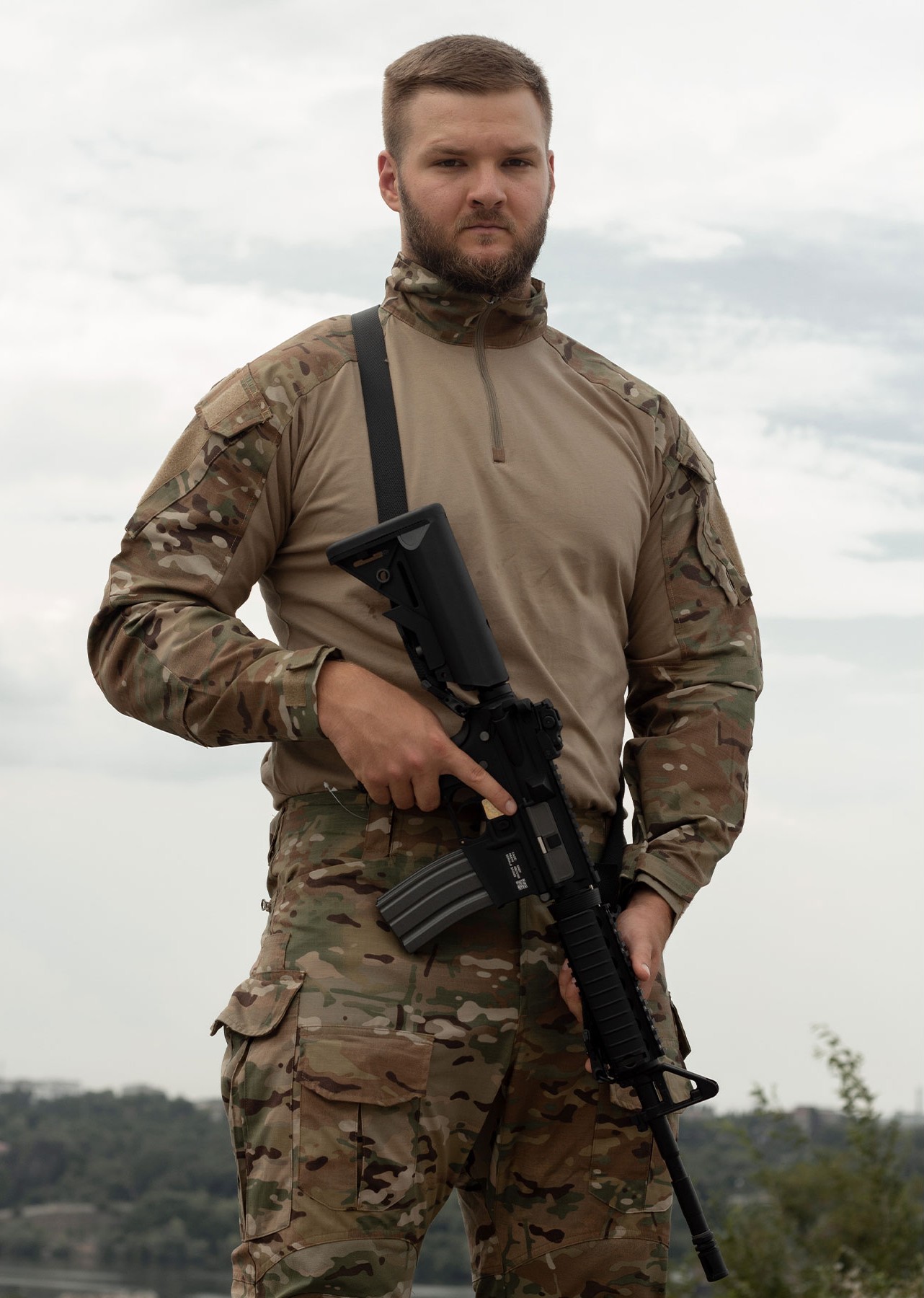
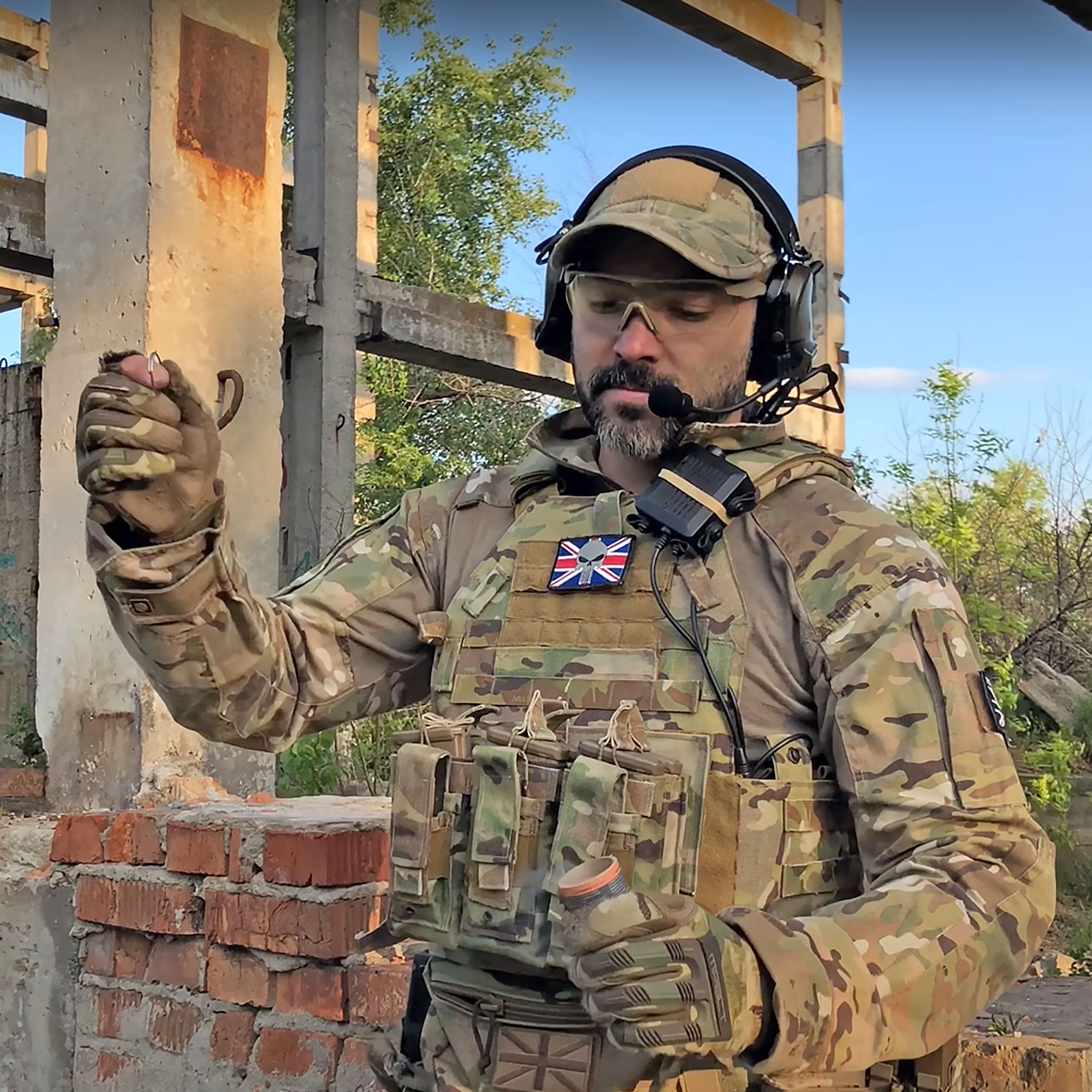
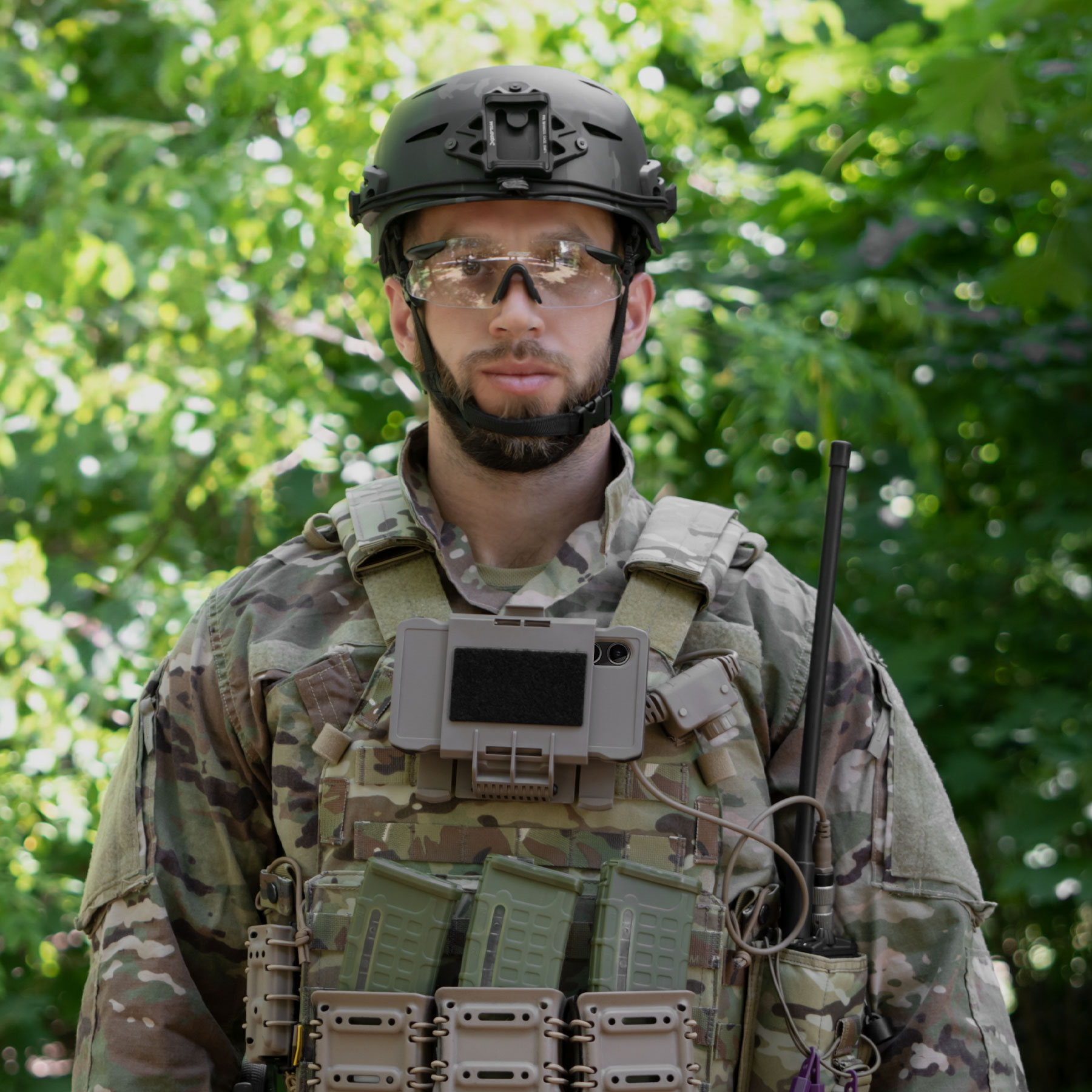
What is Included in Airsoft Equipment
To put it very simply, an airsoft kit consists of four large blocks: protection, replica, ammunition/power, and wearable gear. But the devil, as always, is in the details.
1. Protection – an absolute priority
If you forget everything else, remember one thing: in airsoft, the main thing is not the replica, but eye protection. All normal guides for beginners put this rule in first place, and quite rightly. For the game, you need high-quality goggles or a mask with a certified level of protection – not "something that looks like tactical glasses", but a proven solution with proper protection standards. Many start-up guides also separately emphasize full eye protection and the desirability of lower face protection, especially for CQB and beginners.
Basic protection also often includes:
-
teeth and lower face protection;
-
gloves – because hits to fingers and knuckles are remembered for a long time;
-
knee pads – especially for CQB, urban games, and active movement;
-
a headpiece or helmet – not so much against BBs, but against branches, bumping into structures, and for mounting accessories;
-
comfortable footwear with proper ankle support.
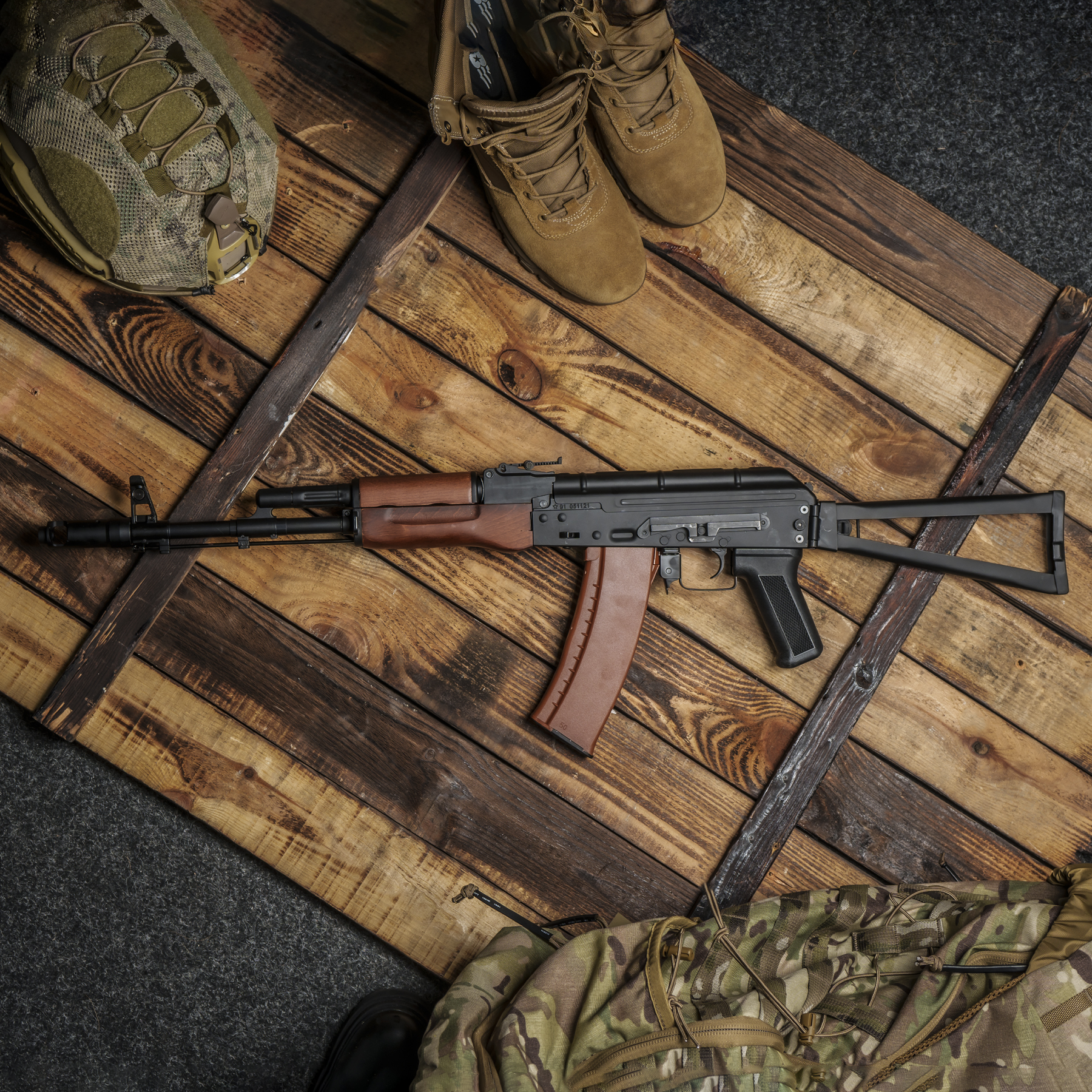
2. Replica: what they shoot with in airsoft
An airsoft "weapon" is correctly called a replica. It is not a live weapon, but visually it can imitate it very precisely. The main types are:
AEG (Automatic Electric Gun)
Electric replicas are the most mass-produced and best starting option for most beginners. They are relatively stable, versatile, less capricious regarding temperature, and have a huge selection of platforms and spare parts. It is the AEGs that most modern starting guides recommend as a first replica.
GBB/GBBR
Gas blowback pistols and gas blowback rifles give a higher level of "realism" in sensations: bolt action operation, recoil impulse, and different handling mechanics. But they are more demanding regarding temperature, maintenance, tightness, and gas stability. For a beginner, this is usually not the first choice, but rather a "second love" after a few seasons.
Spring/bolt-action
Manual cocking, sniper configurations, specialized roles. It looks spectacular on video, but it is not always a smart first step. Being a sniper in airsoft is not just about a long replica, but a separate philosophy of patience, camouflage, distance, knowledge of field rules, and often – additional investments in upgrades.
HPA
High Pressure Air is already the territory of more experienced players and specific formats, especially speedsoft or finely tuned custom builds. HPA gives very interesting opportunities regarding stability, reaction, and adjustments, but adds its own complexity, cost, and maintenance nuances.
3. Ammunition, batteries, gas, and little things without which the game won't run
A separate category of things that a beginner remembers only after the first game:
-
magazines;
-
BB pellets of the required weight;
-
batteries and a charger for AEGs;
-
gas/CO₂ for the respective systems;
-
a speedloader for filling magazines;
-
a sling;
-
pouches/containers for batteries and small consumables.
And there is an important rule here: a simple, reliable, and convenient kit is better than an expensive but raw or chaotically assembled setup.
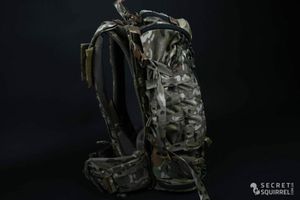
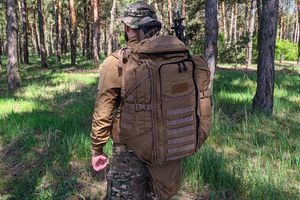
4. Wearable gear
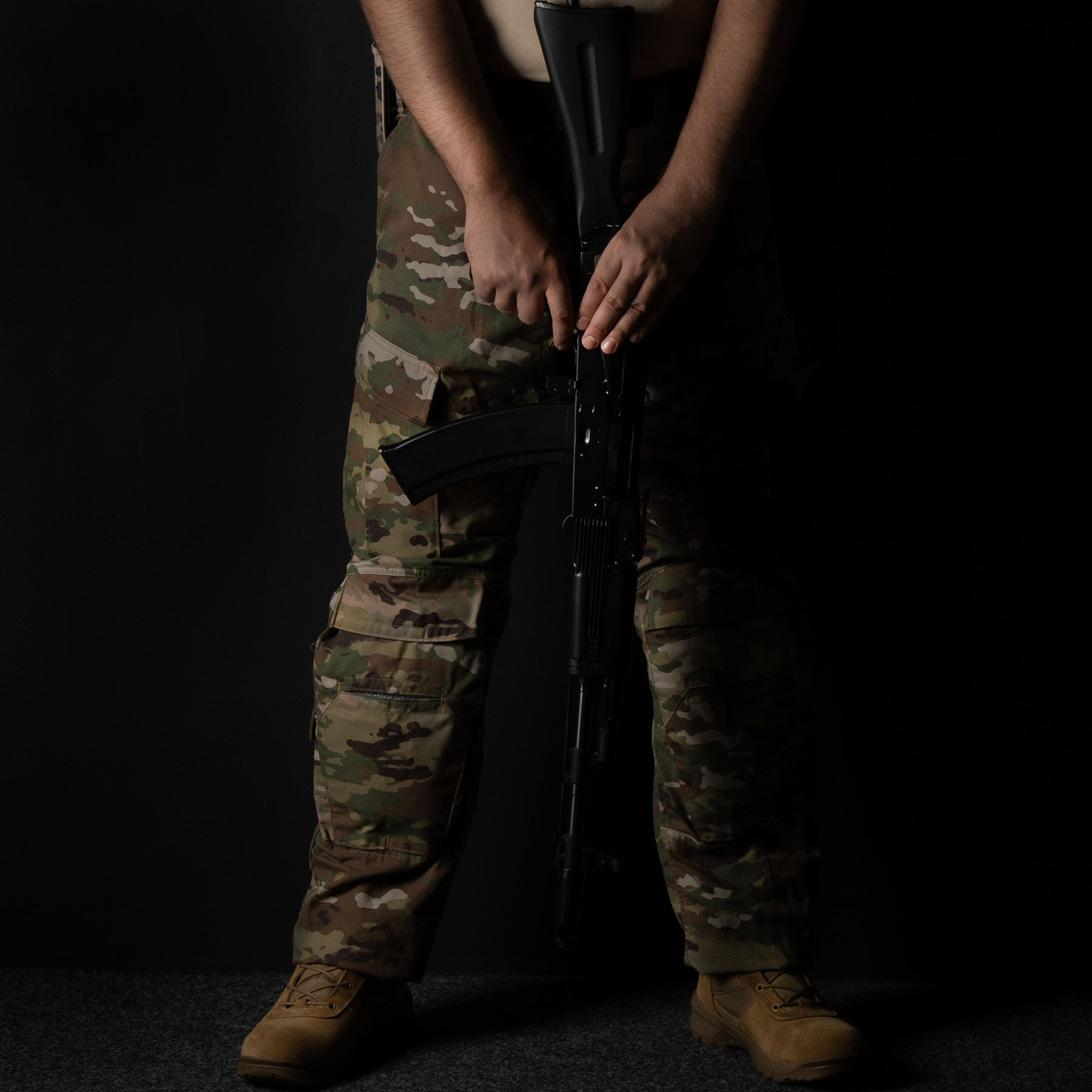
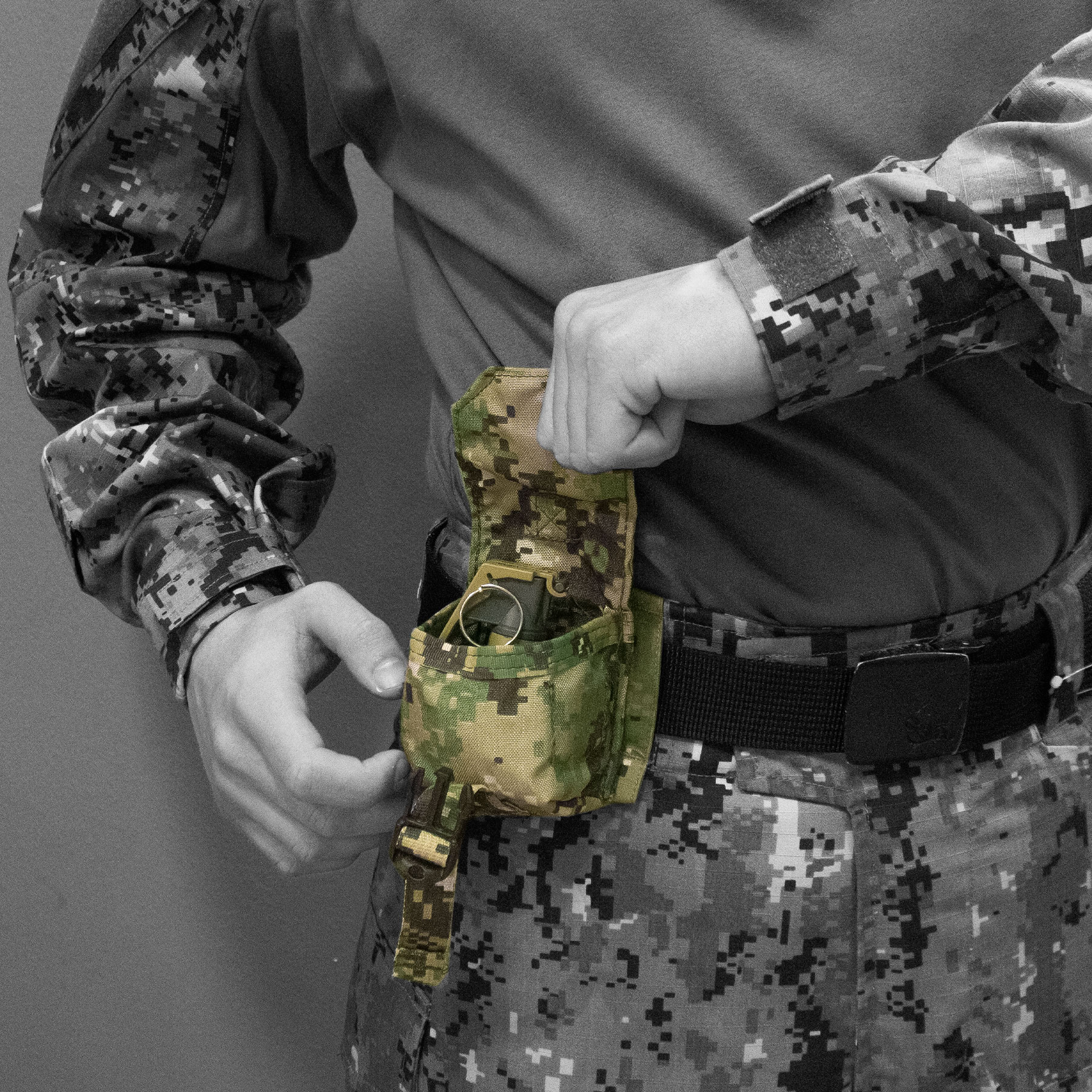
This is where the real airsoft alchemy begins. A plate carrier or a chest rig? How many pouches? Where to carry the radio? Where to put the first-aid kit? How not to overload the belt? Is a helmet needed? Does a uniform of a certain cut make sense?
Basically, everything comes down to a few things:
-
a uniform or comfortable field clothing;
-
a load-bearing system – chest rig, plate carrier, belt-and-harness system;
-
pouches for magazines;
-
a hydrator or flask;
-
a radio, if the game format requires it;
-
a flashlight, if there are buildings, a night phase, or CQB;
-
an IFAK/basic first-aid kit – at least for real everyday needs on the field.
In airsoft, it quickly becomes clear that the most expensive gear does not equal the best. Sometimes a player in a modest chest rig, but with good physical fitness, a cool head, and a proper understanding of the field, brings more benefit to the team than a person who resembles a Christmas tree made of pouches but cannot run 80 meters without shortness of breath.
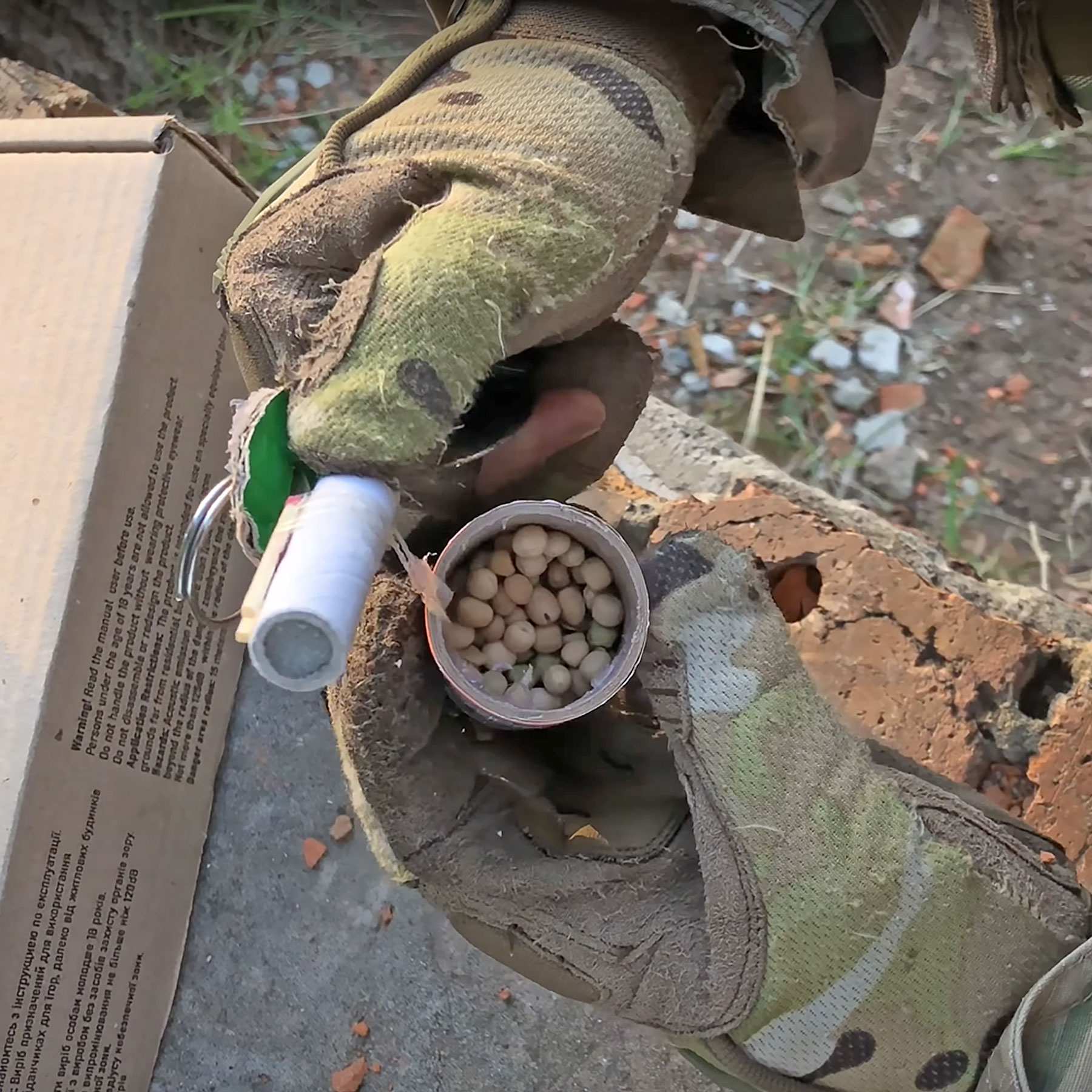
What is Important for a Beginner to Know: How to Enter Airsoft Without Extra Mistakes
Tip #1: Do not buy everything at once
The best start is to go to a few games with a rental kit. It's cliché, but it really saves your budget. After the first game, it might seem that you want "something short and fast for CQB", and after the third game, you suddenly realize that you like the forest, MilSim, and leisurely work at medium range the most. Buying a replica before you understand your own playstyle is like choosing boots before you understand where you are going at all.
Tip #2: Start with an AEG and proper protection
Для більшості новачків найздоровіший сценарій виглядає так:
-
high-quality eye and face protection;
-
a simple, reliable AEG;
-
comfortable footwear;
-
a minimal load-bearing system;
-
a few magazines, a battery, and a charger.
This is exactly how most modern beginner guides advise starting: do not chase exotic items, do not start with a sniper role, do not buy gas "beauty" just because it looks spectacular, but assemble a working, durable basic kit first.
Tip #3: Learn not to shoot, but to play
A very common mistake is to think that airsoft is won by the rate of fire. In fact, it is often won by completely different things:
-
correct movement;
-
the ability to read the field;
-
working the flank;
-
communication;
-
timing;
-
patience.
A person who knows how to silently enter a blind spot, save ammunition, and pass the right information in time is often more useful than someone who just showers BBs "in that direction".
Tip #4: Respect the rules and hit-calling
Airsoft stands on a culture of honesty. In most formats, there is no "official referee over the shoulder" of every player. If you get hit, you call it. If you are not sure, but it looks like you were, it is also better to walk out. The normal atmosphere of the game depends precisely on this. A person who does not call their hits ruins the game faster than any bad replica.
Tips for Veterans: How to Grow Further if You Have Already Passed the Basics
If you have been in the hobby for a long time, the main question is no longer "what to buy?", but how to become more effective and smarter on the field.
1. Review your setup for weight
Over the years, many players have come to a paradoxical conclusion: the best upgrade is not to add, but to remove the excess. Leave only what really works. Lighten the configuration, remove decorative ballast, change the magazine layout, arrange pouches more logically, and rethink the belt and shoulders. Modern airsoft gear trends of 2026 are also moving toward more thoughtful, lighter, and more practical configurations, where balance and functionality are more important than "visual noise".
2. Practice communication
Many teams lose not because they shoot poorly, but because they talk poorly. If you have chaos on the airwaves in your group, extra words, duplication of commands, and shouting instead of short informative messages – no amount of tuning will save you. Good communication is power.
3. Learn to play roles
Airsoft becomes much more interesting when you stop being just a "shooter with a replica" and start thinking in terms of a role: rifleman, marksman, support, scout, medic, element leader, radioman, pace driver in CQB, or flank player in the forest. A role provides structure and forces you to develop your strengths rather than just "being everywhere a little bit".
4. Train your physical fitness
This is the least glamorous and most useful advice. Running, mobility, knees, back, breathing, endurance, basic core strength – all this affects airsoft more than another "tactical accessory". A person who does not die after three dashes has a better shooting platform, a more stable head, and a better chance of making the right decisions at the end of the game when everyone else is already tired.
Many arguments in the airsoft community revolve around the question "which is cooler – MilSim or speedsoft?". In fact, it's about the same as arguing what's better – a mountain hike or a stadium sprint. Both formats are about different things: one is about immersion, endurance, and tactical drama; the other is about pace, reaction, and aggressive maneuvering. And a good player often knows how to enjoy both worlds. On forums and in communities, they phrase it very simply: airsoft is big, and there are enough styles in it for everyone.
Airsoft and Lifestyle: Why People Stay in It for Years
The most interesting thing about airsoft is that it rarely ends with the game itself. A whole ecosystem forms around it very quickly:
-
searching for and tweaking gear;
-
preparing for a scenario;
-
joint trips;
-
clubs and teams;
-
inside jokes, traditions, callsigns;
-
upgrading replicas;
-
training beginners;
-
discussing tactics, equipment, and field mistakes.
This is how a hobby slowly turns into a lifestyle. Not because a person suddenly decided to "live for war", but because the culture itself becomes interesting to them – order in gear, setup logic, the feeling of a teammate's shoulder, physical and psychological composure, the drive from scenarios, and that special aftertaste of a game when you sit in the dust, drink water from a flask, and break down with your teammates exactly where everything went wrong, and where it worked perfectly.
In airsoft, a specific "tactical mindset of everyday life" is born very quickly. After a few seasons, a person automatically divides things into "necessary," "excess," "what should be at hand," and "what is better not to drag along at all." And this habit works surprisingly well not only on the field, but also in hiking, road trips, workouts, and even in simply packing a backpack for the weekend.
Airsoft has long ceased to be just a "game with plastic pellets". Today it is a multi-layered hobby in which sport, teamwork, tactical culture, technical curiosity, and a very human desire to experience strong emotions among like-minded people are intertwined. For someone, it begins with a rental mask and the first entry onto the field, for someone with a love for gear, for someone with a desire to learn to move better, communicate, think under pressure, and experience a team game not on a screen, but in real space.
In a world where more and more things happen online, airsoft is also valuable because it returns a person to reality – to the forest, the field, the building, the team, the movement, the fatigue, the excitement, and the honest result of one's own decisions. It does not replace professional training, does not substitute for real military science, and should not romanticize war. But as a tool for training discipline, interaction, attentiveness, physical endurance, and gear culture – it is a very strong school.
And perhaps this is where the main secret of airsoft lies: you come into it to "play", but you stay – because you realize that you have found not just entertainment, but an environment that forces you to become more composed, smarter, and stronger.

Igor Ivandikov — author of the article
Project Manager
Has over 2 years of experience working in the field of camping equipment. Well-versed in products for tourism, camping, and outdoor recreation.
Responsible for coordinating projects, monitoring deadlines, and ensuring the quality of task completion.
He enjoys football (soccer) and billiards, participates in competitions, and has won prizes on numerous occasions. He is a fan of active recreation.
FAQ: Answers to Frequently Asked Questions
1. What is airsoft in simple words?
2. Does it hurt to play airsoft?
3. Can airsoft be considered preparation for real service?
4. Is airsoft as expensive a hobby?