Every experienced military professional, hunter, or shooter will confirm one simple truth: even the most expensive weapon gradually loses its reliability without proper care. If you compare a rifle to a car engine, powder fouling is like dirty oil. Everything will work for a while, but one day the mechanism might fail you exactly when you least expect it.
That is why weapon cleaning is not just a recommendation, but a mandatory part of its operation. Moreover, this applies to combat rifles as well as hunting shotguns, carbines, or sports weapons.
In this article, together with a specialist from the Punisher military store, we will look step-by-step at how to clean a weapon, what products to use, what mistakes to avoid, and why proper care directly affects the service life of mechanisms.
Why Regular Weapon Cleaning Is So Important
After every shot, powder combustion products, metal particles, carbon fouling, and lubricant residues remain inside the barrel and mechanisms. If they are not removed, they gradually accumulate.
The consequences can vary:
-
deterioration of shooting accuracy;
-
more difficult reloading;
-
accelerated wear of parts;
-
appearance of corrosion;
-
increased risk of malfunctions during automatic operation.
That is why weapon maintenance after shooting is recommended to be carried out as soon as possible after the firing is completed. The longer carbon fouling remains on metal surfaces, the harder it is to remove.

What Will Be Needed for Quality Care
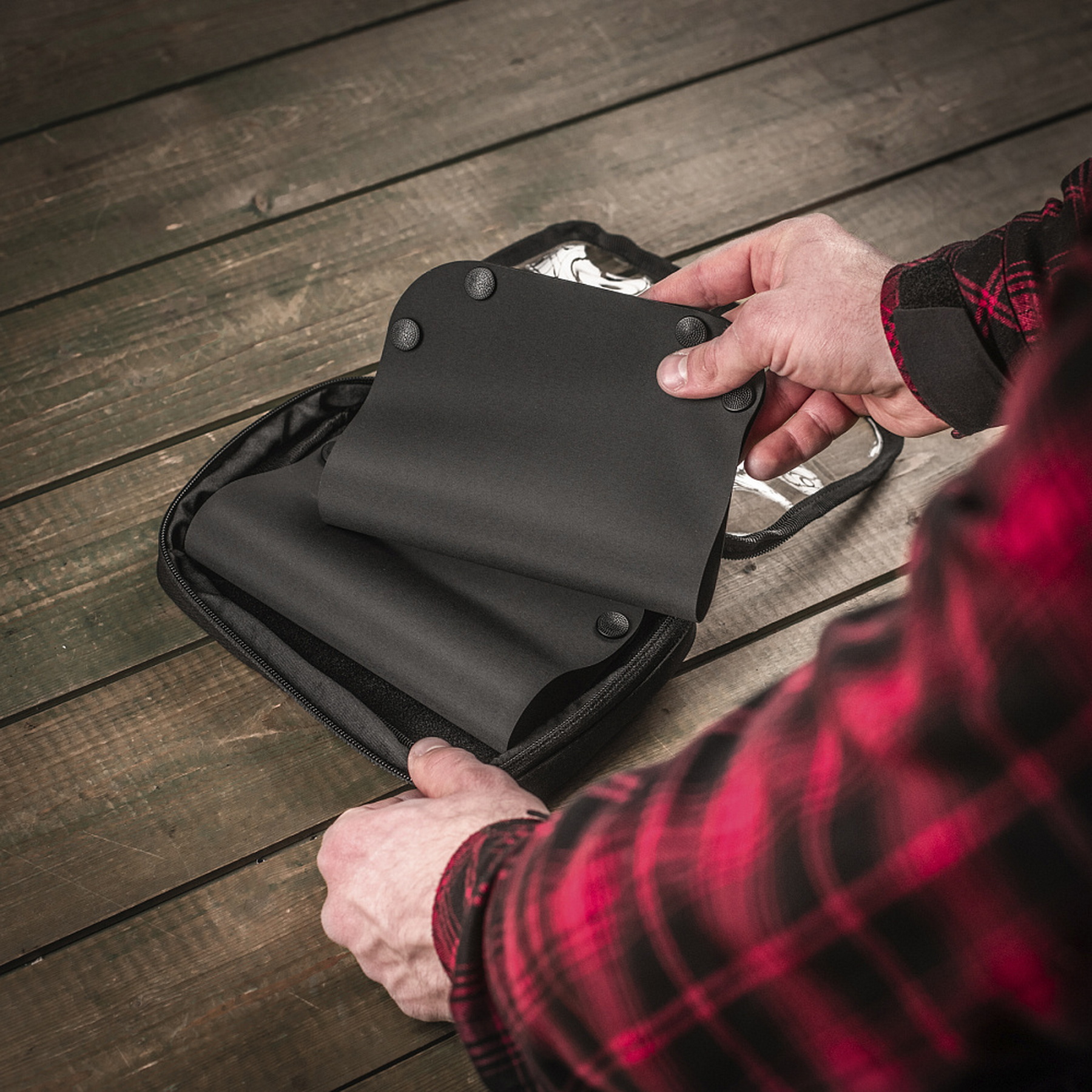
Before starting work, it is worth preparing the necessary accessories.
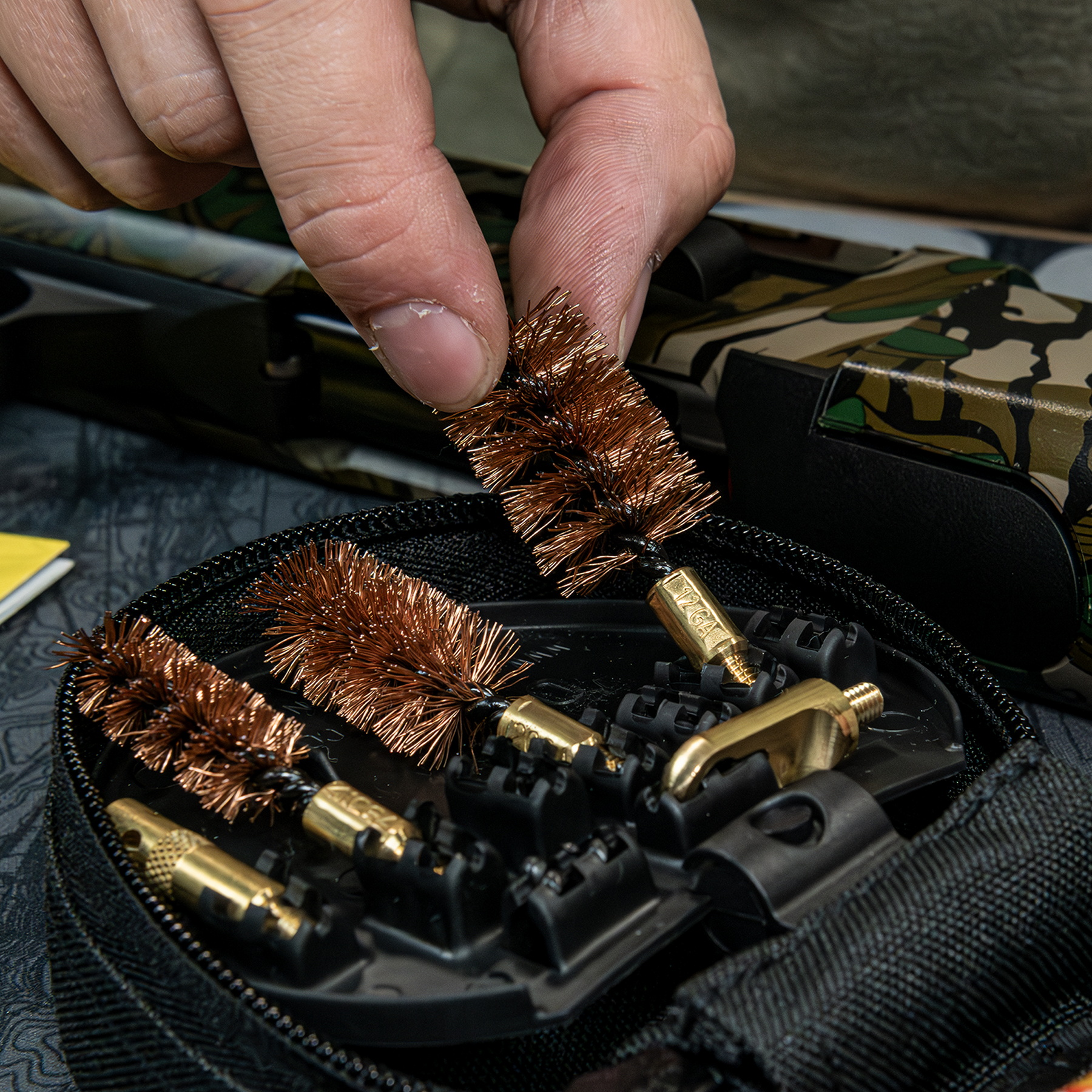
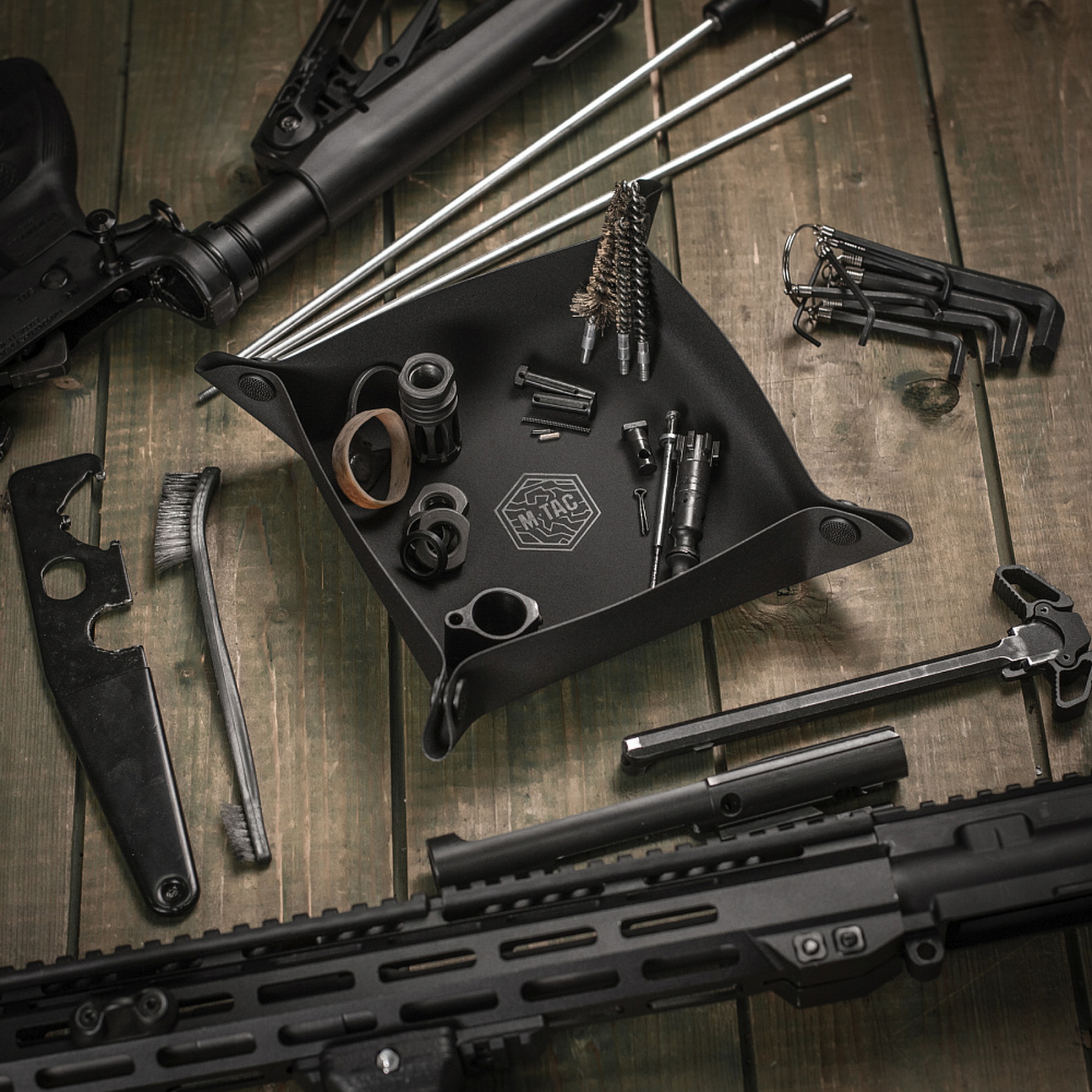
The basic kit includes:
-
patches or clean lint-free wipes;
-
a component brush;
-
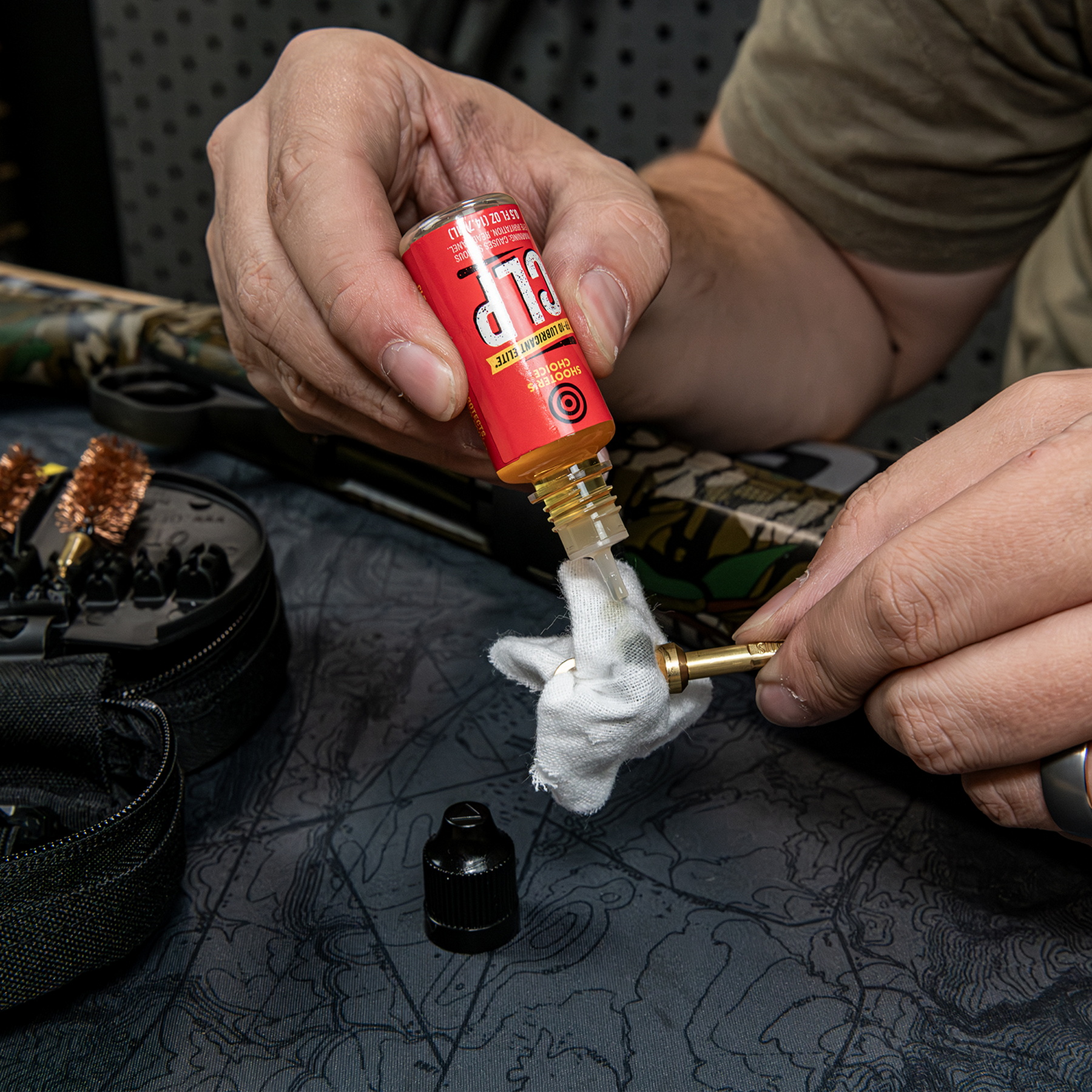
gun oil/lubricant;
-
gun cleaner;
-
protective gloves;
Quality weapon cleaning always begins with the right tool. Using random metal objects or coarse brushes can damage the surface of the parts.
Powder fouling has the property of attracting moisture from the air. That is why even a weapon that lies unused after shooting can corrode faster.
Step 1. Make Sure the Weapon Is Completely Unloaded
Before any maintenance, the main safety rule applies.
It is necessary to:
-
remove the magazine;
-
check the chamber;
-
ensure there is no ammunition present;
-
point the barrel in a safe direction.
Only after this can you proceed to disassembly.
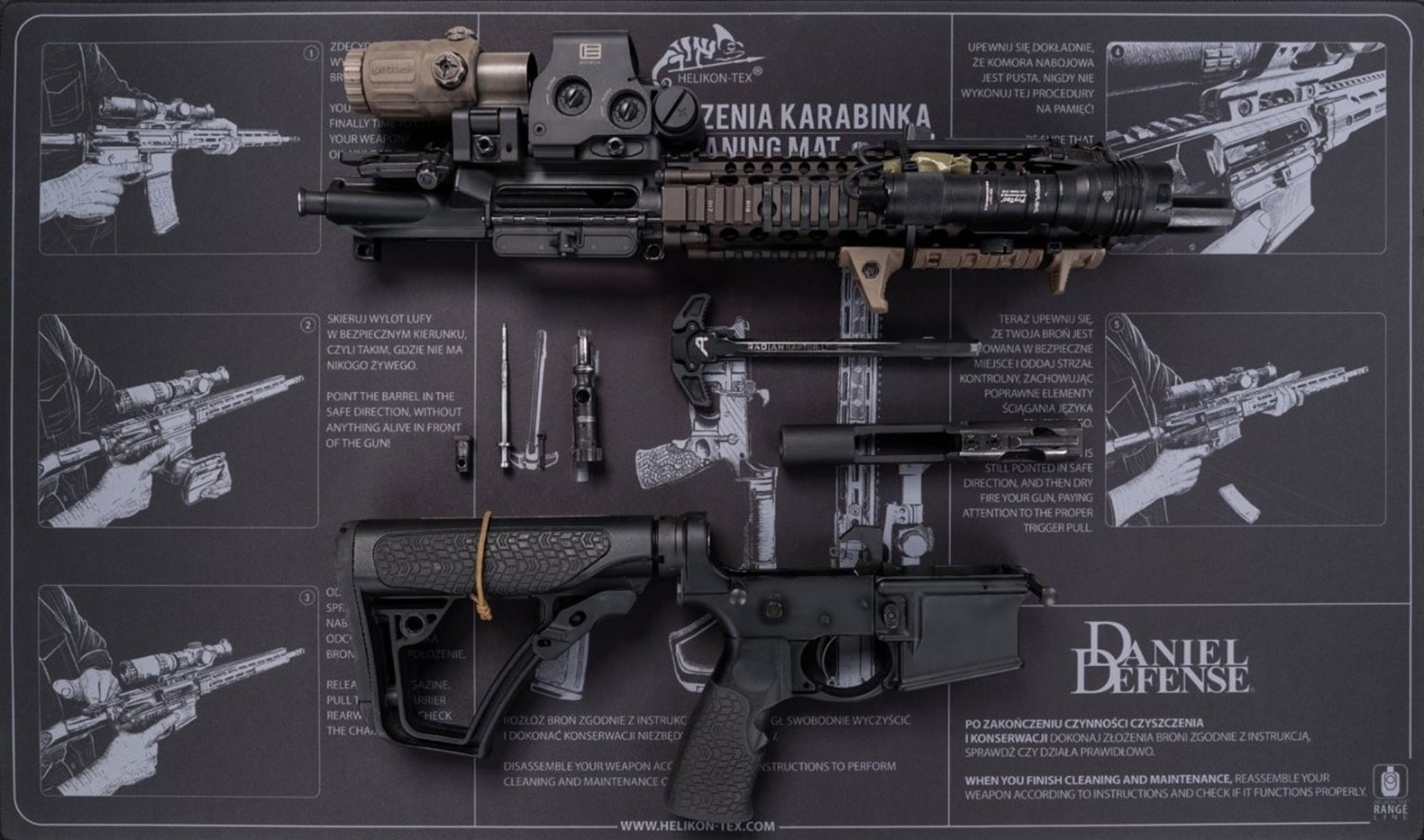
Step 2. Perform Field Stripping
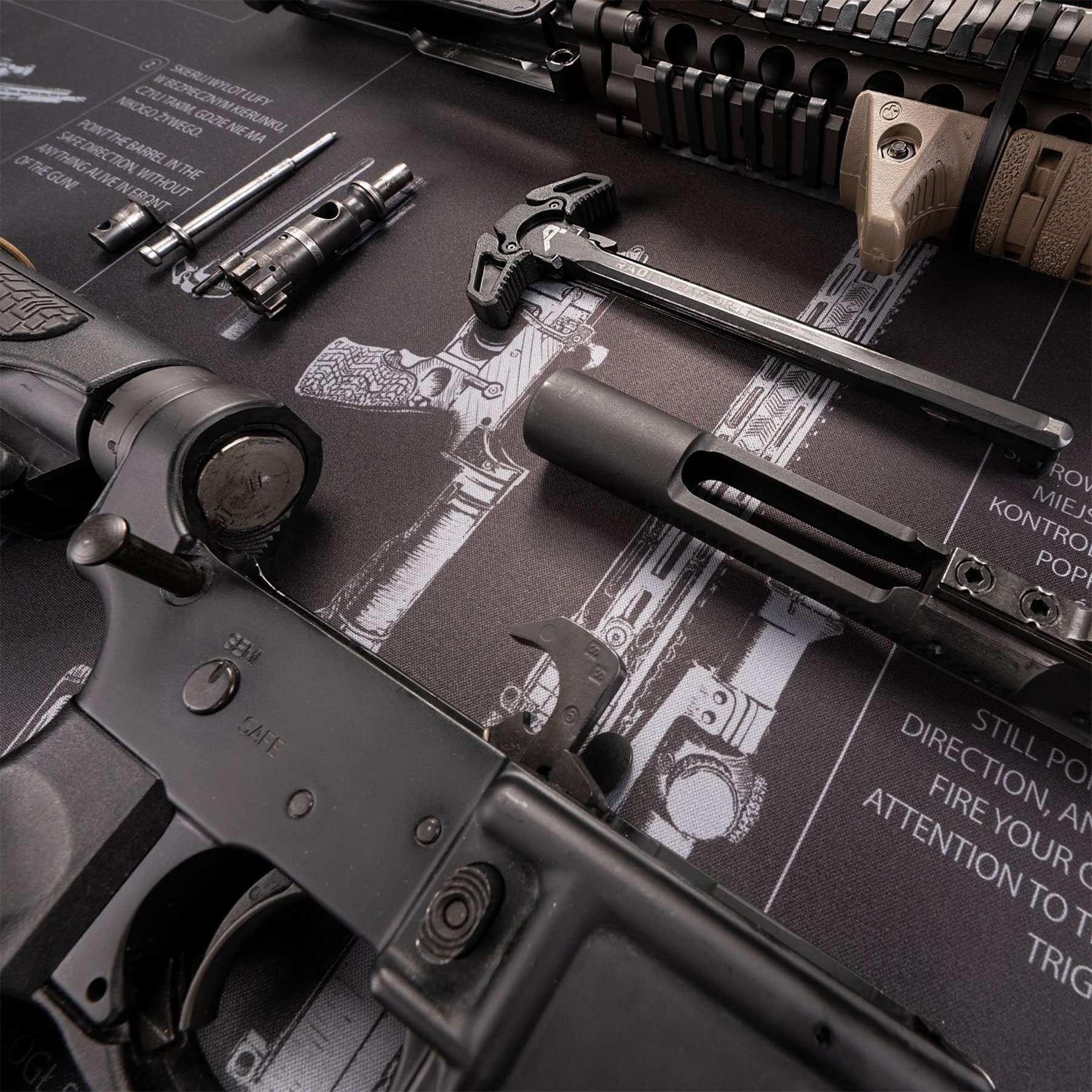
In most cases, field stripping according to the manufacturer's instructions is sufficient for regular care.
Do not completely disassemble the trigger mechanism or other assemblies unnecessarily if it is not required by the maintenance schedule.

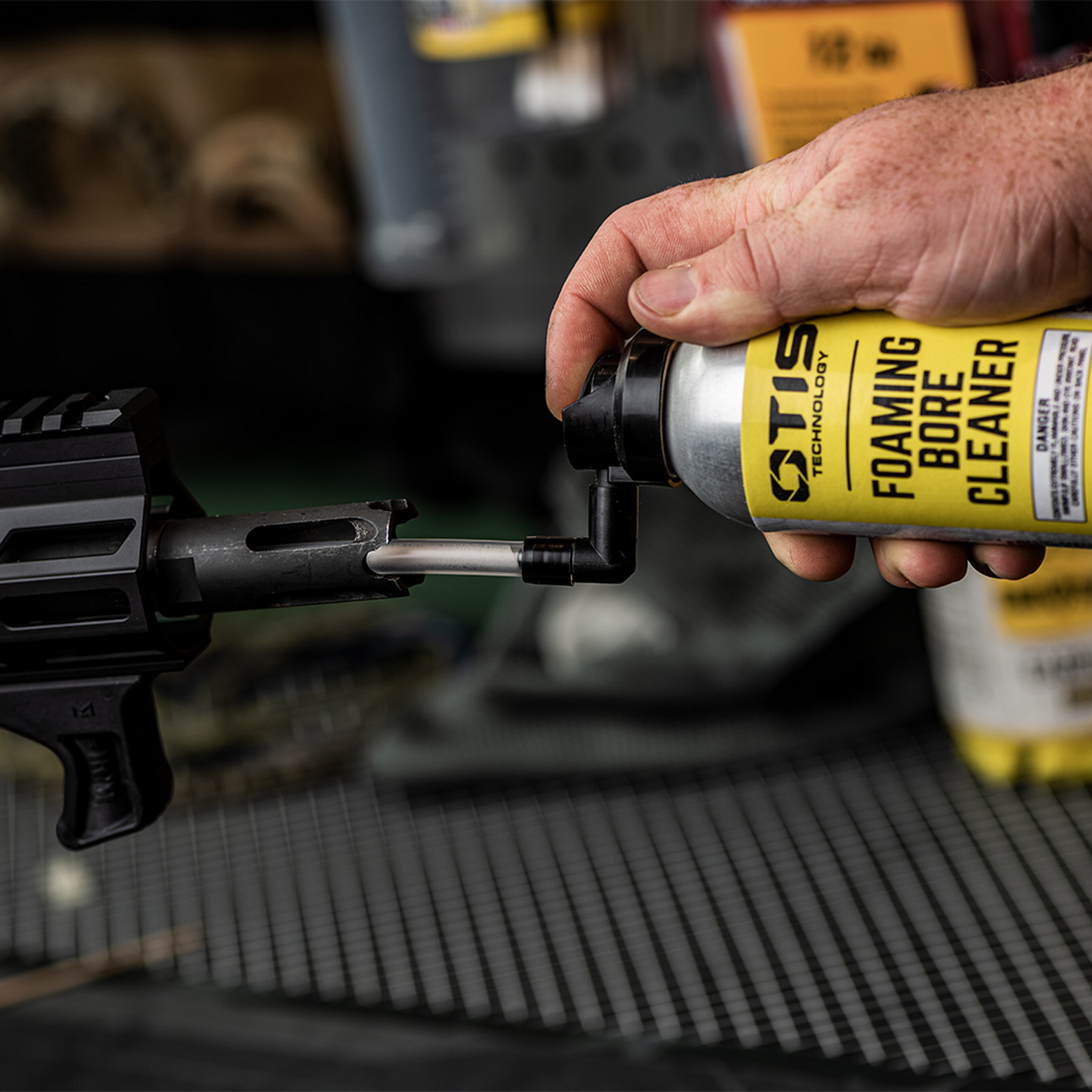
Step 3. Cleaning the Bore of the Barrel
The barrel requires the most attention.
Many beginners ask:
what exactly is used to clean the bore of a rifle barrel?
The standard set includes:
-
a cleaning rod;
-
a bronze or nylon brush of the appropriate caliber;
-
patches;
-
a special gun cleaner.
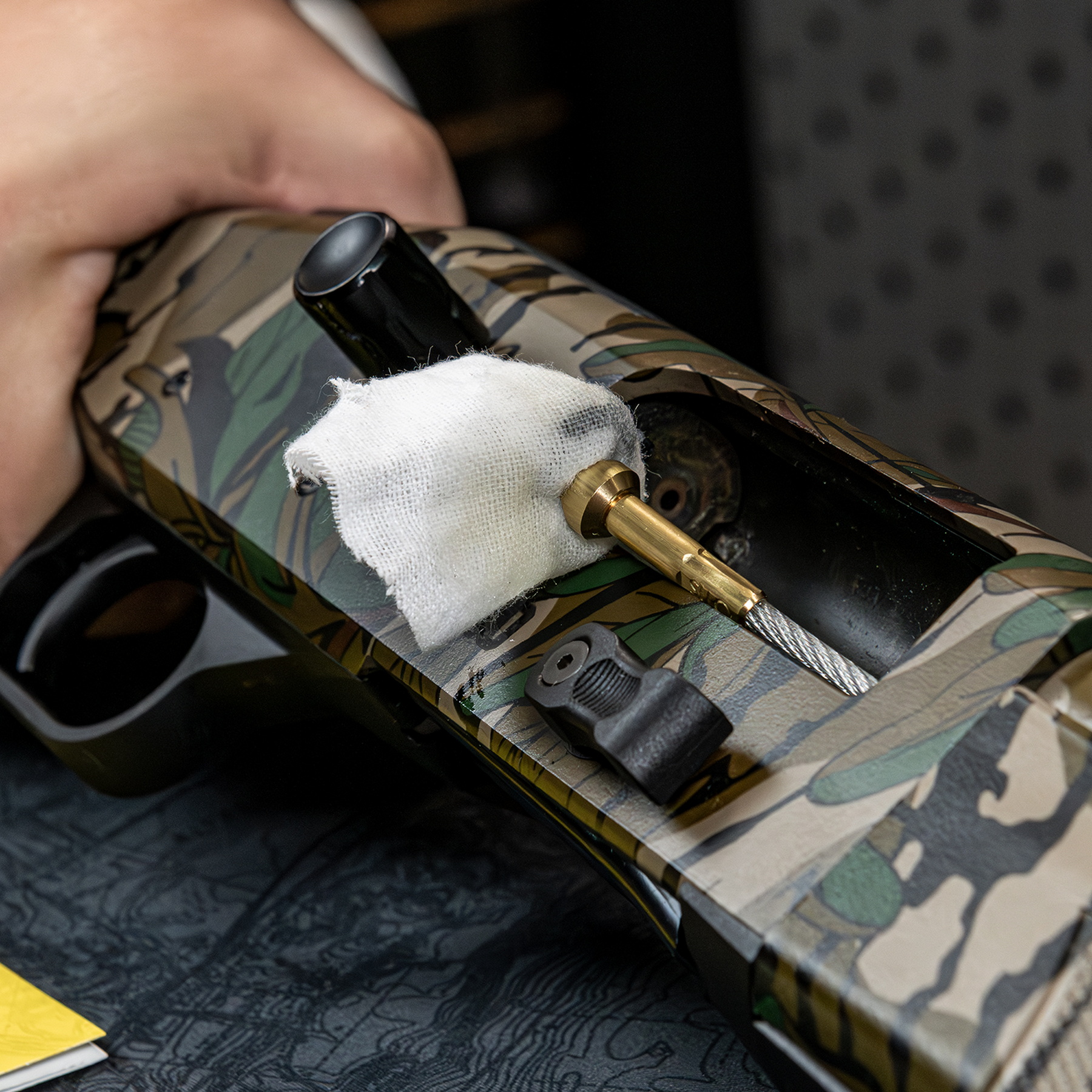
First, a cleaning agent is applied to soften the carbon fouling. Then, the bore of the barrel is passed through several times with a brush in the direction from the chamber to the muzzle. After that, dry patches are used until they come out clean.
Finally, a very thin layer of lubricant is applied if the weapon is to be stored for some time without use.
Bronze brushes effectively remove carbon fouling, but they gradually wear out. This is a normal process, not a sign of a poor-quality product.

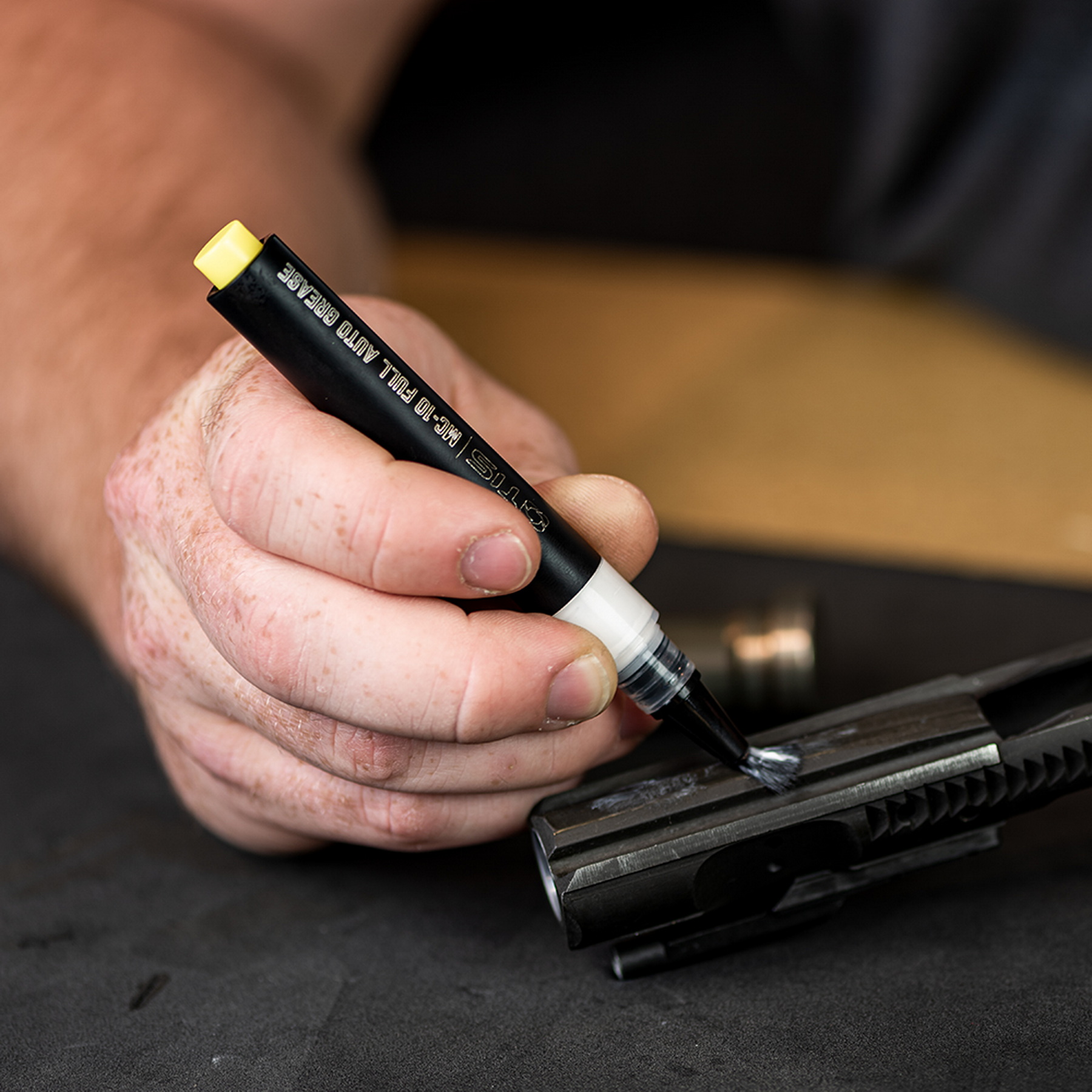
Step 4. Clean the Bolt Carrier Group
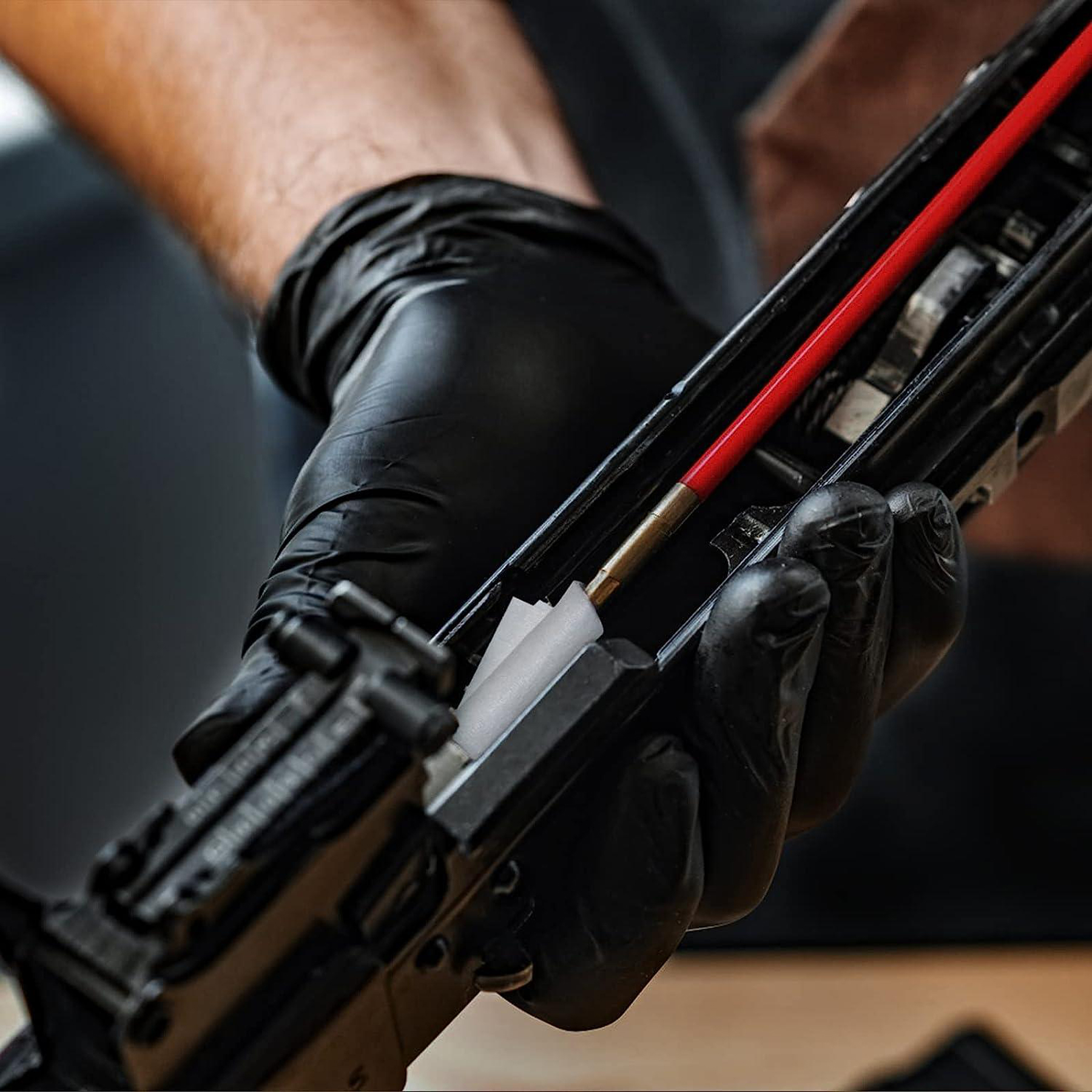
This is where a significant portion of the combustion products accumulates.
Pay special attention to:
-
the bolt face;
-
locking lugs;
-
the bolt carrier;
-
the gas piston (if provided by the design).
Soft brushes and appropriate solvents are used for cleaning. It is not recommended to use excessive mechanical force or abrasive materials.

Step 5. Remove Remaining Dirt from Other Parts
After cleaning the main assemblies, it is worth brushing over:
-
the receiver;
-
guide rails;
-
springs;
-
the receiver cover;
-
the magazine (if necessary).
It is fine dust that often causes premature wear of moving parts.
In field conditions, fine quartz sand can act as an abrasive and significantly accelerate the wear of metal surfaces.
Step 6. Lubricate the Mechanisms Correctly
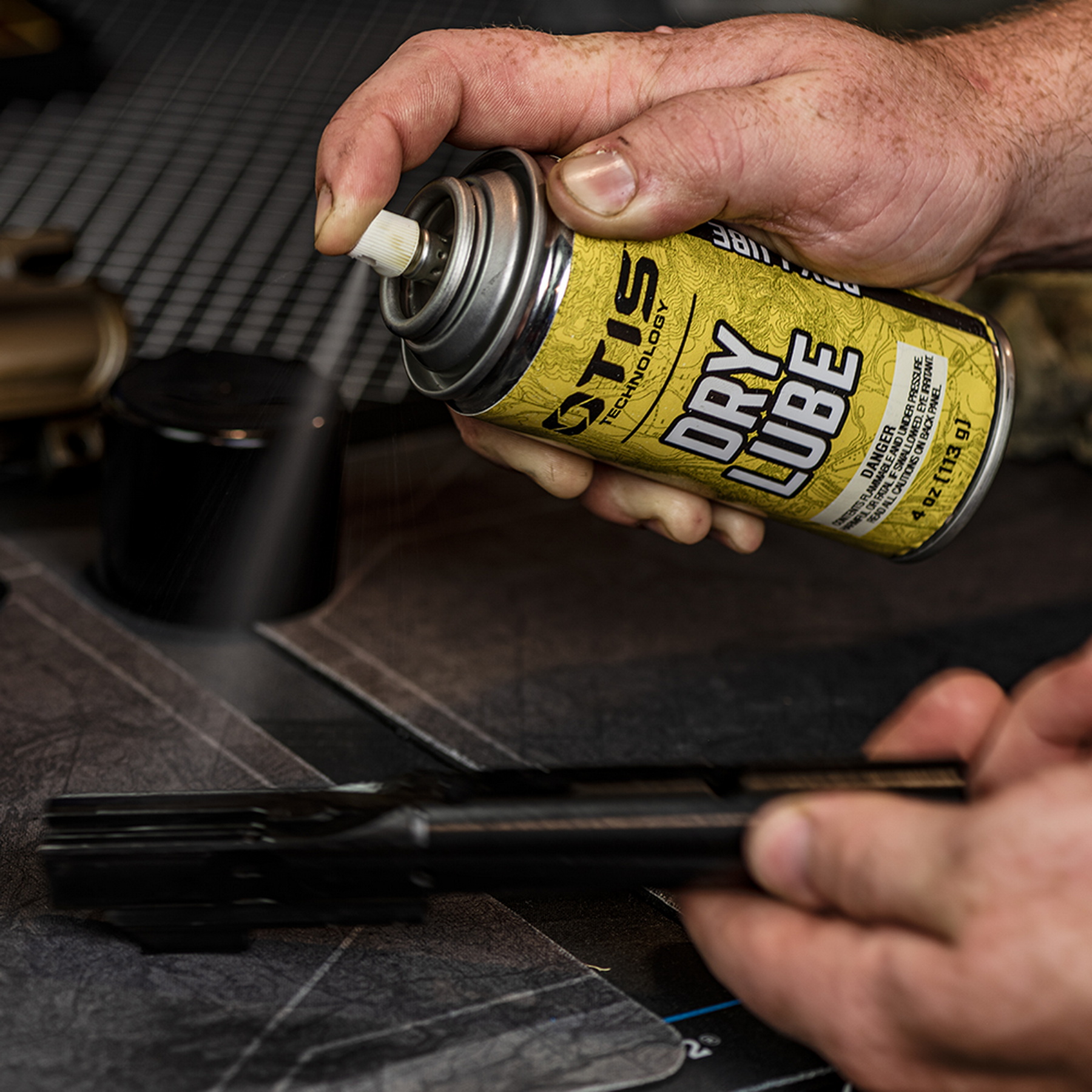
One of the most common mistakes is an excess of lubricant.
In reality, the metal should not literally "swim" in oil.
A thin, uniform film on the parts that rub against each other is sufficient.
An excess of lubricant, on the contrary, attracts dust, dirt, and unburnt powder residues.
Step 7. Assemble the Weapon and Check Its Operation
After completing the cleaning, it is necessary to:
-
perform assembly;
-
check the operation of moving mechanisms without using ammunition;
-
ensure that all assemblies work smoothly.

How to Clean a Rifle Correctly
Many beginners are interested in how to clean a rifle to avoid making mistakes.
The basic rules are quite simple:
-
take your time;
-
use only specialized products;
-
do not mix different types of lubricants unnecessarily;
-
clean even hard-to-reach places;
-
do not leave the weapon wet after washing or using cleaners.
Regular care takes significantly less time than removing stubborn, old carbon fouling.
How to Clean a Shotgun
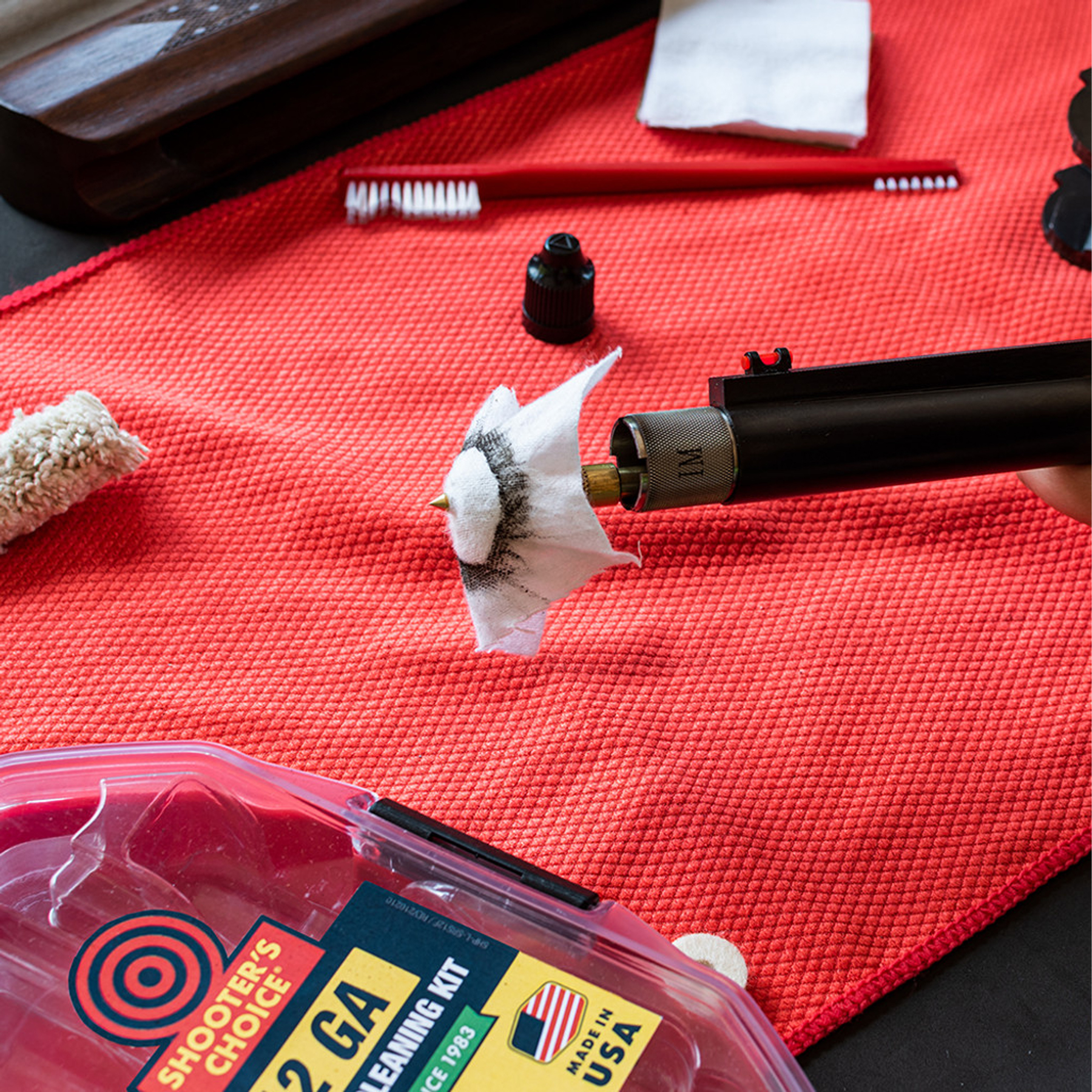
Although the principles of care are similar, how to clean a shotgun has its own peculiarities.
Special attention is paid to:
-
the bore of the barrel;
-
the chamber;
-
choke tubes (if present);
-
the trigger mechanism.
After shooting hunting cartridges, it is recommended not to delay cleaning, as combustion products can also contribute to the formation of corrosion.
Is It Necessary to Clean a Weapon in Field Conditions
The question often arises whether it is worth servicing a weapon directly while performing tasks.
The answer is clear: cleaning a weapon in combat conditions is necessary if the tactical situation allows it, especially after intensive shooting, or exposure to sand, dust, water, or dirt. In field conditions, minimal necessary cleaning and lubrication are usually performed, while full maintenance is carried out in a safe place.
At the same time, during combat operations, safety and mission accomplishment have priority, so maintenance is carried out only when it does not create additional risk.
Even a few minutes spent removing sand from the bolt carrier group can significantly reduce the likelihood of malfunctions during subsequent weapon operation.
Typical Mistakes of Beginners
Most often, weapon owners make the following mistakes:
-
delay cleaning for several days;
-
use household solvents instead of specialized products;
-
apply too much lubricant;
-
use metal objects to clean the barrel;
-
neglecting to clean the magazine and the bolt carrier group.
Proper weapon cleaning is not a complex procedure, but a regular habit.

Weapon care begins not with expensive accessories, but with discipline. Regular weapon cleaning, timely weapon maintenance after shooting, the use of quality products, and adherence to the manufacturer's recommendations help preserve the accuracy, reliability, and durability of mechanisms.
Whether you need to know how to clean a rifle or how to clean a shotgun, the main principle remains the same: cleaning must be thorough, safe, and regular. It is this approach that ensures the stable operation of the weapon and readiness for use at any moment.

Vitalii Buniak — article author
Military gear consultant
Before 2022, he worked as a sales assistant at the Panisher store. After the start of the full-scale invasion, he joined the Armed Forces of Ukraine, gaining real combat experience.
Thanks to his combat experience and deep knowledge of tactical gear, Vitalii serves as a personal expert of the Panisher online store in the fields of:
- Clothing and footwear
- Equipment
His recommendations help customers choose reliable and functional gear for any conditions.
FAQ. Answers to Frequently Asked Questions
1. Do I need to clean my weapon after every shooting session?
2. What gun cleaner is best to use?
3. Is it only a cleaning rod used to clean the bore of a rifle barrel?
4. Can I use a lot of lubricant?