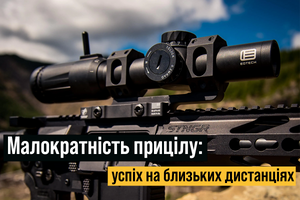
When it comes to low-power optics (LPVO – Low Power Variable Optic), most shooters eventually gravitate toward the same few models. The reason is simple: the market has long since separated the "workhorses" from those that only look good in advertisements.
In real-world use – at the range, during training, hunting, or field operations – three things are valued most: speed at 1x, glass quality, and mechanical reliability. This is why certain models remain at the top of recommendation lists for years. This guide from the Punisher military store will help break down the essential nuances.

Budget Segment: When You Need a "Working Tool"
One of the most popular options in the budget class remains the SIG Sauer Tango-MSR 1-6x24. This LPVO is often recommended as a first low-power scope for AR platforms or civilian carbines. Its main advantage is the price-to-feature ratio: illumination, a solid 1-6x magnification range, an included mount, and a fairly durable build.
Practical experience from shooters shows that the Tango-MSR is well-suited for distances up to 300-400 meters, performs quickly at close ranges, and requires no "learning curve" after using a red dot. However, there is a catch: at maximum magnification, the eyebox becomes less forgiving, especially compared to cheaper 1-8x or 1-10x models. This is why many experienced users still consider the classic 1-6x format optimal.
Mid-Tier Segment: Balance Between Price and Professional Grade
In this category, the Primary Arms SLx 1-6x24 is frequently mentioned. The SLx series has long been a favorite for those wanting a capable LPVO without jumping into the "premium" price bracket. The proprietary ACSS reticles are particularly prized for significantly simplifying long-range holdovers.
Shooters often note that Primary Arms offers excellent functionality for the money, and the optics themselves are forgiving of beginner mistakes. For this reason, it is a regular recommendation for budgets under $300-400.
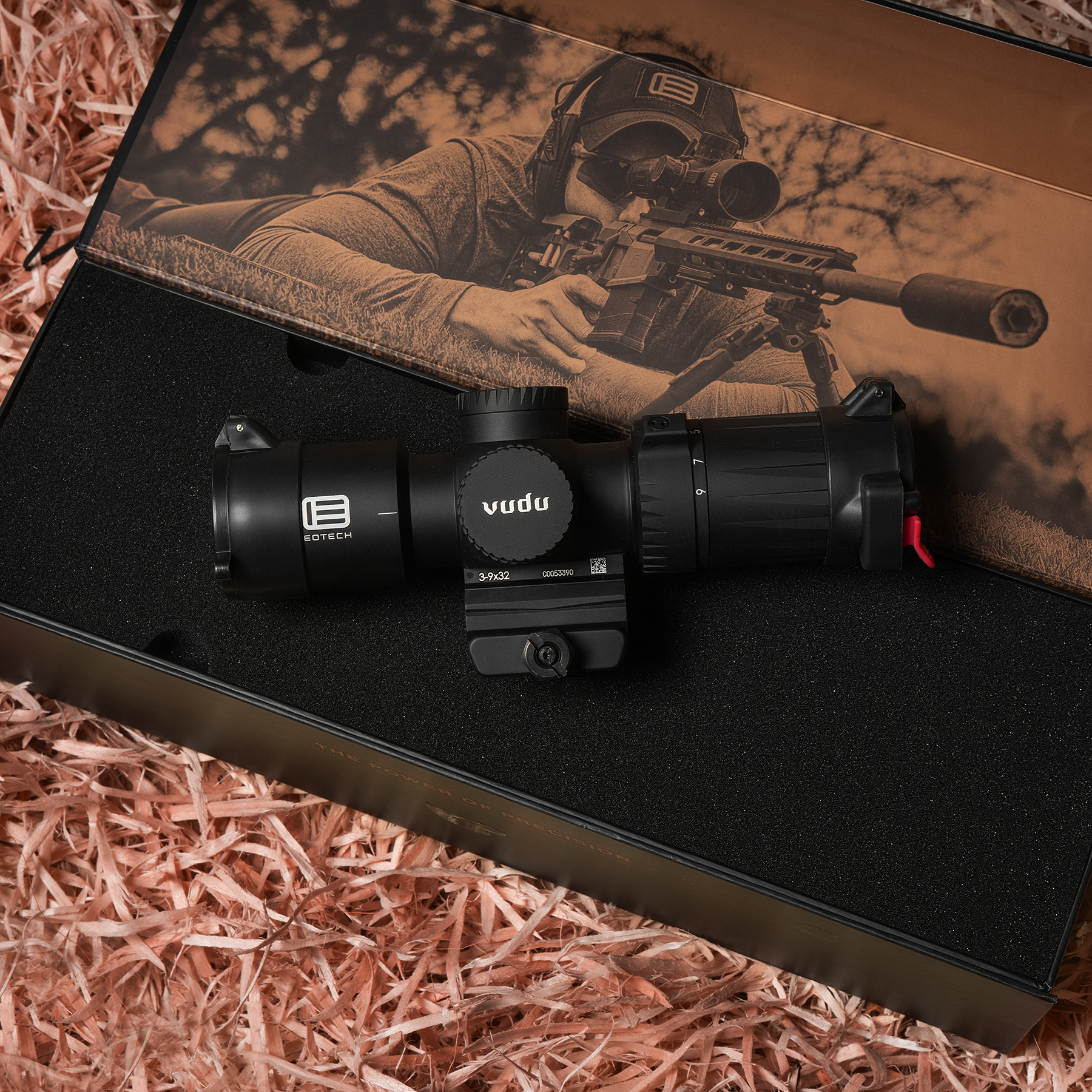
Another popular choice is the EOTECH Vudu 1-6x24. This marks a step up in glass quality, illumination, and overall user comfort. The Vudu is often chosen by shooters who demand maximum speed at close range but aren't ready to switch to heavier 1-10x systems.

Premium Segment: When You Demand the Maximum
Certain LPVO models have long held "gold standard" status. One such model is the Vortex Razor HD Gen II-E 1-6x24.
This scope is frequently cited as one of the best LPVOs for AR-15 platforms. The reasons are its incredibly clear glass, an extremely generous eyebox, and an almost "red dot-like" feel at 1x. Many shooters flatly state that after using a Razor, it’s hard to go back to cheaper optics.
While it is heavier and more expensive than budget alternatives, the Razor is the benchmark against which all other LPVOs are measured.
Comparison of Popular Model Specifications
|
Model |
Magnification |
Weight |
Key Features |
Best Use Case |
|
SIG Sauer Tango-MSR 1-6x24 |
1-6x |
525 g (18.5 oz) |
Affordable, includes mount |
First LPVO, training, general use |
|
Primary Arms SLx 1-6x24 |
1-6x |
varies by version |
ACSS reticles, great value |
Mid-range shooting |
|
EOTECH Vudu 1-6x24 |
1-6x |
505-570 g (17.8-20.1 oz) |
Premium glass, fast target acquisition |
Tactical, dynamic shooting |
|
Vortex Razor HD Gen II-E 1-6x24 |
1-6x |
610 g (21.5 oz) |
One of the best eyeboxes on the market |
Professional use |
|
Trijicon VCOG 1-8x28 |
1-8x |
heavy class |
Extreme durability |
Harsh field conditions |
Interestingly, the 1-6x format is still considered the "sweet spot", despite the popularity of 1-8x and 1-10x. The reason is simple: the higher the magnification in an LPVO, the harder it is to maintain a comfortable eyebox (exit pupil), brightness, and speed at the minimum setting. This is why many professional shooters stick with classic 1-6x systems.
A Bit More to Consider
Visible to the "naked eye"
Prism scopes are undergoing a true renaissance. Thanks to new ultralight models (weighing under 250-300g) with illumination and advanced reticles, they have become a real alternative to heavy LPVOs for those working primarily within 300 meters.
FFP or SFP?
This remains a top-tier question.
-
FFP (First Focal Plane): The reticle grows with magnification. Popular for those using reticle holdovers.
-
SFP (Second Focal Plane): The reticle stays the same size. Often preferred for low-power scopes because at 1x, the reticle remains large and intuitive, like a red dot.
In 2026, there has been a significant increase in requests for "Japanese glass" in the budget scope series, indicating higher user demands for image clarity.
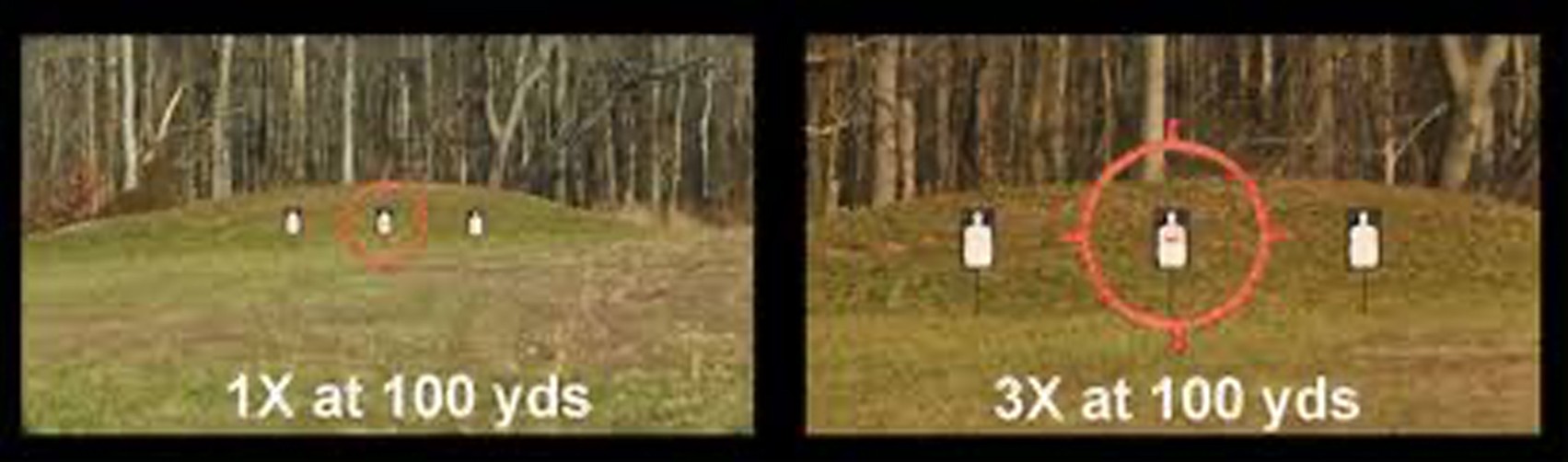
Expert Tips for Selection:
-
Light Transmission: At low magnification (1x), it is critical that the glass doesn't "yellow" and has no edge distortion ("fish-eye effect").
-
True Unity Power: Check if the scope truly provides 1x without magnification. This allows for shooting with both eyes open, just like a red dot.
-
System Weight: Remember to add the weight of the mount (monoblock) to the LPVO's weight, which together can total 700-900g. A "red dot + magnifier" system often proves to be lighter or more flexible.
What Should You Actually Choose?
If you need a versatile and affordable option – most look toward the SIG Tango-MSR or Primary Arms SLx.
If glass quality and speed are paramount – EOTECH Vudu.
If you want one of the best LPVOs without compromise – the Vortex Razor HD Gen II-E remains a top market favorite. By the way, there is a more economical option that retains useful properties – the Appow Optics 1-6x24 Razor HD Gen II-E Riflescope – a high-quality replica of the legend that is worth considering.

Choosing low-power optics in 2026 has become a real challenge due to the massive variety of technological solutions: from classic LPVOs to modern prism scopes and "red dot + magnifier" systems. Today, users aren't just looking for a scope; they want a versatile solution for distances from 5 to 500 meters.
The key takeaway is this: good optics are about more than just magnification. It's about how quickly you find the target, how comfortably you work with the scope on the move, and whether it begins to "irritate" you after several hours of use. In real-world conditions, these factors prove far more important than raw numbers on a spec sheet.

Vitalii Buniak — article author
Military gear consultant
Before 2022, he worked as a sales assistant at the Panisher store. After the start of the full-scale invasion, he joined the Armed Forces of Ukraine, gaining real combat experience.
Thanks to his combat experience and deep knowledge of tactical gear, Vitalii serves as a personal expert of the Panisher online store in the fields of:
- Clothing and footwear
- Equipment
His recommendations help customers choose reliable and functional gear for any conditions.
FAQ. Frequently Asked Questions
1. What is an LPVO scope?
2. What is the best LPVO magnification range?
3. LPVO or red dot with magnifier — which is better?
4. Which LPVO is best for beginners?