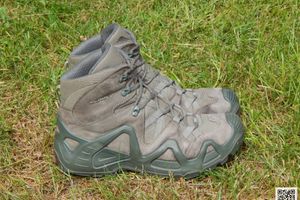
The choice between summer combat boots and demiseason combat boots is, inherently, like choosing between a light windbreaker and a warm jacket: both options are necessary, but each "works" within its own weather zone. In military or tactical applications, a mistake in selecting footwear quickly translates into discomfort, fatigue, and even a decrease in effectiveness.
Let us break it down simply, in human terms and without excessive theory, together with an experienced specialist from the Punisher military store, to see which summer combat boots to choose for the heat, and which demiseason combat boots will save you in damp and cool weather.


What Are Summer Combat Boots and When Do They Work Best
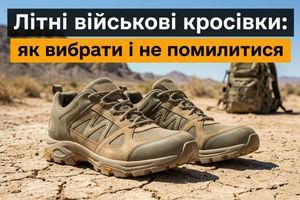
Tactical summer combat boots are created for environments where the primary enemy is not the cold, but overheating and moisture from sweat. This footwear features maximum breathability and dissipates heat rapidly. To put it simply, military summer combat boots are like sneakers with armor: lightweight yet protected. Their main characteristics include:
-
lightweight materials (leather + textiles or synthetics);
-
ventilation inserts;
-
a thinner lining;
-
fast drying.
That is why summer combat boots for the AFU are frequently chosen for active movement during the warm season or training sessions in hot weather.
The temperature inside regular footwear during active movement can be 5-10°C higher than the outside temperature. This is exactly why ventilation in summer models is critically important.

What Are Demiseason Combat Boots and How Do They Differ
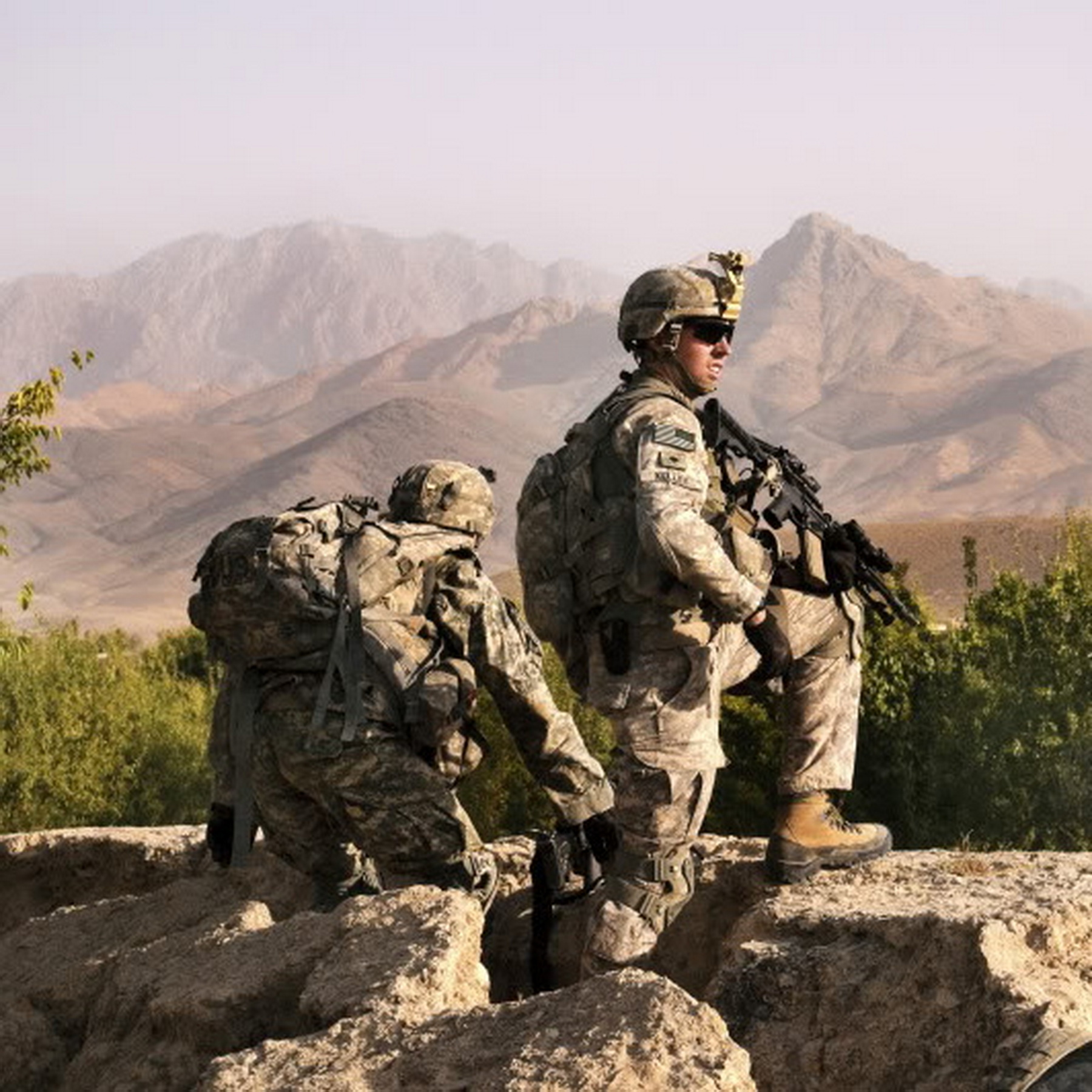
Demiseason combat boots are a versatile option for spring and autumn, when the weather "plays roulette": first rain, then wind, then sun.
Their primary objective is a balance between protection and comfort.
Key features include:
-
Denser materials.
-
Reinforced protection against moisture.
-
A thicker sole.
-
Better thermal insulation.
In such conditions, demiseason models work like a thermos for the feet: they prevent them from cooling down quickly, but do not cause overheating during active movement.
Demiseason footwear is frequently tested in "transitional conditions" – for instance, when the temperature can shift by 10-15°C over the course of a single day.
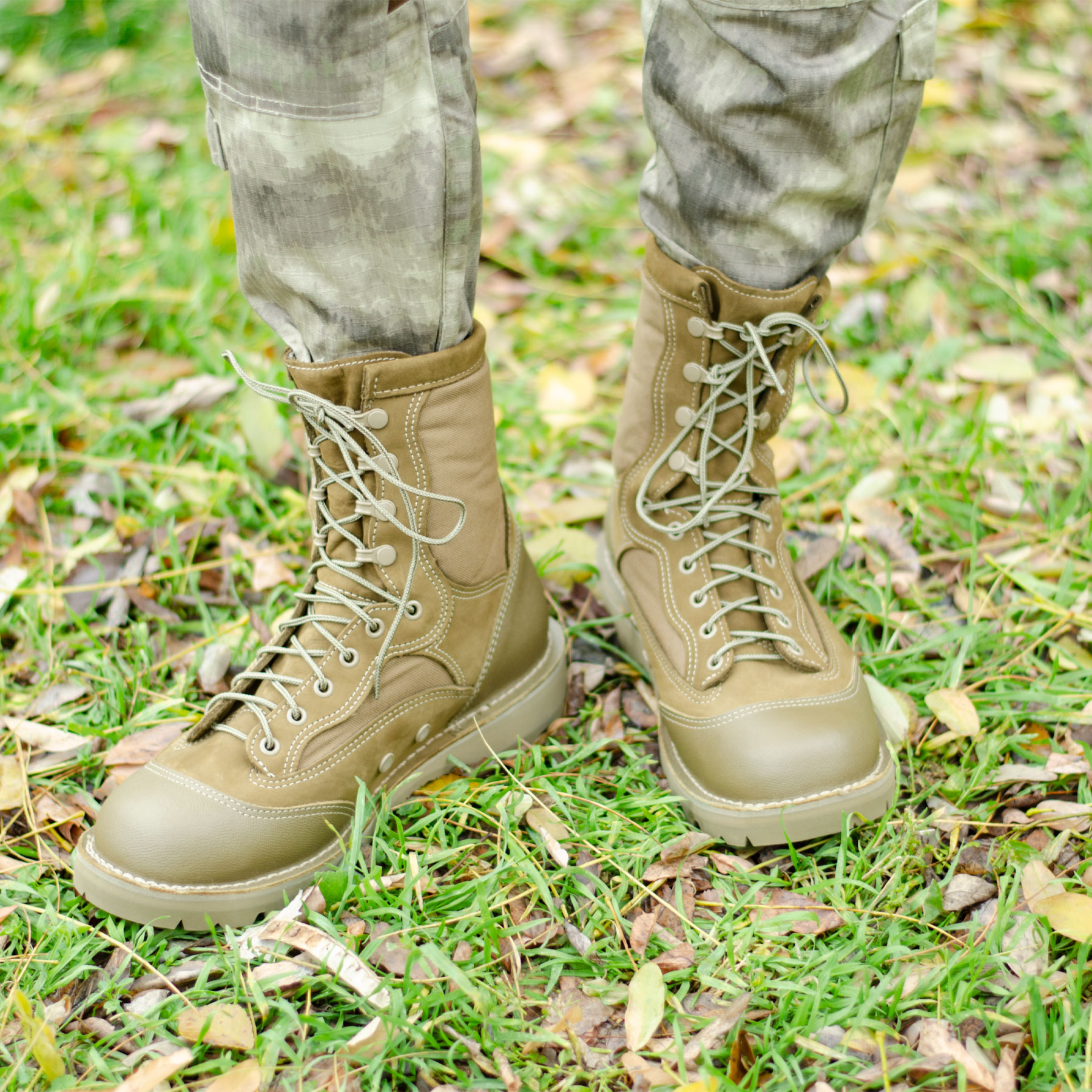
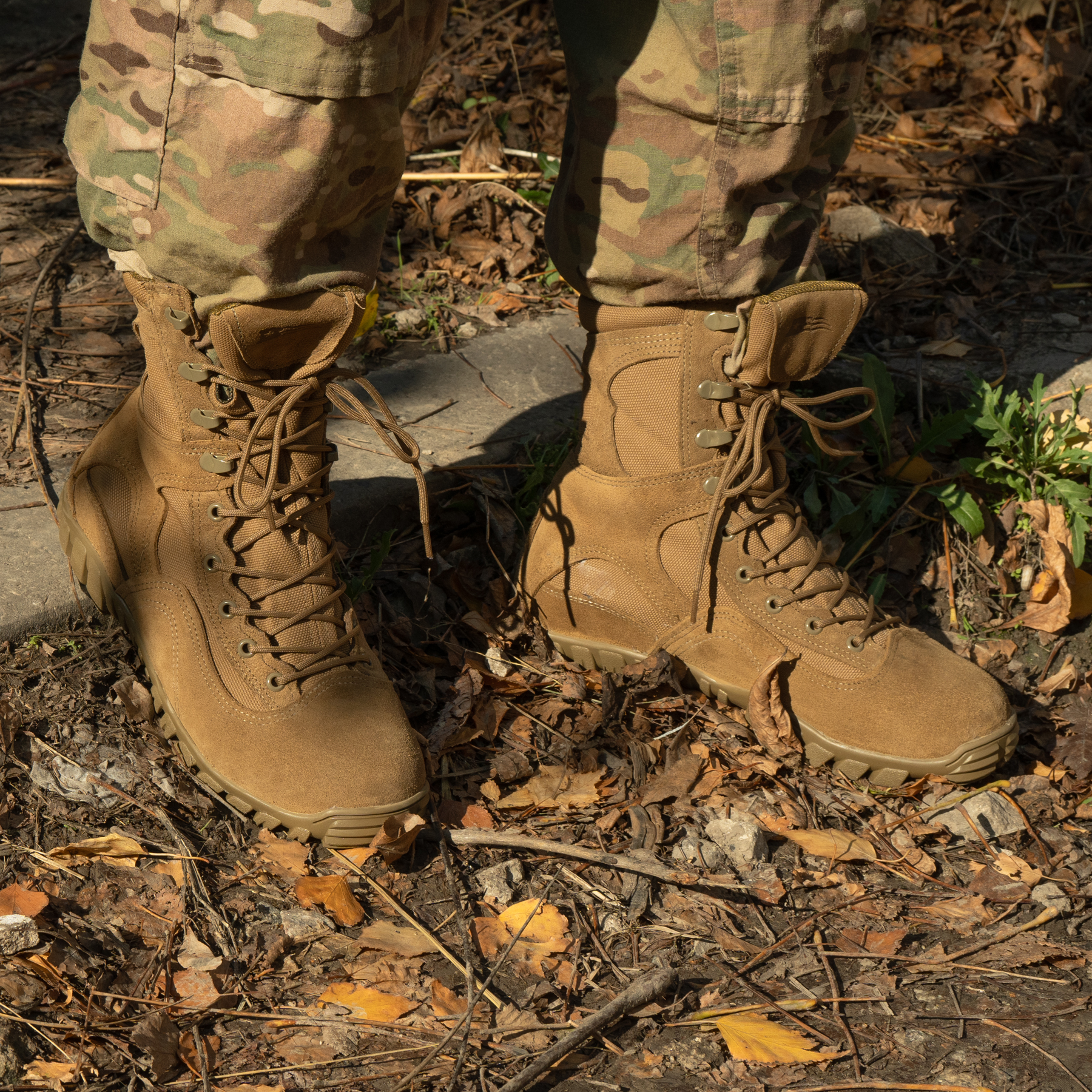
Summer Combat Boots vs Demiseason: The Key Difference
To avoid overcomplicating things, let us compare them directly:
Temperature of Use
Summer combat boots are well-suited for hot, dry, or warm weather. Meanwhile, demiseason combat boots are significantly better adapted to cool conditions, wind, and rain.
Ventilation
Summer combat boots are engineered with the maximum possible ventilation, whereas in demiseason boots, it is moderate.
Moisture Protection
Summer combat boots feature basic moisture protection, which allows one to feel easy and comfortable during light precipitation. In the case of demiseason combat boots, a reinforced level of protection is already provided, designed to counteract the whims of heavy rains and high air humidity.
Weight
Summer combat boots feature an exceptionally lightweight construction, which allows them to withstand significant loads and significantly increases foot protection without excessive weight or compromises in comfort. Demiseason boots have a heavier, yet sturdier construction that is capable of enduring more, but with less carrying comfort.
In other words, the difference between them is the same as the difference between a sports T-shirt and a membrane jacket.
Most complaints about "uncomfortable combat boots" are related not to the quality of the footwear, but to an incorrect selection of the season of use.
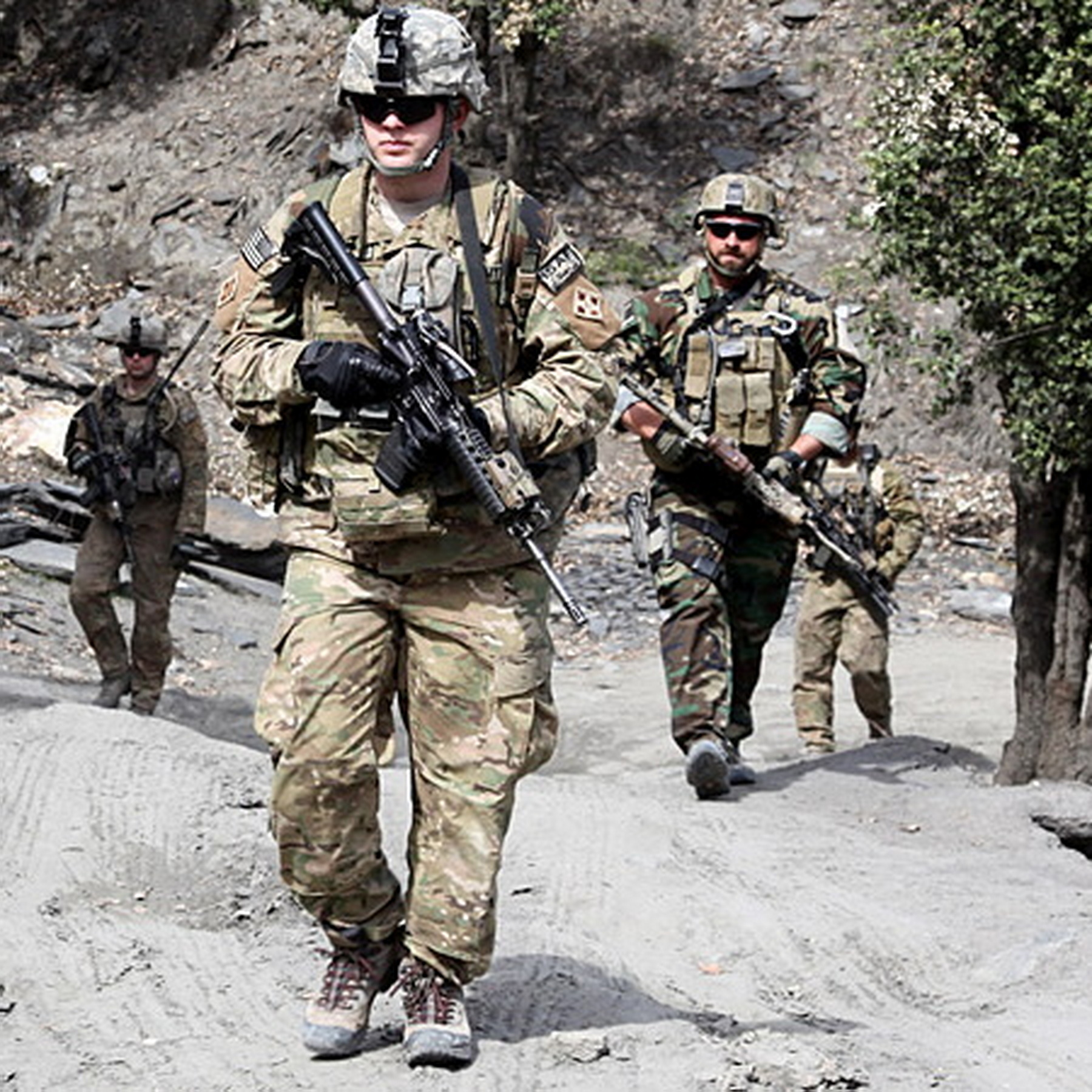

How to Correctly Choose Combat Boots for Yourself
Before purchasing, it is worth answering three questions:
-
In what conditions will you wear them?
-
heat and dryness – summer combat boots;
-
changing weather – demiseason combat boots.
-
-
How much time do you spend on the move?
The more activity there is – the more vital ventilation becomes.
-
Will there be contact with moisture?
If yes – a demiseason model always wins.
Typical Mistakes When Choosing
-
Buying "universal" combat boots for everything at once.
-
Ignoring ventilation.
-
Choosing winter models "just in case".
-
Incorrect sizing (especially for long-term wear).
In field conditions, even a difference of 1 size can alter the load on the foot enough to affect endurance during a march.
Practical Advice
-
for summer, choose models with mesh inserts;
-
for demiseason – membrane materials or water-repellent coatings;
-
always test footwear with the specific type of socks you intend to wear;
-
do not skimp on insoles – they heavily influence comfort.


The choice between summer combat boots and demiseason combat boots is not a matter of "better or worse". It is a matter of matching the conditions. Summer combat boots deliver lightness, ventilation, and comfort in the heat. Demiseason combat boots provide protection, versatility, and stability in changing weather. Therefore, the right choice of footwear is like the proper tuning of a tool: it should not get in the way, it must work together with you.

Igor Ivandikov — author of the article
Project Manager
Has over 2 years of experience working in the field of camping equipment. Well-versed in products for tourism, camping, and outdoor recreation.
Responsible for coordinating projects, monitoring deadlines, and ensuring the quality of task completion.
He enjoys football (soccer) and billiards, participates in competitions, and has won prizes on numerous occasions. He is a fan of active recreation.
FAQ: Answers to Frequently Asked Questions
1. How do summer combat boots for the AFU differ from demiseason ones?
2. Can I wear summer combat boots in autumn?
3. Are demiseason combat boots suitable for summer?
4. What is better for active movement?