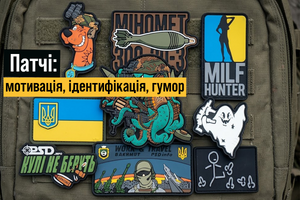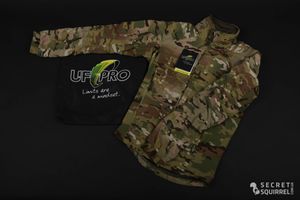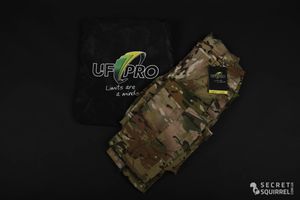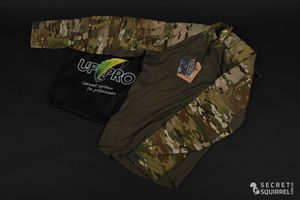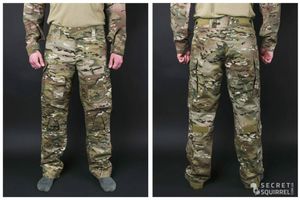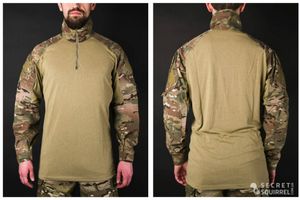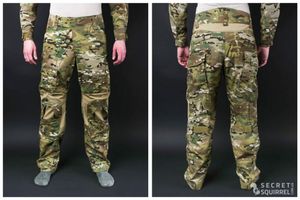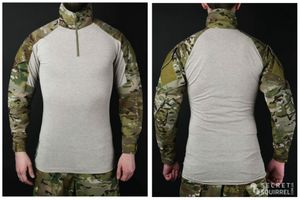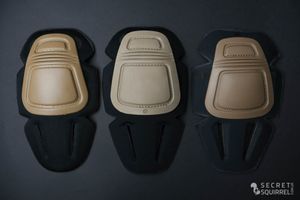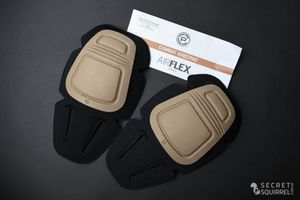


Clothing has long ceased to be just a means of protection from the weather. Today, it is a method of communication, self-expression, and even a key element of branding. Printed clothing has become an integral part of modern fashion – ranging from everyday T-shirts to corporate and tactical gear. In this article, I – as a specialist and consultant for the Punisher quality gear store, with years of experience using textiles and branded products – will explain what printed clothing is, how it evolved, which technologies are used today, and how to properly choose and care for it.
What is Printed Clothing?
Printed clothing refers to textile products that have images, inscriptions, logos, or decorative elements applied to their surface. Most commonly, these include:
-
Hoodies and sweatshirts;
-
Caps;
-
Sports and corporate wear;
-
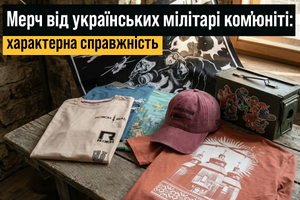
Tactical or themed merch.
In my practice working with clients, I often see that today people are not just looking for a garment, but for an opportunity to emphasize their individuality or create brand recognition.
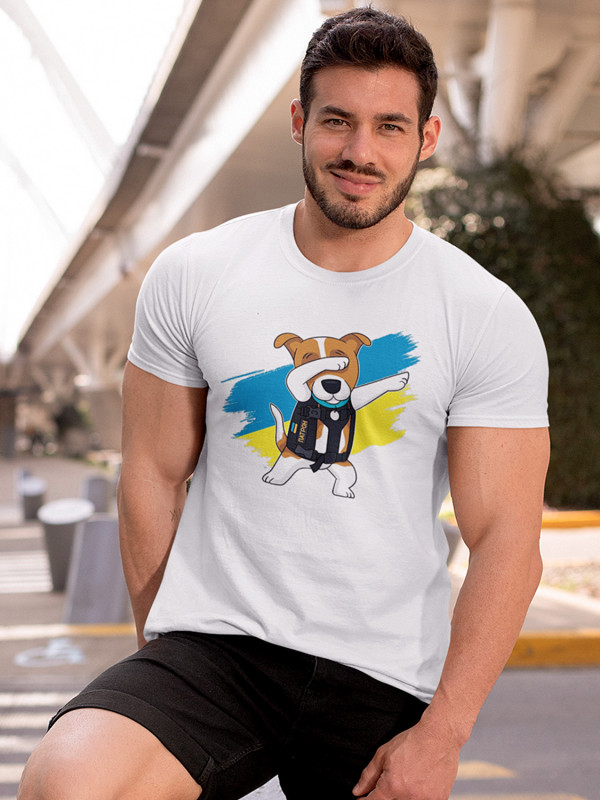
The first mass-produced printed T-shirts appeared in the 1940s in the USA, when manufacturers began applying images of movie characters and musical performers. This marked the beginning of merch culture.



History of Printing Development on Clothing
Technologies for applying images to fabric have been known since ancient times. In Japan and India, manual stencil printing was used, while in Europe, fabrics with ornaments were popular.
The real breakthrough occurred in the 20th century:
-
1930-1950 – Development of silk screen printing;
-
1980s – The emergence of heat transfer;
-
2000s – The arrival of digital DTG (Direct to Garment) printing;
-
Today – Full-color printing, durable inks, and eco-friendly technologies.
From my own experience, I can say: a modern custom print on a T-shirt can withstand dozens of washes without losing quality if the technology is chosen correctly.
Primary Printing Technologies for Clothing
Modern printed clothing is manufactured using various technologies, each with its own characteristics, applications, and advantages for the consumer. From a practical standpoint: the correctly chosen printing technology directly affects the durability of the product, wearing comfort, and the visual appearance of the print.
DTF Printing (Direct to Film)
One of the most popular modern technologies for applying prints to clothing. The image is first printed onto a special film and then transferred to the fabric using a heat press.
-
Advantages: High detail, vibrant colors, elasticity, and wash resistance. Suitable for cotton, polyester, and blended fabrics. Ideal for T-shirts, hoodies, and sweatshirts with complex designs.
-
Interesting fact: DTF is currently actively displacing classic heat transfer due to its versatility and print longevity.
DTG Printing (Direct to Garment)
A method of direct digital printing onto fabric, similar to how an inkjet printer works.
-
Advantages: The most natural look for the image, a soft feel to the print, and excellent reproduction of fine details and gradients. It works best on cotton products and is suitable for individual orders or small runs.
Silk Screen Printing (Serigraphy)
A classic technology used for mass production of printed clothing. Ink is applied through special stencils in layers.
-
Advantages: High wear resistance, saturated colors, and cost-effectiveness for large volumes. Often used for corporate clothing, merch, and serial production.
Sublimation Printing
A technology where ink, under the influence of temperature, turns into a gaseous state and penetrates the fibers of the fabric.
-
Advantages: The print does not crack, is imperceptible to the touch, and retains its brightness even after numerous washes. It is best suited for light-colored polyester products, making it widely used in sportswear, team uniforms, and promotional textiles.
Heat Transfer Printing
An image is applied to the material by heat-transferring a finished film or vinyl layer.
-
Advantages: Speed of production, ability to create lettering, numbers, and simple graphic elements. Often used for personalizing clothing and small orders.
In practice, the choice of technology depends on three factors: the type of fabric, the complexity of the design, and the conditions under which the product will be used. For universal everyday items, DTF is most often chosen; for sportswear – sublimation; and for large batches – screen printing. It is the correct combination of material and application method that determines how long printed clothing will maintain its appearance. Furthermore, no print will satisfy you for long if standard requirements for tailoring and garment quality are not met. Brightness accompanied by unesthetically protruding threads is a risk that can be entirely avoided at the start.
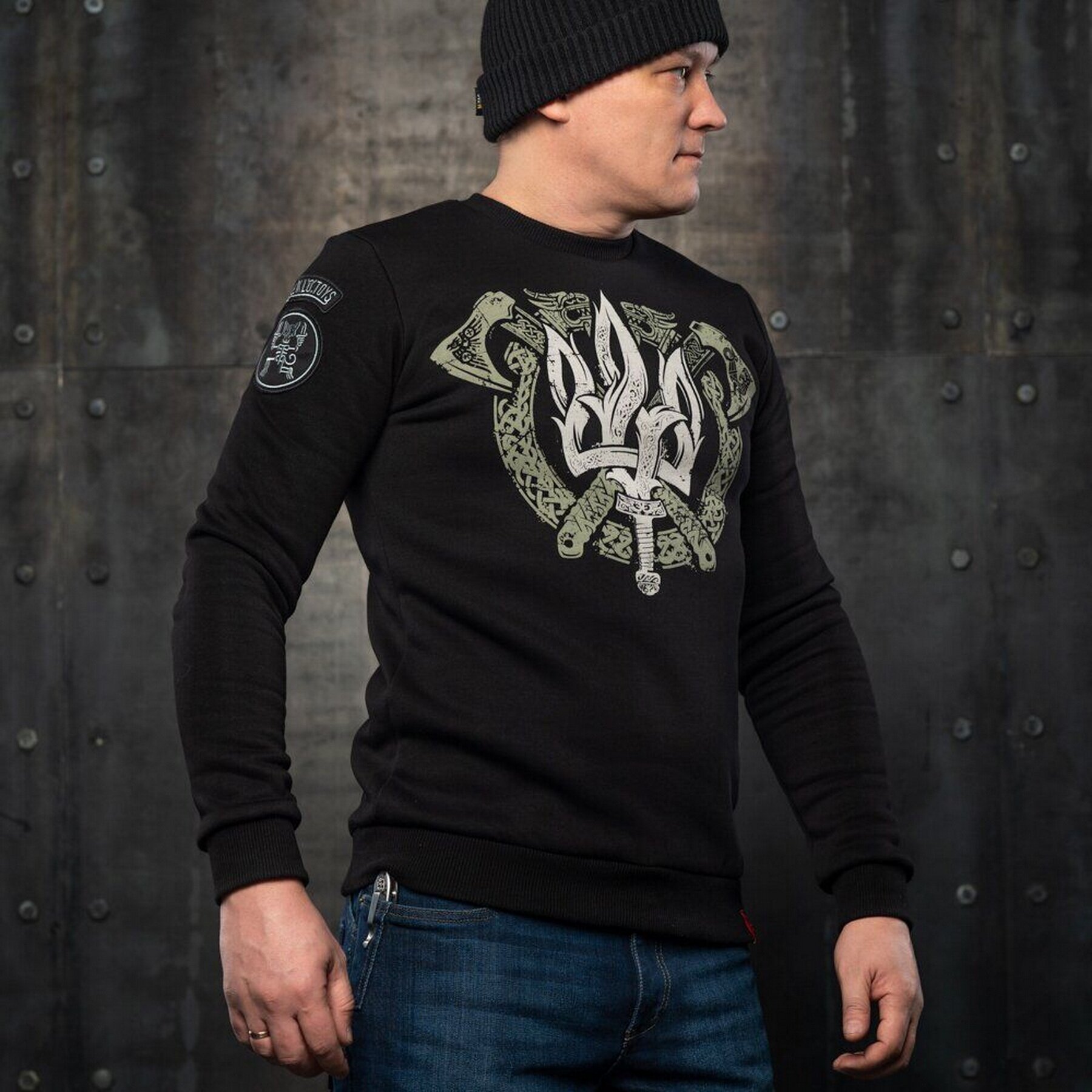

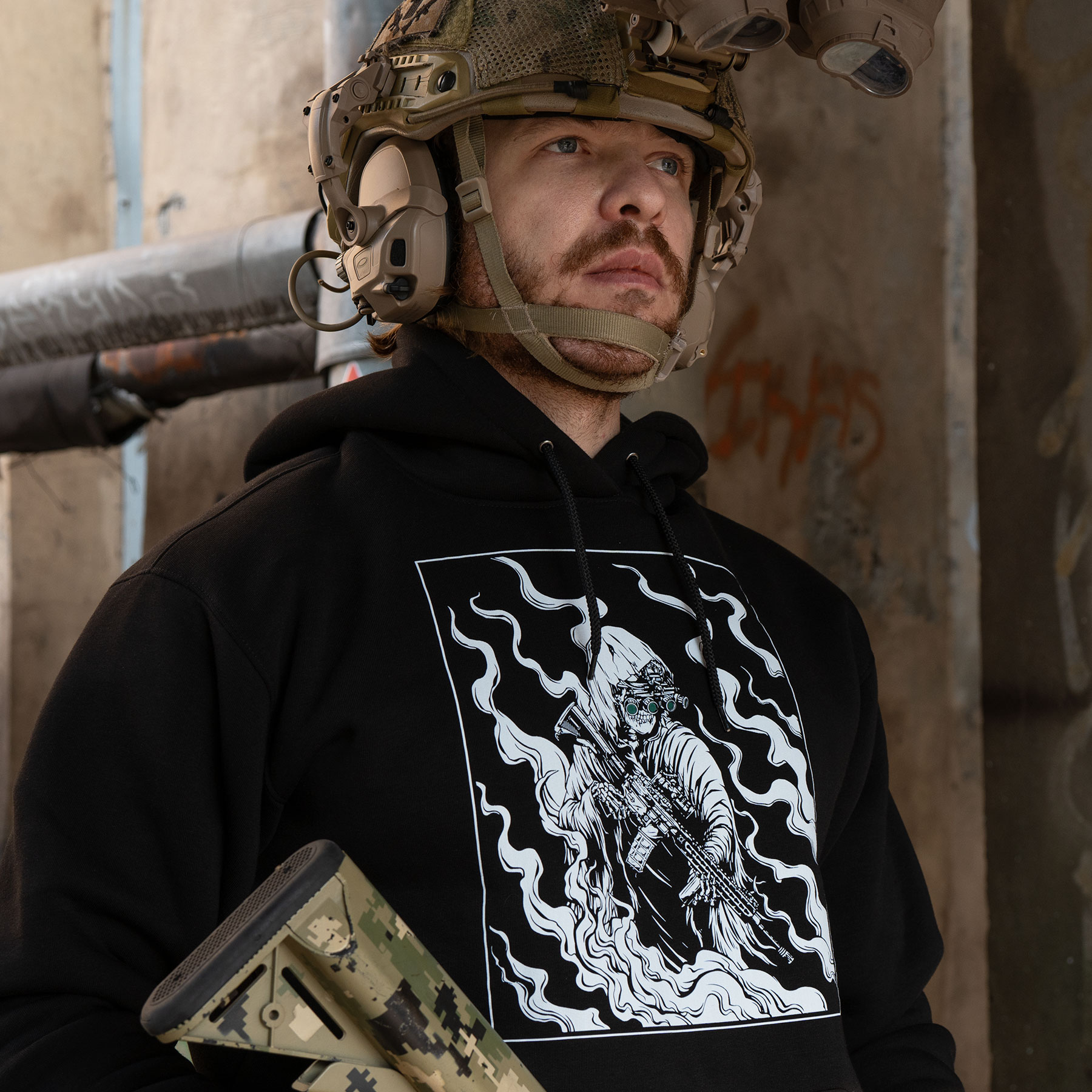

According to market statistics, over 60% of orders for branded clothing are for T-shirts and hoodies – they are the most accessible and effective tools for advertising and self-expression.
The Role of Printed Clothing in Daily Life
Today, printing on clothing is used in various fields:
-
Corporate style for companies;
-
Advertising campaigns and promotions;
-
Sports teams;
-
Themed communities;
-
Military and volunteer merch;
-
Individual style in everyday life.
In my practice, I often see that high-quality branded clothing increases recognition and fosters a sense of unity within a team.
How to Properly Select Printed Clothing
To ensure the item looks stylish and serves you for a long time:
-
Choose a design based on its purpose (casual, corporate, promotional);
-
Consider the fabric quality (100% cotton or blended materials);
-
The clothing should not be overloaded with excessively large or complex images;
-
For business – readable logos and contrasting colors are recommended.


How to Care for Printed Clothing
Recommendations:
-
Wash at temperatures up to 30-40°C;
-
Turn the garment inside out before washing;
-
Do not use aggressive bleaches;
-
Iron from the inside out or through a protective cloth;
-
Store in a dry place without heavy folding.
The most common cause of print damage is not the quality of the print itself, but washing at high temperatures or ironing without protection. Additionally, the desire to save money – resulting in the purchase of products from "basement" (unlicensed) brands – automatically deprives the buyer of any guarantees regarding the garment's lifespan.
Leading Global and Ukrainian Manufacturers
Here are just a few global brands that actively utilize prints:
-
Rothco
-
Helikon-Tex
-
Doberman's Aggressive
-
Nine Line Apparel
In Ukraine, a segment of vibrant manufacturers is also actively developing, ready to compete on equal terms with global brands regarding quality:
-
M-Tac
-
Peklo.Toys
-
Kramatan
-
Dobryak.Prod
-
Dead Souls Group
-
Schutzen
As someone who works with printed products and sees customer reactions, I can say: today’s buyer chooses not just a high-quality item, but an emotion, a meaning, and uniqueness.
After 2022, the demand for patriotic printed T-shirts in Ukraine increased several times over, forming a distinct market segment.

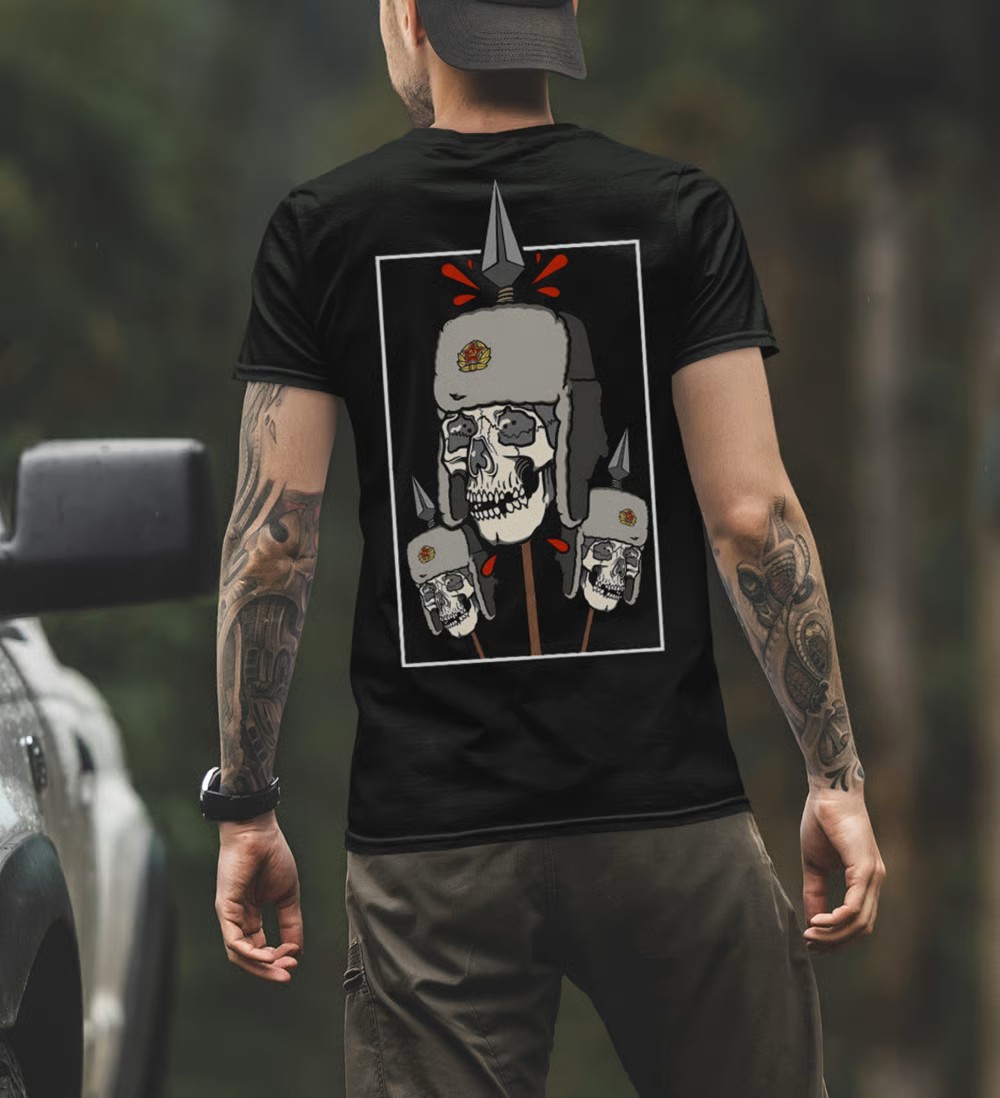


Key Trends and Future Outlook
1. From "Logomania" to Author Graphics
Users are looking for more than just famous brands. Currently, the trend is graphic prints containing complex illustrations, surrealism, or digital aesthetics.
2. Patriotism 2.0
While in 2022-2023 people looked for a "T-shirt with a flag," in 2026, requests for hidden meanings are popular:
-
Quotes from Ukrainian classics in a modern style;
-
Depictions of cities (not just Kyiv, but local brands like "Zaporizhzhia," "Lviv," etc.);
-
Minimalist embroidery-style prints.
3. Corporate Merch and the Eco-Trend
The request for "bulk clothing printing" is growing due to businesses restoring or striving to create their own corporate culture. Additionally, an "eco-printing" segment has emerged – using water-based inks and organic cotton.
4. Trends for the Coming Years:
-
Personalization (print-on-demand);
-
Ecological inks and organic fabrics;
-
Integration of QR codes and digital elements;
-
Small-batch production;
-
Rapid online printing with delivery.
Printed clothing today is far more than just a fashionable wardrobe element. It is a tool for self-expression, a means of communication, an effective branding channel, and an integral part of modern culture. Thanks to the advancement of garment printing technologies, users receive not only a vibrant design but also high wear resistance, wearing comfort, and a long-lasting aesthetic appearance of the product.
From practical experience, I can say that the key to satisfaction with a purchase lies in the combination of three factors. First, high-quality base apparel. Second, a correctly selected printing technology tailored to the specific material and intended conditions of use. And third, a reliable manufacturer who maintains control over the entire process – from sewing to the final print.
The printed clothing market continues to evolve dynamically: there is an increasing demand for personalization, corporate merch, patriotic and themed designs, eco-friendly materials, and cutting-edge digital printing technologies. This means that the opportunities for creating a unique style or building a recognizable brand are becoming broader, more accessible, and technologically superior.
By choosing high-quality printed clothing today, you are investing not just in a garment, but in an image, an idea, and an emotion that will work for you every day. That is why it is essential to prioritize proven manufacturers, thoughtful designs, and technologies that guarantee durability and comfort in use.

Igor Ivandikov — author of the article
Project Manager
Has over 2 years of experience working in the field of camping equipment. Well-versed in products for tourism, camping, and outdoor recreation.
Responsible for coordinating projects, monitoring deadlines, and ensuring the quality of task completion.
He enjoys football (soccer) and billiards, participates in competitions, and has won prizes on numerous occasions. He is a fan of active recreation.
FAQ. Answers to Frequently Asked Questions
1. What is printed clothing?
2. Which type of printing on clothing is the most durable?
3. How long does a print stay on a T-shirt?
4. How should I wash printed T-shirts?