Camouflage uniforms may look stylish, but their main function is to reduce the likelihood of detection and increase the chances of success in an operation or survival in the field. The specific criteria for effectiveness depend on the task: military operations, hunting, or other tactical activities have different “hostile” perception systems (humans, animals, optics, thermal imagers), and therefore, the approach to camouflage must be different.

The essence of military camouflage
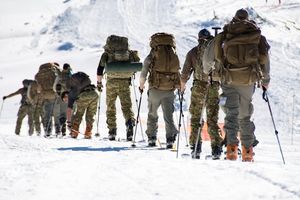
The purpose of military camouflage is to make it difficult or delay the recognition of a person as a threat. To do this, it is not enough to simply “choose a color”: it is necessary to disrupt the ability of the eye and brain to distinguish contours, recognize shapes, and assess movement. A high-quality pattern makes the wearer less noticeable when stationary and at the same time disrupts the silhouette when in motion.
When developing a pattern, specialists are brought in to test the effectiveness of macro- and micro-patterns at different distances, study the use of fractal elements and color gradients, and conduct field tests in different locations. This approach yields a more versatile result, which is useful when it is not possible to change equipment frequently.
Materials are also critically important: they must be durable, fade-resistant, wear-resistant, and, if possible, silent. Special attention is paid to treatments that reduce visibility in the near-infrared range (NIR/NIRR) – these technologies help in night operations, but their effectiveness depends on the dyeing method, fiber type, and condition of the fabric after use.

Mandatory requirements for military camouflage
– Macro and micro patterns. Large spots hide the silhouette from a distance; fine structures work at close range. Together, they provide multi-scale camouflage capabilities.
– Color and gradients. The choice of colors depends on the terrain (forest, steppe, desert, snow, urban buildings). Not only are the tones themselves important, but also how they smoothly transition into each other – gradients reduce the sharpness of the “body-background” boundaries.
– Fractal elements. Natural environments exhibit structures at various scales; fractal/multilayered patterns mimic this complexity, thereby increasing the versatility of camouflage.
– Material durability. Treatments and printing methods must withstand sun, dirt, washing, and salt moisture; otherwise, the camouflage properties will quickly deteriorate.
– NIR compatibility. Modern tactical fabrics often feature NIR-compatible dyes, which reduce visibility to night vision devices. However, the NIR effect deteriorates with wear and tear and contamination.
– Noise discipline. The silence of the fabric and disciplined movements are important but often underestimated factors in camouflage during close interaction.

Why hunting and military camouflage differ
Target observer. Hunting camouflage is geared toward animals, which have different color sensitivity and stronger olfactory/motor detectors; military camouflage is geared toward the human eye and technical sensors.
Design. Photorealistic prints (branches, leaves) are often used for hunting, which works when the wearer is motionless. Military patterns, on the other hand, aim to disrupt the silhouette and be versatile in motion and against different backgrounds.
Tactics. Hunters usually rely on concealed immobility and positional camouflage; the military relies on maneuverability, adaptability, and a combination of visual and spectral camouflage.

The highest level of camouflage: infrared and thermal
Visual patterns are important, but modern sensors (thermal imagers, NIR devices) require additional solutions. Some materials and designs reduce the thermal signature: thermal insulation layers, heat-dissipating panels, and special coatings. However, it should be clearly emphasized that complete concealment from a thermal imager is practically unattainable; it is only possible to reduce the contrast with the background and make detection difficult under certain conditions.
A typical set of measures includes:
– multi-layering to regulate heat exchange;
– heat exchange/heat dissipation inserts in areas with the highest emission (head, chest, back);
– Use of special cloaks or coverings that alter the thermal pattern
– Tactical measures (concealing heat sources, using cover)
Effectiveness depends on temperature contrast, sensor quality, and specific conditions (weather, duration of observation).

Concamo: confusion as a tactical advantage
The confusion camouflage (sometimes CONCAMO) approach does not seek to accurately mimic a specific background. Instead, it creates visual “overload” – complex, multi-layered patterns that slow down the observer's ability to classify an object. Field tests show that in certain mixed environments, such patterns can be advantageous, especially when the observer is under stress or using peripheral vision. However, the result is always contextual and depends on the specific situation.

Useful practical tips
1. Check NIR compliance when purchasing: the manufacturer must indicate the fabric's compatibility with night vision devices.
2. Assess the durability of the print: request information about the printing/dyeing method and washability.
3. Avoid overly “smooth” synthetic surfaces – they can glare in the sun and stand out against the background.
4. Match clothing to tactics: cover, movement discipline, and noise masking are often more important than the pattern itself.
5. Do not read this text as instructions for avoiding legal control. Technical advice is intended to improve safety and effectiveness in legitimate scenarios (military service, rescue operations, hunting).

Specific patterns
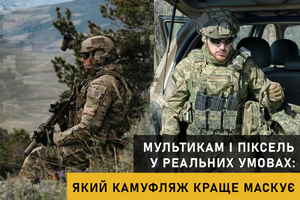
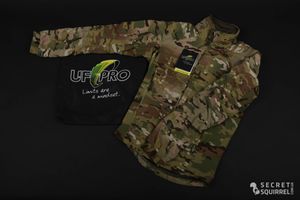
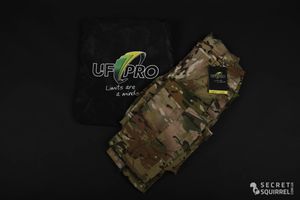
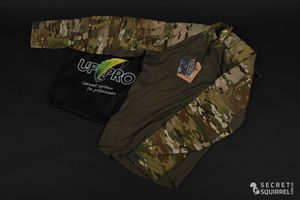
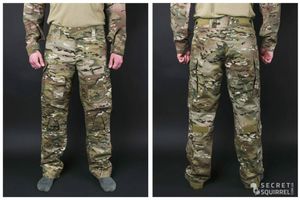
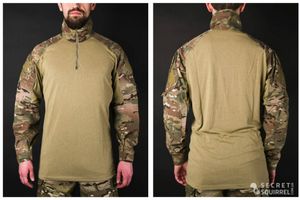
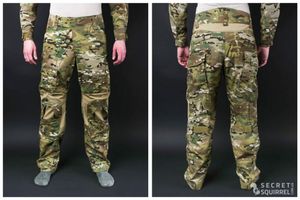
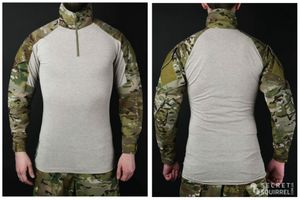
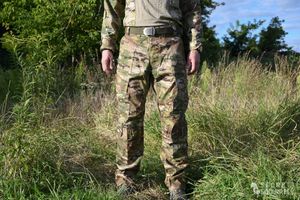
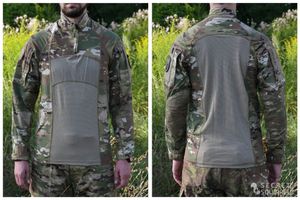
– MultiCam (Crye Precision) – a multi-scale universal pattern for various eco-regions; works well in mixed landscapes and is often used as a “universal” option.
– MTP – Multi Terrain Pattern (UK) – British version of universal camouflage, optimized for European and temperate conditions; used in military uniforms.
– A-TACS (series: AU, FG, LE, etc.) – disruptive patterns with several modifications for different environments (forest, urban, desert); provides good silhouette breakdown in motion.
– PenCott/digital “fractal” patterns – multi-scale solutions that mimic natural textures; improve camouflage at different distances.
– CONCAMO/Confusion Camouflage (ConCamo GreenZone, etc.) – patterns that rely on “confusing” perception; effective in mixed environments and with peripheral vision.

Conclusion
The secret to effective camouflage is a combination of the right pattern, suitable materials, and tactics. Modern developments enable the minimization of both visible and infrared/thermal visibility; however, no single approach provides a guarantee of invisibility. Therefore, the best results are achieved through a combination of design, multi-layered materials, and combat/hunting discipline.