The human knee can be compared to the hinges of an armored personnel carrier. As long as they function properly, we hardly pay any attention to them. But if one mechanism fails, the entire system begins to perform significantly worse.
In military affairs, tourism, rescue operations, or active sports, knees are constantly subjected to severe stress. Concrete, asphalt, rocks, tree roots, building debris, and metallic structures – all of these test our joints' strength daily. That is why properly selected tactical knee pads have long ceased to be just an accessory and have become an essential tool for protection and maintaining performance.
In this article, along with a guide from the Punisher military store, we will take an in-depth look at how to select tactical knee pads, what varieties exist, how models differ for various categories of users, and how to determine the correct size for maximum comfort during use.


Why Knee Protection Is So Important
During combat missions, patrolling, or hiking, a person may drop to one knee dozens or even hundreds of times a day. From personal experience using various gear setups, one can say that you only truly begin to appreciate high-quality military knee pads after a few hours of working on hard soil or concrete.
Even a minor impact to the kneecap can temporarily limit the mobility of a soldier or a first responder. Furthermore, prolonged loads without proper protection gradually lead to chronic discomfort and joint strain. This is why knee pads for military personnel are included in the standard gear issue of many armies worldwide.
Who Needs Tactical Knee Pads
It is often mistakenly assumed that military tactical knee pads are required exclusively by soldiers. In reality, their scope of application is much wider.
Military Personnel and AFU Soldiers
Knee pads for the AFU help protect the knees during:
-
firing from a kneeling position;
-
moving through trenches;
-
assault operations;
-
operating around cover;
-
fortifying positions;
-
evacuating casualties.
Police and Law Enforcement Structures
Special units frequently operate in urban settings, where they have to make contact with concrete, metal, and asphalt.
Rescue Workers
Debris fields left by shelling or natural disasters present a massive volume of sharp surfaces, broken glass, and rebar.
Hikers and Travelers
When navigating challenging routes, knee pads reduce fatigue and the risk of injury on rocky terrain sections.
Airsoft Players and Motorcyclists (Cyclists, Rollers, Skiers, Skateboarders, and Snowboarders)
Knee protection helps mitigate the consequences of falls and impacts against the road surface.
Activists and Volunteers
When clearing debris, working on construction sites, or participating in humanitarian missions, knees are often subjected to the same stresses as in field conditions.
The prototypes of modern military knee pads began to see active use back in the second half of the 20th century. However, they gained true popularity following the widespread increase in urban combat operations, where contact with hard surfaces became virtually constant.


Types of Knee Pads: Which Style Is Right for You
The modern market offers several core designs.
External Knee Pads
The classic variant utilizing retaining straps.
-
Advantages: Fast to put on, easily replaceable, compatible with different clothing types, and provide a high level of protection.
-
Disadvantages: Can slip down during prolonged movement; occasionally causes chafing in the popliteal (back of the knee) area.
Integrated Knee Pads
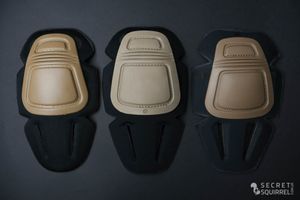
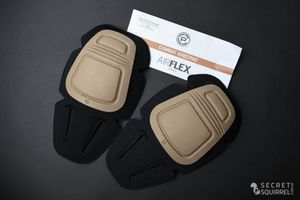
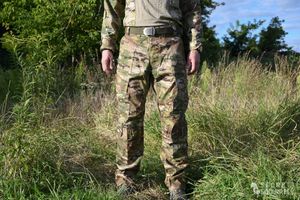
Installed directly into specialized pockets built into combat pants.
-
Advantages: Do not slide down, do not interfere with running, distribute weight and load evenly. This format is currently being actively utilized by leading tactical gear manufacturers.
Soft Cushioning Models
Best suited for hikers, hunters, and individuals who spend long periods working on their knees. The primary emphasis here is placed on comfort.
Rigid Impact-Resistant Models
Equipped with a plastic or composite outer shell. These are better suited for military personnel, law enforcement, rescue workers, and motorcyclists.
Integrated knee protection systems are increasingly favored in modern NATO armies, as they cause fewer obstructions while running, jumping, or moving through narrow passageways.


How to Select a Knee Pad by Fastening Type
Comfort depends not only on the protective cap but also on the securing system. Here are the primary options:
Single strap
Suitable for lightweight models and short-term use.
Two straps
The most common variant provides optimal stability.
Elastic systems
Allow movement without restrictions and adapt better to the contours of the leg.
Integrated installation
The most reliable method of fixation, requiring no straps at all.
How to Correctly Determine Your Knee Pad Size
One of the most frequent questions from buyers is how to determine their knee pad size. A poorly sized model can slide down, restrict blood circulation, chafe, and hinder movement. To choose correctly, you must:
-
Measure the circumference of your leg approximately 10-15 cm above the center of the knee.
-
Compare this measurement with the manufacturer's sizing chart.
It is important to remember that knee pad sizes can vary depending on the brand and construction; there is no universal industry standard. From practical experience, a simple tip can be offered: if the model is to be used over winter clothing or insulated trousers, you should account for the extra bulk.
Most instances of knee pads sliding down are related not to poor product quality, but to an incorrectly selected size or overly loose strap adjustment.
Materials: What to Look For
If you are wondering how to select a knee pad for heavy-duty use, carefully evaluate the materials and choose options that use the components listed below.
External Shell
TPU, polymer composites, or high-impact plastic are most commonly used. They protect against impacts and abrasion.
Shock-Absorbing Layer
Can be made of EVA foam, polyurethane, or specialized dampening materials. This element is solely responsible for comfort.
Fabric Base
For military models, Cordura, high-density nylon, or reinforced synthetic fabrics have proven to perform the best.
How to Choose Tactical Knee Pads for Different Environments
For Combat Operations
Military knee pads with a rigid outer shell and a secure fastening system are optimal.
For the Shooting Range
Lighter models featuring good shock absorption are highly suitable.
For Hiking and Tourism
Weight and comfort are more critical than maximum heavy-duty protection.
For Rescue Workers
Models with enhanced resistance to punctures and abrasion should be chosen.
For Motorcyclists
Impact-resistant designs with rigid caps are best utilized.


Quality tactical knee pads are not a minor accessory, but a full-fledged protective element that helps preserve your mobility, operational capacity, and knee health in demanding conditions.
When selecting knee pads for military use, consider not only the price tag but also the intended application, design, materials, fastening system, and proper sizing. Once you understand how to select tactical knee pads specifically tailored to your mission requirements, your gear will work for you, rather than against you.

Vitalii Buniak — article author
Military gear consultant
Before 2022, he worked as a sales assistant at the Panisher store. After the start of the full-scale invasion, he joined the Armed Forces of Ukraine, gaining real combat experience.
Thanks to his combat experience and deep knowledge of tactical gear, Vitalii serves as a personal expert of the Panisher online store in the fields of:
- Clothing and footwear
- Equipment
His recommendations help customers choose reliable and functional gear for any conditions.
FAQ: Answers to Frequently Asked Questions
1. Which knee pads are best suited for the AFU?
2. How do I determine my knee pad size?
3. Are tactical knee pads suitable for hikers?
4. What is the difference between military tactical knee pads and construction knee pads?