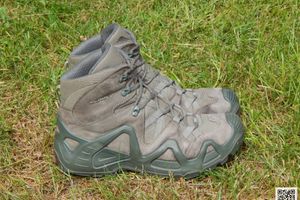

Buying shoes without fitting them on seemed like a risky adventure just a few years ago. Today, however, online stores have become the norm, and many people regularly order boots, sneakers, or trekking shoes remotely.
In fact, buying shoes without trying them on is entirely possible – but only with the right preparation. It is important to understand the features of sizing systems, the differences between brands, and a few simple selection principles.
In this article, together with the Punisher military store, we will explore when buying shoes online is justified, the risks involved, and how to minimize the risk of a mistake.
When Buying Shoes Without Fitting Makes Sense
Ordering shoes online is particularly convenient in several situations. For example, when you already know the brand and its last (the shoe's shape). Most manufacturers of trekking and outdoor footwear maintain a fairly stable sizing chart.
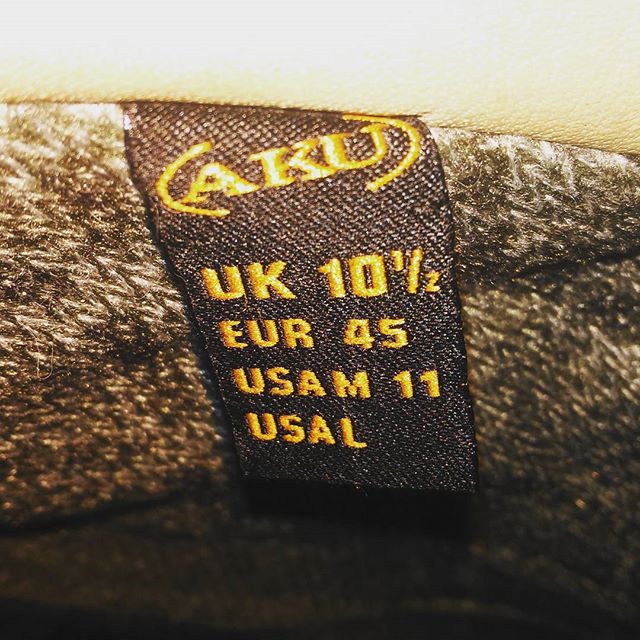
For instance, across many Italian brands – such as AKU, SCARPA, and La Sportiva – sizes usually correspond to one another. If you wear a certain size from these manufacturers, there is a high probability it will also fit another Italian brand.
However, this specifically applies to the length of the foot. The width of the last may differ. For example, ASOLO lasts are traditionally considered quite narrow.
From personal experience: If I know a certain size fits well in SCARPA, I can almost always take the same size in AKU. But I still check the size chart before purchasing.

Features of Shoes from Different Manufacturers
A crucial role is played not only by size but also by the geometry of the last.
-
German brands often make shoes with a wider fit. For example, HANWAG products usually offer more toe room, which is especially comfortable during long hikes.
-
American manufacturers have gone even further. They commonly use a system with several width options: standard, wide, and narrow. This is why selecting American footwear can sometimes be even more precise.
-
On the other hand, with lesser-known or local manufacturers, sizes can differ significantly. Here, buying without a fitting can truly turn into a lottery.
How Different Sizing Systems Work
Several main systems for designating shoe sizes are used worldwide:
-
European (EUR): The most common. It usually covers a range from approximately size 35 to 49.
-
British (UK): Uses a different scale but also includes half-sizes.
-
American (US): Similar to the British system, but it is important to remember one detail: the American size is usually about half a size larger than the British one.
-
Mondopoint: A system where the size is determined directly by the length of the foot in centimeters.
From practice, I can say that the least confusion arises with Mondopoint, as it is based on the actual measurement of the foot.

How to Correctly Determine Your Size
The easiest way to select a new pair of shoes is to rely on already tested models. If you have comfortable boots from a well-known brand, simply check the size on the label. In most cases, it will correspond to the same size in another model of the same class.
It is also worth checking the size chart on the manufacturer's website. Many brands even offer special templates for measuring the foot. For example, Danner suggests printing two sheets, standing on them, and determining the exact size.
From my own experience: this method is significantly more accurate than measuring the insole.

How to Correctly Measure Your Foot
If you don’t have the opportunity to try the shoes on, you can measure your foot length at home:
-
Place your foot on the floor and press it between two objects – for example, books – at the heel and the toes.
-
It is important to take measurements while standing, because the foot expands slightly under load.
-
After that, simply measure the distance between the objects.
In my experience, the difference between a foot at rest and under body weight can be several millimeters – which is already half a size.

Risks of Buying Shoes Without Fitting
The main risk is an unsuccessful fit. Even if the length is correct, the shoe may be too narrow or too wide. Another common problem is the different stiffness of the last. This is especially true for trekking or military footwear.
That is why I always advise considering the conditions of use. For example, it is better to buy winter boots about half a size larger. This leaves room for a thick sock or insulation.
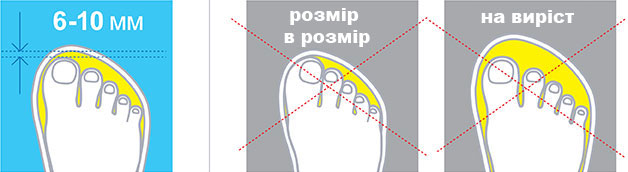
The Mondopoint system was created for the military. It was used for the precise selection of army footwear to minimize foot injuries during long marches. This is why many manufacturers of tactical and trekking footwear still use this system as their primary one.
Cheat Sheet
-
UK 1 – for those who are a definite 45 (EUR).
-
UK 10.5 – for those who are around 44-45 (EUR).
-
UK 8 – for those who are a definite 42 (EUR).
-
UK 9 – for those who are a definite 43 (EUR).
-
UK 5 – for those who are 37-38 (EUR).
-
UK 5.5 – for those who are a definite 38 (EUR).
-
UK 6 – for those who are 39 (EUR).
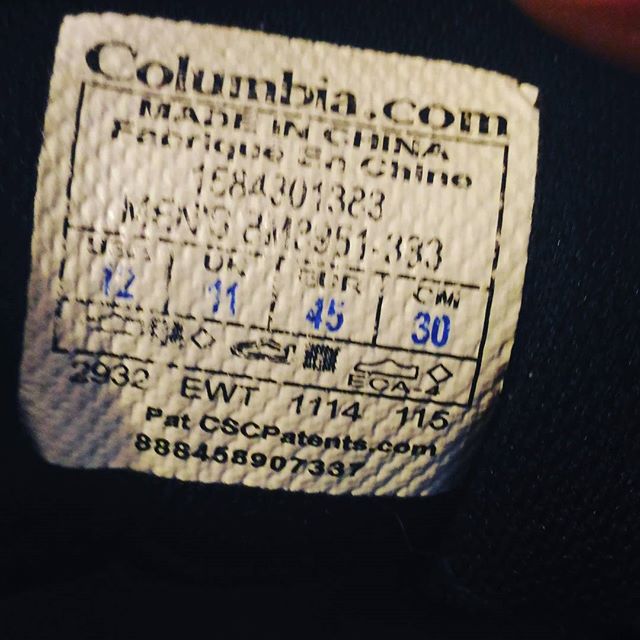
Buying shoes without trying them on is entirely realistic if you know a few basic principles. It is best to stick to proven brands, use manufacturers' size charts, and measure your foot correctly.
In my experience, the main rule is simple: if you are torn between two sizes, it is better to choose the larger one. A small margin can be compensated for with an insole, socks, or lacing, whereas fixing shoes that are too tight is almost impossible.

Igor Ivandikov — author of the article
Project Manager
Has over 2 years of experience working in the field of camping equipment. Well-versed in products for tourism, camping, and outdoor recreation.
Responsible for coordinating projects, monitoring deadlines, and ensuring the quality of task completion.
He enjoys football (soccer) and billiards, participates in competitions, and has won prizes on numerous occasions. He is a fan of active recreation.
FAQ. Answers to Frequently Asked Questions
1. Can I accurately pick shoes without trying them on?
2. Why does the same size fit differently across different brands?
3. Should I buy winter shoes in a larger size?
4. What is the most accurate way to determine size?