Tactical gear can easily turn into an endless shopping list: body armor, plate carrier, helmet, backpack, pouches, first-aid kit, knee pads, active headsets, eyewear, flashlight, radio… Then it turns out all of this not only needs to be purchased, but also carried. And this is where the main problem begins: the more gear we add, the more important it becomes to understand why each specific item is needed.
There is no universal set of military gear that is equally correct for every service member. The task, duration of work, method of movement, weather, terrain, role within the unit, and ability to replenish supplies all change the requirements for equipment. Therefore, the right approach is not to look for the maximum number of items, but to assemble a minimum set that covers a specific task without unnecessary duplication. And our guide from the Punisher military store will gladly help you handle this.


What Is Military Gear and Why There Is No Universal List
Military gear is not simply a collection of all the items a service member may use. It is a system in which each element has its own function: providing protection, carrying equipment, enabling communication, helping with navigation, providing medical assistance, or supporting a person’s ability to perform.
That is why one person may work with a minimal kit during a short mission, while another may need significantly more equipment for extended movement. Even modern armies view load not as a fixed figure, but as a quantity that needs to be adapted to the mission.
A U.S. Army Infantry study dedicated to the Fighting Light concept explicitly distinguishes between fighting load and approach load. The first is the equipment a service member directly carries on their body during maneuver and combat. The second includes the fighting load plus a backpack with additional supplies of water, ammunition, food, and other equipment needed to move to the area where the task is to be performed.
In the example provided by the U.S. Army for a 10-day summer JRTC rotation, the dry weight of a single backpack was less than 25 pounds – approximately 11.3 kg. This is not a “military backpack weight standard,” but a specific example of load planning that takes into account the conditions of the rotation and logistics. In other words, the question should not be “what else should I put in the backpack?” but “what exactly do I need for this task?”
Body Armor and Plate Carrier: The Foundation of Protection or Unnecessary Weight?
When it comes to military gear, ballistic protection stands apart from most other items: its function cannot be replaced by a more compact alternative. But there are nuances.
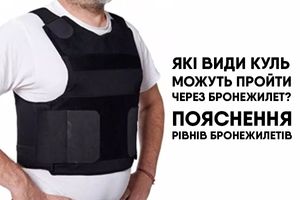
In particular, the Punisher catalog includes both body armor and plate carriers and armor plates. It is important to distinguish between them, because a plate carrier itself is not synonymous with a full body armor system: the actual level of protection depends on the system’s construction, the installed armor elements, and their characteristics.
Body Armor: It Is Not Simply “The Heavier, the Better”
The question “how to choose body armor” makes sense precisely because the choice does not come down to the maximum possible protection. It is necessary to consider the protected area, type of armor elements, compatibility with the task, mobility, and the overall weight of the system.
At Punisher, for example, body armor of various DSTU classes is available, including models with Kevlar and UHMWPE. This means that even within the single category of “body armor,” there can be fundamentally different solutions designed for different functionality and conditions of use.
Plate Carrier: Modularity Instead of Constant Maximum
A plate carrier allows you to build a system around armor plates and additional equipment. Its advantage lies precisely in modularity: the configuration can be adjusted to a specific role and task.
Punisher offers, among other things, a plate carrier from its own brand, as well as a wide selection of other models. And here a simple rule applies: every additional pouch or accessory should have a specific purpose. If a pouch is installed simply because there is free space on the MOLLE, this is no longer gear optimization but unjustified accumulation.
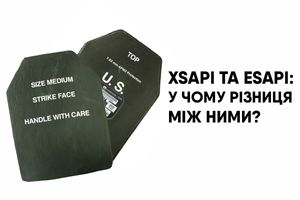
In September 2025, the U.S. Army placed an order for 72,179 lighter LSAPI armor plates. According to the U.S. Army, they are approximately 30% lighter than ESAPI Generation III while maintaining the stated ballistic protection. It is also noted that the shooter’s cut shape is intended to improve mobility and range of motion. This clearly demonstrates a broader trend in modern military equipment: weight reduction has become an independent characteristic of system effectiveness, rather than simply a matter of comfort.


Military Clothing: How Much Do You Actually Need?
Tactical clothing is one of the categories where it is easiest to accumulate excess. Another pair of pants, another combat shirt, an additional jacket, an insulation layer… In the end, the closet is full, yet you still have to decide what to take for a specific mission. Therefore, the foundation should be not the number of items, but the layering system and conditions of use.
Tactical Pants and Combat Shirt
Combat clothing has somewhat different requirements than standard field uniforms: freedom of movement, durability, ventilation, access to pockets, and the ability to work together with other elements of the equipment.
Punisher offers a wide selection of tactical pants, from M-Tac Aggressor Gen.II to models from Crye Precision and UF PRO. For example, UF PRO Striker ULT Combat Pants or Crye Precision G4 Combat Pants are designed for a different level of functionality than simpler tactical pants.
A separate category includes pants with integrated knee pads or pockets for them. The Punisher catalog offers both options.
The same applies to combat shirts. The catalog includes both specialized UF PRO models and more affordable solutions, such as the GRAD Hawk Combat Arno or M-Tac Gen.II combat shirts.
Jacket and Thermal Underwear
The situation with jackets is even more interesting. A winter tactical jacket, a mid-season outer layer, and a lightweight windproof model are not interchangeable items. Their necessity is determined by the season and method of use. Therefore, instead of the principle “the warmest jacket is needed”, it is more appropriate to ask: what temperature range, activity level, and layering system are expected during the work?

MILITARY CLOTHING
Tactical pants, combat shirts, jackets, and clothing based on the L1–L7 system for different conditions of use.
Browse and choose!
In modern military clothing, even the construction of pants can be part of a protection and mobility system. For example, Punisher offers models with adjustable pockets for insertable knee pads, as well as pants with removable knee pads included. In other words, one properly selected item can sometimes perform the functions of several pieces of equipment at once – and this is precisely what helps reduce the amount of gear.
Knee Pads, Elbow Pads, and Gloves: Protection That Is Easy to Underestimate
Knee pads and elbow pads are not constantly needed by absolutely every service member. But for tasks that involve working on the knees, crawling, frequently changing position, or coming into contact with hard surfaces, they can have very practical value.
Punisher offers both separate tactical knee pads and elbow pads, as well as pants with integrated or insertable protective elements. This is where the difference between the two approaches becomes clear. If knee pads are needed regularly, an integrated system in the pants may be more convenient. If the need changes depending on the task, a separate pair of knee pads provides more flexibility. For example, Crye Precision AirFlex Combat Knee Pads in the Punisher catalog are a separate protective element, while combat pants with knee pads allow protection to be integrated without a separate equipment set.
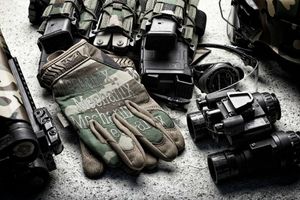
The same applies to gloves. They should correspond not to the abstract concept of “tactical,” but to the work the service member will perform: the required hand protection, finger sensitivity, weather, and compatibility with other equipment.
Military First-Aid Kit and IFAK: What Should Be Accessible, Not Just Lying in a Backpack
A military first-aid kit is another case where the issue is not the maximum amount of contents. IFAK (Individual First Aid Kit) is an individual first-aid kit. Its logic is based on quick access to the supplies needed to provide first aid to the specific user. At the same time, a medical backpack or group first-aid kit is already a different class of equipment.
Punisher offers ready-made IFAKs, universal first-aid kits, medical backpacks, and separate kits for assembling a setup. The store itself separately notes that the contents of an IFAK may vary depending on the specifics of service and conditions of use.
Therefore, the principle of “putting everything that might be needed into the first-aid kit” is especially unsuccessful here. A large first-aid kit that is difficult to open or find quickly among other equipment may be less practical than a compact kit assembled according to the task and the user’s skills.
In military planning, medical equipment is also divided by role. An individual IFAK is intended for one person, while universal first-aid kits and medical backpacks may be intended for work with multiple casualties. This is precisely why a “large first-aid kit” is not automatically better than an IFAK.


Helmet, Ballistic Eyewear, and Hearing Protection
Head, eye, and hearing protection are three different tasks that should not be combined simply because they all belong to the category of protective equipment.
Tactical Helmet
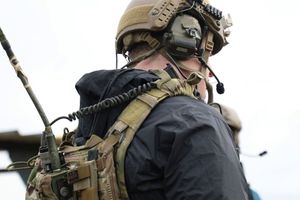
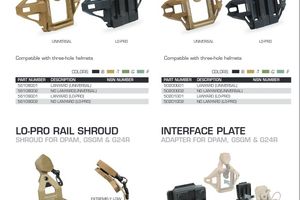
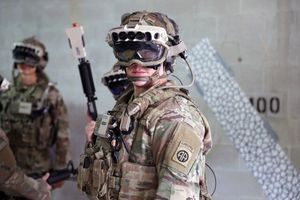
A helmet must meet not only ballistic protection requirements, but also the way it will be used. Fit, weight, suspension system, compatibility with the headset, and additional equipment are important. In other words, buying a “tactical helmet” as an abstract category is not enough. You need to understand what construction and configuration are required specifically for your equipment.
Punisher offers FAST High Cut, MICH, ACH, and other designs. For example, the assortment includes Ops-Core FAST LE High Cut, Protection Group Danmark Arch High Cut, ArmorSource 505 ACH Ballistic Helmet, and other models.
Ballistic Eyewear
The eyes are one of those areas where saving money on unsuitable protection may make little sense. But here too, you should not rely solely on the word “ballistic” in the name. Punisher, in particular, has a separate ballistic eyewear category, including ESS models. The declared standards and testing, compatibility with the helmet and headset, fit, field of view, and lens characteristics are important for selection.
Active Headsets
An active headset is no longer simply a means of hearing protection. In professional models, it combines protection from dangerous noise, interaction with surrounding sounds, and, depending on the model and configuration, communication through a radio.
Punisher offers a wide range of 3M PELTOR ComTac models, including XPI and VIII.
For example, Punisher’s own review of the ComTac XPI states a claimed battery life of up to 200 hours, while the ComTac VIII is rated at around 50 hours. This is a good example of why a “newer model” does not automatically mean “better in every parameter”: specifications need to be compared with the task.
In controlled experiments cited by the U.S. Army, load increased the time required for a service member to accurately initiate fire by approximately 0.1 seconds compared with an unloaded condition. In other configurations, researchers recorded an increase in target identification and acquisition time from slightly more than 3 seconds to more than 3.5 seconds. On paper, this is a small difference. In a dynamic situation, it is not necessarily insignificant.
Tactical Backpack: What to Take With You and What to Leave Out
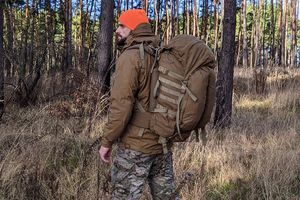
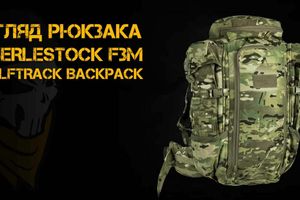
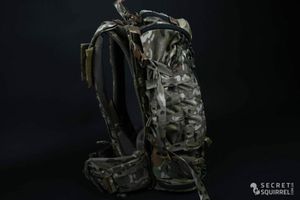
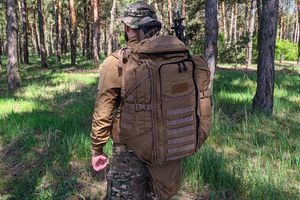
A tactical backpack is not a warehouse on your back. Its main task is to carry what does not need to be kept directly on the body at all times. Punisher offers backpacks for different purposes and in different volumes – from compact urban and assault models to large systems of 70-100+ liters. The catalog includes, for example, MOLLE II Assault Pack 3-Day, Eberlestock Halftrack, Mystery Ranch 3 Day Assault Pack, Eberlestock G4 Operator Pack, and many other models.
This clearly demonstrates the main principle: there is no universally correct backpack volume. If the task is short, a large backpack can easily become a trap: free space appears – and it is quickly filled with things “just in case”. For extended movement, the situation is different. Additional clothing, water, food, spare batteries, and other equipment require appropriate volume. Therefore, the question “which tactical backpack should I choose?” is better started not with liters, but with the duration of the task and the list of equipment that will actually have to be carried. Thus, the figure “40 liters” or “60 liters” says nothing about whether the choice is correct without context.
In the same JRTC Army example, the dry weight of the backpack for a 10-day summer rotation was less than 11.3 kg. At the same time, planning was not limited to the backpack alone: the load was considered together with the fighting load, additional combat equipment, and the availability of support.
Pouches and MOLLE: The Ability to Carry More Does Not Mean You Should Carry More
The MOLLE system has become the de facto standard for modular attachment of a large amount of modern tactical equipment. Its advantage is obvious: the user can change the system configuration according to the task. But there is also a side effect. An empty MOLLE webbing section very quickly creates the urge to attach something to it.
A pouch for the sake of having another pouch does not make the equipment more functional. It adds volume, weight, and another item that needs to be controlled. This is clearly visible in modern systems using the American MOLLE system: the U.S. Army uses specialized equipment configurations for different roles – Rifleman, Pistolman, Grenadier, SAW Gunner, and Medic. In other words, modularity itself implies not maximum filling of the system, but adaptation to the role.
Five specialized MOLLE sets for different military roles are a practical example of how one modular system can replace the approach of “one huge universal kit for everyone”.
Flashlight, Compass, Radio, and Other Small Items: When Are They Actually Needed?
It is precisely small items that most often and imperceptibly expand a gear setup. A tactical flashlight seems light. A compass is even lighter. An additional multitool, spare battery, carabiner, another pouch – each individual item weighs almost nothing. The problem begins when there are twenty such “almost nothing”.
Therefore, before adding any accessory, it is useful to ask three questions: What exactly does it do? Is this function needed for the specific task? Is there already another item that performs it?
For example, a military compass has obvious value for tasks where navigation is part of the job. But having one in every pocket simply because “a service member should have a compass” is an entirely different logic. The same applies to flashlights, radios, additional batteries, and an EDC kit.
How to Understand That There Is Already Excess Gear
There is a simple way to check your own setup without creating another shopping list. Take each item and ask yourself five questions in sequence:
-
What specific function does it perform? If the answer sounds like “it might come in handy someday,” that is a reason to think about it.
-
Is this function needed specifically for the current task? Equipment for assault, patrolling, extended movement, and work at a base can differ significantly.
-
Does this item duplicate another one? Two pouches with the same function, a spare accessory without a real need, or several tools with practically identical purposes increase the load without a proportional increase in capabilities.
-
How quickly can you reach it? An item that is needed constantly but is hidden at the bottom of a backpack effectively does not perform its function as intended.
-
Fifth: does the benefit justify the weight and volume?
The last point is particularly important. The U.S. Army directly links excessive load not only to fatigue, but also to reduced situational awareness, impaired mobility, and an increased risk of injury. Therefore, gear optimization is not about carrying as little as possible. It is about making sure every gram has a reason to be with you.


Good tactical gear is not the longest list of items and not the most heavily loaded plate carrier. It is a system in which protection, clothing, medical equipment, backpack, communications, and accessories correspond to a specific task and do not interfere with one another.
Punisher offers equipment for building different configurations: from plate carriers, body armor, and helmets to tactical clothing, backpacks, IFAKs, ballistic eyewear, and active headsets. But a wide assortment itself does not mean that a service member needs everything at once. On the contrary – the right choice begins with the question “what do I need to accomplish?”, and only then moves on to the question “what should I take for this?”.
NEED HELP CHOOSING?
Our specialists will help you choose equipment according to your tasks, conditions of use, and the required level of protection.
Get a consultation

Vitalii Buniak — article author
Military gear consultant
Before 2022, he worked as a sales assistant at the Panisher store. After the start of the full-scale invasion, he joined the Armed Forces of Ukraine, gaining real combat experience.
Thanks to his combat experience and deep knowledge of tactical gear, Vitalii serves as a personal expert of the Panisher online store in the fields of:
- Clothing and footwear
- Equipment
His recommendations help customers choose reliable and functional gear for any conditions.
FAQ. Answers to Frequently Asked Questions
1. What gear does a service member need?
2. What should be in a service member’s backpack?
3. Does a service member need to carry all their equipment on their body?
4. How can you reduce the weight of tactical gear?