There is a funny situation with modular clothing systems: the more you read about them, the harder the simple question "what should I wear today?" seems to become. Level 1, Level 2, Level 3, softshell, windshirt, hardshell membrane, insulation – everything seems clear on paper, but when you step outside, the temperature alone doesn't tell you what from that list is actually required.
In reality, PCU (Protective Combat Uniform) and ECWCS (Extended Cold Weather Clothing System) were never designed as seven garments to be pulled on sequentially, one over the other. Their true strength lies in the ability to combine layers based on activity levels, wind speed, precipitation, and whether you will be moving or standing static for long periods. The U.S. Army explicitly defines GEN III ECWCS as a system whose individual elements can function independently or in tandem with others.
Therefore, in this article, a guide from the military surplus and tactical store Punisher won't spend time re-explaining what each Level is. We have already covered that separately. Here, something else is far more interesting: how to turn PCU and ECWCS from a collection of nice jackets and fleeces into a truly functional system – and why sometimes at 23 °F (−5 °C) you need fewer clothes than at 32 °F (0 °C).
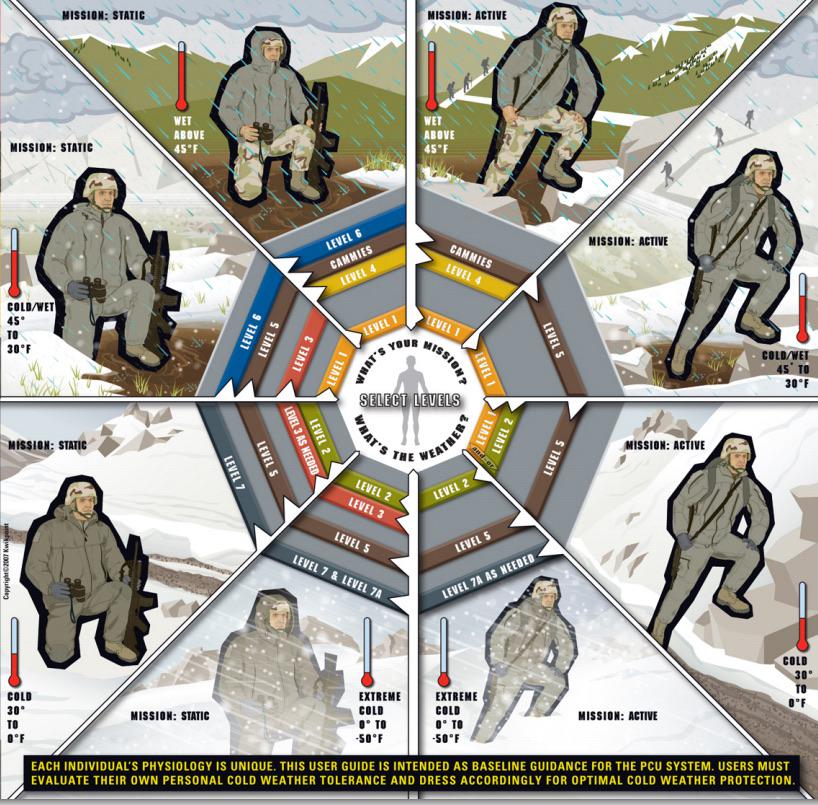

PCU and ECWCS: Why It Is Completely Fine to Mix Them
Let's start with a point that often confuses. If you own a PCU Level 5 jacket and your insulation consists of an ECWCS Level 2 or Level 3 fleece, that doesn't mean you've put together an "incorrect set." Quite the opposite. Both systems are built around the same core concept – dividing functions across different layers. The base layer manages moisture, the insulating layer retains heat, and the outer shell protects against wind and harsh weather. That is why the Level number shouldn't turn into a rigid doctrine: what matters isn't which system a garment belongs to, but what specific function it fulfills.
Historically, PCU was developed as a more flexible system for high physical exertion and demanding tactical environments. ECWCS Gen III is a broader military cold-weather system featuring seven levels that allow operators to tailor combinations to specific missions and ambient conditions. Therefore, pairing PCU + ECWCS in practice is a thoroughly logical combination.
The philosophy behind the PCU system grew largely out of the field experience of individuals operating in extreme cold environments who understood a simple truth: remaining completely dry during intense physical exertion is virtually impossible. Therefore, the goal of the system isn't to magically eliminate all moisture, but to actively manage it as quickly as possible so it doesn't compromise your thermal equilibrium. This is precisely why PCU relies heavily on advanced synthetic materials, rapid drying times, and highly breathable outer layers. It serves as an excellent example of a military approach to gear design: rather than fighting human physiology, you work alongside it.
The Biggest Mistake: Choosing Clothes Based Strictly on Temperature
Imagine two identical mornings. The thermometer reads 23 °F (−5 °C). In the first scenario, you head out with a pack, walk at a rapid pace for several miles, occasionally work with your hands, and climb stairs. In the second, you have to stand in an open field for several hours with only minimal movement. The temperature is identical. However, the required clothing loadout should be completely different.
Why? Because your body isn't a thermos – it generates its own heat. The harder you work, the more thermal energy your body produces. If you enclose yourself in heavy insulation topped with a non-breathable waterproof membrane, heat and sweat rapidly build up inside. At first, you feel cozy. Then hot. Then you break into a heavy sweat. Then you stop – and those soaking-wet garments instantly start working against you.
U.S. military cold-weather training manuals explicitly emphasize the need to control overheating and adjust layers according to activity levels. Military doctrine even uses a simple fundamental rule: avoid overheating. Thus, the first rule of modular layering is straightforward: Dress for your anticipated activity, not for the ambient temperature.
Scenario #1: You Begin Moving
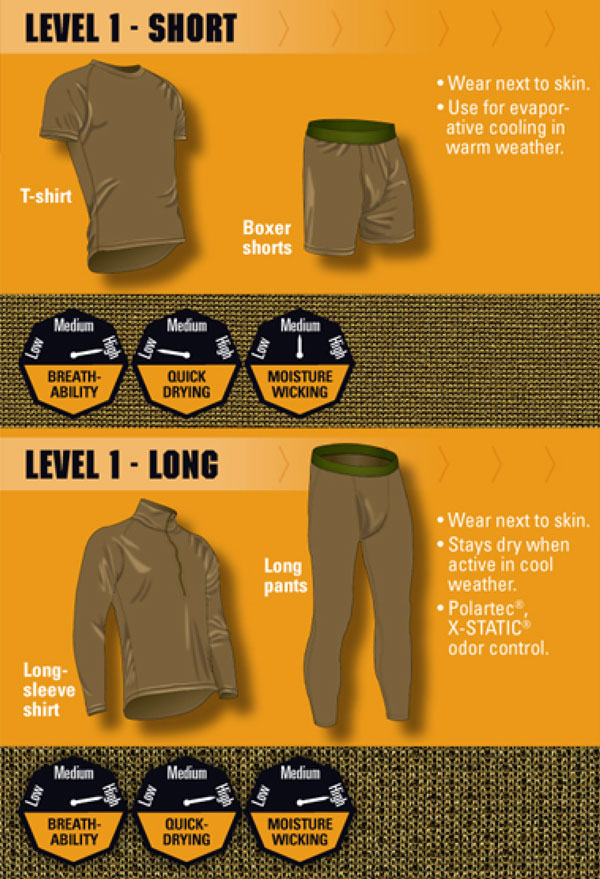
This is the moment where many make their first mistake. It's cold outside, so before stepping out, the temptation is to bundle up "just in case." However, a proper loadout should actually feel slightly cool at the very start. That is completely normal. In the first few minutes, your body hasn't warmed up yet. Once muscle engagement kicks in, circulation speeds up, and internal heat production increases – within 15 to 20 minutes, the thermal equation changes entirely. This is precisely where the L1 base layer demonstrates its true value. Its mission isn't to make you feel hot, but to ensure proper skin-level moisture management.
In GEN III ECWCS, Level 1 is a lightweight moisture-wicking base layer worn directly against the skin. If that isn't enough, L2 is added. But not because "it's 23 °F (−5 °C) and the chart mandates L2", but because you are genuinely cold while on the move. That is a fundamental distinction.
L1 + L2: Probably the Simplest Working Combination
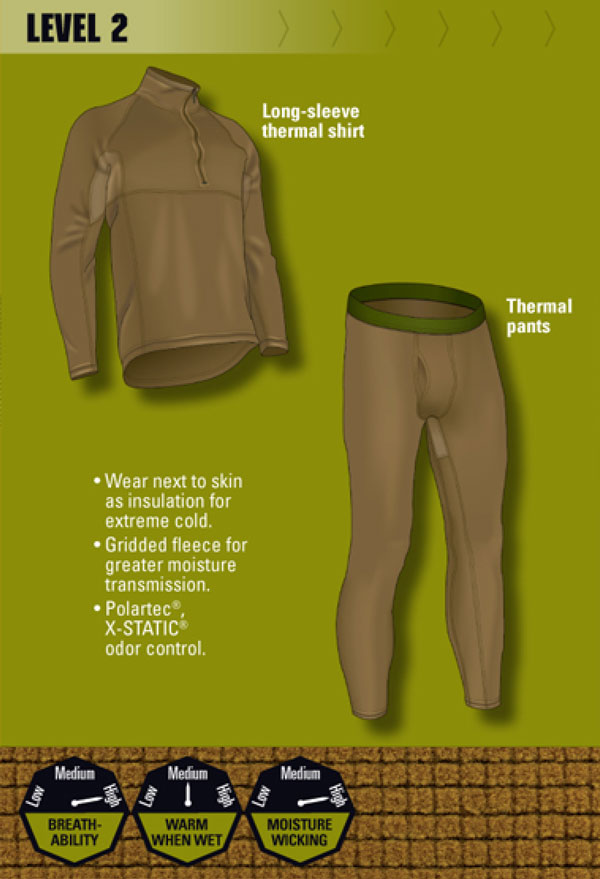
ECWCS Level 2 is often underrated precisely because of its simplicity. It consists of a lightweight grid fleece that adds thermal insulation without turning you into a walking winter blanket. Its true utility shines in situations where a base layer alone falls short, but heavy insulation is not yet required.
Imagine a crisp, dry day with light winds and moderate physical exertion. L1 + L2 might be the exact setup you need. However, if your pace accelerates and you start overheating, you simply shed the L2. This highlights the primary advantage of the entire concept: you don't have to swap out your entire outfit every time – you adjust a single component.
L3: When You Need Heavy Heat Retention, Not Just Chill Protection
L3 represents a significantly higher tier of insulation. In ECWCS Gen III, Level 3 is a high-loft fleece, serving as the primary insulating mid-layer designed to be worn under an outer shell or standalone in cool conditions.
Here, it is crucial not to view L3 as an automatic sequential step after L2. Do not follow: L1 → L2 → L3 just because the ambient temperature dropped. Instead, follow: L1 → I feel cold → add L2 → still feeling cold or activity is minimal → upgrade to L3.
This reflects a completely different operational logic. If you are moving heavily, L3 will likely prove excessive. If you are stationary most of the time, it might be the exact garment you were missing.

A Small Paradox: Sometimes You Don't Need Another Warm Sweater
Picture this: 27 °F (−3 °C), you are moving actively, but you step into an exposed area where strong winds pick up. You instantly feel chilled. Your immediate thought might be: "I need another warm layer". In reality, your insulation levels may already be completely adequate. The wind is simply stripping away the warm air trapped by your clothes. In this scenario, adding another fleece will cause you to overheat within ten minutes without solving the core problem. A solid windproof layer, however, will solve it immediately. This is a crucial concept when utilizing PCU and ECWCS in the field: insulation and wind protection are two entirely different functional needs.
L4 and L5: Two Ways to Handle the Wind
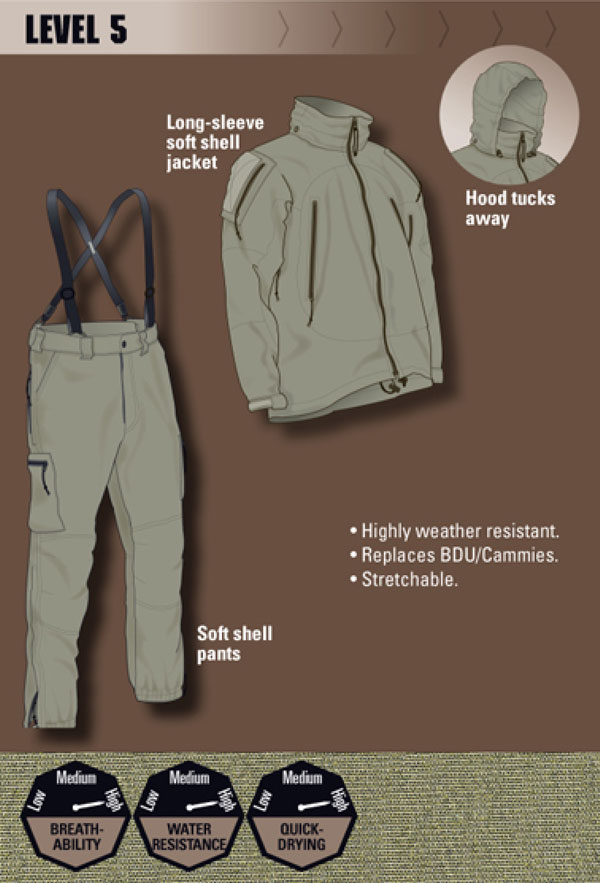
Level 4 is a lightweight windshirt. Level 5 is a more robust softshell system. Both interact with environmental elements, but they should not be viewed simply as "one thin jacket and one thicker jacket." In ECWCS, Level IV is primarily designed for wind protection in transitional environments, whereas Level V softshell is an all-around system for moderately cold and cold conditions. In field practice, this translates to:
-
L1 + L4 – when you need minimal, ultra-lightweight wind blockage.
-
L1 + L5 – when you need a versatile outer shell for active tactical tasks.
-
If it turns colder: L1 + L2 + L5.
-
If it gets even colder or your activity level drops: L1 + L3 + L5.
This approach aligns much closer with real-world application than a rigid "Level X for Temperature Y" chart.
Why L5 Is Often the "Workhorse" of the System
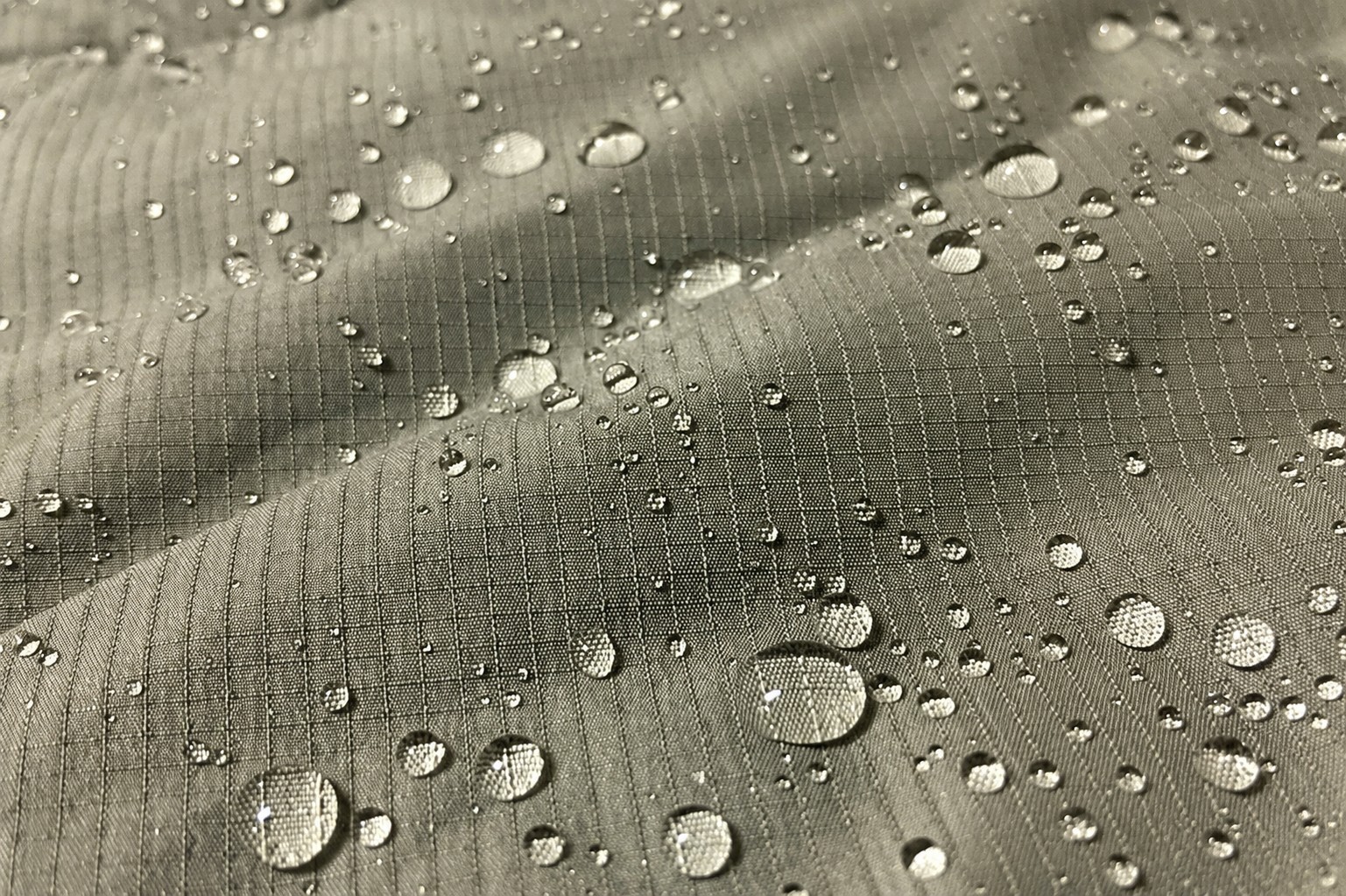
Softshell excels because it doesn't try to fulfill every role at once. It doesn't replace heavy insulation, nor is it a fully waterproof hardshell meant for torrential downpours. What it does best is allow freedom of movement, block wind, repel light precipitation, and perform reliably across a wide spectrum of environments. That is why an L1 + L5 setup often proves far more comfortable than L1 + L2 + L3 + L5, even at identical temperatures. During high exertion, the primary challenge is rarely a lack of heat – it is an excess of it.
It is no coincidence that U.S. military field guidelines specifically highlight the softshell as particularly effective during high aerobic activity in cold weather.
What to Do When It Starts Raining
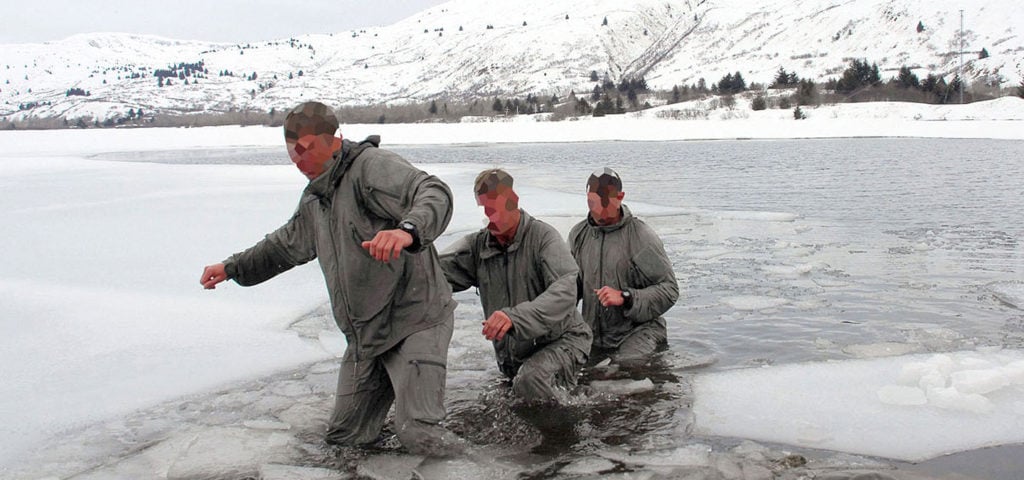
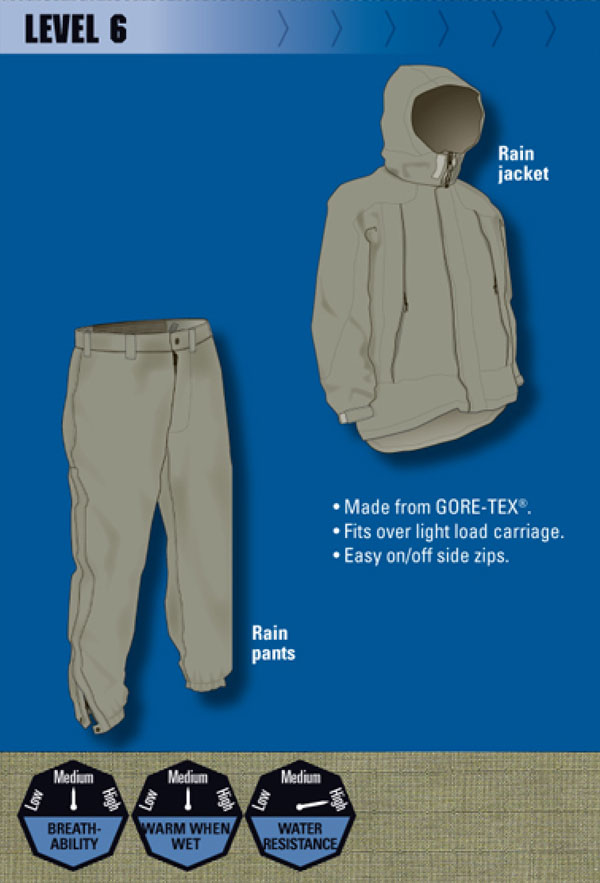
This is where Level 6 enters the picture. A common misconception surrounds this layer as well: "If I have a waterproof membrane, I should wear it continuously". No. A hardshell membrane is a tool for a specific problem. When heavy rain or wet snow hits, you put on L6. Once the precipitation stops and the protective barrier is no longer needed, you revert to a more breathable layer configuration.
In official military specifications, ECWCS Level VI is a waterproof barrier designed specifically for wet, cold conditions. The underlying rule applies once again: do not wear maximum environmental protection constantly, but deploy specific protection when a clear environmental threat arises.
The Most Critical Moment: You Stop Moving
This is where the system faces its ultimate test. Before this, you were trekking for an hour. You were warm – perhaps even sweating slightly. Now you have to remain stationary. Not for five minutes, but for an hour. The temperature hasn't changed. The wind hasn't changed. But your body's internal heat production has dropped dramatically. Before long, cold sets in. This is precisely why L7 exists.
L7: Heavy Insulation You Don't Have to Wear All Day
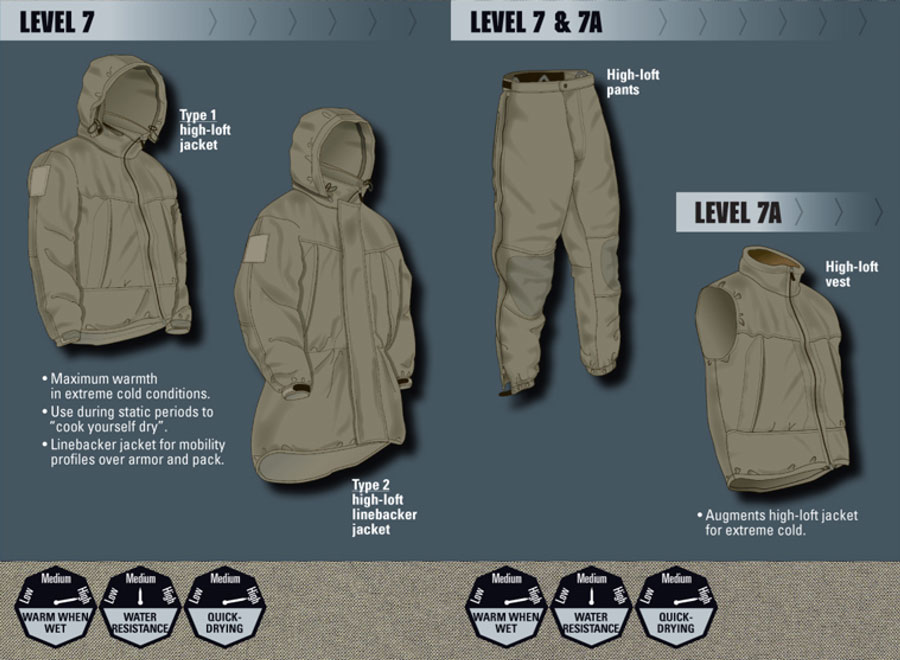
Level 7 in ECWCS is an extreme cold weather outer insulation layer designed primarily for static conditions. That is why it is uniquely suited for transitions from high exertion to prolonged halts.
For example, you were moving in L1 + L2 + L5. You arrive at a halt. You retrieve L7 from your pack and throw it on over your existing layers. When it's time to move again, you shed the L7. It functions much like shifting gears in a vehicle as road conditions change. You don't need a single clothing configuration for every scenario; that adaptability is why the modular system was created.
Is It Better to Wear L7 or Keep It in Your Pack?
If you are actively moving, L7 belongs in your pack most of the time. Do not view this as carrying "extra weight". On the contrary, L7 in your pack represents a dedicated heat reserve ready for the moment your activity level drops.
The same applies to L6. If rain is in the forecast, there is no need to march in a hardshell from dawn to dusk. Keep it accessible.
Consequently, an effective winter loadout setup often looks like this:
-
Worn on body: L1 + L5.
-
Stowed in pack: L2/L3 + L6 + L7.
The exact combination deployed at any given moment depends on immediate field conditions.

PCU + ECWCS: Real-World Operational Scenarios
Setting theory aside, let's look at several typical field situations.
Scenario 1: Cold, dry, high exertion
Preventing overheating is critical: L1 + L5. If additional warmth is needed: L1 + L2 + L5.
Scenario 2: Cold, moderate exertion
You can safely add more thermal insulation: L1 + L3 + L5. If you start overheating, shed the L3.
Scenario 3: High winds
Do not rush to add insulating fleeces. First, check if wind protection is what's missing: L1 + L4 or L1 + L5.
Scenario 4: Rain or wet snow
Add L6 over your working combination. Once precipitation stops, stow it away.
Scenario 5: Prolonged static halt
Don L7 before you stop moving – not after you have already chilled.
Why "Wearing Everything at Once" Is a Bad Idea
Consider a well-meaning user who wants to play it safe by donning everything simultaneously: L1 + L2 + L3 + L5 + L6 + L7. He steps outside. For the first ten minutes, everything feels great. Twenty minutes in, he is overheating. Forty minutes in, he is drenched in sweat. After an hour, he stops. Then a paradox occurs: despite wearing maximum insulation, he starts freezing. Why? Because he lost vital thermal energy through improperly managed body moisture.
U.S. Army cold-weather doctrine stresses three core tenets: the base layer manages moisture, insulating layers trap dead air to retain heat, and the outer shell blocks wind and external moisture. Overheating prevention is heavily emphasized throughout military instruction. Wearing more clothes does not automatically make you warmer; often, more clothes simply means more sweat.
Five Rules Worth Remembering
-
Start with the minimum necessary layers.
Adding a layer in the field is far easier than drying out a soaked base shirt.
-
Do not rely solely on ambient temperature.
Factor in wind chill, precipitation, workload intensity, and duration of exposure.
-
If you feel hot, shed a layer before you sweat.
Overheating is the primary cause of cold-weather failure in modular systems.
-
Keep L6 and L7 readily accessible.
These are contingency layers that may be needed on short notice.
-
Don't treat PCU or ECWCS as an exclusive club.
Mix and match components freely as long as they fulfill the required function.
In official U.S. Army doctrine, GEN III ECWCS is described not merely as "seven layers of clothing", but as a 12-component system configured into seven distinct levels based on mission requirements and environmental conditions. Each element can be worn standalone or combined with others. This makes the concept of layering far more important than the specific Level numbers – a perfect summary of the system's underlying philosophy. You aren't given seven mandatory steps; you are given a modular toolkit to manage your personal thermal equilibrium.
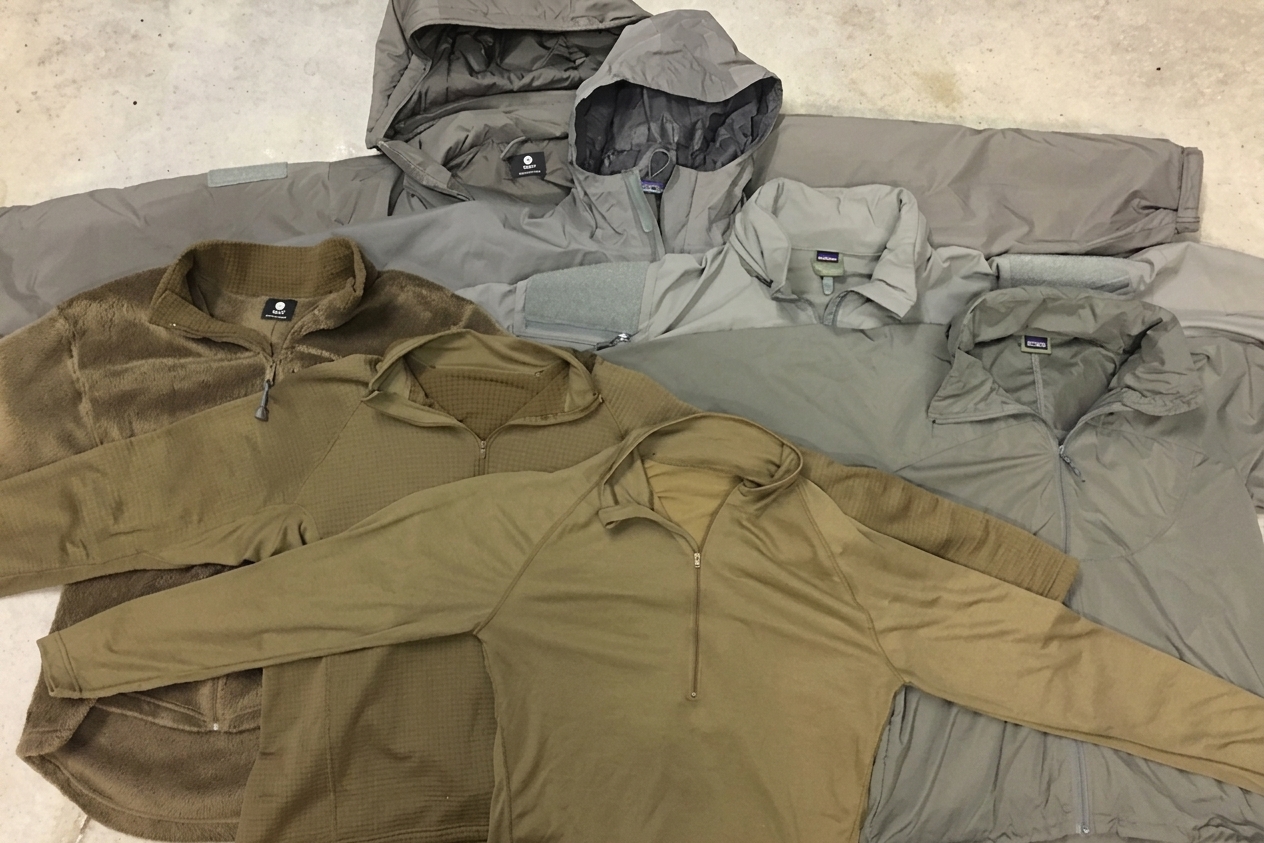
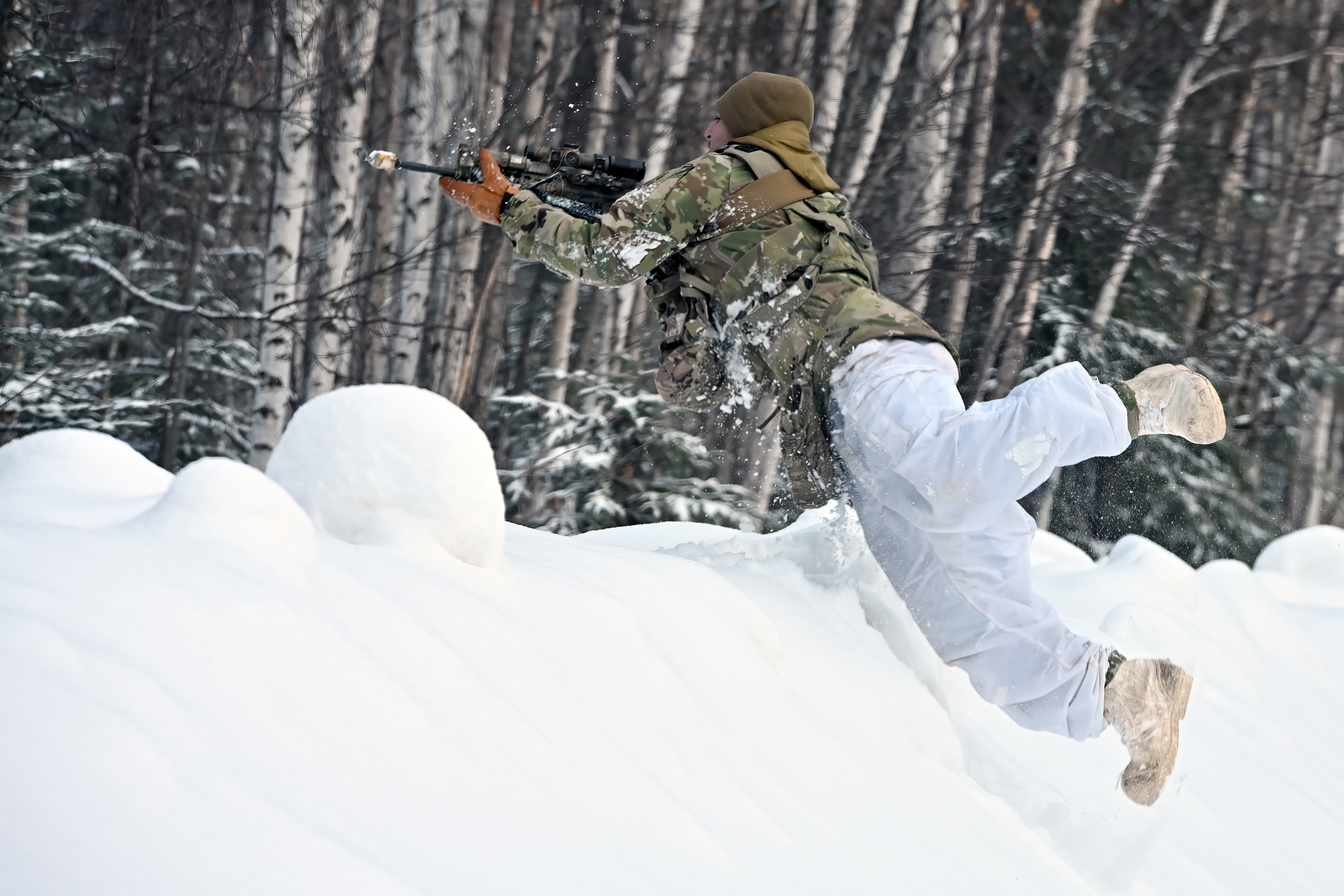
The ultimate advantage of PCU and ECWCS isn't that they allow you to pile seven layers onto your body. On the contrary, their strength lies in the fact that you don't have to wear all seven at once. You add thermal insulation when physical activity drops, block wind when it strips away warmth, deploy a hardshell when rain starts, and throw on L7 before an extended static halt.
The most effective way to utilize a modular layering system is to stop asking "Which Level matches this temperature?" Instead, ask yourself: How hard am I currently working? What environmental factor is draining my heat? What conditions might change over the next hour?
That is when PCU and ECWCS cease to be just a collection of military jackets and fleeces. They become what they were engineered to be: a flexible thermal management system that adapts seamlessly to the weather and the mission at hand.

Vitalii Buniak — article author
Military gear consultant
Before 2022, he worked as a sales assistant at the Panisher store. After the start of the full-scale invasion, he joined the Armed Forces of Ukraine, gaining real combat experience.
Thanks to his combat experience and deep knowledge of tactical gear, Vitalii serves as a personal expert of the Panisher online store in the fields of:
- Clothing and footwear
- Equipment
His recommendations help customers choose reliable and functional gear for any conditions.
FAQ: Answers to Frequently Asked Questions
1. Can PCU and ECWCS components be combined?
2. Which is more important when selecting layers – temperature or physical activity?
3. Should Level 7 be worn while on the move?
4. Is it necessary to buy a complete PCU or ECWCS system?