A military uniform is not just clothing for service and combat tasks. Its elements help identify a service member's affiliation with a particular formation, unit, or area of military activity. Sleeve insignia, commonly called patches in everyday speech, hold a special place in this system.
The images on these patches can help identify the Ground Forces, Air Assault Forces, Special Operations Forces, Territorial Defence Forces, and other components of the Ukrainian military. At the same time, military symbolism is not limited to the official emblems of large military formations: individual brigades and battalions have their own insignia, which often incorporate the history of a region, military traditions, or the specific characteristics of a unit.
Let's take a closer look at what a military patch is, what Ukrainian Armed Forces patches mean, how the symbols of different service branches and arms differ, and how their placement on the uniform is regulated. We will also examine the symbolism of the National Guard of Ukraine, which is part of the Defence Forces but not part of the Armed Forces.
What Is a Military Patch and What Is It Used For?
A patch is an insignia attached to clothing by sewing or using a textile fastener. In the military, this term is commonly used to refer to sleeve insignia that help identify a service member's affiliation with a particular formation or unit.
It is worth distinguishing between several terms. Ukrainian Armed Forces regulations use the terms “sleeve insignia”, “emblem”, and “distinguishing insignia”. In everyday speech, these are often grouped under the word “patch”, although they are not entirely interchangeable.
A sleeve insignia is an element of military uniform placed on the sleeve and serving a decorative, informational and identification function.
An emblem is the official symbol of a military authority, formation or unit. It may be used not only on uniforms but also on flags, breast badges, equipment, documents, and other items. Therefore, an image of an official emblem is not necessarily a photograph of the exact sleeve insignia worn by a service member on their uniform.
Distinguishing insignia is a broader term covering elements that help identify a service member's rank, affiliation, or other status. This category includes shoulder boards and other prescribed insignia.
The primary purpose of a patch is quick visual identification. It may indicate affiliation with a particular branch of the Ukrainian Armed Forces, a separate force or service branch, or a specific military unit. The national flag worn on the sleeve, in turn, indicates national affiliation.
It is important not to confuse a patch with a military rank insignia. A sleeve insignia does not indicate whether a service member is a private, sergeant, or officer. Separate distinguishing insignia serve this purpose, including shoulder boards. We cover them in more detail in our article “Ukrainian Armed Forces Ranks and Shoulder Boards”.
Military Patches: Meaning of Symbols and Colours
The meaning of military patches cannot be determined by looking at a single image alone. A Tryzub, sword, parachute, anchor or animal may form part of the symbolism of different military formations. To identify an insignia correctly, its entire composition must be considered: the shape of the shield, background and figure colours, the arrangement of elements and any inscriptions.
The Tryzub is one of the most common symbols of the Ukrainian military. However, on sleeve insignia it may appear in different colours and against different backgrounds. This is not an arbitrary decorative choice: in standardised designs, these differences help distinguish affiliation with particular components of the military.
Other images also carry their own symbolism. A parachute is associated with airborne units, an anchor with naval service, while historical coats of arms and local motifs may refer to the region where a military unit was formed. However, each element should be interpreted according to the official description of the specific insignia, rather than through general associations.
Inscriptions and mottos also deserve attention. They may be part of an approved design or an unofficial patch. This is why patches that look similar do not necessarily have the same status.
Uniform regulations separately provide for the State Flag of Ukraine to be worn on both sleeves, the insignia of a service branch or arm of service on the right sleeve, and the military unit insignia on the left. This system makes it possible to distinguish a service member's national affiliation from their affiliation with a particular component of the military and a specific military unit.
Patches of the Branches and Arms of the Ukrainian Armed Forces
Sleeve insignia of the Ukrainian Armed Forces indicate service members' affiliation with the relevant services, arms of service or military units. To understand this system, it is important not to confuse these categories.
The Ukrainian Armed Forces have three service branches: the Ground Forces, the Air Force and the Navy. Separate arms of service and forces also operate within the Armed Forces, including the Air Assault Forces, Special Operations Forces, Territorial Defence Forces and other formations. Accordingly, their sleeve insignia should not all be treated as one general category.
Ground Forces

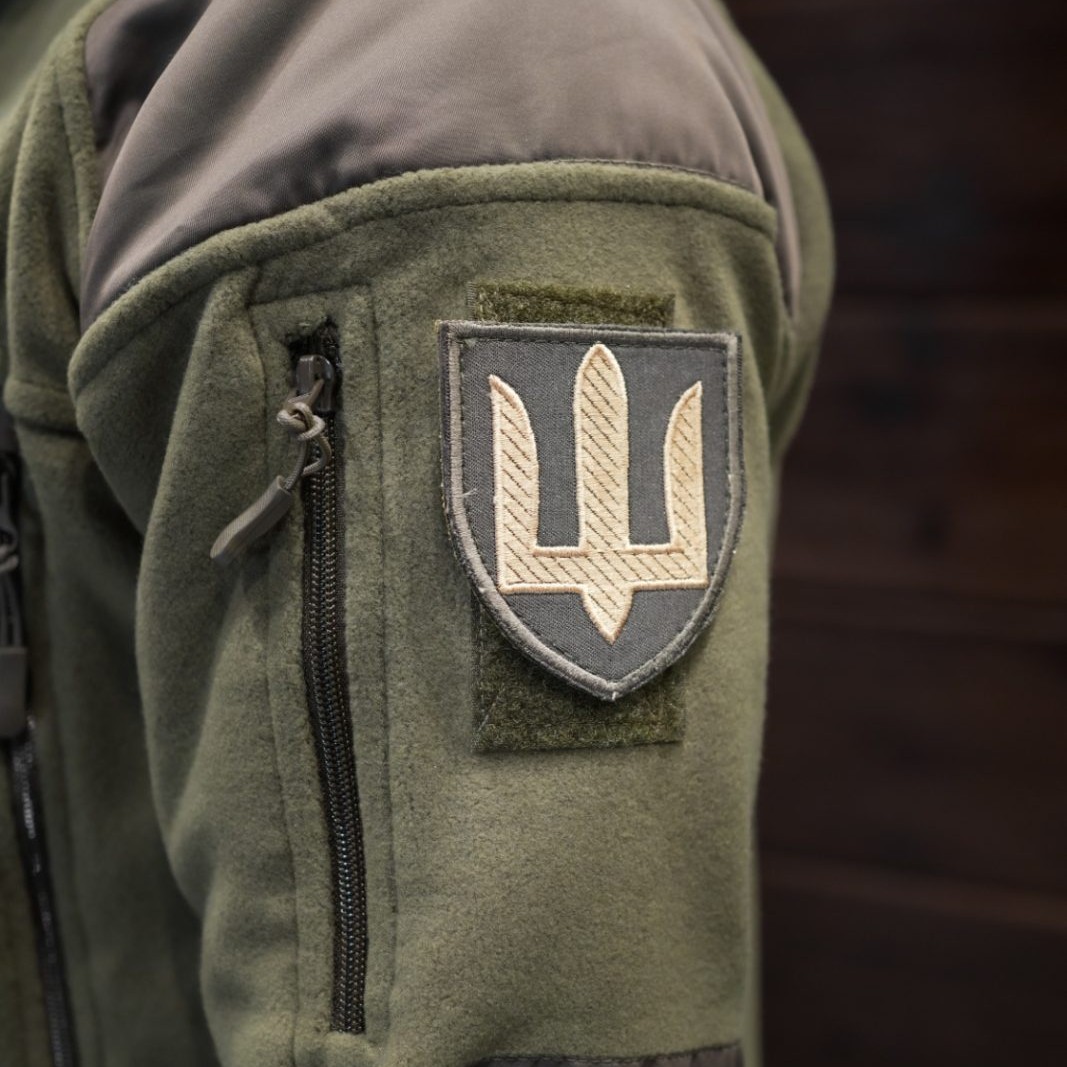
The Ministry of Defence technical requirements specify a Ground Forces sleeve insignia in the form of a green shield with a gold Tryzub. This is the design that should be used when referring to the Ground Forces patch, rather than replacing it with a different heraldic emblem.
The Ground Forces include separate arms of service with their own insignia. For example, the technical requirements provide for a version for tank troops featuring a gold Tryzub on a black background, and one for mechanised troops featuring a blue Tryzub on a green background. These differences make it possible to identify not only general affiliation with the Ground Forces but also a more specific area of service.


Air Force

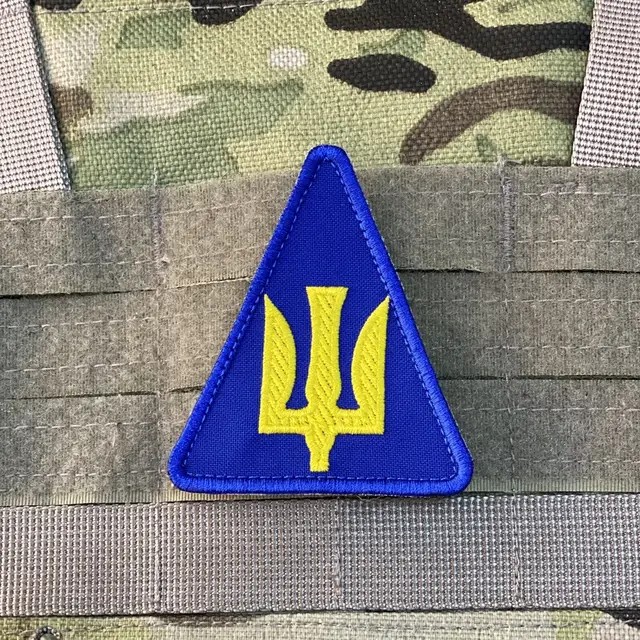
The Air Force has its own standardised sleeve insignia. It should be distinguished from the emblems of aviation units, images of aircraft, and other symbols that may appear on badges or in the design of military facilities.
Navy

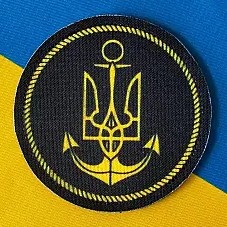
The Navy sleeve insignia has its own approved design and differs from the patches of other Ukrainian Armed Forces service branches. It should not be confused with naval distinguishing insignia on shoulder boards, which serve a different purpose and are governed by separate provisions of the uniform regulations.
Air Assault Forces


The Air Assault Forces have recognisable military symbolism associated with airborne traditions. However, for this article, it is important to show the actual sleeve insignia worn on the uniform, rather than the full Air Assault Forces emblem or beret badge.
Special Operations Forces
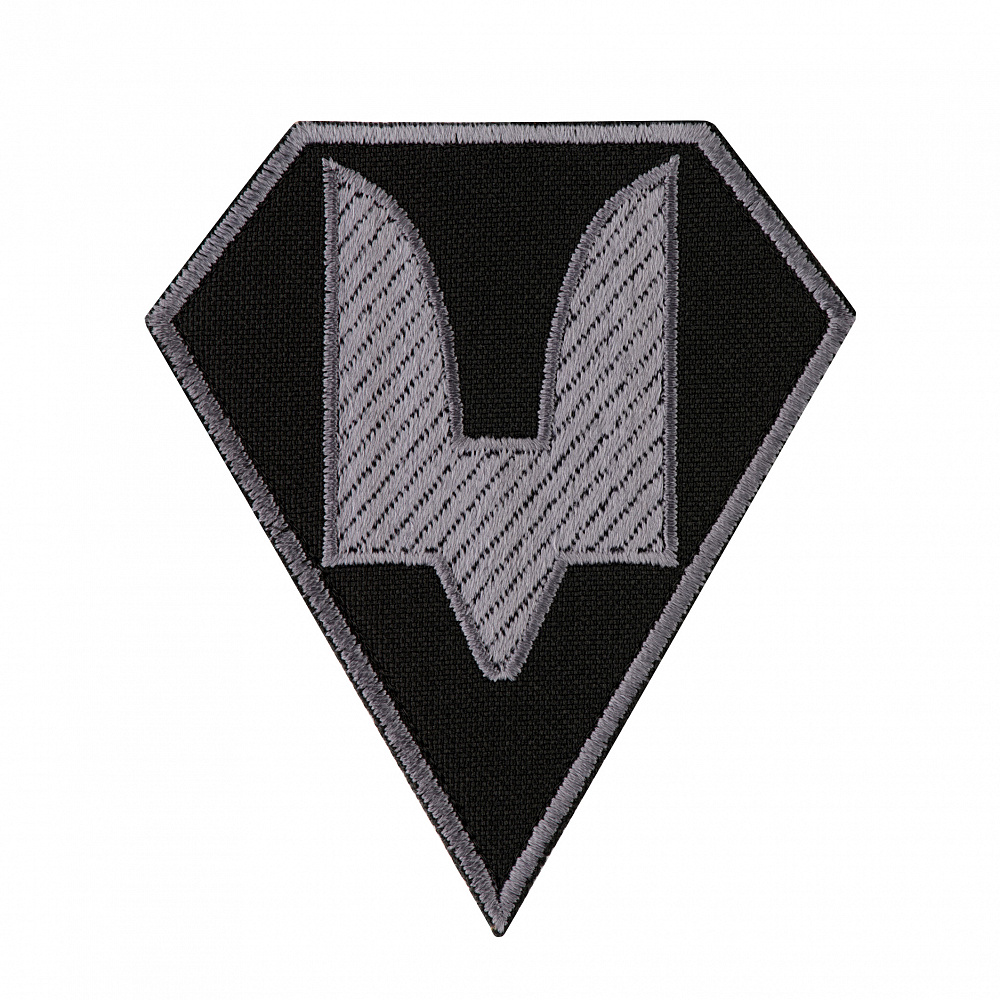

The Special Operations Forces have their own system of symbolism. It features the double-pointed symbol of Prince Sviatoslav the Brave – a historical sign associated with the SOF tradition and their motto, "I Am Coming for You".
Territorial Defence Forces


The Territorial Defence Forces sleeve insignia features a distinctive shield with a crenellated upper edge and a Tryzub. The crenellated motif refers to a defensive wall, while the overall composition is associated with the mission of protecting one's homeland.
However, the general Territorial Defence Forces patch should not be confused with the insignia of individual Territorial Defence brigades. The latter may have their own heraldry associated with regional history, local symbols or the traditions of a particular formation.
Patches of Individual Military Units and Brigades


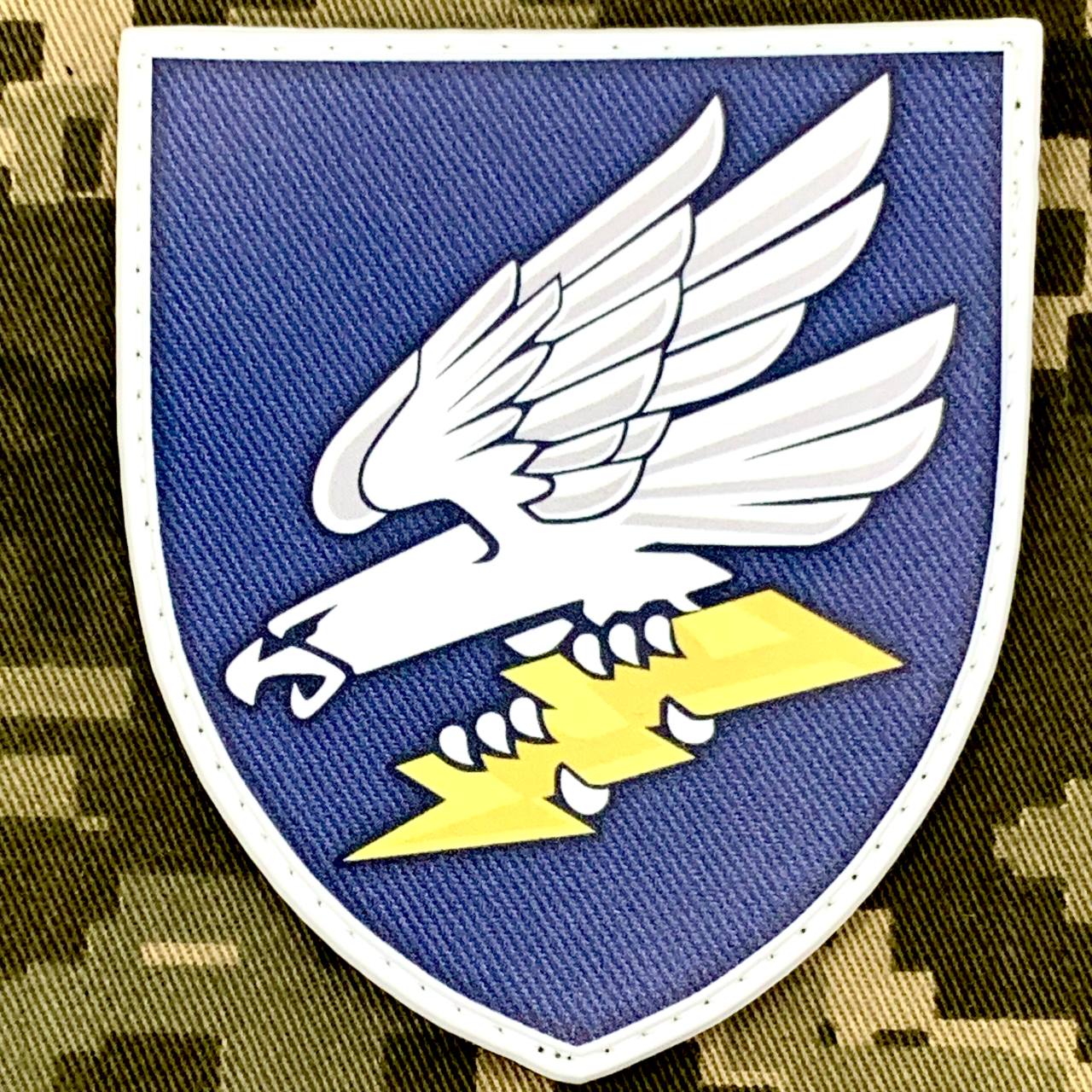
In addition to the general insignia of service branches and arms of service, Ukrainian military personnel use patches representing specific brigades, regiments, battalions and other units. These often have the most distinctive designs: patches may feature historical coats of arms, Cossack motifs, local heraldry, animal imagery, weapons or symbols associated with a unit's combat history.
These insignia help preserve the internal identity of a military formation. For service members, they may symbolise shared experience, remembrance of fallen comrades and affiliation with a particular unit.
At the same time, there is no single short list that covers every Ukrainian Armed Forces patch. The number of military units, their subunits and variations in their symbolism is considerable, and individual designs may change. It is therefore more accurate to discuss the main categories and provide verified examples than to promise readers a complete catalogue of all military patches.
National Guard of Ukraine Patches

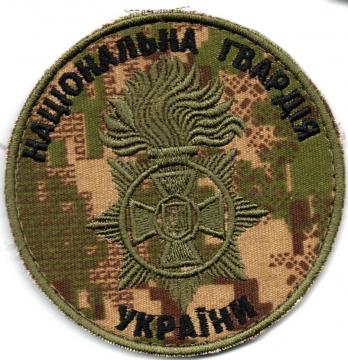
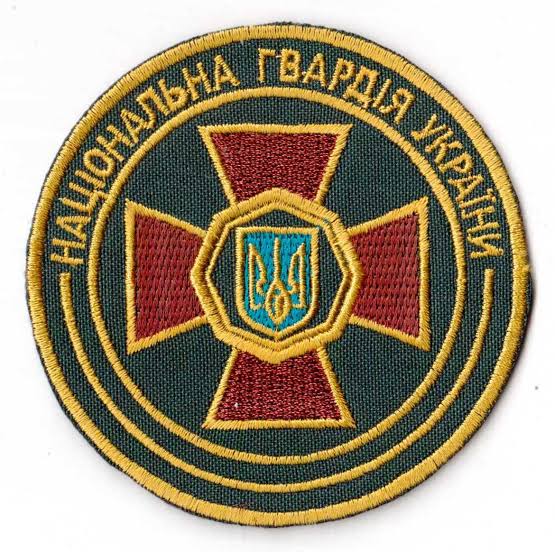
The National Guard of Ukraine is part of the Defence Forces but is not a component of the Ukrainian Armed Forces. It is a military formation with law enforcement functions within the system of the Ministry of Internal Affairs. Therefore, its sleeve insignia and uniform-wearing rules should be considered separately from Ukrainian Armed Forces patches.
The rules governing sleeve insignia placement also differ. According to Ministry of Internal Affairs Order No. 140 dated 12 February 2026, the military unit insignia is worn on the right sleeve of the National Guard uniform, while the formation affiliation insignia is worn on the left. This is the opposite of the general arrangement used by the Ukrainian Armed Forces.
Placement of Patches on Ukrainian Armed Forces Uniforms
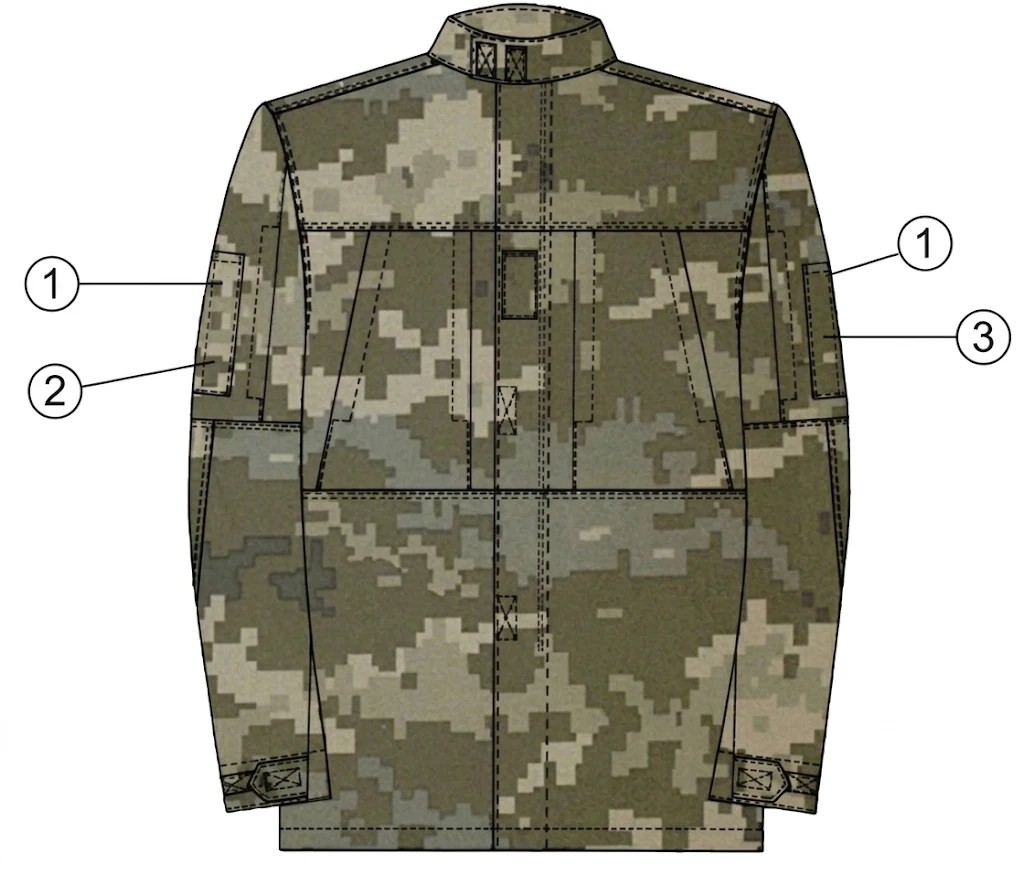
The placement of sleeve insignia is governed by regulations. The main requirements are set out in Ministry of Defence of Ukraine Order No. 606 dated 20 November 2017, which approved the Rules for Wearing Military Uniforms and Distinguishing Insignia. In particular, the standard placement of sleeve insignia follows this arrangement:
-
The State Flag of Ukraine is placed on the outer side of both sleeves. It is rectangular and measures 1.18 × 1.77 inches. The insignia is attached 1.77 inches below the shoulder seam;
-
The right sleeve is designated for the insignia of the Ministry of Defence of Ukraine, the Office of the Commander-in-Chief of the Ukrainian Armed Forces, the General Staff, or the relevant service branch or arm of service. It is placed on the outer side of the sleeve, 4.13 inches below the shoulder seam;
-
The left sleeve is designated for the insignia of the military unit or educational institution. It is also placed on the outer side of the sleeve, 4.13 inches below the shoulder seam. A separate distance of 3.35 inches is prescribed for the insignia of a military educational institution with a decorative motto ribbon.
These rules apply to specified items of military uniform, including the service jacket, polo shirt, mid-season jacket, and field uniform. At the same time, sleeve insignia are not attached to the shirt, jacket, winter jacket, mid-season coat, or winter overcoat. Separate exceptions also apply to the State Flag insignia, specifying the items of clothing on which it is not worn.
There is also an important restriction related to combat tasks. During their execution, the use of identification emblems is prohibited, except for national affiliation identifiers. In addition, full-colour emblems are not permitted on combat and training-combat uniforms.
Therefore, photographs of military personnel wearing different patches should not be treated as universal instructions for insignia placement. In practice, the appearance of a uniform depends on its type, purpose, applicable regulations, and the conditions under which tasks are carried out.
The Ministry of Defence does not limit itself to general descriptions of military symbolism. A separate technical specification, TS A01XJ.03054-081:2018 (01), sets out requirements for the sleeve insignia worn by Ukrainian Armed Forces personnel. It defines product requirements, and the document is included in the Ministry of Defence's official list of technical specifications. In other words, an official patch is not merely an approved image but also a product with specified technical parameters.
Official and Unofficial Military Patches
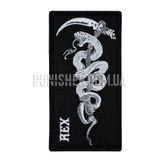
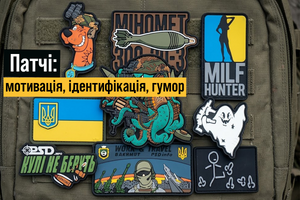
Not every patch on a military uniform is an official distinguishing insignia. Alongside approved sleeve emblems, service members may use additional patches featuring call signs, unit symbolism, commemorative inscriptions, humorous images, or other elements.
Such patches may have personal or internal unit significance, but their use does not in itself grant them the status of official military symbolism. They do not replace prescribed affiliation insignia or change the regulatory procedure for placing them.
Colour variations deserve special attention. Full-colour images may be used for everyday wear, while corresponding low-visibility versions are used on field uniforms where this is prescribed by regulations and service conditions. Separate restrictions on identification emblems apply in combat situations.
A Velcro textile fastener makes a patch easy to replace, but this alone does not mean that any insignia can be attached to the corresponding position. It is important to take into account the purpose of the uniform, established regulations and command requirements.
If you need a patch for your own gear, collection or permitted use on clothing, pay attention to the quality of the embroidery, backing material, colour accuracy, clarity of small details and reliability of the attachment. A selection of relevant products is available in the “Patches and Insignia” category.
On 9 November 2026, the Verkhovna Rada of Ukraine adopted Bill No. 13255 as a basis in its first reading. The bill provides for the addition of a new branch – the Space Forces – to the structure of the Armed Forces of Ukraine. A total of 252 members of parliament voted in favour of the document.
The initiative is intended to establish a legislative foundation for developing military capabilities in outer space. The areas mentioned in the bill's supporting materials include early detection of enemy missile launches, secure satellite communications and the development of Ukraine's own space-based reconnaissance capabilities.
Military patches are much more than decorative insignia on a uniform. They help identify a service member's affiliation with a particular formation, preserve historical memory, and reflect the specific nature of military service. Their symbols reveal the connection between the modern structure of the Ukrainian military, its traditions, and specific combat units.
At the same time, military symbolism follows a clearly defined system and regulatory rules. Not every emblem is a sleeve insignia, not every patch has official status, and the placement of insignia on a uniform depends on established requirements. Therefore, when determining the meaning of a particular patch, it is important to consider not only its image but also its origin and official description.
Ukrainian military symbolism continues to evolve alongside the Armed Forces. New formations, changes in organizational structure, and the emergence of new military capabilities may gradually lead to additions to the system of emblems. This is why this guide should be viewed as an overview of the main symbols and the principles governing their use, rather than a definitive list of all patches worn by the Ukrainian military.

Vitalii Buniak — article author
Military gear consultant
Before 2022, he worked as a sales assistant at the Panisher store. After the start of the full-scale invasion, he joined the Armed Forces of Ukraine, gaining real combat experience.
Thanks to his combat experience and deep knowledge of tactical gear, Vitalii serves as a personal expert of the Panisher online store in the fields of:
- Clothing and footwear
- Equipment
His recommendations help customers choose reliable and functional gear for any conditions.
FAQ: Answers to Frequently Asked Questions
1. Does a patch confirm a service member's military rank?
2. Why can different versions of a patch be seen in photographs of the same unit?
3. Does every military unit of the Ukrainian Armed Forces have its own patch?
4. Where can you check whether an image is an official military emblem?