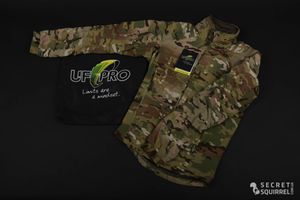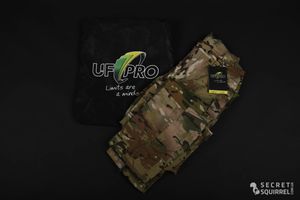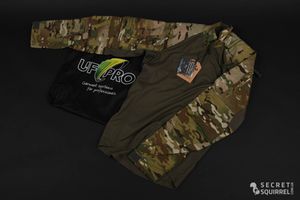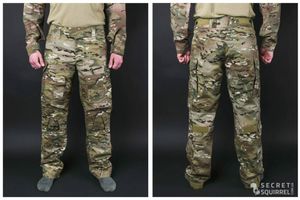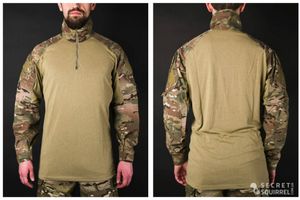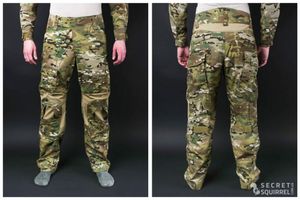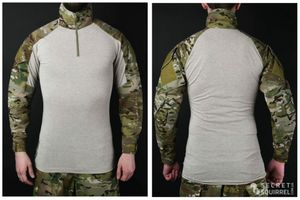
A membrane jacket, hiking trousers, or tactical clothing made from Softshell is designed for use in conditions where protection against bad weather, comfort, and freedom of movement are important. However, even high-quality fabric gradually accumulates sweat, dust, and grease, while its outer water-repellent finish wears down. To preserve the properties of your clothing, it is important to know how to wash membrane clothing correctly, what to use to clean it, and how to restore its water-repellent properties.
Care does not have to be complicated or expensive. In many cases, it is enough to follow the manufacturer's recommendations, choose the right detergent, and avoid neglecting drying. Let's look at how to wash a membrane jacket, what to consider when caring for GORE-TEX and Softshell, and when a specialized water-repellent treatment is needed.

Features of Membrane Clothing Care
Membrane clothing differs from ordinary clothing not only in its materials but also in how it works. In waterproof products, the membrane prevents external water from penetrating while helping water vapor move from the inside to the outside. However, the result depends on the entire product construction, the condition of the outer fabric, and proper care.
Membrane clothing differs from ordinary clothing not only in its materials but also in how it works. In waterproof products, the membrane prevents external water from penetrating while helping water vapor move from the inside to the outside. Read more about what GORE-TEX is and how the membrane works in a separate Punisher article. Here, we will focus on practical rules for washing, drying, and restoring water-repellent properties.
During use, clothing accumulates dust, sweat, skin oils, sunscreen residue, and other contaminants. These can reduce comfort and affect the performance of the outer water-repellent finish. Detergent residue is also undesirable, so it is important to rinse the fabric thoroughly after washing.
At the same time, membrane clothing does not need to be washed after every short trip outdoors. Consider the actual level of dirt, odor, intensity of use, and the manufacturer's recommendations. Washing too infrequently can be just as problematic as failing to follow care instructions: accumulated contaminants can impair the material's properties.
It is important to distinguish between two concepts:
-
Membrane waterproofness – the ability of the relevant construction to prevent external water from penetrating.
-
The water-repellent properties of the outer fabric — the ability of the surface to resist absorbing water and instead allow it to bead up and roll off. A DWR finish is often used for this purpose.
If the outer fabric starts getting wet, this does not necessarily mean the membrane is damaged. However, an outer layer saturated with water can make clothing heavier, colder, and less comfortable. This is why proper washing and timely restoration of DWR are practically important.
Before performing any care, check the product label. Even if two jackets are made from materials belonging to the same technology range, their outer fabrics, linings, insulation, and construction elements may differ. This affects the permitted temperature, washing cycle, and drying method.
How to Wash a Membrane Jacket Correctly
Most modern membrane jackets can be machine-washed if the manufacturer's instructions permit it. The key is not to avoid machine washing at all costs, but to prepare the clothing properly, select a gentle cycle, and avoid unsuitable products.
Preparing Clothing for Washing
Before washing a jacket with a membrane, empty the pockets and check that no small items have been left inside. Fasten the main zipper, pockets, and ventilation openings, if present. Secure hook-and-loop fasteners, loosen drawcords, and secure loose straps so they do not catch on the fabric.
If the manufacturer permits it, remove fur, a detachable hood, and other removable components that require separate care. A heavily soiled jacket should not be washed with items that could transfer dirt or residue from unsuitable detergents onto it.
Before loading the machine, check the detergent dispenser for powder or fabric conditioner residue. Remove any residue so it does not come into contact with the technical fabric during the cycle.
Washing Temperature and Cycle
The washing temperature depends on the specific product. For many GORE-TEX jackets, the manufacturer recommends machine washing at around 104°F, but this is not a universal rule for all membrane materials. If the label specifies a lower temperature or a special cycle, follow those instructions.
A gentle cycle with moderate mechanical action is generally chosen for membrane clothing. Excessive spinning is unnecessary: it can cause excessive creasing and put additional strain on structural components. Check the instructions for specific restrictions on spin speed.
Do not overload the drum. The clothing should move freely in the water so that the detergent is distributed evenly and dirt and detergent residue are thoroughly washed out.
Hand Washing or Machine Washing
If the manufacturer permits machine washing, it is usually a convenient way to care for a membrane jacket. One advantage is that the washing machine provides a controlled cycle and allows the fabric to be rinsed again.
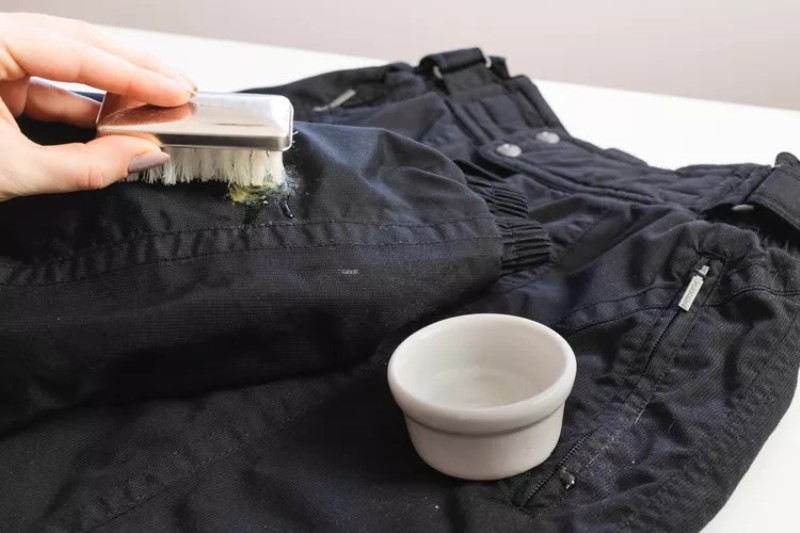
Hand washing may be appropriate for products for which it is specifically recommended or for spot-cleaning individual areas. Use water at the permitted temperature and a small amount of suitable detergent. Do not scrub the fabric with stiff brushes, wring it out forcefully, or try to remove stains with aggressive solvents.
After washing, it is important to remove the detergent thoroughly. If the instructions permit it, use an additional rinse cycle. This is particularly appropriate when there is any doubt that the main cycle has completely removed the detergent from the fabric.


Which Detergent Should You Choose for Membrane Fabrics?
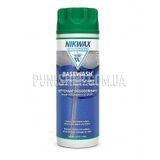
A detergent for membrane fabrics should effectively remove dirt without leaving unwanted residue on the material. Products used for this purpose include specialized liquid detergents for technical clothing and some ordinary liquid detergents, provided their composition and the product's care instructions allow their use.
A specialized membrane-clothing detergent can be a convenient choice if you regularly care for hiking, tactical, or sports clothing. However, do not assume that every product with a membrane necessarily requires a separate specialized detergent. For example, GORE-TEX recommends a small amount of liquid detergent for many of its jackets and does not require the use of a specialized product.
Liquid Detergent or Laundry Powder
For membrane clothing, it is generally preferable to choose a liquid detergent or gel formulated for membrane fabrics. Liquid formulas are easier to measure, and when used correctly, they help reduce the risk of undissolved powder residue remaining on the fabric.
This does not mean that every liquid detergent is suitable. Check the product's composition and intended use, as well as the clothing manufacturer's recommendations. Avoid formulas containing fabric conditioners, bleach, and other ingredients prohibited by the manufacturer of the specific material.
When choosing a detergent, pay attention to the following characteristics:
-
Intended use for functional, membrane, or technical clothing.
-
Suitability for the relevant fabric types.
-
Dosage for the specific amount of water and level of soiling.
-
Requirements for washing and rinsing temperatures.
-
The presence of fabric conditioners or other undesirable additives.
Do not increase the dosage “for better results”. Excess detergent can be more difficult to rinse out of the fabric. Follow the instructions on the packaging and do not mix several products unnecessarily.
What Not to Use
When washing membrane clothing, it is not recommended to use fabric conditioners, chlorine bleach, or aggressive stain removers unless the manufacturer specifies otherwise. These products may leave unwanted substances on the fabric or affect its properties.
Do not automatically use a general-purpose stain remover for stubborn dirt. Check the manufacturer's instructions first. If a particular area needs cleaning, a safer option may be to apply a small amount of an approved liquid detergent directly to that area and then rinse it thoroughly.
For regular care, you can choose a suitable clothing care product based on the fabric type and its manufacturer's recommendations.
GORE-TEX states that buying a separate specialized detergent is not necessary for washing many products made with this technology: the manufacturer permits the use of a small amount of suitable liquid detergent. At the same time, powder detergents, fabric conditioners, bleach, and stain removers are not included in the care recommendations for these products.
Practical takeaway: choose a detergent based not on the words “for membranes” on the packaging, but on its composition, instructions, and compatibility with the specific garment.
How to Wash and Care for GORE-TEX
When caring for GORE-TEX clothing, follow the instructions for the specific jacket or trousers. For many waterproof products, the manufacturer recommends machine washing at around 104°F, using a small amount of liquid detergent, rinsing twice, and spinning at a moderate speed. However, some constructions have special requirements, so do not apply these recommendations to every product without checking first.
Before washing, fasten the zippers and pockets, secure the hook-and-loop fasteners, and loosen the drawcords. Do not wash the product with heavily soiled items. After the main cycle, make sure the detergent has been rinsed out, then proceed to drying.
Particular attention should be paid to the outer DWR water-repellent finish. It helps water form droplets and roll off the fabric surface. During use and washing, the effectiveness of this finish gradually decreases.
If water beads up on the outer fabric again after cleaning and drying, additional treatment may not be necessary. If the surface continues to wet out quickly, check the instructions and restore the DWR with a suitable product if necessary.
It is important not to confuse care for an ordinary waterproof GORE-TEX product with care for specialized constructions that have a different outer-layer design. For example, GORE-TEX SHAKEDRY products have separate care rules: they should not automatically be machine-dried or treated with additional DWR products. In this case, the instructions for the specific model are particularly important.
For many GORE-TEX products, the manufacturer recommends machine washing at around 104°F, using a small amount of liquid detergent, and adding an extra rinse. However, specific requirements may differ depending on the product's construction. Before washing, check the label and, if necessary, consult the official GORE-TEX outerwear care instructions.
How to Wash Softshell Correctly
Softshell is not the name of one universal fabric, but a group of materials used in functional clothing that can combine stretch, breathability, wind protection, and varying levels of protection against precipitation. Some Softshell products have a membrane, while others do not. As a result, care requirements may differ.
Before washing Softshell, check the label and determine whether the construction includes a membrane, insulation, or a special outer finish. Not every Softshell product is designed to provide the same level of rain protection as a waterproof membrane jacket.
Washing Softshell Jackets and Trousers
Many Softshell products can be washed in a washing machine on a gentle cycle with liquid detergent, but the specific temperature and cycle depend on the model. Before loading the machine, empty the pockets, fasten the zippers and hook-and-loop fasteners, loosen the drawcords, and turn the garment inside out if the manufacturer recommends doing so.
Do not use fabric conditioner if it is prohibited by the instructions: its residue may affect the fabric's functional properties. You should also avoid high temperatures or intensive mechanical cleaning unless the manufacturer explicitly permits them.
After washing, rinse the garment thoroughly and dry it according to the label. Some models can be tumble-dried at a low temperature, which may help activate the DWR finish. Others should be air-dried. There is no universal drying cycle for all Softshell products.
How Care Differs Between Membrane and Non-Membrane Softshell
If a Softshell product has a membrane, you need to consider the care requirements for both the membrane and the outer fabric. If it does not have a membrane, that does not mean the product can be washed in any way: the material may still have a water-repellent finish, elastic fibers, insulation, or a special treatment.
You should not expect all Softshell products to have the same level of waterproofness either. Some models are designed primarily for wind protection, breathability, and light precipitation, while others provide a higher level of protection. Proper care helps maintain the stated properties, but it does not change the material's intended purpose.
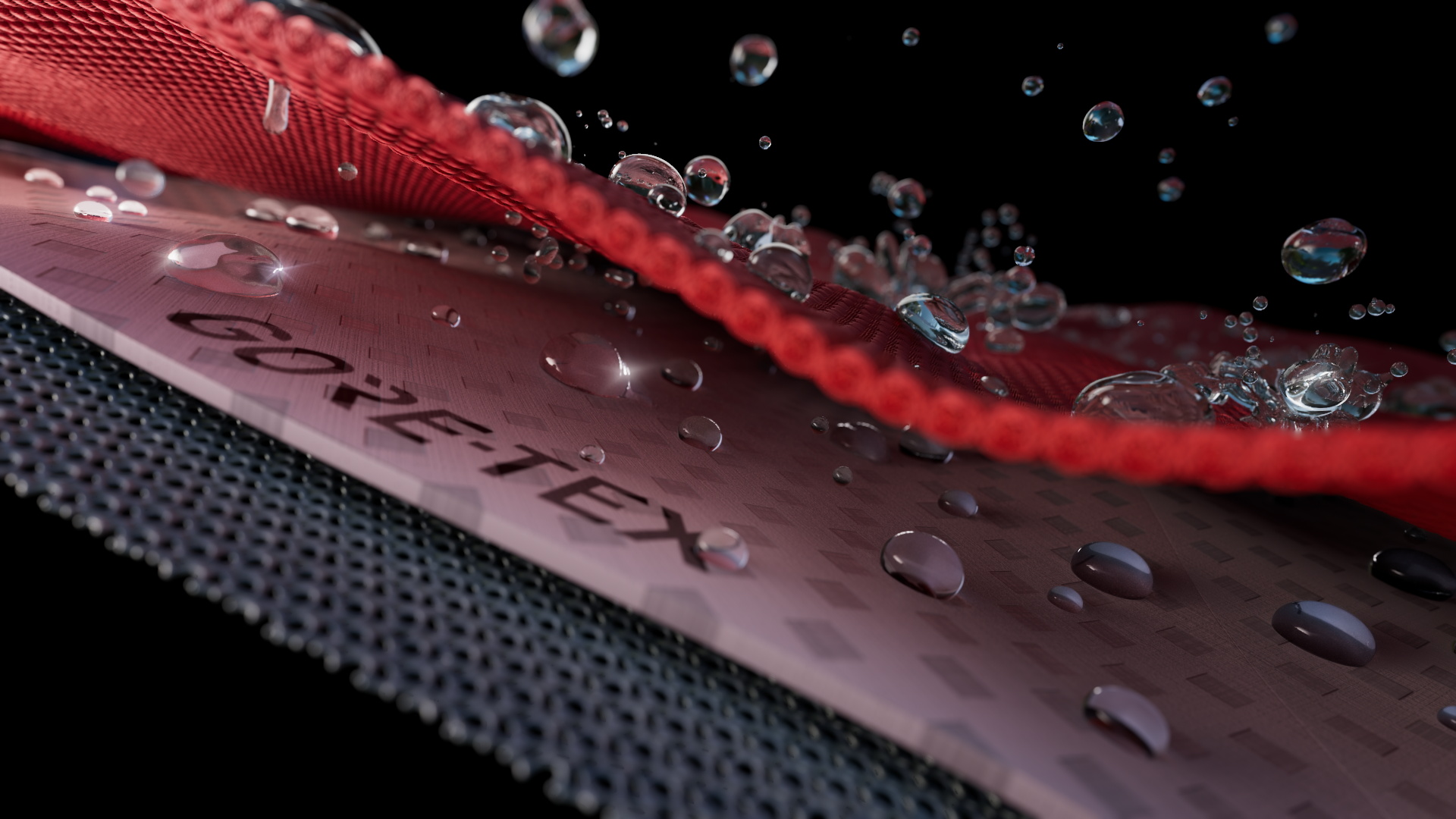
Water may stop beading on the outer fabric of membrane clothing even when the membrane itself remains waterproof. This happens when the DWR water-repellent finish wears down or its performance is impaired by dirt.
Therefore, before concluding that the membrane is damaged, clean the garment, dry it according to the instructions, and check whether water behaves differently on the surface afterward. If the fabric continues to wet out quickly, it may be time to renew the DWR finish.
How to Dry Membrane Clothing After Washing
Proper drying is just as important as washing. Excessive heat can damage the fabric, laminate, adhesive bonds, or other product components. On the other hand, for some models, controlled heat after drying helps restore the performance of the outer water-repellent finish.
The first step is to check the label. If the manufacturer permits air-drying, place the clothing in a well-ventilated area and let it dry without direct contact with a heater. Do not place a membrane jacket directly on a radiator or use a hair dryer with hot air unless the instructions specifically allow this method.
Many GORE-TEX products can be tumble-dried on a moderate setting. The manufacturer also recommends giving some products an additional 20 minutes of drying after they have dried, to activate the DWR finish. However, this is not a universal rule for all membrane fabrics: specialized constructions, including GORE-TEX SHAKEDRY, have separate restrictions.
If a tumble dryer is unsuitable or its use is prohibited, do not try to compensate by applying high heat from another source. Follow only the drying method permitted by the manufacturer of the specific garment.
After drying, check the condition of the fabric, seams, zippers, and outer finish. Do not store the garment while damp or tightly crumpled in compact packaging for an extended period.
How to Restore the Water-Repellent Finish on Membrane Clothing
DWR is a thin water-repellent finish usually applied to the outer fabric of a garment. It helps water form droplets and roll off the surface instead of soaking into the outer material.
Over time, DWR wears down due to friction, dirt, washing, and use. One sign that the water-repellent properties have deteriorated is that water no longer beads up and instead quickly wets the fabric surface.
First, wash and dry the clothing according to the instructions. In some cases, proper drying or heat treatment permitted by the manufacturer can restore the performance of the existing finish. If this is not enough, consider applying a specialized treatment.
Spray or Wash-In Treatment
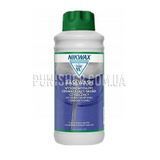
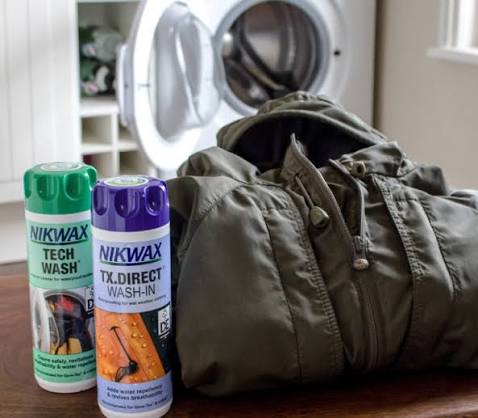
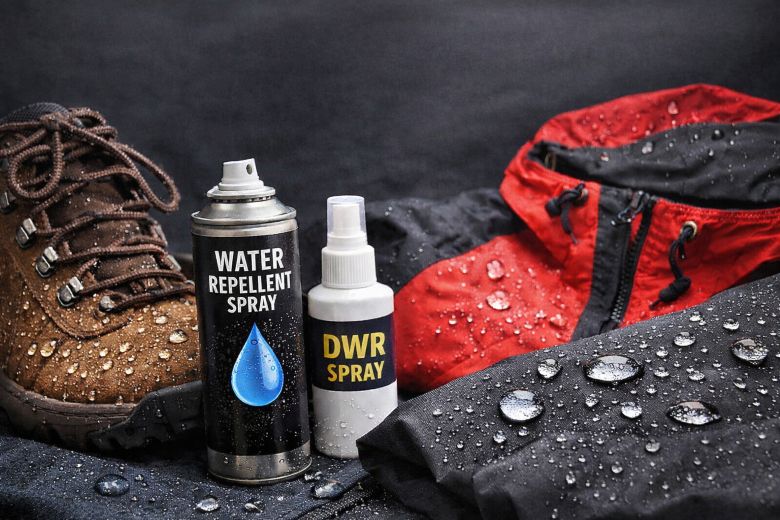
A water-repellent treatment for membrane clothing may come as a spray or as a product added during washing. The choice depends on the fabric type, product construction, and the recommendations of both the clothing manufacturer and the treatment manufacturer.
A spray allows the product to be applied to the outer surface, including areas that lose their water-repellent properties more quickly. A wash-in treatment is distributed during the washing process, but its use must be compatible with the specific fabric and construction.
Do not apply just any treatment simply because the label contains the words “membrane” or “waterproof”. Check whether the product is suitable for your garment and whether the manufacturer prohibits additional treatment. This is particularly important for materials with a specialized outer surface that do not require standard DWR.
The official GORE-TEX instructions specify 1 US fluid ounce of liquid detergent as a guideline for one washing cycle. This is not a universal dosage for every washing machine, water supply, or detergent: follow the instructions on the packaging and the clothing manufacturer's recommendations.
After applying the treatment, follow the instructions for drying or activating the finish. Do not increase the concentration of the product or combine several different treatments unnecessarily.
How Often Should DWR Be Renewed?
There is no single interval that applies to all jackets and trousers. Frequency depends on intensity of use, friction, dirt, the number of washes, and the type of finish.
A practical guide is how water behaves on a clean surface. If water beads up again after washing and the recommended drying process, additional treatment may not be necessary. If the outer fabric continues to wet out quickly, check the recommendations for restoring DWR for the specific model.

Detergents for washing membrane clothing, water-repellent treatments, and other products for caring for GORE-TEX, Softshell, and other fabrics.
Buy Clothing Care Products
Common Mistakes When Caring for Membrane Clothing
Even high-quality membrane clothing can lose some of its properties because of improper care. Problems most often arise not from washing itself, but from unsuitable products, excessive heat, or failure to follow instructions.
Using fabric conditioner. If the manufacturer prohibits fabric conditioners, do not add them when washing membrane clothing. Residue from these products may impair the fabric's functional properties.
Using too much detergent. A larger dose does not guarantee better cleaning. Excess detergent may remain on the fabric, so it is important to follow the dosage instructions and use an additional rinse if necessary.
Ignoring the label. Washing at 104°F or tumble-drying may be permitted for one model and prohibited for another. Do not transfer care recommendations from one jacket to another without checking.
Drying on a radiator or near an open flame. Excessive heat can damage materials and structural bonds. Use only the drying method permitted by the manufacturer.
Applying an unsuitable treatment. Not every water-repellent finish is compatible with every fabric. Make sure the product is intended for the specific garment.
Improper storage. Do not put clothing away for long-term storage while it is damp or dirty. Allow it to dry completely before packing it and follow the storage recommendations.
Proper care helps membrane clothing retain its functional properties for longer without requiring complicated procedures. The main rules are simple: check the label, use a suitable detergent, do not add prohibited fabric conditioners or bleach, rinse the fabric thoroughly, and dry the garment using an approved method.
For GORE-TEX, it is important to consider the specific construction, while when washing Softshell, remember that this material does not always contain a membrane. It is also important not to confuse the membrane's waterproofness with the water-repellent properties of DWR: if the outer fabric starts getting wet, first check the condition of the finish and the recommendations for restoring it.
Regular but appropriate care, a properly selected detergent for membrane fabrics, and compliance with the manufacturer's instructions will help maintain the comfort and performance of clothing during everyday use, training, travel, and work outdoors.
NEED HELP CHOOSING?
Our specialists will advise you on choosing care products for GORE-TEX, Softshell, and other fabrics to preserve their functional properties.
Get a consultation

Igor Ivandikov — author of the article
Project Manager
Has over 3 years of experience working in the field of camping equipment. Well-versed in products for tourism, camping, and outdoor recreation.
Responsible for coordinating projects, monitoring deadlines, and ensuring the quality of task completion.
He enjoys football (soccer) and billiards, participates in competitions, and has won prizes on numerous occasions. He is a fan of active recreation.
FAQ. Answers to Frequently Asked Questions
1. Can a membrane jacket be machine-washed?
2. What is the best way to wash membrane clothing?
3. How should a membrane jacket be dried correctly?
4. Does a water-repellent treatment need to be applied after every wash?