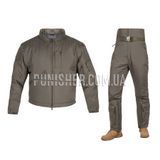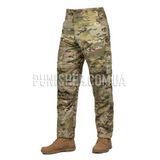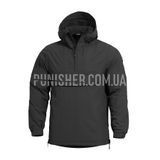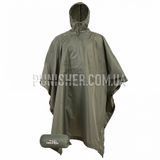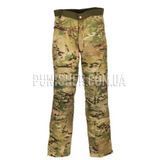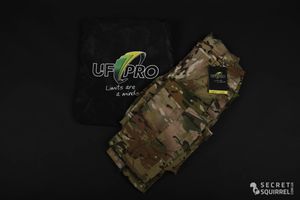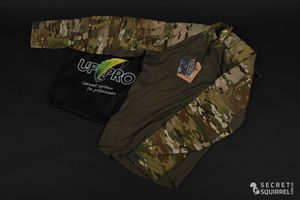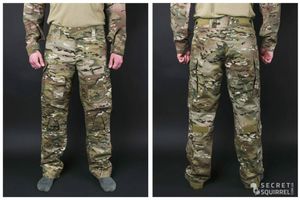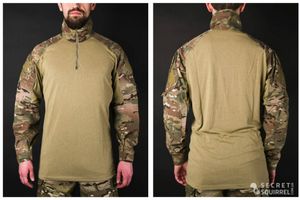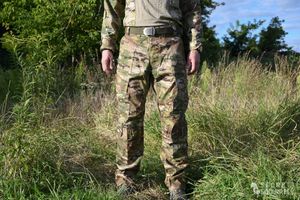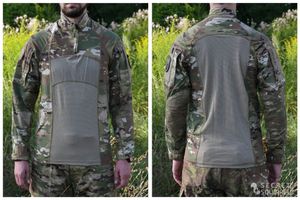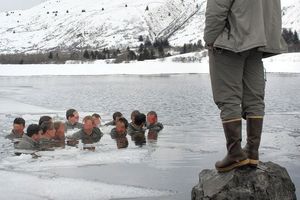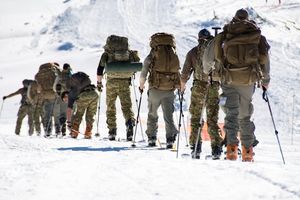
While the first three levels of PCU and ECWCS primarily manage what happens next to the skin, Levels 4 through 7 begin dealing directly with the external environment. Wind, rain, freezing sleet, extreme cold, prolonged stationary periods – the layering system provides a specialized tool for each of these conditions.
Yet this is precisely where confusion most frequently arises. Wearing four jackets in a row does not represent four sequential stages of "warmth". L4 is not a lighter version of L5, L6 is not merely a "better L5", and L7 operates on an entirely different operational philosophy altogether.
Let’s break down Levels 4-7 together with guidance from the Punisher military gear shop – not as a catalog of technical specifications, but as a suite of outer tools that you must learn to swap between based on weather conditions, physical exertion, and operational duration.
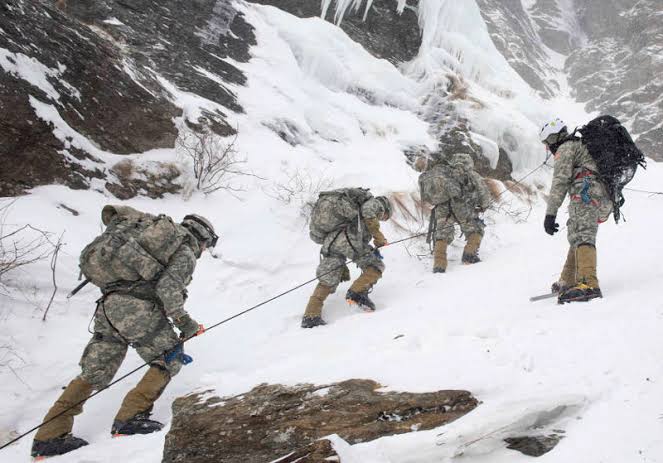
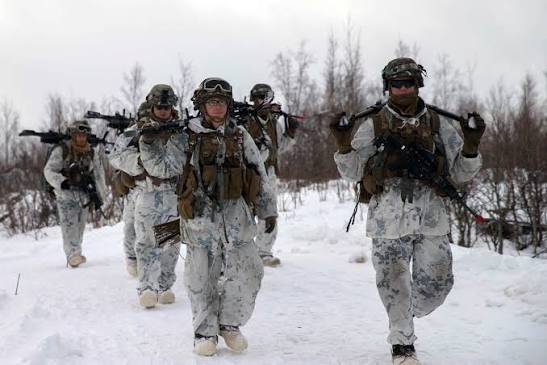
Level 4: When the Cold Is Driven by Wind, Not Temperature
Consider a typical winter day. The thermometer reads 35°F (+2°C). That sounds manageable. Yet, stepping outside, you begin to freeze within minutes. You check the thermometer again: still 35°F (+2°C). The culprit isn't the ambient temperature itself – it’s the wind. This highlights one of the most critical functions of an outer layer: it must not only trap body heat, but actively prevent the wind from stripping away the warmth you've already generated and retained within the system.
ECWCS Gen III incorporates Level 4 – a lightweight windshirt – specifically for this scenario. Official system doctrine dictates its use for wind protection in cool conditions, particularly during movement. This distinction is vital: L4 provides virtually no thermal insulation on its own. Its sole purpose is to prevent wind from compromising the insulating layers beneath it.
Why a Thin Jacket Is Sometimes More Effective Than a Thick One
This is one of the most compelling dynamics of a layered system. Imagine wearing L1 + L2. You feel comfortable, but upon stepping into an open area, a cold wind picks up. You could add an L3 fleece layer, or you could slip on an L4 windshirt first. In many cases, the second option is far wiser. Why? Because you already have adequate insulation; you simply need to stop losing it to wind chill. Think of it like heating a house: if the furnace is running, you don't necessarily need an extra heater – you just need to shut the open window. L4 acts as that "shut window".
When Is L4 Most Effective?
Level 4 performs best under the following conditions:
-
Cool temperatures, but not extreme cold;
-
High wind conditions;
-
High physical exertion;
-
When maximum mobility is required;
-
When rainfall is not a primary factor.
For example: 37°F (+3°C), gusting winds, fast-paced marching. Instead of wearing L1 + L2 + L3 under a heavy coat, wearing L1 + L2 + L4 is substantially more comfortable. L2 retains body heat, while L4 prevents the wind from driving that heat away.
The Main Advantage of L4: You Barely Notice It
This is a tremendous practical benefit. A quality wind layer should never feel like a bulky winter parka. It is lightweight, highly packable, and remains stowed in your pack most of the time.
Crossing an exposed ridge? Pull it out. Exiting tree cover into high wind? Throw it on. Returning to shelter? Pack it away. It is a prime example of how a minimal piece of gear can dramatically improve overall environmental comfort.


At any given ambient temperature, air movement dramatically increases convective heat loss from the body. This physical phenomenon forms the basis of the wind chill index. Under freezing conditions, even a modest breeze of 5 to 10 mph can significantly elevate the thermal stress on the human body.
Level 5: When You Need More Than Protection – A Durable Working Outer Layer
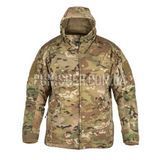
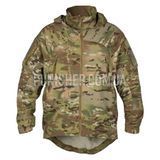
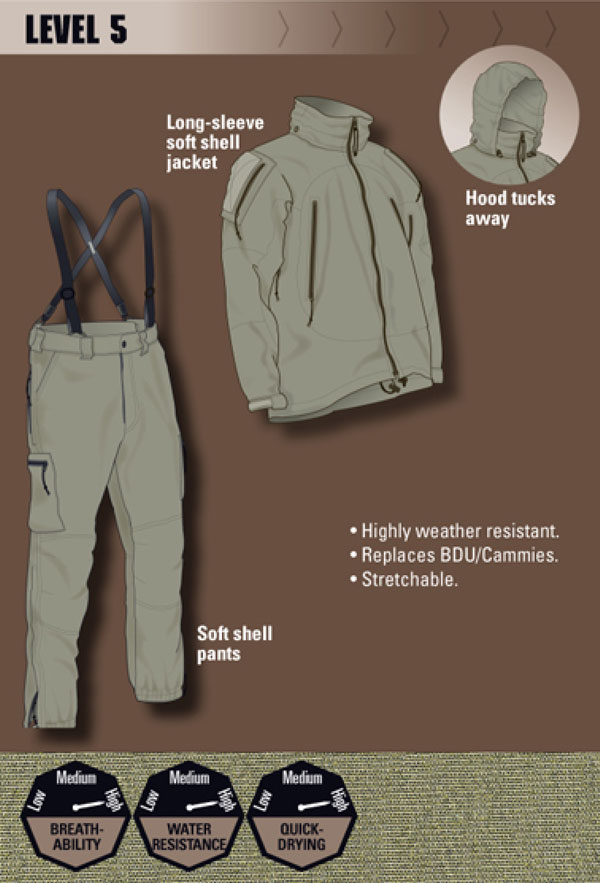
Level 5 operates on a completely different premise. Where L4 functions as a lightweight wind shield, L5 is a full-fledged outer working garment. ECWCS Gen III Level 5 is a softshell engineered to protect against wind, light precipitation, and environmental abrasion while maintaining sufficient breathability for high-exertion tasks. Consequently, L5 is often the most versatile garment in the entire framework. It is not as unnoticeable as L4, nor is it as restrictive as a hard shell membrane.
Why Softshell Performs So Well During Movement
High exertion creates an inherent physiological dilemma. On one hand, you must block cold external winds. On the other hand, you must dump excess body heat and perspiration. If your outer barrier is completely non-breathable, you remain comfortable only until physical work begins – after which you quickly overheat, sweat excessively, and feel compelled to unzip everything. Softshell fabric strikes a functional balance between these competing demands, making L5 ideal for operators in continuous motion.
L4 vs. L5: Which Should You Choose?
A practical rule of thumb applies here: "Select L4 when prioritizing minimum weight, maximum mobility, and pure wind resistance; select L5 when needing enhanced durability, environmental protection, and active-use versatility".
For instance: 40°F (+5°C), high activity, strong winds → L4. 32°F (0°C), high activity, biting wind, intermittent light flurries → L5. However, this does not mean L4 is strictly for "40°F" or L5 for "32°F" – in practice, selection depends entirely on output levels, base layers, and real-time weather.
Critical Point: L5 Does Not Replace Thermal Insulation
A widespread misconception is pairing L1 + L5 and expecting the softshell to function independently as a winter coat. It will not. Its primary purpose is outer shell protection, not high-loft thermal insulation.
When temperatures drop, you do not replace the L5 – you insert insulating layers underneath it. Combining L1 + L2 + L5 or L1 + L3 + L5 is far more adaptable and thermally efficient than wearing a single heavy coat across all conditions.
When precipitation intensifies beyond drizzles, L5 reaches its operational limit. While softshell fabric manages light rain or dry snow, soaking downpours require a hard barrier: Level 6.


A landmark physiological trial evaluated 18 subjects walking for 5 hours at 41°F (+5°C), with the final 4 hours spent under simulated heavy rainfall of approximately 2.9 inches per hour (74 mm/h) and a 5 mph (8 km/h) wind without waterproof outer gear.
During the first hour of exertion, core body temperature rose to approximately 100.6°F (38.1°C) due to metabolic heat output. After prolonged rain exposure, core temperatures dropped to 97.5°F (36.4°C) by hour five, with two participants developing significant hypothermia at 95°F (35°C). Most subjects failed to complete the protocol due to severe cold distress.
This highlights why clothing efficacy cannot be judged solely by core body temperature early in an evolution. The body aggressively compensates through elevated metabolism and shivering, but those physiological reserves deplete rapidly over time.
Level 6: When You Must Stop Compromising with the Elements
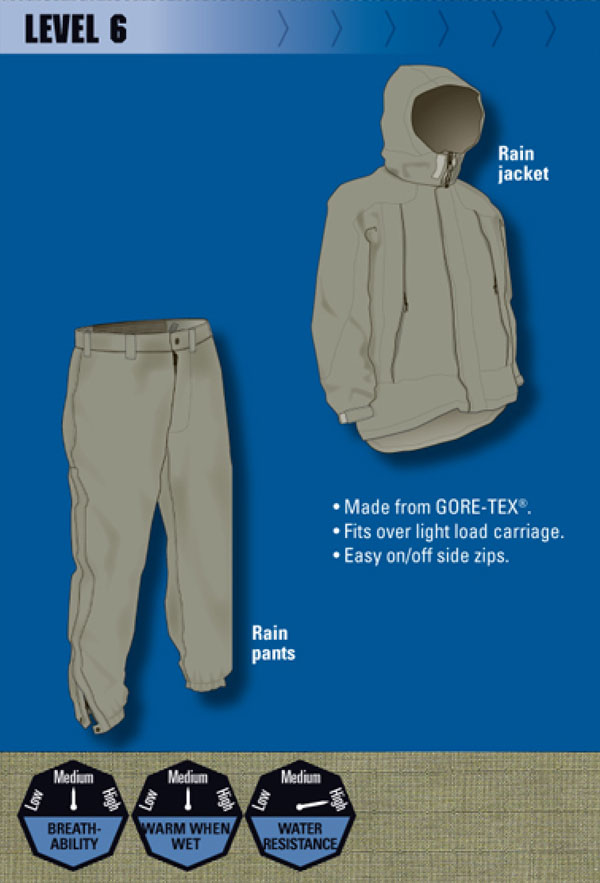
Level 6 is a true hard shell garment designed with a single goal: keeping water out. ECWCS Gen III Level 6 features a waterproof/breathable membrane constructed for cold, wet conditions, worn directly over insulating and base layers.
An essential rule of thumb: L6 does not need to be worn continuously. If conditions are dry at dawn with rain forecasted three hours later, wearing a hard shell prematurely is counterproductive. Stow L6 in your pack, and deploy it only when rain begins.
Why a Waterproof Membrane Shouldn't Be Your Default "Winter Coat"
Membranes are functional compromises. While exceptional at blocking external water, the human body produces substantial heat and water vapor during exertion – more than any membrane can vent under high output. Wearing L6 + heavy insulation during intense activity quickly leads to the classic dilemma: "Why am I soaked when it didn't even rain on me?" The answer is simple: trapped internal perspiration.
Deploy L6 as a Tactical Tool
Heavy rain starts? Don it. Wet sleet begins falling? Don it. Weather dries out? Pack the membrane back away.
This approach is vital during active movement. A baseline of L1 + L2 + L5 serves as an excellent working setup. If heavy rain hits, add L6 over top. Once rain ceases, stow L6 back into your kit. It is a simple protocol, but highly effective.
What Should Be Worn Underneath L6?
A common misconception is that wearing a hard shell requires heavy thermal insulation underneath. In reality, base layer configurations beneath L6 vary widely: L1 + L6 for warm, active movement in heavy rain; L1 + L2 + L6 for colder rain; or L1 + L3 + L6 for stationary or low-output wear in wet freezing conditions.
L6 does not govern thermal warmth – it governs environmental waterproofing and weather protection. These are distinct functional roles.


At ambient temperatures around 41°F (+5°C), wet clothing can increase conductive and evaporative heat loss up to twofold compared to dry garments. This occurs not only because the water itself is cold, but because evaporation continually draws heat from the skin while saturated insulation loses its loft and thermal dead-air space.
Level 7: The Thermal Reserve
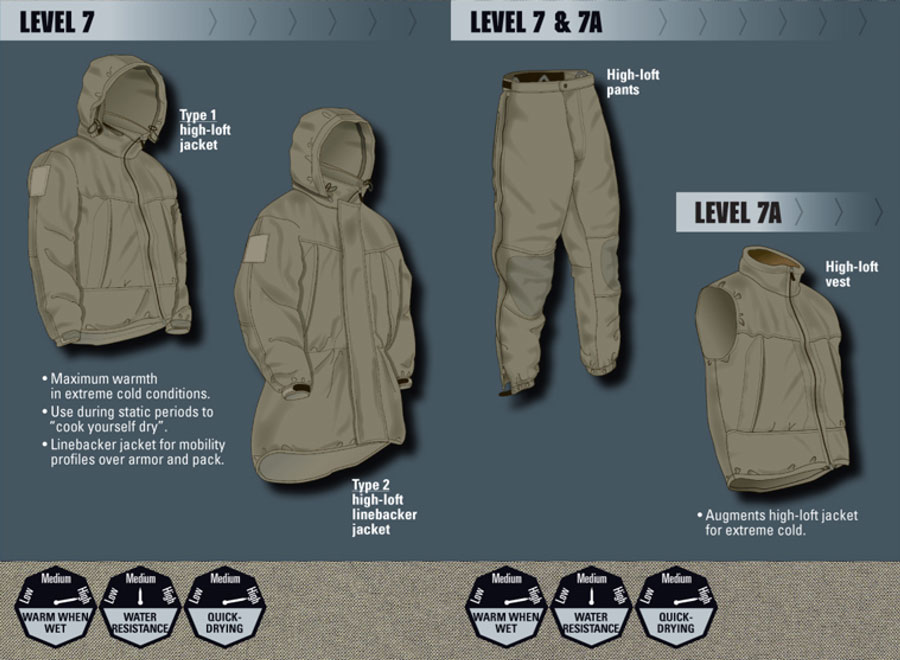
Level 7 serves a distinct purpose within the layering continuum: while L4 blocks wind, L5 acts as a durable working shell, and L6 manages heavy water, L7 exists to preserve thermal energy during extreme cold and static low-activity states. Level 7 is not a jacket intended for continuous active wear throughout winter – it is a static thermal park.
The Ideal Scenario for L7: Static Halts
Consider a scenario where you have been marching for an hour wearing L1 + L2 + L5. You felt comfortably warm while moving. Upon halting, you feel fine for the first five minutes. By minute twenty, cold sets in. By minute forty, significant hypothermic discomfort begins. The weather hasn't changed, nor has your clothing – your metabolic heat production has dropped. During movement, working muscles act as an internal furnace; upon stopping, that furnace idles. L7 is engineered precisely to bridge this gap.
Don L7 BEFORE You Start Freezing
This is one of the most critical practical guidelines for cold-weather operations: do not wait until you are shivering to put on L7. If a one-hour static halt is five minutes away, pull L7 from your pack immediately. Waiting until core body temperature drops forces the body to expend significant metabolic energy regaining comfort. Donning high-loft insulation proactively preserves stored body heat.
Wearing L7 During Movement: Is It Recommended?
It can be done, but output levels dictate whether it makes sense. In extreme conditions around -5°F (-20°C) with minimal physical activity, L7 functions well as a primary outer insulating shell. However, during high-exertion tasks or marching, high-loft synthetic insulation will cause rapid overheating and sweat saturation. The optimal cycle remains: L7 stowed in pack → halt called → don L7 over working layers → movement resumes → stow L7 back in pack.
Can L7 Be Worn Directly Over L5?
Yes, and this represents one of the most effective real-world configurations. For example: wearing L1 + L2 + L5 while moving, then donning L7 directly over L5 upon halting (yielding L1 + L2 + L5 + L7).
Size considerations apply here: because L7 is designed as an outer parka, it should be sized to fit comfortably over a full working uniform without compressing its synthetic insulation loft.
Combining L6 + L7: When Is It Appropriate?
Layering L6 over L7 is viable under specific, severe conditions. In extremely cold, wet, low-output environments, pairing synthetic insulation with a waterproof hard shell provides maximum environmental protection. However, during active movement, this combination traps excessive heat and humidity very quickly. Treat L6 + L7 not as a standard "maximum warmth" outfit, but as a specialized protective barrier for severe freezing-wet conditions during low activity.
In human thermoregulation studies, walking at approximately 3 mph (5 km/h) generates a metabolic rate of roughly 200 W/m², compared to 58-70 W/m² for sitting at rest. Physical movement increases internal metabolic heat production by three- to fourfold. Consequently, a single clothing configuration cannot perform identically during an active march versus a prolonged stationary watch.

Level 4-7: Four Levels, Four Distinct Functions
To summarize the core roles:
-
L4 – Wind protection (lightweight, highly packable, minimal).
-
L5 – Versatile working shell (durable softshell for active movement).
-
L6 – Waterproof barrier (hard shell for heavy rain/sleet).
-
L7 – Extreme cold & static defense (high-loft thermal parka).
This distinction reinforces why L7 cannot simply be labeled "the best layer because it's the warmest". That logic parallels claiming a heavy raincoat is superior to a T-shirt simply because it is waterproof. Each garment serves a distinct functional role.

PCU and ECWCS Level 4–7
Our catalog features a full range of L4–L7 clothing for the layering system.
View and order now!
How These Four Outer Layers Integrate
Here is how the system fits together across operational scenarios:
-
Dry, cool, high wind – L1 + L2 + L4;
-
Cold, high exertion – L1 + L2 + L5;
-
Cold, low exertion – L1 + L3 + L5;
-
Heavy rain – Add L6 over the active configuration;
-
Extended static halt – Add L7 over the active configuration;
-
Extreme cold + wet + static – Combine insulation layers with L6/L7 based on exact conditions.
Treat this as a decision-making framework rather than a rigid temperature chart.
The Most Common Mistake with Levels 4-7
Operators often view these levels as a strict linear sequence: L4 → L5 → L6 → L7, assuming colder weather simply requires moving up numerical levels. Instead, evaluate conditions dynamically:
-
Biting wind? → L4.
-
Need a durable active working shell? → L5.
-
Heavy precipitation? → L6.
-
Extreme cold during static hold? → L7.
These represent distinct tools for specific environmental challenges rather than sequential gears in a transmission.
What to Wear vs. What to Pack
Pack management depends on weather forecasts, but a solid baseline loadout includes:
-
Worn on body: L1 + L5;
-
Stowed for rapid access: L4 or L6 (depending on precipitation risk);
-
Packed in ruck: L7.
L4, L6, and L7 are contingency layers – vital when environmental conditions demand them, but unnecessary to wear continuously.
Pre-Mission Assessment Checklist
Before stepping out into the field, answer five key operational questions:
-
Will the mission involve active movement or static positions?
-
Is severe wind chill anticipated?
-
Is heavy rain or freezing sleet expected?
-
What is the total duration of exposure?
-
Will conditions allow for rapid layer adjustments?
Answering these clarifies your layer selection:
-
Active movement + wind → L5 or L4;
-
Active movement + heavy rain → L5 + L6;
-
Static halt + extreme cold → L7;
-
Rain + cold + static halt → Base insulation + L6 + L7.
This represents the true practical application of the PCU/ECWCS architecture.
In ECWCS Gen III, Levels 4 through 7 were deliberately engineered without functional redundancy. The system isolates wind protection, active shell durability, waterproofing, and static insulation into distinct garments. This is why L5 is not merely an "upgraded L4", nor is L6 a "warmer L5". Each level solves a distinct environmental problem, allowing users to successfully mix PCU, ECWCS, and commercial tactical equivalents as long as each layer's specific role is respected.
5 Practical Rules for Levels 4-7
-
Never wear L4, L5, L6, and L7 simultaneously "just in case"
Outer layers are specialized tools intended for specific environmental conditions.
-
L4 is not an insulating garment
Its strength lies in blocking wind chill at minimal pack weight.
-
L5 is your primary active working shell
It excels during high-exertion tasks in cool or cold environments.
-
Keep L6 accessible in your loadout
Rain builds rapidly; hard shells must be readily available.
-
Don L7 before static halts
Do not wait until core temperature drops and shivering begins.


Levels 4 through 7 clearly demonstrate why PCU and ECWCS should not be treated as conventional winter clothing. They do not follow a simple "higher number equals warmer garment" scale. L4 cuts wind chill, L5 serves as a durable working softshell, L6 seals out driving rain and sleet, and L7 preserves core heat when movement no longer generates warmth.
Rather than searching for a single "ultimate winter jacket", building a system of functional layers allows you to adapt to changing environments in real time. Deploy L4 against wind, rely on L5 for active work, don L6 when heavy rain hits, and pull out L7 during frozen static halts.
That is the core philosophy of layered tactical clothing: adapting dynamically to the elements rather than relying on a single heavy garment.
NEED HELP CHOOSING?
Our specialists will help you navigate the available options and choose the optimal clothing based on your needs and conditions of use.
Get a consultation

Vitalii Buniak — article author
Military gear consultant
Before 2022, he worked as a sales assistant at the Panisher store. After the start of the full-scale invasion, he joined the Armed Forces of Ukraine, gaining real combat experience.
Thanks to his combat experience and deep knowledge of tactical gear, Vitalii serves as a personal expert of the Panisher online store in the fields of:
- Clothing and footwear
- Equipment
His recommendations help customers choose reliable and functional gear for any conditions.
FAQ: Answers to Frequently Asked Questions
1. How does Level 4 differ from Level 5?
2. Do I need Level 6 if I already have Level 5?
3. Can Level 7 be worn directly over Level 5?
4. Which layer among Levels 4-7 is the most versatile?
This video explains the purpose of the 4-7 layers of the American military. It clearly demonstrates the purpose and proper use of these layers. This is crucial for maintaining consistent comfort year-round and in any weather: